
FinancingFeed working capital, export credit, trade finance & asset leasing — explore options

Soybean Meal — Spécifications, fournisseurs et RFQ

Soybean Meal : spécifications techniques, origines mondiales, certifications GMP+/FAMI-QS et devis vérifiés. The global reference vegetable protein for monog…

Tourteau protéique

Acheter du tourteau de soja

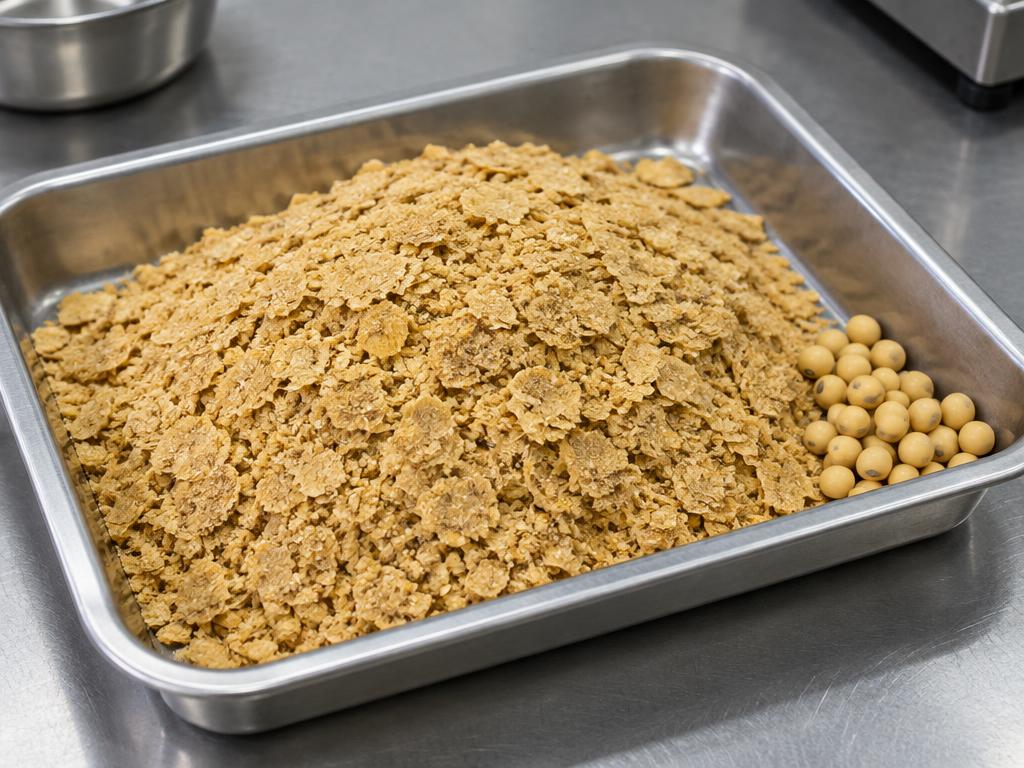
Le tourteau de soja (44–48 % de protéines brutes) reste la référence protéique des formules volailles, porcs et aquaculture. Son prix suit le CBOT, les primes d'origine (Brésil, Argentine, États-Unis, Paraguay), le fret et le change. En UE, le statut OGM et la documentation EUDR déterminent en plus la classe de prix.

Spécification d'achat

Protéine brute
44–48 % (standard 46 %)
Énergie métabolisable (volailles)
≈ 2 230 kcal/kg
Cellulose brute
max. 3,5 %
Humidité
max. 12,5 %
Taux d'incorporation usuel
15–35 % poulet/porc, 10–25 % pondeuses
Origines
Brésil, Argentine, États-Unis, Paraguay, Inde

Points à vérifier avant commande

  • Fixer la base protéine et humidité au contrat (bonification/réfaction par 0,1 %).
  • Exiger l'activité uréasique et la solubilité KOH comme preuve de cuisson.
  • Clarifier le statut OGM, RTRS/ProTerra et les preuves EUDR avant signature.
  • Demander un COA par lot : salmonelles et mycotoxines.
  • Comparer les offres uniquement en coût rendu port de déchargement (CIF/DAP).

Demander des offres vérifiées

FeedMatch Group consulte plusieurs origines certifiées, compare les offres en coût rendu (CIF/DAP) et vérifie GMP+ / FAMI-QS avant toute recommandation. Gratuit pour les acheteurs.

FinancingFeed working capital, export credit, trade finance & asset leasing — explore options
Protein Meals & Alternative Proteins

Soybean Meal

Also known as: SBM · Soya meal · Soymeal

The global reference vegetable protein for monogastric diets. 44–48% CP, excellent amino-acid balance, benchmark of least-cost formulation worldwide.

Applications by species

broilerslayersbreedersturkeyswinedairytilapiashrimpsalmon

Top global export origins

Brazil Argentina United States Paraguay India

FeedMatch Group's RFQ Builder benchmarks landed costs across origins for your discharge port and shipment window.

Certifications & quality standards

GMP+ FAMI-QS RTRS ProTerra Non-GMO (EU segregated)
GMO status drives price stratification. EU, MENA and Asia-Pacific buyers increasingly require RTRS or deforestation-free (EUDR) documentation.

Buyer considerations

Advantages

  • Best-in-class lysine and total amino-acid profile among plant proteins
  • Deep, liquid global market — daily CBOT and Rosario price discovery
  • Well-characterized by every feed formulation package

Constraints & risks

  • Anti-nutritional factors (trypsin inhibitors) require adequate toasting
  • Price and availability tied to South American harvests and USD/BRL/ARS
  • Deforestation and land-use scrutiny in some EU/UK supply chains

Buyer-grade specification: soybean meal grades and contract parameters

The parameters a soybean meal contract is actually judged on at discharge. Quote every offer against the same guaranteed analysis — a grade difference of two protein points changes the cost per unit of protein far more than the headline price per tonne.

ParameterStandard 46% CP (hulls in)Hi-pro 48% CP (dehulled)Why it matters to the buyer
Crude protein (as-is)45–46% min47.5–48.5% minThe basis of price. Contract it as a minimum with a pro-rata price adjustment clause, not as 'typical'.
Moisture12.0–12.5% max12.0–12.5% maxEvery extra point of water is a point of protein you paid for and did not receive; it also drives caking and mould in tropical storage.
Crude fibre7.0% max3.5% maxFibre displaces energy in broiler and shrimp diets; the low-fibre grade is what justifies the hi-pro premium.
Crude fat (residual oil)1.5–2.5%1.0–2.0%Expeller and mechanically pressed meal runs far higher; do not benchmark expeller against solvent-extracted meal on price alone.
Urease activity0.05–0.30 ΔpH0.05–0.30 ΔpHThe practical proxy for toasting. Above 0.30 means under-toasting and residual trypsin inhibitors; below 0.02 means over-toasting and lysine damage.
KOH protein solubility73–85%73–85%Confirms the urease reading and catches heat-damaged lots that still assay full protein.
Sand / silica, ash1.0% / 7.0% max1.0% / 6.5% maxAdulteration and sweeping indicator on origin-blended parcels.
DocumentationGMP+ or FAMI-QS, phytosanitary, ISO 17025 CoA, GMO/non-GMO status, RTRS or EUDR where requiredSameMissing sustainability or GMO documentation is the most common reason a compliant cargo is rejected at an EU or MENA port.

Ask every supplier to quote the same incoterm, discharge port, parcel size and shipment window. An FOB Paranaguá number and a CIF Lagos number are not comparable until freight, insurance, demurrage risk and duty are added.

What actually moves the soybean meal price you are quoted

Soybean meal is a traded commodity: the quoted number is a global futures price plus a basis your supplier controls. Knowing which part moved tells you whether to negotiate or wait.

CBOT / Rosario futures

The board sets the underlying value for every origin. Most export offers are priced as futures plus a differential rather than as a flat number.

Buyer action: Ask for the offer split into futures + basis so you can see which half changed between quotes.

Origin basis and crush margin

Brazilian, Argentine and US basis diverge with harvest pressure, crush economics and export taxes; Argentine meal typically prices under Brazilian in a good crush year.

Buyer action: Always tender at least two origins in the same RFQ, even if you intend to buy one.

Freight and parcel size

Container, break-bulk and Panamax freight per tonne can differ by USD 20–60/t on the same route, and small parcels carry the worst rate.

Buyer action: Consolidate requirements into a larger shipment window, or tender a combined parcel with a neighbouring mill.

Currency

USD/BRL and USD/ARS moves change what the origin seller will accept in dollars, independently of the board.

Buyer action: Fix the currency and the payment terms in the same negotiation as the price.

Certification and GMO status

Non-GMO segregated, RTRS or ProTerra meal carries a premium that has ranged from USD 15 to over USD 80/t depending on availability.

Buyer action: Only specify the certification your customer or regulator actually requires — and price the conventional lot alongside it.

Seasonality

South American harvest pressure (Feb–Jun) and the US harvest (Oct–Dec) are the structurally cheaper windows for forward cover.

Buyer action: Plan forward cover into those windows rather than buying spot every month.

Supplier qualification checklist: soybean meal

Run every new soybean meal supplier through these eight checks before the first vessel or truck is booked. Each check has one piece of evidence that settles it, so the qualification can be closed in days rather than months.

CheckEvidence to requestAcceptReject
Crude protein and moisture basisContract wording plus three consecutive lot CoAs on the same basisCP and moisture stated as-is with a named reference method (Dumas/Kjeldahl) and a moisture maximumProtein quoted 'dry basis' with no moisture cap, or CP guaranteed as 'typical'
Heat treatment / over- and under-processingKOH protein solubility, urease activity and PDI on recent lotsUrease rise 0.05–0.20, KOH solubility 73–85%, PDI 15–30% and stable lot to lotUrease above 0.30 (under-toasted, trypsin inhibitors) or KOH below 70% (over-toasted, lysine damage)
Anti-nutritional factorsTrypsin inhibitor activity report from an ISO 17025 laboratoryTIA at or below 4 mg/g, with the method namedNo TIA data, or a house method with no reference standard
Mycotoxins and contaminantsPer-lot CoA covering aflatoxin B1, deoxynivalenol, zearalenone plus heavy metalsNumeric maxima written into the contract and tested per shipment by an accredited laboratoryAnnual or origin-level certificates presented as lot evidence
Origin, traceability and deforestation complianceOrigin declaration, RTRS/ISCC or EUDR due-diligence statement, GM statusTraceable to the crushing plant, with an EUDR statement where the destination is the EU'South American origin' with no plant name or chain-of-custody document
Sampling and arbitrationContract clause naming sampler, method and arbitration bodyIndependent surveyor at load and discharge, GAFTA/FOSFA arbitration, retained samples for 90 daysSeller's own analysis binding, or no retained sample clause
Physical quality and shipment conditionHold-cleanliness certificate, fumigation record, discharge survey reportMoisture at discharge within contract, no caking, no heat damage, free of foreign matterHistory of wet or heat-damaged discharge with claims unsettled
Commercial and counterparty standingTwo trade references at similar tonnage, bank details verified out-of-band, GMP+/FAMI-QS certificateValid feed-safety certification, verifiable references, workable payment terms (LC or CAD)Advance telegraphic transfer to a new counterparty with no certification or references

Worked example: is 48% hi-pro cheaper than 46% standard?

A 5,000 t/month mill compares two CIF offers for the same discharge port and shipment window. The correct comparison is cost per unit of delivered protein, not price per tonne.

LineOffer A — 46% CP standardOffer B — 48% CP hi-pro
CIF price quotedUSD 402/tUSD 421/t
Guaranteed protein (min)46.0%48.0%
Cost per protein point per tonneUSD 8.74USD 8.77
Crude fibre7.0% max3.5% max
Formulation effectExtra fibre displaces energy; the diet needs ~4 kg/t more added fat to hold MENo energy correction needed
Added fat cost at USD 1,150/t≈ USD 4.60/t of finished feed
Effective cost gapUSD 402 + energy correctionUSD 421, no correction

Takeaway: On protein alone the two offers are within USD 0.03 per protein point — effectively identical. The decision is made by the fibre and the energy correction: once the added fat needed to offset the extra fibre is priced in, the hi-pro offer is the cheaper feed in any energy-limited broiler or shrimp diet, while the 46% grade stays cheaper for layer and ruminant diets that tolerate the fibre. Run both grades through your own least-cost matrix before signing, and put a pro-rata protein price adjustment into the contract either way.

Key specifications to contract

Each parameter is explained in the specification library — what it measures, how it is tested and what to verify.

Laboratory testing programme

TestWhy buyers run it
Crude protein (Kjeldahl or Dumas)Contractual value; confirm nitrogen factor and moisture basis
Amino-acid profile, digestible basisThe real formulation value; detects heat damage crude protein hides
Urease / KOH solubility / protein dispersibility indexProcessing intensity proxy for soy and heat-treated proteins
Total and acid-insoluble ashBone, shell, soil and mineral dilution indicator
Salmonella and EnterobacteriaceaeProtein meals are the classic entry point for pathogens into a mill
Moisture and water activityStorage stability and short-weight economics

Storage, packaging, transport & handling

Shelf life

Typically 3–6 months from production when held below 12% moisture, under 30 °C and protected from condensation. Marine and rendered proteins require antioxidant treatment; remaining shelf life on arrival should be contractual.

Storage recommendations
  • Keep moisture below the contractual maximum and monitor water activity in humid climates
  • Store on ventilated, dry floors with clear separation from finished feed and medicated materials
  • Apply first-expiry-first-out rotation and record production dates at intake
  • Monitor bulk temperature — self-heating signals microbial or oxidative activity
Packaging options
  • Bulk vessel parcels for large-volume commodity meals
  • 1,000–1,250 kg bulk bags with certified lifting loops for intermediate volumes
  • 25–50 kg polypropylene bags with liner where humidity or long storage is expected
Transportation considerations
  • Verify hold or container cleanliness and prior-cargo history before loading
  • Use kraft lining and desiccant for ocean containers into humid discharge ports
  • Record transit time and temperature exposure — both consume usable shelf life
Handling best practices
  • Avoid repeated pneumatic handling, which generates fines and heat
  • Segregate materials subject to species-specific regulatory restrictions
  • Draw and retain sealed samples at every transfer of custody

Procurement considerations

  • Contract urease activity, KOH solubility or protein dispersibility index alongside crude protein
  • Define GMO status and any deforestation-related documentation required at destination
  • Specify dehulled or standard grade — fibre and protein follow directly from it
  • Agree moisture basis, tolerance and umpire laboratory before shipment
Common industry standards
  • GMP+ FSA / FAMI-QS feed safety scheme certification of the producing site
  • ISO/IEC 17025 accredited analysis for contractual and safety parameters
  • HACCP plan covering the specific material and process route
  • Codex Alimentarius Code of Practice on Good Animal Feeding

Typical risks & common mistakes

Typical risks
  • Over-processing reducing digestible lysine while crude protein appears compliant
  • Non-protein nitrogen adulteration in tight markets
  • Salmonella recontamination after processing, during storage or transport
  • Origin switches changing the contaminant and composition profile
Common mistakes
  • Buying on headline protein and price per tonne rather than cost per unit of digestible lysine
  • Accepting typical-value sheets instead of lot certificates
  • Skipping retained samples, which removes any basis for a later claim

Species & industry intelligence

BroilersLayersBreedersTurkeySwineDairy cattleTilapiaShrimpSalmon

Related knowledge

Educational reference maintained by FeedMatch Group. We do not rank, recommend or endorse manufacturers; values are indicative industry references and never replace testing of the delivered lot.

Related buyer resources

Next steps for a soybean meal purchase — the paperwork side of the shipment and the guides that cover tendering and verification:

Your next step, by buying intent

Pick the lane that matches where you are in the purchase — each link goes to the exact tool or page for that step.

Frequently asked questions

What is the difference between 46% and 48% protein soybean meal?

48% CP (dehulled/hi-pro) SBM has hulls removed after extraction, raising protein and lowering fibre. 46% CP is standard and preferred where fibre is not a constraint. Price differential is typically €10–25/t.

Can I substitute soybean meal in broiler diets?

Partial substitution with canola meal (up to 15%), sunflower meal (up to 10%), or emerging alternatives like insect and single-cell protein is common. Full substitution rarely pencils out on total amino-acid cost.

What is the HS code for soybean meal?

Solvent-extracted soybean meal is classified under HS heading 2304 (oil-cake and other solid residues from soybean oil extraction), commonly declared as 2304.00. Full-fat soya that has not been de-oiled does not belong in 2304 — it is classified with the beans or preparations depending on processing. Full breakdown, document checklist and permit notes: /guides/soybean-meal-import-documentation.

What documents are required to import soybean meal?

A typical shipment travels with an ISO 17025 certificate of analysis, phytosanitary certificate, GMO/non-GMO declaration, certificate of origin, bill of lading, packing list, fumigation certificate and — for many destinations — a pre-shipment inspection report and an import permit obtained before arrival. See the import documentation guide for the destination-by-destination detail.

How do I procure soybean meal internationally?

Use FeedMatch Group's RFQ Builder to request quotes from vetted origin exporters (Brazil, Argentina, US) with certifications, incoterms and shipment window. Typical parcel sizes: 25 t containers, 3,000 t break-bulk, up to Panamax 60,000 t.

For commercial farm feed buyers

Buying soybean meal for a commercial farm

Best for
Commercial farms, integrators, distributors and feed buyers sourcing soybean meal and related feed, additives or nutrition supply on a recurring commercial scale — not pet food, hobby farms or backyard quantities.
Animal species covered
Broilers and layers, dairy and beef cattle, pigs, tilapia, salmon and shrimp, plus sheep and goats on request.
Typical feed buyer needs
A written specification, verified suppliers who can hold that specification, comparable pricing on the same delivery terms, documented quality (CoA, certifications) and a supply schedule that matches production.
Bulk feed and recurring supply
Most requests are bulk or big-bag volumes on monthly or quarterly contracts. Volume per delivery, storage capacity on farm and contract length change price more than the headline per-tonne quote.
Feed additives and premix
Premix, amino acids, minerals, vitamins, enzymes, organic acids, toxin binders and other additives can be quoted alongside compound feed or ingredients so one supplier comparison covers the whole ration.
What affects feed cost
Raw-material origin and specification, inclusion rates, freight and Incoterms, packaging, order volume, payment terms, currency and certification requirements. Landed cost, not ex-works price, decides the winner.
RFQ checklist
Species and production stage, tonnes per month, target specification, delivery port or farm location, packaging, required certifications, first delivery date and contract duration.
Supplier matching process
You define the requirement, FeedMatch structures the RFQ, sends it to relevant qualified suppliers, and returns comparable offers side by side so you can negotiate on equal terms.
Buyer is not charged
Farm buyers are not charged to submit a requirement, receive matched suppliers or compare quotes.

FeedMatch helps farm buyers compare feed suppliers, nutrition providers, additives suppliers and related solutions. FeedMatch is an intermediary and does not manufacture feed or provide financing directly.

Get a Free QuoteExplore Financing