See financing options
Protein Meals & Alternative Proteins

Fish Meal

Also known as: FM · LT94 fish meal · Anchovy meal

Cooked, pressed and dried fish (primarily anchovy). 62–72% CP with the most digestible amino-acid profile in commercial feed.

Short answer: Feed-grade fish meal is normally traded at 60–67% crude protein (super-prime grades reach 70–72%), with Peru, Chile, Vietnam, India and Morocco the main origins for aquaculture, pig and poultry rations. FeedMatch Group compares independent fish meal suppliers on your specification and CIF landed cost after a person reviews your request; timing depends on supplier responses.

Applications by species

broilersswineshrimpsalmontroutpet food

Species that use this ingredient

Top global export origins

Peru Chile Denmark Iceland Norway Mauritania

Compare origins on the same delivered basis for your discharge port and shipment window with the landed-cost calculator, then request offers through a reviewed RFQ.

Certifications buyers commonly request

Schemes buyers often ask suppliers to document for this ingredient — not a statement that any supplier holds them. FeedMatch asks for the current certificate in the RFQ; check that its scope covers the product and activity in the scheme's own register (see GMP+ and FAMI-QS).

IFFO RS (MarinTrust) GMP+ MSC
Peruvian anchovy quotas set biannually by IMARPE drive global price volatility. El Niño events historically add 30–60% to CIF.

Buyer considerations

Advantages

  • Reference amino-acid and DHA/EPA profile for young animals and marine species
  • Palatability and growth performance unmatched by plant proteins

Constraints & risks

  • Wild-catch sustainability constraints and quota risk
  • Highest priced conventional protein
  • Substitution pressure from insect and single-cell proteins

Buyer-input calculator

Estimate landed cost

Put a fish meal offer on one delivered basis. Use the figures in the supplier quote and your own logistics estimate.

Estimated landed cost / tonne
Not enough information to calculate safely.
Estimated shipment cost
Not enough information to calculate safely.

Source: buyer-entered figures only · Date: calculated now · Currency: selected above · Reliability: preliminary arithmetic estimate. Confirm duties, taxes, losses and charges with qualified advisers before contracting.

Marine ingredient supply: what IFFO and MarinTrust reported in 2026

Each point quotes the original source, with its date and the period it covers. Confirmed data, member-based reports, forecasts and speakers' views are labelled separately. Sources checked 2026-10-21. FeedMatch does not quote fishmeal or fish oil prices here.

  • Confirmed historical data

    By-products (processing trimmings) supplied 34% of global fishmeal production and 54% of global fish oil production in 2024.

    Shares of production volume, not of supply to any one market. A separate IFFO-hosted magazine article (August 2026) gives about 35% and 57% without stating the data year, so quote the figure with its year and source.

    Source: IFFO, By-product (Dr Enrico Bachis) · March 2026 · data: 2024

  • Reported member data (not a full global census)

    Through August 2026, cumulative fishmeal output in the countries IFFO tracks ran 45% behind the same period of 2025, and fish oil output 26% behind, while Peru's North-Centre anchovy season stayed closed.

    Based on IFFO members' data from 12 producing countries covering about 40% of global fishmeal and 50% of fish oil output.

    Source: IFFO, El Niño remains a concern, with expectations of prolonged coastal warming in Peru · 5 October 2026 · data: January–August 2026

  • Forecast

    IFFO expects 2026 global supply below 4.6 million t of fishmeal and around 1.15 million t of fish oil — the lowest since 2016 for both.

    A projection published before the season outcome is known; check the next IFFO update before using it in a contract or budget.

    Source: IFFO, El Niño remains a concern, with expectations of prolonged coastal warming in Peru · 5 October 2026 · data: 2026 (forecast)

  • Speaker statement reported by IFFO

    At the IFFO Annual Conference in Buenos Aires, a DNB Bank speaker said record-high fishmeal and fish oil prices are changing aquafeed recipes, with more poultry, GMO and novel ingredients.

    A reported view, not a price series: IFFO's summary gives no price level, benchmark or comparison period, so FeedMatch quotes no price.

    Source: IFFO, IFFO Conference 2026: Key takeaways from the Opening session (19 October) · 19 October 2026

  • Speaker statement reported by IFFO

    In the 20 October session, a Rabobank speaker said biofuel demand is reshaping price relationships between oils and proteins, and that relative prices and co-product availability will increasingly decide which ingredients enter feed formulas.

    An outlook from one speaker, not a forecast with figures.

    Source: IFFO, IFFO Conference 2026: Key takeaways from Challenges & Opportunities · Session of 20 October 2026 (date on IFFO's session slides)

  • Speaker statement reported by IFFO

    MarinTrust's Executive Chair said responsible sourcing covers product safety, manufacturing practice, social safeguards and full traceability, and that a certificate is one tool and a snapshot in time.

    Reported in the same 20 October session summary.

    Source: IFFO, IFFO Conference 2026: Key takeaways from Challenges & Opportunities · Session of 20 October 2026 (date on IFFO's session slides)

  • Certification standard

    MarinTrust (formerly IFFO RS) certifies marine-ingredient factories under its Global Standard Version 3.0, which assesses whole-fish and by-product raw materials; all facility audits have used Version 3 since 1 May 2025.

    A factory certificate covers the named site and scope; ask for the certificate, its scope and expiry.

    Source: MarinTrust, MarinTrust Standard Version 3.0 · Issued 23 October 2023; effective 1 May 2024

  • Certification standard

    MarinTrust Chain of Custody Standard Version 2.1 (issued February 2026, effective 1 May 2026) covers processing, storage and trading of certified marine ingredients.

    Relevant when buying through a trader or blender rather than directly from a certified factory.

    Source: MarinTrust, MarinTrust Chain of Custody Standard · February 2026

What to put in your fishmeal or fish oil request

FeedMatch guidance based on the points above — not a source statement.

  • State whether by-product or whole-fish raw material is acceptable, and the fishery, species or by-product origin you need.
  • Ask for the MarinTrust factory certificate (site, scope, expiry) and, when buying through a trader, the chain-of-custody certificate.
  • Require lot numbers on every bag or bulk lot, a certificate of analysis per lot and traceback from lot to raw material.
  • Ask suppliers how they would cover your volumes if a fishing season closes: alternate origins, stock positions and notice periods.
  • Compare formula options by feed cost per kg of output with your own measured FCR, not by ingredient price alone.

Fish Meal sourcing questions buyers should settle before an RFQ

These questions turn a broad market search into a comparable procurement brief. Values, doses, substitutions and performance expectations must be approved by the buyer's qualified nutrition, veterinary, feed-science, safety and regulatory advisers.

What should a fish meal RFQ specify?

State the protein source and processing method, guaranteed analysis, moisture, fibre, relevant digestibility basis, anti-nutritional limits, contamination limits and the species or feed phase. Crude protein alone does not make two offers equivalent.

How should buyers compare fish meal supplier quotations?

Normalise offers to the same delivered moisture and nutrient basis, then compare usable nutrient value, quality variability, testing, freight, duties and rejection terms. A lower price per tonne can be more expensive when digestibility or consistency differs.

Which documents should a fish meal supplier provide?

Request a current specification, technical and safety data, recent batch certificates of analysis, manufacturing and feed-safety certification, destination registration where required, allergen or GMO status where relevant, traceability details, shelf-life evidence and a clear procedure for non-conforming lots. Verify documents and claims before approval.

What changes fish meal availability and the price offered to buyers?

The quoted result can change with feedstock or active-material availability, production concentration, plant outages, energy and freight costs, packaging, order size, Incoterm, destination registration, testing requirements and delivery window. FeedMatch does not publish a live price; buyers should request a firm, time-bound quotation against one controlled specification.

Official standards and regulatory references

Confirm the current rule for the exact product, target species and destination market before contracting. Private assurance schemes may support supplier qualification but do not replace applicable law.

Key specifications to contract

Each parameter is explained in the specification library — what it measures, how it is tested and what to verify.

Laboratory testing programme

TestWhy buyers run it
Crude protein (Kjeldahl or Dumas)Contractual value; confirm nitrogen factor and moisture basis
Amino-acid profile, digestible basisThe real formulation value; detects heat damage crude protein hides
Urease / KOH solubility / protein dispersibility indexProcessing intensity proxy for soy and heat-treated proteins
Total and acid-insoluble ashBone, shell, soil and mineral dilution indicator
Salmonella and EnterobacteriaceaeProtein meals are the classic entry point for pathogens into a mill
Moisture and water activityStorage stability and short-weight economics

Storage, packaging, transport & handling

Shelf life

6–12 months when antioxidant-treated at production and stored below 30 °C. Untreated material can self-heat within weeks; treatment type, dose and date belong on the specification.

Storage recommendations
  • — Keep moisture below the contractual maximum and monitor water activity in humid climates
  • — Store on ventilated, dry floors with clear separation from finished feed and medicated materials
  • — Apply first-expiry-first-out rotation and record production dates at intake
  • — Monitor bulk temperature — self-heating signals microbial or oxidative activity
Packaging options
  • — Bulk vessel parcels for large-volume commodity meals
  • — 1,000–1,250 kg bulk bags with certified lifting loops for intermediate volumes
  • — 25–50 kg polypropylene bags with liner where humidity or long storage is expected
Transportation considerations
  • — Verify hold or container cleanliness and prior-cargo history before loading
  • — Use kraft lining and desiccant for ocean containers into humid discharge ports
  • — Record transit time and temperature exposure — both consume usable shelf life
Handling best practices
  • — Avoid repeated pneumatic handling, which generates fines and heat
  • — Segregate materials subject to species-specific regulatory restrictions
  • — Draw and retain sealed samples at every transfer of custody

Procurement considerations

  • —Contract digestible amino acids or a heat-damage proxy, not crude protein alone
  • —Define moisture basis, tolerance band, reference method and umpire laboratory
  • —Specify sampling plan and the party drawing samples at load and discharge
  • —Require lot-specific certificates of analysis matched to cargo marks
Common industry standards
  • — GMP+ FSA / FAMI-QS feed safety scheme certification of the producing site
  • — ISO/IEC 17025 accredited analysis for contractual and safety parameters
  • — HACCP plan covering the specific material and process route
  • — Codex Alimentarius Code of Practice on Good Animal Feeding

Typical risks & common mistakes

Typical risks
  • — Self-heating and combustion risk in untreated or under-treated cargo
  • — Oxidation destroying palatability and vitamin content in the finished feed
  • — Species substitution and ash-driven dilution in tight markets
  • — Salmonella recontamination after processing
Common mistakes
  • — Buying on headline protein and price per tonne rather than cost per unit of digestible lysine
  • — Accepting typical-value sheets instead of lot certificates
  • — Skipping retained samples, which removes any basis for a later claim

Species & industry intelligence

BroilersSwineShrimpSalmonTroutPet food

Related knowledge

Educational reference maintained by FeedMatch Group. We do not rank, recommend or endorse manufacturers; values are indicative industry references and never replace testing of the delivered lot.

Related buyer resources

Next steps for a fish meal purchase — verifying what actually arrives and structuring the tender:

Purchase specification and commercial terms

What to agree before you buy feed ingredients

Short answer: suppliers can only quote like-for-like when the specification and the commercial terms are written down. Use the two checklists below. Your nutritionist sets the nutrient values; this page does not suggest any limits, prices or tolerances.

Specification checklist
Product identityExact name, origin and process (e.g. solvent-extracted soybean meal), not a generic category.
Analytical specificationParameters with limits and basis: protein, moisture, fat, fibre, ash or the key nutrient for that ingredient.
Contaminant limitsMycotoxins, salmonella, heavy metals and residues under your local feed regulation.
Sampling and test methodWho samples, where (loading or arrival), how many samples, which laboratory and method.
Packaging and handlingBulk, big bag or bags; storage and handling conditions in transit.
Documents per lotCertificate of analysis, phytosanitary or health certificate and certificate of origin, as required.
Commercial terms checklist
Price basisPrice per tonne in one currency with an Incoterms® 2020 rule and named place (e.g. CIF named port).
Quantity and toleranceContract tonnage, delivery schedule and the agreed quantity tolerance.
Payment termsDeposit, letter of credit or open account, and the documents that trigger payment.
Quality acceptanceWhich analysis is final (loading or arrival), how a referee sample is resolved, and price adjustment or rejection rules.
Claims windowHow many days after delivery a quality or quantity claim can be raised, and what evidence is needed.
Delivery and delayDelivery window, who bears late-delivery costs and force majeure wording.
ValidityHow long the offer stays valid and how price changes are handled for later deliveries.

Compare offers on cost per kg of output, not price per tonne alone: a cheaper ingredient that worsens feed conversion can cost more per kg produced.

Calculators and checklists are free. Plant and equipment projects start from USD 250,000; ingredient and feed supply has no such minimum. Our team reviews each request before contacting suppliers. Incoterms® is a trademark of the International Chamber of Commerce.

Your next step, by buying intent

Pick the lane that matches where you are in the purchase — each link goes to the exact tool or page for that step.

Related buyer questions

Who supplies finished aqua feed rather than the raw ingredient?

Finished ration sourcing, including bulk and bagged formats, runs through the aqua feed panel.

Aquaculture feed suppliers

Do I need fish oil in the same tender?

Marine oil is quoted on its own specification and price basis.

Fish oil sourcing

Human-reviewed RFQ

Request Fish Meal offers

Submit your own commercial requirement. FeedMatch does not formulate diets or guarantee supplier availability, price, quality, documentation or delivery.

We use these details only to review and answer your request. Our team decides which suppliers to contact; your contact details are not passed to a supplier without your agreement. Customer, supplier, RFQ and project information, including files in private project rooms, is confidential: it is not published or used for marketing. Only authorised FeedMatch staff and service providers who need it for your request can access it, or where the law requires; selected suppliers receive only what they need to quote. Privacy Policy and your rights.

Availability and the ability to trade depend on the applicable law and on the licences and approvals required, which differ by product and country. Each participant is responsible for the rules that apply to its own role: suppliers for the products they offer and supply, buyers for their own import permissions and checks. FeedMatch is not a manufacturer, importer, exporter, seller or regulatory approver; it facilitates sourcing and screens requests before any supplier is contacted. Regulation & responsibilities.

Frequently asked questions

What does LT94 mean for fish meal quality?

Low-temperature (<70 °C) processed, ≥94% digestibility (TVN-based). Premium standard for salmon and shrimp diets.

How does El Niño affect fish meal prices?

Peruvian catch cuts of 30–60% push CIF prices 40–100% higher. Hedging via forward contracts or partial substitution with insect protein is recommended.

Can insect protein fully replace fish meal in shrimp diets?

Not yet in most commercial applications. Replacement of 25–50% has shown parity in trials; 100% requires supplemental attractants and DHA.

For commercial farm feed buyers

Buying fish meal for a commercial farm

Best for
Commercial farms, integrators, distributors and feed buyers sourcing fish meal and related feed, additives or nutrition supply on a recurring commercial scale — not pet food, hobby farms or backyard quantities.
Animal species covered
Broilers and layers, dairy and beef cattle, pigs, tilapia, salmon and shrimp, plus sheep and goats on request.
Typical feed buyer needs
A written specification, suppliers whose documents show they can hold that specification, comparable pricing on the same delivery terms, documented quality (CoA, certifications) and a supply schedule that matches production.
Bulk feed and recurring supply
Most requests are bulk or big-bag volumes on monthly or quarterly contracts. Volume per delivery, storage capacity on farm and contract length change price more than the headline per-tonne quote.
Feed additives and premix
Premix, amino acids, minerals, vitamins, enzymes, organic acids, toxin binders and other additives can be quoted alongside compound feed or ingredients so one supplier comparison covers the whole ration.
What affects feed cost
Raw-material origin and specification, inclusion rates, freight and Incoterms, packaging, order volume, payment terms, currency and certification requirements. Landed cost, not ex-works price, decides the winner.
RFQ checklist
Species and production stage, tonnes per month, target specification, delivery port or farm location, packaging, required certifications, first delivery date and contract duration.
Supplier matching process
You define the requirement, FeedMatch structures the RFQ, sends it to relevant qualified suppliers, and returns comparable offers side by side so you can negotiate on equal terms.
Buyer is not charged
Farm buyers are not charged to submit a requirement, receive matched suppliers or compare quotes.

FeedMatch helps farm buyers compare feed suppliers, nutrition providers, additives suppliers and related solutions. FeedMatch is an intermediary and does not manufacture feed or provide financing directly.

Choose your path

What do you need next?

  • Equipment: USD 250K+
  • Supplier-neutral
  • Human-reviewed
I need to buy feed

Finished feed for my animals

Poultry, dairy & beef, pig and aquafeed, plus bulk feed contracts.

I need ingredients

Ingredients, premixes & additives

Soybean meal, grains, DDGS, fish meal, amino acids, vitamins, minerals, premixes and additives.

Suppliers are contacted only after authorized human review. Plant and equipment projects generally from USD 250,000; feed and ingredient supply has no such minimum.

How it works

Fish Meal: Sourcing brief and purchase decisions

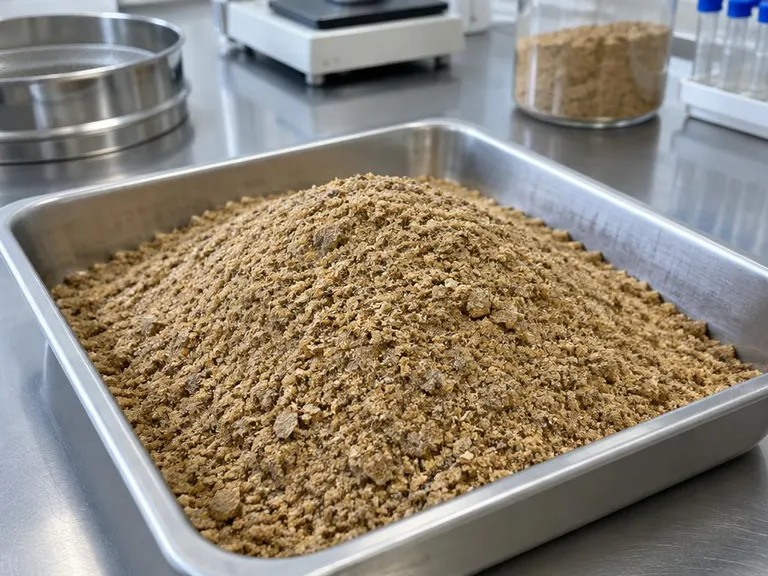
Fish Meal — Illustrative product sample—not a verified shipment or formulation
Illustrative product sample—not a verified shipment or formulation

Product-specific specification

Fish MealEvidence to request
Product-specific specificationSpecies and raw-material origin; processing and freshness evidence; protein, ash, oxidation and microbiology.

Lot acceptance and traceability

Turn the product checks into a written specification approved by your technical team. Separate guaranteed contractual values from typical information; state units, moisture basis, analytical methods and tolerances. Request a dated, lot-linked certificate of analysis and representative sampling plan. Agree who releases the lot, what happens after an out-of-spec result, and how retained samples and claims are handled. A generic technical sheet is not evidence for the shipment you receive.

Compare delivered offers on the same basis

Use the same grade, quantity, named delivery place, Incoterm, currency and quote date. Separate product, freight, insurance, duties, testing, handling and payment costs; never count included freight twice or unknown charges as zero. Concentrates require an agreed active-content or activity basis. Moisture correction and nutritional equivalence must use measured analysis and qualified approval, not a kilogram-for-kilogram swap. Ask for quote validity and confirm inclusions before comparing totals.

Shipment, storage and repeat supply

State quantity and units per shipment, frequency, requested arrival window, packaging and unloading constraints. Record warehouse temperature/humidity needs, remaining shelf life at arrival, segregation and traceability requirements. Ask the team to obtain dated lead-time proposals and contingency terms; this is not a stock or supplier-availability claim. Product eligibility and import documents must be checked for the actual destination and animal species, not inferred from another market.

Relate sourcing to measured feed conversion

A lower ingredient invoice does not prove a lower cost of animal production. Use the FCR calculator with your own feed consumed, liveweight gain and complete-feed cost over the same period. Keep species, phase, feed basis and measurement method consistent. Do not attribute an FCR change to an additive without comparable evidence; the calculator evaluates inputs, not product efficacy. Any inclusion or reformulation decision belongs to your qualified nutritionist.

Include these details in your RFQ

  • Product, form/grade and approved specification; species and feed phase
  • Quantity and units per shipment; repeat frequency
  • Delivery country, receiving point, Incoterm and requested window
  • Packaging, storage, unloading and remaining shelf-life needs
  • Lot tests, sampling, traceability and required destination documents
  • Offer validity, currency, payment terms and acceptance/claims conditions

Buyer use is free. Ingredient and recurring feed supply are assessed by specification, viable volume/frequency, destination and logistics—not the plant/equipment capital minimum. FeedMatch reviews your request, contacts suitable suppliers and presents responses through the team; no direct buyer–supplier handoff and no guaranteed offers.

Technical and regulatory references

Ready to submit your ingredient RFQ?

Send your specification, quantity and destination for human review; the US$250,000 minimum applies only to plant and equipment projects. FeedMatch reviews and organises your brief before contacting suitable suppliers, then presents responses through FeedMatch—not through direct buyer-to-supplier contact.

Submit your requirements
WhatsApp

Buyer FAQ in your language