See financing options
Minerals

Monocalcium Phosphate

Also known as: MCP · 22% P MCP

Feed-grade monocalcium phosphate, typically 22% P and 16% Ca with high phosphorus availability and a low Ca:P ratio. The standard phosphate for shrimp and high-performance broiler, layer and pig diets.

Short answer: Feed-grade monocalcium phosphate (MCP) typically supplies about 22% phosphorus and 16% calcium with high phosphorus availability, which makes it the standard phosphate for shrimp and high-performance broiler, layer and pig diets that need a low calcium-to-phosphorus ratio. China dominates supply volume, with Morocco, Tunisia and Vietnam serving EU and MENA buyers. FeedMatch Group compares supplier offers on assay, fluorine and heavy-metal limits and landed cost per unit of available phosphorus; supplier and batch evidence must be checked before award.

Applications by species

broilerslayersswineshrimpsalmon

Top global export origins

China Morocco Vietnam Tunisia

Compare origins on the same delivered basis for your discharge port and shipment window with the landed-cost calculator, then request offers through a reviewed RFQ.

Certifications buyers commonly request

Schemes buyers often ask suppliers to document for this ingredient — not a statement that any supplier holds them. FeedMatch asks for the current certificate in the RFQ; check that its scope covers the product and activity in the scheme's own register (see GMP+ and FAMI-QS).

GMP+ FAMI-QS

Buyer considerations

Advantages

  • High phosphorus availability — commonly cited at 90–98% relative to monosodium phosphate
  • Low calcium relative to phosphorus, so the formulator controls Ca:P independently
  • Standard choice for shrimp and other aquaculture diets requiring a low Ca:P ratio
  • Fine, free-flowing granular or powder forms suit premix and on-line dosing

Constraints & risks

  • Price premium per tonne over DCP — only justified where the extra available P or lower Ca is needed
  • More hygroscopic than DCP; needs dry storage and careful handling in humid climates
  • Assay and fluorine content vary by origin and process, so a certificate of analysis is essential

Typical feed-grade MCP specification

Indicative ranges for commercial feed-grade MCP. Actual values vary by producer, rock source and process, so contract against the supplier's guaranteed analysis rather than these figures.

ParameterTypical valueWhy a buyer checks it
Total phosphorus (P)21.0–22.7%The unit you are actually buying — normalise every offer to cost per unit of P.
Calcium (Ca)15.0–17.0%Determines how much limestone the formulation still needs and fixes the Ca:P ratio.
Phosphorus availability~90–98% (relative)MCP's main advantage over DCP; drives the real inclusion rate.
Water-soluble PTypically ≥80% of total PA practical indicator that the product is genuinely mono- rather than di-calcium.
Fluorine (F)Regulated maximum, commonly ≤0.2% (2,000 mg/kg)A defluorination failure is the classic reason a phosphate cargo is rejected.
Heavy metals (Cd, Pb, As, Hg)Within feed-material legal limits of the destination marketPhosphate rock origin drives cadmium in particular.
Moisture≤4%High moisture caking is the commonest handling complaint on MCP.
Particle size / formGranular or powder, per dosing systemGranular for on-line dosing, powder for premix.

Fluorine and heavy-metal limits are set by the destination market's feed legislation. Confirm the limits that apply to your country before contracting.

Buyer comparison

MCP vs DCP for animal feed

Both supply phosphorus and calcium, but the right specification depends on the whole formulation. Compare actual grades and documents, not shorthand names or price per tonne alone. A qualified nutrition professional should approve any substitution or inclusion rate.

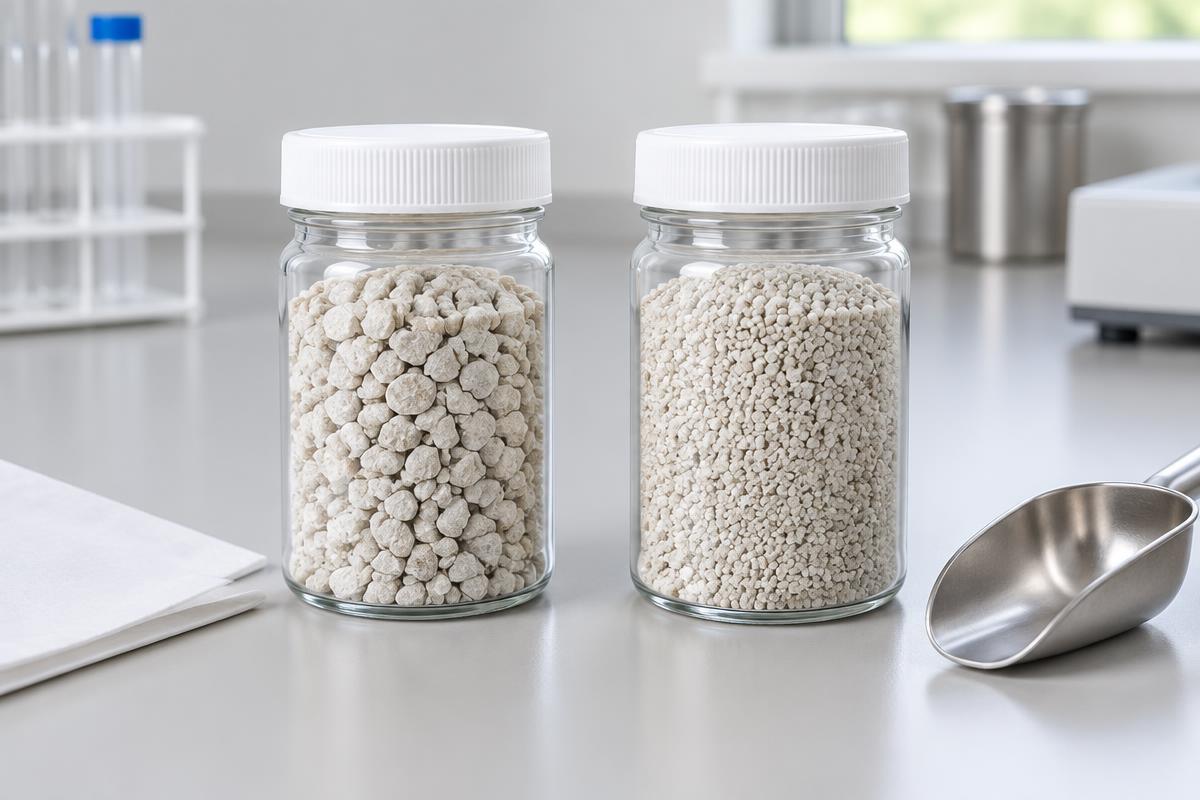
Illustrative laboratory sample jars containing light-colored mineral granules; not verified MCP or DCP products
Illustrative mineral samples only. Appearance cannot establish identity, feed suitability, assay or origin; verify each offered lot by documentation and testing.
Buyer checks for monocalcium phosphate and dicalcium phosphate offers
Buyer checkMCPDCP
Phosphate formMonocalcium phosphateDicalcium phosphate
Phosphorus and calciumCompare the supplier's guaranteed P and Ca assayCompare the supplier's guaranteed P and Ca assay; account for calcium in the whole ration
Phosphorus availabilityRequest the analytical method and evidence used for the proposed gradeRequest the same method and evidence; do not treat total P as available P
Physical formCheck granule size, moisture and flow for the dosing systemCheck granule size, moisture and flow for the dosing system
Safety and documentationBatch COA, fluorine and heavy-metal results for the destination marketBatch COA, fluorine and heavy-metal results for the destination market
Commercial comparisonDelivered cost on an agreed available-P basisDelivered cost on the same available-P basis

How to compare two offers

Ask for a lot-specific certificate of analysis, the proposed formulation basis and a delivered quotation to the same destination. Have a qualified professional assess available phosphorus, the calcium balance, phytase assumptions and applicable safety limits before calculating an equivalent cost or changing the ration.

Do not use indicative ranges on this page as a contract specification or a guarantee of product performance.

What actually moves the monocalcium phosphate price you are quoted

What actually moves the number an MCP supplier quotes you, and what a buyer can do about each one:

Phosphate rock and sulphuric acid cost

MCP is produced from phosphate rock and acid, so its price tracks the upstream phosphate and fertiliser complex rather than the feed market.

Buyer action: Do not assume feed-market seasonality applies. Track phosphate fertiliser direction when timing larger contracts.

Assay (actual % P)

A 21.0% P product and a 22.5% P product are not the same purchase; the difference is roughly 7% more material for the same phosphorus.

Buyer action: Convert every offer to cost per unit of available phosphorus before comparing headline prices per tonne.

Origin and freight

China dominates export volume; Morocco, Tunisia and Vietnam serve EU and MENA buyers with shorter lead times.

Buyer action: Compare on a landed basis. A lower FOB price from a distant origin often loses once freight, duty and lead time are included.

Form and packaging

Granular, powder, 25 kg bags, big bags and bulk each carry different handling and packaging costs.

Buyer action: Specify the form your dosing system actually needs — paying for granular you then have to grind is waste.

Phytase strategy

Applying a phytase matrix typically removes several kilograms of inorganic phosphate per tonne of feed.

Buyer action: Settle the phytase matrix before tendering, so the tonnage you quote is the tonnage you will buy.

Monocalcium Phosphate sourcing questions buyers should settle before an RFQ

These questions turn a broad market search into a comparable procurement brief. Values, doses, substitutions and performance expectations must be approved by the buyer's qualified nutrition, veterinary, feed-science, safety and regulatory advisers.

What should a monocalcium phosphate RFQ specify?

State the mineral source, guaranteed element content rather than compound weight alone, physical form, contaminant and heavy-metal limits, destination-market authorisation and the intended premix or complete-feed use.

How should buyers compare monocalcium phosphate supplier quotations?

Compare delivered cost per kilogram of the declared element, not price per kilogram of compound. Include source form, bioavailability evidence, contaminants, testing and the approved inclusion basis.

Which documents should a monocalcium phosphate supplier provide?

Request a current specification, technical and safety data, recent batch certificates of analysis, manufacturing and feed-safety certification, destination registration where required, allergen or GMO status where relevant, traceability details, shelf-life evidence and a clear procedure for non-conforming lots. Verify documents and claims before approval.

What changes monocalcium phosphate availability and the price offered to buyers?

The quoted result can change with feedstock or active-material availability, production concentration, plant outages, energy and freight costs, packaging, order size, Incoterm, destination registration, testing requirements and delivery window. FeedMatch does not publish a live price; buyers should request a firm, time-bound quotation against one controlled specification.

Supplier qualification checklist: monocalcium phosphate

The checks that separate a reliable MCP supplier from a cargo that gets rejected at intake:

CheckEvidence to requestAcceptReject
Guaranteed analysis on the contractTotal P, Ca, water-soluble P and moisture stated as guaranteed minimums or maximums, not 'typical'.Guarantees written into the contract with a tolerance and a remedy.Only a typical-analysis sheet, or figures quoted verbally.
Batch certificate of analysisA batch-specific COA from the producing plant, with batch number and date, matching the shipped lot.Batch COA traceable to the delivered lot.A generic or undated COA, or one that cannot be tied to the batch.
Fluorine and heavy metalsFluorine, cadmium, lead, arsenic and mercury tested against the destination market's feed limits.Results inside the legal limits of the country of use, from a recognised laboratory.Missing fluorine result, or limits quoted for a different market than yours.
Feed-safety certificationA valid GMP+, FAMI-QS or equivalent certificate covering the producing site, not only the trader.Current certificate naming the production site and the product scope.An expired certificate, or one covering a trading office only.
Independent verification rightA contractual right to third-party sampling and analysis at load or discharge.Named inspection company, agreed sampling method, agreed cost split.Supplier's own analysis declared final.

Buying this as part of your additive programme

Monocalcium Phosphate is bought inside the additives category, where specification discipline — not price per kilogram — decides the real cost. Our feed additives procurement guide covers how to write a quotable specification, which certifications and registrations to demand (FAMI-QS, GMP+, EU Reg. 1831/2003), when a premix beats buying straights, and how to normalise offers to delivered cost per unit of active.

Official standards and regulatory references

Confirm the current rule for the exact product, target species and destination market before contracting. Private assurance schemes may support supplier qualification but do not replace applicable law.

Key specifications to contract

Each parameter is explained in the specification library — what it measures, how it is tested and what to verify.

Laboratory testing programme

TestWhy buyers run it
Assay of the declared elementConfirms the purchased mineral content, not just the salt identity
Heavy metals (Pb, Cd, As, Hg) by ICP-MSMineral sources are the primary heavy-metal entry route into feed
Fluorine, where phosphates are involvedRegulated and tightly limited in phosphate feed grades
Particle size distributionSegregation control in premix and mash
Acid-insoluble ash / insolublesDetects inert filler

Storage, packaging, transport & handling

Shelf life

Generally 12–24 months when dry and sealed; caking risk rises sharply with humidity exposure.

Storage recommendations
  • — Store sealed and off the floor with humidity control
  • — Segregate from vitamins and organic materials to limit catalytic degradation
  • — Keep clearly marked to prevent misidentification of visually similar salts
Packaging options
  • — 25 kg bags with moisture barrier liner
  • — Bulk bags for high-volume macro minerals
  • — Sealed drums for hygroscopic salts
Transportation considerations
  • — Protect from moisture ingress at every transfer
  • — Avoid stacking pressure that compacts hygroscopic salts
Handling best practices
  • — Use dust extraction — mineral dust is abrasive and a respiratory hazard
  • — Verify granulometry matches the carrier for mixing homogeneity
  • — Calibrate micro-dosing equipment against actual bulk density

Procurement considerations

  • —Verify heavy metals against destination limits at complete-feed level, not only per ingredient
  • —Specify the mineral form and solubility, since bioavailability differs between salts
  • —Require lot-specific assay rather than a typical-analysis sheet
Common industry standards
  • — GMP+ FSA / FAMI-QS feed safety scheme certification of the producing site
  • — ISO/IEC 17025 accredited analysis for contractual and safety parameters
  • — HACCP plan covering the specific material and process route
  • — Codex Alimentarius Code of Practice on Good Animal Feeding
  • — Destination-market maxima for undesirable substances in feed materials

Typical risks & common mistakes

Typical risks
  • — Heavy-metal accumulation across multiple mineral inputs
  • — Caking and dosing failure after humidity exposure
  • — Substitution with a cheaper, less bioavailable salt form
Common mistakes
  • — Comparing mineral offers on product weight rather than on the element delivered
  • — Testing finished feed only

Species & industry intelligence

BroilersLayersSwineShrimpSalmon

Related knowledge

Educational reference maintained by FeedMatch Group. We do not rank, recommend or endorse manufacturers; values are indicative industry references and never replace testing of the delivered lot.

Exact grades buyers order

Related buyer resources

Before you tender, settle the phosphate source and the availability maths:

Purchase specification and commercial terms

What to agree before you buy feed ingredients

Short answer: suppliers can only quote like-for-like when the specification and the commercial terms are written down. Use the two checklists below. Your nutritionist sets the nutrient values; this page does not suggest any limits, prices or tolerances.

Specification checklist
Product identityExact name, origin and process (e.g. solvent-extracted soybean meal), not a generic category.
Analytical specificationParameters with limits and basis: protein, moisture, fat, fibre, ash or the key nutrient for that ingredient.
Contaminant limitsMycotoxins, salmonella, heavy metals and residues under your local feed regulation.
Sampling and test methodWho samples, where (loading or arrival), how many samples, which laboratory and method.
Packaging and handlingBulk, big bag or bags; storage and handling conditions in transit.
Documents per lotCertificate of analysis, phytosanitary or health certificate and certificate of origin, as required.
Commercial terms checklist
Price basisPrice per tonne in one currency with an Incoterms® 2020 rule and named place (e.g. CIF named port).
Quantity and toleranceContract tonnage, delivery schedule and the agreed quantity tolerance.
Payment termsDeposit, letter of credit or open account, and the documents that trigger payment.
Quality acceptanceWhich analysis is final (loading or arrival), how a referee sample is resolved, and price adjustment or rejection rules.
Claims windowHow many days after delivery a quality or quantity claim can be raised, and what evidence is needed.
Delivery and delayDelivery window, who bears late-delivery costs and force majeure wording.
ValidityHow long the offer stays valid and how price changes are handled for later deliveries.

Compare offers on cost per kg of output, not price per tonne alone: a cheaper ingredient that worsens feed conversion can cost more per kg produced.

Calculators and checklists are free. Plant and equipment projects start from USD 250,000; ingredient and feed supply has no such minimum. Our team reviews each request before contacting suppliers. Incoterms® is a trademark of the International Chamber of Commerce.

Your next step, by buying intent

Pick the lane that matches where you are in the purchase — each link goes to the exact tool or page for that step.

Availability and the ability to trade depend on the applicable law and on the licences and approvals required, which differ by product and country. Each participant is responsible for the rules that apply to its own role: suppliers for the products they offer and supply, buyers for their own import permissions and checks. FeedMatch is not a manufacturer, importer, exporter, seller or regulatory approver; it facilitates sourcing and screens requests before any supplier is contacted. Regulation & responsibilities.

Frequently asked questions

MCP vs DCP: which feed phosphate is the better buy?

MCP typically supplies about 22% phosphorus and 16% calcium with high phosphorus availability; DCP typically supplies about 18% phosphorus and 23–25% calcium at lower availability and a lower price per tonne. MCP suits shrimp and high-performance monogastric diets that need a low Ca:P ratio; DCP is often cheaper where the ration can carry the extra calcium. Compare offers on landed cost per unit of available phosphorus, not price per tonne, and check the certificate of analysis for assay and fluorine limits.

What is MCP in animal feed?

MCP is monocalcium phosphate, an inorganic feed phosphate that supplies phosphorus and calcium. Feed grade typically carries about 22% phosphorus and 16% calcium with high phosphorus availability, which makes it the reference phosphate where the diet needs phosphorus without much extra calcium.

What is the difference between MCP and DCP?

MCP typically supplies around 22% P and 16% Ca at high availability; DCP typically supplies around 18% P and 23–25% Ca at lower availability and a lower price per tonne. MCP is chosen where a low calcium-to-phosphorus ratio or maximum available phosphorus matters; DCP is often cheaper per unit of available P where the ration can carry the extra calcium.

Is MCP required for shrimp feed?

Shrimp diets need a low calcium-to-phosphorus ratio, so MCP or MDCP is the standard phosphate source. DCP's high calcium content makes it a poor fit for most shrimp formulations.

What is the difference between MCP and MDCP?

MDCP (mono-dicalcium phosphate) is a blend of both salts, giving a Ca:P ratio and availability between MCP and DCP, usually at a price between the two. It is a common compromise where MCP's cost premium is not justified.

Where is MCP produced?

China dominates global export volume. Morocco and Tunisia are significant producers serving EU and MENA buyers, and Vietnam supplies regional Asian demand.

How much MCP goes into a tonne of feed?

Typically 3–15 kg per tonne depending on species, phase and the rest of the mineral package. Applying a phytase matrix commonly removes several kilograms per tonne of inorganic phosphate.

How should buyers compare two MCP offers?

Convert both to cost per unit of available phosphorus on a landed basis: divide the delivered price per tonne by (total P% × availability). Then check the certificate of analysis for assay, moisture, fluorine and heavy metals against the limits of the market where the feed will be used.

For commercial farm feed buyers

Buying monocalcium phosphate for a commercial farm

Best for
Commercial farms, integrators, distributors and feed buyers sourcing monocalcium phosphate and related feed, additives or nutrition supply on a recurring commercial scale — not pet food, hobby farms or backyard quantities.
Animal species covered
Broilers and layers, dairy and beef cattle, pigs, tilapia, salmon and shrimp, plus sheep and goats on request.
Typical feed buyer needs
A written specification, suppliers whose documents show they can hold that specification, comparable pricing on the same delivery terms, documented quality (CoA, certifications) and a supply schedule that matches production.
Bulk feed and recurring supply
Most requests are bulk or big-bag volumes on monthly or quarterly contracts. Volume per delivery, storage capacity on farm and contract length change price more than the headline per-tonne quote.
Feed additives and premix
Premix, amino acids, minerals, vitamins, enzymes, organic acids, toxin binders and other additives can be quoted alongside compound feed or ingredients so one supplier comparison covers the whole ration.
What affects feed cost
Raw-material origin and specification, inclusion rates, freight and Incoterms, packaging, order volume, payment terms, currency and certification requirements. Landed cost, not ex-works price, decides the winner.
RFQ checklist
Species and production stage, tonnes per month, target specification, delivery port or farm location, packaging, required certifications, first delivery date and contract duration.
Supplier matching process
You define the requirement, FeedMatch structures the RFQ, sends it to relevant qualified suppliers, and returns comparable offers side by side so you can negotiate on equal terms.
Buyer is not charged
Farm buyers are not charged to submit a requirement, receive matched suppliers or compare quotes.

FeedMatch helps farm buyers compare feed suppliers, nutrition providers, additives suppliers and related solutions. FeedMatch is an intermediary and does not manufacture feed or provide financing directly.

Choose your path

What do you need next?

  • Equipment: USD 250K+
  • Supplier-neutral
  • Human-reviewed
I need to buy feed

Finished feed for my animals

Poultry, dairy & beef, pig and aquafeed, plus bulk feed contracts.

I need ingredients

Ingredients, premixes & additives

Soybean meal, grains, DDGS, fish meal, amino acids, vitamins, minerals, premixes and additives.

Suppliers are contacted only after authorized human review. Plant and equipment projects generally from USD 250,000; feed and ingredient supply has no such minimum.

How it works

Monocalcium Phosphate: Sourcing brief and purchase decisions

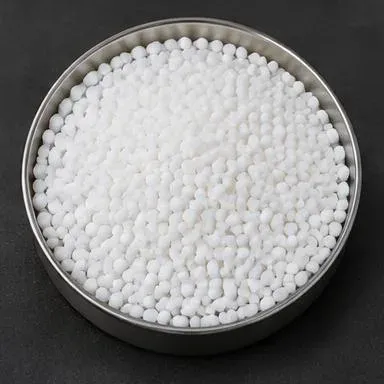
Monocalcium Phosphate — Illustrative product sample—not a verified shipment or formulation
Illustrative product sample—not a verified shipment or formulation

Product-specific specification

Monocalcium PhosphateEvidence to request
Product-specific specificationMCP identity and soluble phosphorus method; calcium/phosphorus balance, fluorine and heavy metals; compare DCP on an approved nutrient basis.

Lot acceptance and traceability

Turn the product checks into a written specification approved by your technical team. Separate guaranteed contractual values from typical information; state units, moisture basis, analytical methods and tolerances. Request a dated, lot-linked certificate of analysis and representative sampling plan. Agree who releases the lot, what happens after an out-of-spec result, and how retained samples and claims are handled. A generic technical sheet is not evidence for the shipment you receive.

Compare delivered offers on the same basis

Use the same grade, quantity, named delivery place, Incoterm, currency and quote date. Separate product, freight, insurance, duties, testing, handling and payment costs; never count included freight twice or unknown charges as zero. Concentrates require an agreed active-content or activity basis. Moisture correction and nutritional equivalence must use measured analysis and qualified approval, not a kilogram-for-kilogram swap. Ask for quote validity and confirm inclusions before comparing totals.

Shipment, storage and repeat supply

State quantity and units per shipment, frequency, requested arrival window, packaging and unloading constraints. Record warehouse temperature/humidity needs, remaining shelf life at arrival, segregation and traceability requirements. Ask the team to obtain dated lead-time proposals and contingency terms; this is not a stock or supplier-availability claim. Product eligibility and import documents must be checked for the actual destination and animal species, not inferred from another market.

Relate sourcing to measured feed conversion

A lower ingredient invoice does not prove a lower cost of animal production. Use the FCR calculator with your own feed consumed, liveweight gain and complete-feed cost over the same period. Keep species, phase, feed basis and measurement method consistent. Do not attribute an FCR change to an additive without comparable evidence; the calculator evaluates inputs, not product efficacy. Any inclusion or reformulation decision belongs to your qualified nutritionist.

Include these details in your RFQ

  • Product, form/grade and approved specification; species and feed phase
  • Quantity and units per shipment; repeat frequency
  • Delivery country, receiving point, Incoterm and requested window
  • Packaging, storage, unloading and remaining shelf-life needs
  • Lot tests, sampling, traceability and required destination documents
  • Offer validity, currency, payment terms and acceptance/claims conditions

Buyer use is free. Ingredient and recurring feed supply are assessed by specification, viable volume/frequency, destination and logistics—not the plant/equipment capital minimum. FeedMatch reviews your request, contacts suitable suppliers and presents responses through the team; no direct buyer–supplier handoff and no guaranteed offers.

Technical and regulatory references

Ready to submit your ingredient RFQ?

Send your specification, quantity and destination for human review; the US$250,000 minimum applies only to plant and equipment projects. FeedMatch reviews and organises your brief before contacting suitable suppliers, then presents responses through FeedMatch—not through direct buyer-to-supplier contact.

Submit your requirements
WhatsApp

Buyer FAQ in your language