
How Industrial Feed Mills Source Ingredients in Bulk
Bulk ingredient buying at an industrial mill starts with the formula and the production plan, not with a price list. This guide walks through the steps mills use to turn demand into firm, comparable supply.
Short answer · reviewed November 2026
Short answer: How Industrial Feed Mills Source Ingredients in Bulk
Short answer: industrial feed mills source bulk ingredients by converting approved formulas and the production plan into monthly demand per ingredient, writing a specification for each, qualifying suppliers against it, choosing a mix of term and spot purchases, and checking every arrival against the contract before it…
Key takeaways
- Demand comes from two numbers the plant already owns: planned tonnage per finished feed and the inclusion rate of each ingredient in that feed.
- A specification is what makes offers comparable.
- Qualification checks that a supplier can deliver the specification repeatedly, not once.
- For the trade-offs of fixed, floating and index-linked pricing, see feed ingredient price risk contracts.
- Agree before shipment how arrival will be checked: who samples, which laboratory tests, which parameters decide acceptance, and how a failed result is settled.
Nutrition Desk
Feed Nutritionists
Short answer: industrial feed mills source bulk ingredients by converting approved formulas and the production plan into monthly demand per ingredient, writing a specification for each, qualifying suppliers against it, choosing a mix of term and spot purchases, and checking every arrival against the contract before it reaches the silo.
How does a mill turn formulas into ingredient demand?
Demand comes from two numbers the plant already owns: planned tonnage per finished feed and the inclusion rate of each ingredient in that feed. Planned tonnes × inclusion % gives the ingredient tonnage for the period. Sum across all feeds, then compare it with storage capacity and lead times to decide order size and frequency. The feed formulation calculator and the bulk feed order planner help structure this arithmetic with your own inputs.
Revisit the demand plan whenever formulas change. A switch from one protein source to another changes not only the tonnage but also the specification and documents the buyer must request.
What goes into a bulk ingredient specification?
A specification is what makes offers comparable. For each ingredient, mills typically state:
- Product and grade (for example soybean meal by protein level and process)
- Analytical limits agreed with the nutritionist: moisture, protein, fat, fibre, ash as relevant
- Contaminant limits that apply to the ingredient and destination market, such as mycotoxins
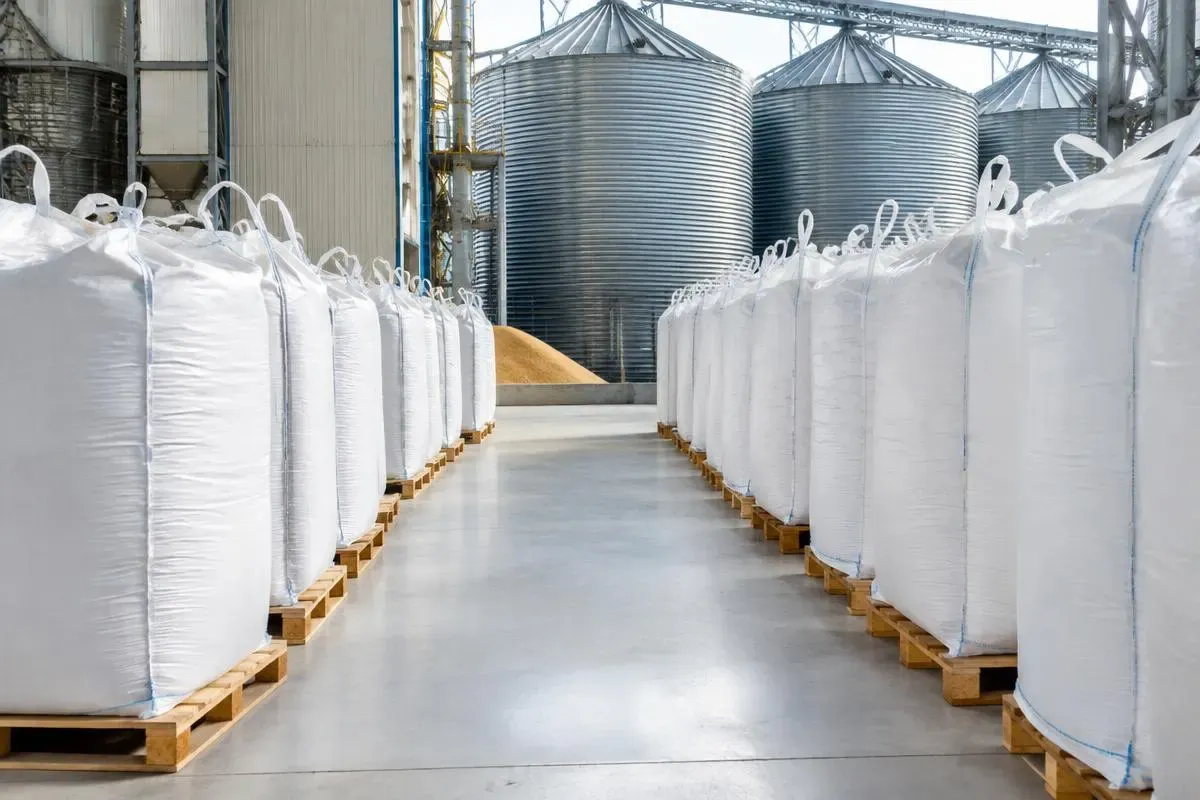
- Physical form, packaging (bulk, big bags) and acceptable tolerances
- Volume per delivery, delivery window, destination and Incoterm
- Documents required with each lot, including a batch certificate of analysis
Ingredient pages such as soybean meal, fish meal and premixes list the specification fields buyers usually state for each input.
How are bulk suppliers qualified?
Qualification checks that a supplier can deliver the specification repeatedly, not once. Typical evidence includes recent lot certificates, registration or licences required in the destination country, references for similar volumes, and an audit or third-party inspection for large programmes. Treat stated capacity and certifications as claims until verified with the issuing body or on site. The feed supplier scorecard gives a structure for recording this evidence.
Term contract or spot purchase?
| Approach | When mills use it | What to watch |
|---|---|---|
| Term contract | Core ingredients with steady demand | Price mechanism, volume tolerance, delivery schedule, quality claims |
| Spot purchase | Peaks, substitutions, opportunistic buying | Specification drift, documents, short lead times |
| Index-linked | Volatile commodities | Which index, fixing dates, how premiums are set |
| For the trade-offs of fixed, floating and index-linked pricing, see feed ingredient price risk contracts. |
What should be checked when a lot arrives?
Agree before shipment how arrival will be checked: who samples, which laboratory tests, which parameters decide acceptance, and how a failed result is settled. A supplier certificate describes the supplier's sample; an independent arrival sample describes what you received. The sampling and incoming inspection plan covers sampling methods in more detail.
How do storage and logistics change the real cost?
Bulk buying only saves money if the plant can receive and store the lot without quality loss. Silo or warehouse capacity, moisture control, rotation and handling losses all affect the cost per usable tonne. Compare offers on landed cost — price plus freight, duties, insurance, testing and handling — using the landed-cost comparison and the guide to storing bulk feed ingredients.
Where does FeedMatch fit?
FeedMatch works as a human-led, supplier-neutral procurement service. A buyer submits one structured request; the team reviews it, contacts suitable suppliers and presents their responses for the buyer to compare. Buyers do not contact suppliers directly through the platform, and the service applies a US$250,000 minimum to all purchases.
Next step: send a structured ingredient RFQ with your specification, volumes and delivery window.
Frequently asked questions
- Where should a feed mill start when sourcing ingredients in bulk?
- Start from the approved formulas and the production plan. Multiply planned tonnage per feed by each ingredient's inclusion rate to get monthly demand, then add a safety margin agreed with the plant. That demand, plus a written specification, is what suppliers quote against.
- Should a mill buy on spot or on contract?
- Most mills use a mix. Core high-volume ingredients are often covered by term contracts with agreed delivery windows, while a share stays open for spot purchases. The right split depends on storage capacity, cash position and how much price risk the business accepts.
- Does FeedMatch supply ingredients?
- No. FeedMatch is a managed procurement service: the buyer submits a request, the team reviews it and contacts suitable suppliers, and responses are presented to the buyer. FeedMatch does not sell or hold stock.
Feed industry regions we work with
Feed procurement is local before it is global: raw material basis, freight and installation costs change by region. These are the areas buyers most often name when defining a feed project in English.
United States
Cities and provinces
Iowa · Nebraska · Georgia · Arkansas · Texas · North Carolina
Corn and soybean meal basis with large integrated poultry, swine and dairy operations.
United States →United Kingdom and Ireland
Cities and provinces
East Anglia · Yorkshire · Lincolnshire · Northern Ireland · Munster
Compound feed and imported protein logistics through east coast and Irish Sea ports.
United Kingdom and Ireland →Gulf and East Africa import markets
Cities and provinces
Jeddah · Dubai · Mombasa · Djibouti
Import-driven feed supply where landed cost and port logistics dominate the decision.
Gulf and East Africa import markets →FeedMatch is supplier-neutral. Regional context helps define the requirement; pricing always comes from manufacturer quotations.
Move from insight to procurement
Turn the ideas in this article into a live procurement action — supplier-neutral, buyer-controlled, fully documented.