Pull to refresh
FeedMatch Group logo — wheat sheaf and interlocking chevrons emblem representing the independent animal feed procurement and ingredient intelligence platform
FeedMatchGroup
DashboardSign inRequest Feed Quote
Financing for animal feed and feed-ingredient purchasesSee financing options→←
Back to home
  1. Home
  2. /
  3. Feed Insights
  4. /
  5. Procurement
  6. /
  7. Feed Supplier Scorecard: How to Compare Offers and Track Performance
Procurement· Oct 2026· 8 min read

Feed Supplier Scorecard: How to Compare Offers and Track Performance

Use separate quotation and performance scorecards to compare feed suppliers consistently, document award decisions and track delivery against agreed requirements.

Short answer · reviewed October 2026

Short answer: Feed Supplier Scorecard: How to Compare Offers and Track Performance

!Two-stage feed supplier scorecard showing quotation evaluation before award and delivery performance tracking after award

Key takeaways

  • !Two-stage feed supplier scorecard showing quotation evaluation before award and delivery performance tracking after award
  • - Farm feed storage calculator - Feed mill energy calculator - Feed landed cost calculator - Feed buyer FAQ: 100 questions
PD

Procurement Desk

Procurement Analysts

Feed procurement scorecard comparing quotation criteria with post-award supplier performance measures

Short answer A feed supplier scorecard should separate two decisions: which offer meets the purchase requirements, and whether the awarded supplier delivers as agreed. First apply non-negotiable specification, regulatory and commercial gates. Then score comparable offers using disclosed weights and evidence. After award, start a separate performance record based on actual deliveries, documents, invoices and claims. Do not treat a persuasive quotation as evidence of reliable performance. Record the reason, evidence source and responsible reviewer behind every score so another buyer can reproduce the assessment.
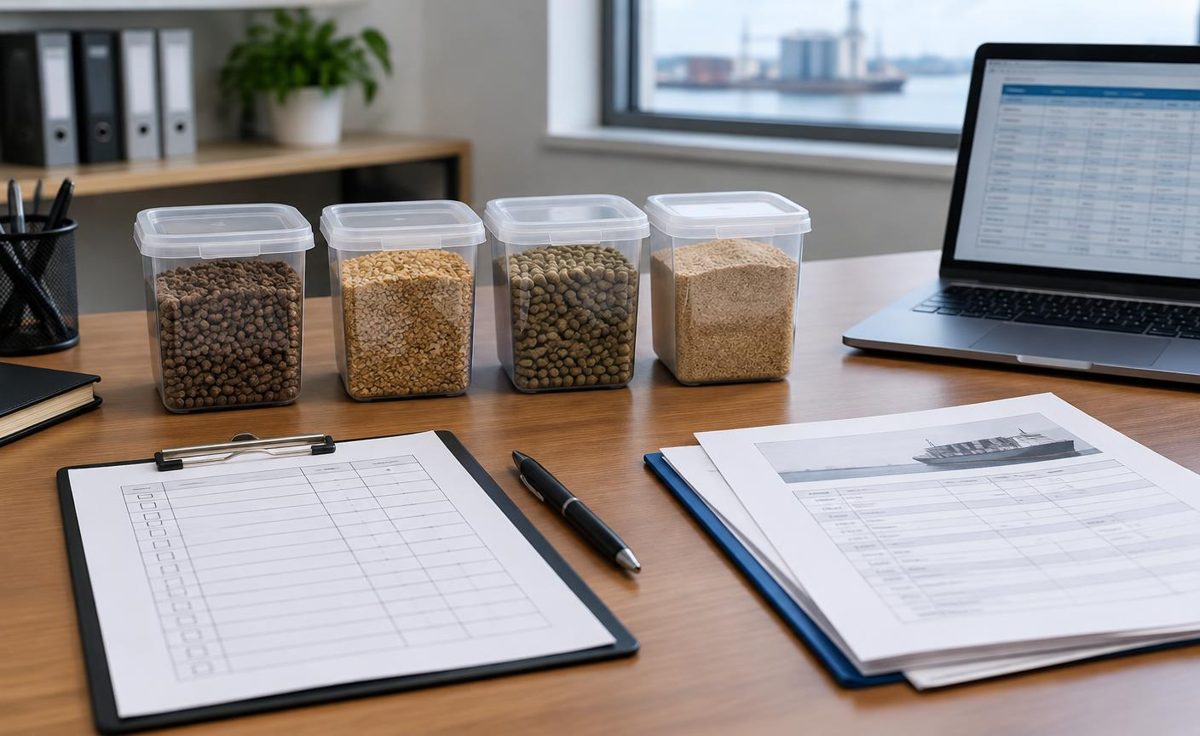
Two-stage feed supplier scorecard showing quotation evaluation before award and delivery performance tracking after award

How should buyers structure the two scorecards? ### Keep promises separate from results Use one quotation sheet per sourcing event and one performance sheet per supplier, product and receiving location. Keeping locations separate prevents good service at one mill from masking recurring failures at another. Before requesting offers, define the required product, specification version, volume, packaging, destination, delivery window and purchasing basis. Include acceptance methods and contractual remedies. Send the same requirements to every participant; [prepare the RFQ intake](/rfq-intake) to organise that information. Apply pass/fail gates before weighted scoring. Examples include prohibited substances, essential legal documentation, unacceptable payment exposure or failure to meet a critical nutrient limit. A low price must not offset a failed safety gate. Give each record an owner, assessment date, evidence reference and status: pass, fail or clarification required. Keep quotation results separate from historical performance; if history informs an award, show it as a distinct decision input.

How do you make feed offers genuinely comparable? ### Normalise the purchasing basis Check that each quotation addresses the same species or intended use, ingredient identity, grade, analytical methods, nutrient limits, contaminant limits and packaging. Identify whether figures are guarantees, typical values or results from a particular lot. A sample certificate of analysis does not establish what a future shipment will contain. Compare landed cost at the same named receiving point, currency, quantity and delivery basis. Include freight, insurance, duties, brokerage, handling, inland transport and non-recoverable taxes where applicable. Show recoverable taxes separately as cash-flow items. Record exclusions rather than treating unknown charges as zero. ### Illustrative calculation > **Illustrative inputs only—not live prices or expected results:** Product cost of USD 310/t + freight of USD 24/t + insurance and handling of USD 6/t + inland transport of USD 10/t = USD 350/t landed. At an illustrative 90% dry matter, cost per tonne of dry matter = 350 ÷ 0.90 = USD 388.89. General formula: landed cost per tonne of dry matter = landed cost per as-received tonne ÷ dry-matter fraction. Dry-matter adjustment does not establish nutritional interchangeability. Use the [COA and dry-matter quotation guide](/blog/compare-feed-ingredient-quotes-coa-dry-matter) alongside the [supplier comparison calculator](/feed-tco-supplier-comparison-calculator), with consistent assumptions and explicit uncertainty.

What should a supplier scorecard template contain? The following supplier scorecard template uses illustrative weights. Set your weights before reviewing offers and retain the version used for each decision. Higher-risk ingredients may warrant different priorities. | Criterion | Quotation weight | Quotation evidence | Performance weight | Post-award evidence | |---|---:|---|---:|---| | Specification compliance | 30% | Alignment with limits and test methods | 30% | Lot results, deviations and acceptance | | Comparable landed cost | 25% | Normalised cost and exclusions | 10% | Invoices against agreed charges | | Documentation | 15% | Required documents and submission plan | 10% | Accuracy, completeness and timeliness | | Lead time | 10% | Written production and dispatch commitments | 5% | Milestones against commitments | | Delivery | 5% | Proposed delivery obligations | 20% | On-time, in-full receipts | | Claims handling | 5% | Agreed process and remedies | 10% | Resolution and corrective action | | Communication | 5% | Clarity and escalation arrangements | 10% | Useful, timely updates | | Payment terms | 5% | Credit period, security and exposure | 5% | Compliance with agreed terms | | **Total** | **100%** | | **100%** | | Score each applicable criterion from 0 to 5 against written anchors: 0 means unacceptable, 3 means meets requirements, and 5 means materially exceeds a defined requirement. Define intermediate scores too. For cost, set event-specific thresholds after normalisation rather than awarding points from intuition. Calculate the total as the sum of each score divided by five, multiplied by its percentage weight. Mark missing evidence as pending; never silently award a midpoint. Resolve critical gaps before award and record any genuinely inapplicable criterion with an approved weighting adjustment.

How should documentation and payment terms be assessed? Check document scope, issuer, validity dates, product coverage and consistency with the seller’s legal entity. Request destination-specific documents early. Separate documents needed for quotation evaluation from shipment-specific originals or electronic records required before dispatch, customs clearance or acceptance. Do not score document volume. Score whether the required evidence is complete, relevant and usable. Flag contradictions between the specification, COA, label and offer for clarification. For payment terms, compare deposit requirements, payment triggers, credit days, currency exposure, bank charges and security arrangements. A longer credit period is not automatically better if conditions create unacceptable risk. Any financing-cost comparison needs a buyer-approved rate and timing assumption. Have appropriate specialists review unfamiliar trade-finance instruments and contractual obligations.

How should post-award performance be measured? Start the performance vendor scorecard when the first order is released. Keep the original commitments and approved changes visible; do not overwrite a missed date with a revised promise. Define on-time, in-full delivery before measuring it. Specify whether the unit is an order, line or shipment; which receipt date counts; the acceptable window; and the quantity tolerance. Report numerator and denominator alongside the percentage. One successful receipt is not equivalent evidence to a sustained delivery history. Track specification compliance by received lot, supported by the agreed sampling and testing process. Record quarantined, rejected and conditionally accepted material separately. For documentation, measure whether the complete, correct pack arrived by the agreed deadline. Compare invoices with contracted prices and authorised changes, not with old quotation assumptions. Review operational exceptions promptly and aggregate scores at an agreed cadence. Show incident severity beside averages: a serious safety event requires escalation even when the overall score remains high.

How do claims and communication become measurable? Maintain a claims log with shipment and lot references, issue category, evidence, notification date, responsible owner, requested remedy and closure status. Agree acknowledgement, investigation and resolution targets contractually rather than assuming a universal benchmark. Assess whether the supplier preserves traceability, investigates causes, implements corrective action and completes the agreed remedy. An unresolved claim should remain open; a credit note alone may not prevent recurrence. Score communication on usefulness, accuracy and compliance with agreed escalation rules—not message volume. Record whether disruption notices arrived early enough for the buyer to act. Distinguish supplier-controlled failures from carrier, port or buyer-caused delays, while retaining evidence of how the supplier managed the exception.

What common mistakes distort supplier comparisons? Common mistakes include changing weights after seeing prices, confusing typical analysis with guaranteed limits, comparing different delivery terms and treating missing charges as zero. Another error is double counting: a late shipment should not automatically receive maximum penalties under lead time, delivery and communication. Define what each measure captures and document related incidents. Avoid averaging away critical breaches, importing unsupported reputation scores or comparing suppliers with radically different order profiles. Keep raw results visible beside scores. A feed supplier comparison should explain trade-offs, not hide them behind a single ranking.

What is the next practical step for a buying team? Pilot the scorecard on one purchase event, then review the first completed deliveries before expanding it. ### Implementation checklist - Confirm specification gates, evidence owners and acceptance methods. - Fix weights, scoring anchors and cost assumptions before evaluation. - Obtain clarification for gaps and document the award rationale. - Transfer contractual commitments into the performance sheet. - Schedule reviews and assign corrective-action owners. For [procurement workflow support](/procurement), FeedMatch is human-led and supplier-neutral, serving commercial opportunities of USD 250,000 or more, with human review before any supplier contact. Submitted documents and relevant public records can be reviewed; FeedMatch is not a certification body and does not audit factories. The buyer retains supplier selection responsibility. Tools and calculators provide preliminary planning outputs and do not replace a nutritionist, engineer, laboratory, lawyer, financial adviser or other relevant specialist.

What else do buyers ask about supplier scorecards? ### Should the cheapest quotation win? Not automatically. Apply mandatory gates first, then compare landed cost, contractual risk and other weighted criteria. ### Can a new supplier receive a performance score? Only for observed activity. Keep untested performance fields pending rather than converting quotation promises into results. ### How often should scores be reviewed? Record each relevant receipt and exception. Set review frequency according to purchasing volume, product risk and incident severity. ### Should every ingredient use identical weights? No. Use consistent governance, but adapt weights and mandatory gates to the ingredient’s risks before requesting offers. ### What evidence should buyers retain? Keep specification versions, quotations, clarifications, contracts, lot documents, receipt records, invoices and claims evidence linked to each assessment.

Related pages on FeedMatch

  • Farm feed storage calculator
  • Feed mill energy calculator
  • Feed landed cost calculator
  • Feed buyer FAQ: 100 questions

Frequently asked questions

Should the cheapest quotation win?
Not automatically. Apply mandatory gates first, then compare landed cost, contractual risk and other weighted criteria.
Can a new supplier receive a performance score?
Only for observed activity. Keep untested performance fields pending rather than converting quotation promises into results.
How often should scores be reviewed?
Record each relevant receipt and exception. Set review frequency according to purchasing volume, product risk and incident severity.
Should every ingredient use identical weights?
No. Use consistent governance, but adapt weights and mandatory gates to the ingredient’s risks before requesting offers.
What evidence should buyers retain?
Keep specification versions, quotations, clarifications, contracts, lot documents, receipt records, invoices and claims evidence linked to each assessment.

Explore related on FeedMatch

  • Browse verified feed suppliers
  • Feed & ingredient categories

Next steps for feed buyers

Turn this article into a procurement brief. A FeedMatch advisor reviews every request before any supplier is contacted.

  • Feed ingredient specifications
  • Feed and feed-mill calculators
  • Shortage calculators: stock, ration, storage
  • Feed procurement guides
  • Send a structured RFQ →

Related Solutions Across Global B2B Group

Complementary supplier-neutral platforms in the Global B2B Group family.

  • Explore the wider procurement ecosystem — specialized supplier-neutral platforms across industrial verticals.

    Visit Global B2B Group

Feed industry regions we work with

Feed procurement is local before it is global: raw material basis, freight and installation costs change by region. These are the areas buyers most often name when defining a feed project in English.

United States

Cities and provinces

Iowa · Nebraska · Georgia · Arkansas · Texas · North Carolina

Corn and soybean meal basis with large integrated poultry, swine and dairy operations.

United States →

United Kingdom and Ireland

Cities and provinces

East Anglia · Yorkshire · Lincolnshire · Northern Ireland · Munster

Compound feed and imported protein logistics through east coast and Irish Sea ports.

United Kingdom and Ireland →

Gulf and East Africa import markets

Cities and provinces

Jeddah · Dubai · Mombasa · Djibouti

Import-driven feed supply where landed cost and port logistics dominate the decision.

Gulf and East Africa import markets →

FeedMatch is supplier-neutral. Regional context helps define the requirement; pricing always comes from manufacturer quotations.

Move from insight to procurement

Turn the ideas in this article into a live procurement action — supplier-neutral, buyer-controlled, fully documented.

Get Multiple Quotes Submit one brief — offers from independent feed and ingredient suppliers are compared after human review.Talk to Procurement Experts Route your project to FeedMatch's supplier-neutral procurement desk.Calculate Your Project FCR, feed volume, storage and CIF landed-cost calculators.Browse Feed Ingredients Specifications for grains, protein meals, premixes and additives.

On this page

  • Short answer A feed supplier scorecard should separate two decisions: which offer meets the purchase requirements, and whether the awarded supplier delivers as agreed. First apply non-negotiable specification, regulatory and commercial gates. Then score comparable offers using disclosed weights and evidence. After award, start a separate performance record based on actual deliveries, documents, invoices and claims. Do not treat a persuasive quotation as evidence of reliable performance. Record the reason, evidence source and responsible reviewer behind every score so another buyer can reproduce the assessment.
  • How should buyers structure the two scorecards? ### Keep promises separate from results Use one quotation sheet per sourcing event and one performance sheet per supplier, product and receiving location. Keeping locations separate prevents good service at one mill from masking recurring failures at another. Before requesting offers, define the required product, specification version, volume, packaging, destination, delivery window and purchasing basis. Include acceptance methods and contractual remedies. Send the same requirements to every participant; [prepare the RFQ intake](/rfq-intake) to organise that information. Apply pass/fail gates before weighted scoring. Examples include prohibited substances, essential legal documentation, unacceptable payment exposure or failure to meet a critical nutrient limit. A low price must not offset a failed safety gate. Give each record an owner, assessment date, evidence reference and status: pass, fail or clarification required. Keep quotation results separate from historical performance; if history informs an award, show it as a distinct decision input.
  • How do you make feed offers genuinely comparable? ### Normalise the purchasing basis Check that each quotation addresses the same species or intended use, ingredient identity, grade, analytical methods, nutrient limits, contaminant limits and packaging. Identify whether figures are guarantees, typical values or results from a particular lot. A sample certificate of analysis does not establish what a future shipment will contain. Compare landed cost at the same named receiving point, currency, quantity and delivery basis. Include freight, insurance, duties, brokerage, handling, inland transport and non-recoverable taxes where applicable. Show recoverable taxes separately as cash-flow items. Record exclusions rather than treating unknown charges as zero. ### Illustrative calculation > **Illustrative inputs only—not live prices or expected results:** Product cost of USD 310/t + freight of USD 24/t + insurance and handling of USD 6/t + inland transport of USD 10/t = USD 350/t landed. At an illustrative 90% dry matter, cost per tonne of dry matter = 350 ÷ 0.90 = USD 388.89. General formula: landed cost per tonne of dry matter = landed cost per as-received tonne ÷ dry-matter fraction. Dry-matter adjustment does not establish nutritional interchangeability. Use the [COA and dry-matter quotation guide](/blog/compare-feed-ingredient-quotes-coa-dry-matter) alongside the [supplier comparison calculator](/feed-tco-supplier-comparison-calculator), with consistent assumptions and explicit uncertainty.
  • What should a supplier scorecard template contain? The following supplier scorecard template uses illustrative weights. Set your weights before reviewing offers and retain the version used for each decision. Higher-risk ingredients may warrant different priorities. | Criterion | Quotation weight | Quotation evidence | Performance weight | Post-award evidence | |---|---:|---|---:|---| | Specification compliance | 30% | Alignment with limits and test methods | 30% | Lot results, deviations and acceptance | | Comparable landed cost | 25% | Normalised cost and exclusions | 10% | Invoices against agreed charges | | Documentation | 15% | Required documents and submission plan | 10% | Accuracy, completeness and timeliness | | Lead time | 10% | Written production and dispatch commitments | 5% | Milestones against commitments | | Delivery | 5% | Proposed delivery obligations | 20% | On-time, in-full receipts | | Claims handling | 5% | Agreed process and remedies | 10% | Resolution and corrective action | | Communication | 5% | Clarity and escalation arrangements | 10% | Useful, timely updates | | Payment terms | 5% | Credit period, security and exposure | 5% | Compliance with agreed terms | | **Total** | **100%** | | **100%** | | Score each applicable criterion from 0 to 5 against written anchors: 0 means unacceptable, 3 means meets requirements, and 5 means materially exceeds a defined requirement. Define intermediate scores too. For cost, set event-specific thresholds after normalisation rather than awarding points from intuition. Calculate the total as the sum of each score divided by five, multiplied by its percentage weight. Mark missing evidence as pending; never silently award a midpoint. Resolve critical gaps before award and record any genuinely inapplicable criterion with an approved weighting adjustment.
  • How should documentation and payment terms be assessed? Check document scope, issuer, validity dates, product coverage and consistency with the seller’s legal entity. Request destination-specific documents early. Separate documents needed for quotation evaluation from shipment-specific originals or electronic records required before dispatch, customs clearance or acceptance. Do not score document volume. Score whether the required evidence is complete, relevant and usable. Flag contradictions between the specification, COA, label and offer for clarification. For payment terms, compare deposit requirements, payment triggers, credit days, currency exposure, bank charges and security arrangements. A longer credit period is not automatically better if conditions create unacceptable risk. Any financing-cost comparison needs a buyer-approved rate and timing assumption. Have appropriate specialists review unfamiliar trade-finance instruments and contractual obligations.
  • How should post-award performance be measured? Start the performance vendor scorecard when the first order is released. Keep the original commitments and approved changes visible; do not overwrite a missed date with a revised promise. Define on-time, in-full delivery before measuring it. Specify whether the unit is an order, line or shipment; which receipt date counts; the acceptable window; and the quantity tolerance. Report numerator and denominator alongside the percentage. One successful receipt is not equivalent evidence to a sustained delivery history. Track specification compliance by received lot, supported by the agreed sampling and testing process. Record quarantined, rejected and conditionally accepted material separately. For documentation, measure whether the complete, correct pack arrived by the agreed deadline. Compare invoices with contracted prices and authorised changes, not with old quotation assumptions. Review operational exceptions promptly and aggregate scores at an agreed cadence. Show incident severity beside averages: a serious safety event requires escalation even when the overall score remains high.
  • How do claims and communication become measurable? Maintain a claims log with shipment and lot references, issue category, evidence, notification date, responsible owner, requested remedy and closure status. Agree acknowledgement, investigation and resolution targets contractually rather than assuming a universal benchmark. Assess whether the supplier preserves traceability, investigates causes, implements corrective action and completes the agreed remedy. An unresolved claim should remain open; a credit note alone may not prevent recurrence. Score communication on usefulness, accuracy and compliance with agreed escalation rules—not message volume. Record whether disruption notices arrived early enough for the buyer to act. Distinguish supplier-controlled failures from carrier, port or buyer-caused delays, while retaining evidence of how the supplier managed the exception.
  • What common mistakes distort supplier comparisons? Common mistakes include changing weights after seeing prices, confusing typical analysis with guaranteed limits, comparing different delivery terms and treating missing charges as zero. Another error is double counting: a late shipment should not automatically receive maximum penalties under lead time, delivery and communication. Define what each measure captures and document related incidents. Avoid averaging away critical breaches, importing unsupported reputation scores or comparing suppliers with radically different order profiles. Keep raw results visible beside scores. A feed supplier comparison should explain trade-offs, not hide them behind a single ranking.
  • What is the next practical step for a buying team? Pilot the scorecard on one purchase event, then review the first completed deliveries before expanding it. ### Implementation checklist - Confirm specification gates, evidence owners and acceptance methods. - Fix weights, scoring anchors and cost assumptions before evaluation. - Obtain clarification for gaps and document the award rationale. - Transfer contractual commitments into the performance sheet. - Schedule reviews and assign corrective-action owners. For [procurement workflow support](/procurement), FeedMatch is human-led and supplier-neutral, serving commercial opportunities of USD 250,000 or more, with human review before any supplier contact. Submitted documents and relevant public records can be reviewed; FeedMatch is not a certification body and does not audit factories. The buyer retains supplier selection responsibility. Tools and calculators provide preliminary planning outputs and do not replace a nutritionist, engineer, laboratory, lawyer, financial adviser or other relevant specialist.
  • What else do buyers ask about supplier scorecards? ### Should the cheapest quotation win? Not automatically. Apply mandatory gates first, then compare landed cost, contractual risk and other weighted criteria. ### Can a new supplier receive a performance score? Only for observed activity. Keep untested performance fields pending rather than converting quotation promises into results. ### How often should scores be reviewed? Record each relevant receipt and exception. Set review frequency according to purchasing volume, product risk and incident severity. ### Should every ingredient use identical weights? No. Use consistent governance, but adapt weights and mandatory gates to the ingredient’s risks before requesting offers. ### What evidence should buyers retain? Keep specification versions, quotations, clarifications, contracts, lot documents, receipt records, invoices and claims evidence linked to each assessment.
  • Related pages on FeedMatch

Related insights

Hand-picked from the same feeding-system and species clusters.

Contracts

How to Structure a Recurring Feed Supply Contract (6–12+ Months)

Learn how commercial buyers structure recurring supply contracts for compound feed and ingredients to manage price volatility and ensure supply continuity.

Quote comparison

How to Compare Feed Ingredient Quotes: A Buyer's Guide to True Value

Effectively comparing feed ingredient quotes requires normalizing for moisture, freight, and nutrient content to determine the true landed cost per unit of value.

Farm planning

Feed Conversion Ratio Calculator: From Farm Data to a Procurement Plan

Use consistent feed and production records to calculate FCR, build feed-volume scenarios and turn operational assumptions into a clear supplier RFQ.

Feed mill planning

Buy Feed or Build a Feed Mill? A Commercial Decision Framework

A practical make-or-buy framework for livestock producers and agriculture investors, covering demand, operating capability, capital exposure and comparable lifecycle costs.

Industrial feed calculators

Other calculators

Free planning tools for feed volume, water, airflow and heat load — with the assumptions shown, so you can defend the numbers internally.

  • Feed Consumption Calculator
  • Water Consumption Calculator
  • Ventilation Calculator

Feed calculators by species

All calculators

Size the tonnage, check the feed conversion ratio and cost it per head before you ask for prices — each tool carries a worked example and hands the volume straight to an RFQ.

  • Poultry feed calculator
  • Broiler feed calculator
  • FCR calculator
  • Cattle feed calculator
  • Dairy feed cost calculator
  • Fish & shrimp feed calculator
  • Shrimp feed calculator
  • Feed ingredient cost comparison
  • Annual feed procurement calculator
  • FCR profit sensitivity
  • Swine feed calculator
  • Layer feed & cost per egg calculator
  • Salmon feed budget calculator
  • Trout feed budget calculator
  • Seabass feed budget calculator
  • Seabream feed budget calculator
Where this applies

Take this to a market — or brief it directly

Market pages

  • Egypt feed market overview
  • Nigeria feed market overview
  • Azerbaijan feed market overview
  • Kazakhstan feed market overview

Act on it

  • Supplier directorySupplier-declared profiles and reviewed documents
  • Start a structured RFQBrief once, get comparable supplier offers
  • Project & trade financingLC, CAD and reviewed financing routes
FeedMatch Group logo — wheat sheaf and interlocking chevrons emblem representing the independent animal feed procurement and ingredient intelligence platform
FeedMatchGroup

Global animal feed & ingredient procurement. Supplier-neutral sourcing of feed and raw materials for farms, integrators, feed mills and importers worldwide.

Follow us on LinkedIn
Chat with our team on WhatsApp+44 7936 808834
Language

Feed Procurement

  • Request a Feed RFQ
  • Get a Free Quote
  • Feed Procurement
  • Feed Procurement Platform
  • Commercial Procurement
  • Buyer's Guide
  • Tenders & Institutional Bids
  • Supplier Sourcing
  • Landed Cost by Trade Lane
  • Logistics & Freight

Feed & Ingredients

  • Feed Ingredients
  • Premixes, Additives & Feed-Grade Products
  • Feed by Species
  • Feed by Production Stage
  • Specification Library
  • Standards Library

Calculators & Tools

  • Calculators & Tools
  • Feed Mill Operating Costs
  • Feed Mill Energy Calculator
  • Feed Mill Calculator

Company

  • About FeedMatch
  • How It Works
  • Buyer Intelligence
  • Become a Supplier
  • FAQ
  • Global B2B Group Network
  • Contact
  • Sitemap
Global B2B Group — Our Network

One procurement operating system across every protein & agri vertical. Explore the full network →

  • HatchMatch — Poultry
  • FishMatch — Aquaculture
  • ColdMatch — Cold Chain
  • SeedMatch — Seeds & Inputs

FeedMatch Group is a human-led, supplier-neutral B2B feed procurement service for commercial feed and ingredient buyers from USD $250,000+. Every request is reviewed by our team — suppliers are contacted only after authorized human review.

FeedMatch Group is the specialized animal feed and feed-ingredient procurement platform of Global B2B Group. FeedMatch Group is not a feed manufacturer, ingredient trader, commodity trader, distributor, broker, feed mill, nutritionist, veterinarian, EPC contractor, lender, bank, credit provider, financial advisor, investment advisor, insurer, underwriter or regulated financial services provider. Any financing, leasing, trade finance, working capital or project-finance option mentioned on this website is provided solely by independent third-party financing providers, subject to their own eligibility checks, KYC, due diligence, compliance review, approval, terms and documentation. FeedMatch Group does not provide financial advice, does not arrange regulated financial products, does not guarantee financing approval, and is not responsible for any financing decision, offer, rejection, delay, cost, term or outcome. Quotes, feed, ingredients, additives, equipment, logistics, services, warranties, feed safety, nutritional outcomes, FCR and animal performance remain solely the responsibility of independent third-party suppliers, manufacturers, logistics providers or qualified professionals. See Terms and Disclaimer.

FeedMatchGroup.com · Global Animal Feed & Ingredient Procurement
Privacy·Terms·Cookies·Disclaimer·Legal Center·Accessibility·Accessibility Support·Contact·Sitemap
© 2026 FeedMatchGroup.com · All rights reserved.FeedMatch Group is the specialized animal feed and feed-ingredient procurement platform of Global B2B Group. FeedMatch is not a feed manufacturer, ingredient trader, commodity trader, distributor, broker, feed mill, premix or additive producer, EPC contractor, lender or regulated financial services provider. Quotes, feed, ingredients, equipment, logistics, financing and services are provided solely by independent third parties and remain subject to their terms, approvals and responsibilities. Operated from the Republic of Cyprus.Built for commercial feed procurement from USD $250K+ — feed mills, integrators, importers, EPCs, governments and industrial farms. Not intended for hobby, backyard, pet-owner or small retail purchasing. How FeedMatch works.FeedMatch Group is a specialized platform of Global B2B Group — a global B2B procurement, project development and financing ecosystem. Sister platforms: HatchMatch Group, ColdMatch Group, FishMatch Group, SeedMatch Group.The specialized feed platform within the Global B2B Group ecosystem.
CalculatorsGuidesFinancingRequest a Quote
WhatsApp