
Sampling and Incoming Inspection Plan for Feed Ingredients
A practical framework for agreeing sampling points, risk-based tests, sample custody, acceptance rules and contractual remedies before feed ingredients arrive.
Short answer · reviewed October 2026
Short answer: Sampling and Incoming Inspection Plan for Feed Ingredients
A practical framework for agreeing sampling points, risk-based tests, sample custody, acceptance rules and contractual remedies before feed ingredients arrive.
Key takeaways
- !Bulk and bagged feed ingredient sampling points with sealed retained samples and lot identification records
- - Dairy feed cost calculator - Farm feed storage calculator - Feed mill energy calculator - Feed buyer FAQ: 100 questions
FeedMatch Editorial Desk
Editorial Team
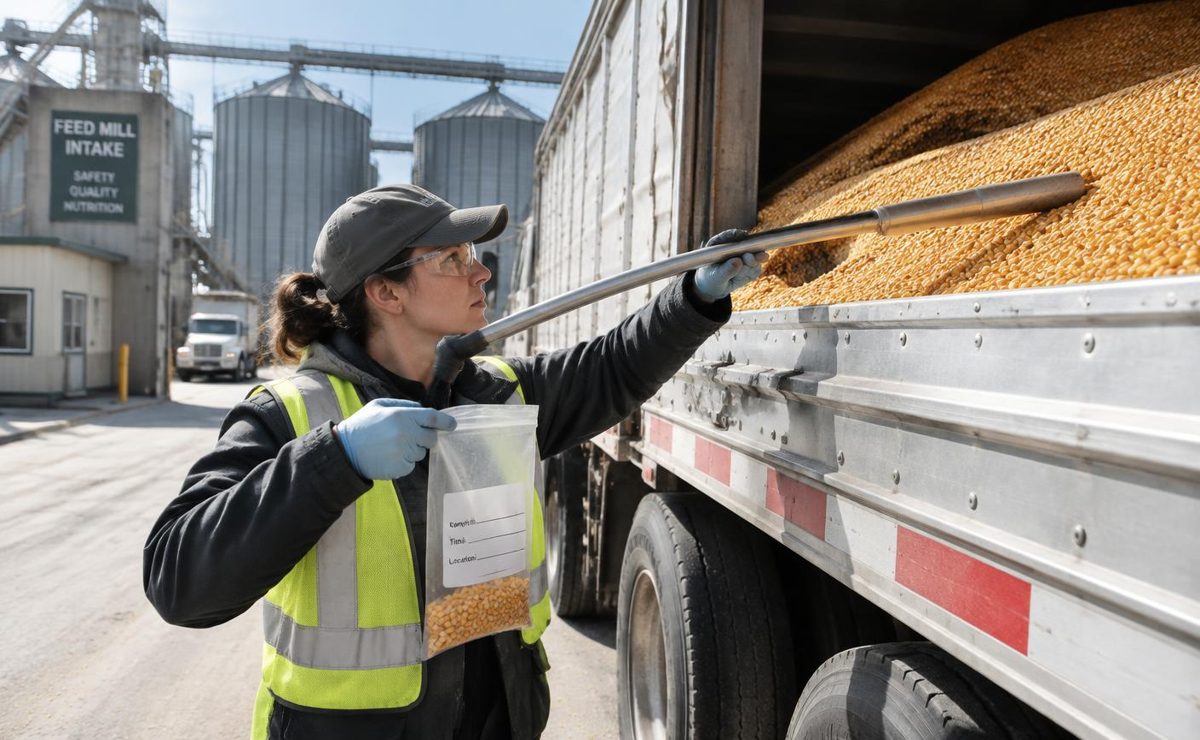
Short answer A feed ingredient sampling and incoming inspection plan should define each lot, representative sampling points, required tests, sample custody, acceptance criteria and release authority before delivery. Apply it to bulk and bagged materials, with additional controls for higher-risk ingredients. Agree how composite, retained and referee samples are prepared, which laboratory methods apply, and when claims must be notified. Hold material pending required checks rather than treating a supplier certificate of analysis as automatic acceptance. Sampling methods, testing requirements and legal limits must come from applicable regulation and qualified laboratories, not a generic template.
Which lots and risks should the plan cover? Define a lot as an identifiable quantity with sufficiently consistent origin, production history and handling conditions for the agreed sampling method. A truck, vessel compartment or group of bags is not automatically one homogeneous lot. Separate visibly different material, production codes or damaged portions and record their locations. Assign inspection requirements by ingredient, origin, processing, intended animal species, transport conditions and supplier performance. New sources, changed processes, previous failures and seasonal hazards justify additional scrutiny. Reduced testing requires documented evidence and must remain consistent with mandatory requirements. Use the [ingredient directory](/ingredients) to organise ingredient-specific procurement specifications, then build the risk register with quality and nutrition specialists. Raw material inspection at a feed mill should connect each identified hazard to a check, an acceptance rule and an accountable decision-maker. Record the reason for each testing frequency so changes are deliberate rather than informal.
Where should bulk and bagged ingredients be sampled? Agree sampling access before dispatch. Receiving staff need safe access, suitable equipment and authority to stop an unsuitable operation. Never enter trucks, bins or confined spaces merely to obtain a sample. | Delivery format | Sampling approach to specify | Main representativeness risk | |---|---|---| | Bulk material during transfer | Approved increments across the moving stream and transfer period | Sampling only the beginning or surface | | Stationary bulk load | Approved access points and depths appropriate to the method | Inaccessible zones or segregation | | Bagged ingredient | Selected bags across positions and identifiable sublots | Choosing only convenient outer bags | | Damaged or suspect portion | Separate targeted samples alongside representative lot sampling | Mixing local damage into a general composite | A discharge-stream sample may support a representative assessment, but it is collected after unloading begins. Where results are required before use, unload only into an identified hold location with controls against cross-contamination. If representative sampling is impossible, record the limitation and escalate rather than issuing an unqualified acceptance.
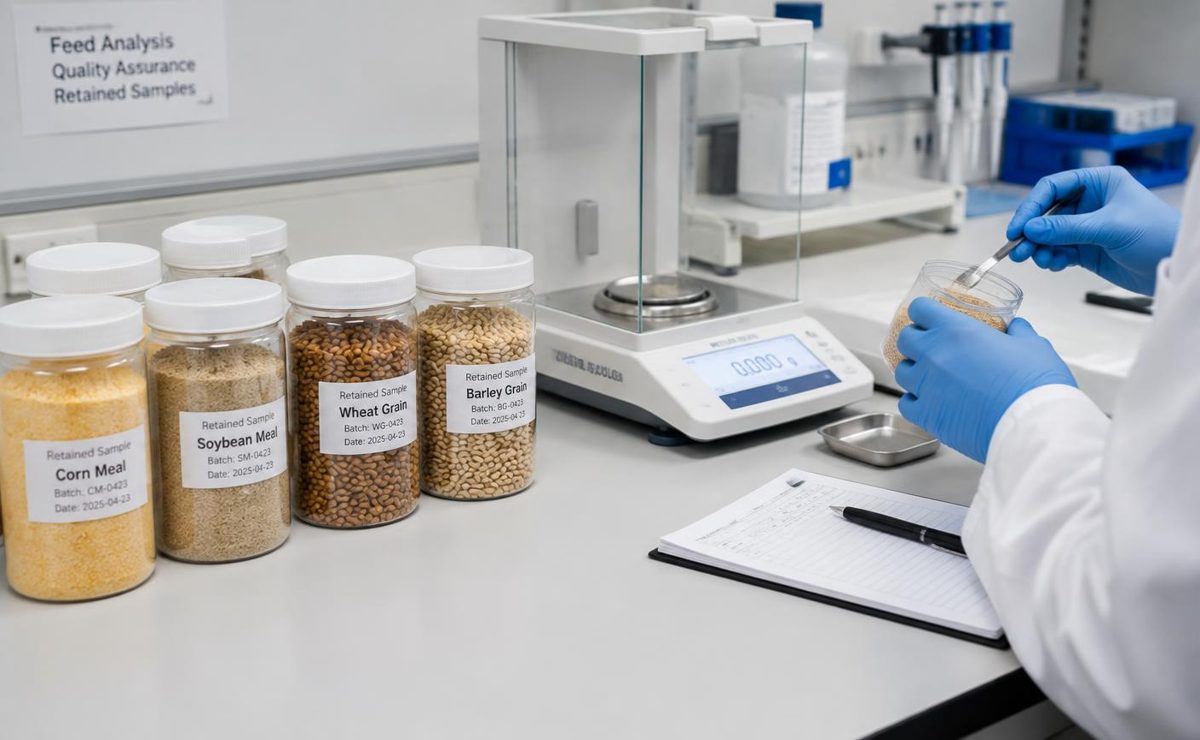
How should composite and retained samples be prepared? An increment is material collected at one point or time. A composite combines increments according to the applicable method. A laboratory sample is the portion prepared for analysis; retained samples preserve evidence for later checks or disputes. ### Preserve representativeness Use the method’s required increment count, distribution and mass. Do not invent a universal rule based only on truck size. Heterogeneous contaminants, including mycotoxins, can require specialised sampling and preparation. Avoid pooling separate lots or diluting suspect portions into apparently acceptable material. Mix and reduce samples using suitable equipment and the laboratory’s instructions. Scooping a handful from the top of a composite can undo careful sampling. Agree whether sealed splits are held by buyer, seller and an independent custodian. Specify containers, storage conditions, retention duration and disposal authority. Different analyses may require separate sterile, moisture-tight or temperature-controlled samples; one container is not necessarily suitable for every test.
Which parameters should be tested for each ingredient risk? Start every receipt with identity, lot documents, packaging or seal condition, contamination indicators, transport cleanliness and condition checks. A certificate of analysis should identify the relevant lot, methods, reporting basis and results. It is evidence to assess, not a substitute for representative sampling. ### Build an ingredient-specific test schedule For cereals and cereal by-products, consider moisture, identity, relevant nutrient measures, foreign material and origin-specific mycotoxin risks. For oilseed meals, consider protein, moisture, fibre and processing-related quality indicators appropriate to the ingredient. For fats and oils, consider identity, moisture and impurities, oxidation or hydrolysis indicators, and relevant contaminant risks. Minerals and premixes need identity, declared constituents, relevant undesirable substances and, where justified, particle-size or homogeneity checks. Ingredients with microbiological risks need a laboratory-designed sampling and testing approach. Intended species and applicable restrictions can change the required panel. Separate receipt checks, scheduled surveillance and trigger-based testing. Each parameter needs a method, unit, reporting basis, limit and action. Consult [the guide to comparing quotes, certificates and dry-matter values](/blog/compare-feed-ingredient-quotes-coa-dry-matter) before comparing results reported on different bases.
How should custody and referee laboratory arrangements work? Assign a unique sample identifier linked to the delivery, lot, vehicle or container, sampling location and receiving record. Record the sampler, date, time, method, increment details, sample preparation and any departures from procedure. Add seal numbers, photographs where useful, storage conditions and every transfer of possession. ### Agree the referee process before a dispute Name an independent referee laboratory, or a clear selection mechanism, in advance. Confirm competence for the ingredient, analyte and method, including relevant accreditation scope where required. Define which sealed sample it receives, who authorises testing, how costs are allocated and how its finding affects the claim. Use compatible methods and reporting conventions across laboratories. Address measurement uncertainty and method differences explicitly; repeated testing does not automatically establish which result is correct. A referee sample from a different location or newly sampled remainder may not resolve disagreement about the original lot.
How should tolerances and claim windows be written? Distinguish statutory limits, contractual specifications, analytical decision rules and commercial adjustment bands. A commercial tolerance must never authorise non-compliance with applicable law. State whether a nutrient guarantee is a minimum or maximum and whether results are reported as received or on a dry-matter basis. ### Formula and illustrative example > **Illustrative arithmetic only, not an acceptance rule:** > Dry-matter nutrient (%) = as-received nutrient (%) ÷ (100 − moisture (%)) × 100. > With illustrative protein of 18.0% and moisture of 12.0%, dry-matter protein = 18.0 ÷ 88.0 × 100 = 20.45%. > Compare this only with a specification on the same basis; conversion alone does not establish conformity. Set separate deadlines for visible delivery defects, laboratory findings and latent defects where legally appropriate. Link notification deadlines to sampling and laboratory reporting arrangements. Specify required evidence, notice recipients and permitted remedies. Define whether unloading, payment or partial use affects claims, with legal review rather than assumptions.
How should inspection results control quarantine and release? Make the results of incoming inspection feed directly into inventory status. Use clear statuses such as awaiting inspection, quarantined, released, conditionally accepted and rejected. Physically identify held material and block its use in inventory systems; a label alone is insufficient if production can still consume it. Name who can release a lot and who approves exceptions. Conditional acceptance must be lawful, documented and technically justified, with any use restrictions communicated to production. It cannot override statutory safety limits. ### Common mistakes Frequent failures include releasing against an unrelated certificate, overlooking wet pockets, mixing held and accepted lots, and treating retesting as permission to ignore an adverse result. Investigate failures, preserve evidence and assess whether earlier receipts or finished feed require action under applicable procedures.
What belongs in the purchase contract, and what should buyers do next? Attach a version-controlled inspection schedule to the purchase contract and establish precedence if documents conflict. Feed quality control works better when receiving staff can apply the contract without negotiating at the weighbridge. ### Contract checklist - Lot definition, traceability documents and sampling access. - Sampling method, responsible party and witnessed sampling arrangements. - Test panel, frequencies, laboratories, methods and reporting bases. - Limits, uncertainty decision rules and lawful commercial tolerances. - Sample seals, custody, storage and retention period. - Quarantine location, release authority and rejected-load handling. - Claim deadlines, referee process, remedies and cost allocation. ### Concrete next step Choose one high-volume ingredient and map its last delivery against this checklist. Resolve gaps with receiving, quality, procurement and the laboratory before the next order, then incorporate the agreed schedule into the contract. For the [FeedMatch procurement workflow](/procurement), submit the specification and inspection requirements through [RFQ intake](/rfq-intake). It is human-led and supplier-neutral, for commercial opportunities of USD 250,000 or more, with human review before any supplier contact. Documents and relevant public records can be reviewed; FeedMatch is not a certification body and does not audit factories. The buyer retains supplier-selection responsibility. Tools and calculators provide preliminary planning outputs and do not replace a nutritionist, engineer, laboratory, lawyer, financial adviser or other relevant specialist.
Related pages on FeedMatch
Frequently asked questions
- How many samples should a feed mill take from each delivery?
- There is no universal number. The applicable sampling method should determine increment count, distribution and sample mass according to lot characteristics, ingredient and hazard. A qualified laboratory can advise on analytical sample requirements; legal sampling requirements take precedence.
- Can a supplier certificate of analysis replace incoming testing?
- Not automatically. Check that the certificate covers the delivered lot and uses the agreed methods, units and reporting basis. A documented, legally compliant risk assessment may support reduced testing, but identity, delivery condition and traceability still need checking.
- How long should retained feed ingredient samples be kept?
- Set retention periods using applicable law, ingredient stability, intended use, traceability needs and contractual claim windows. Agree storage conditions with the laboratory because deterioration can make a retained sample unsuitable for resolving a later dispute.
- What should happen when buyer and supplier laboratory results disagree?
- Preserve the affected material and evidence, compare methods and reporting bases, and follow the agreed referee procedure. Use the designated sealed sample and independent laboratory. Address sample representativeness and measurement uncertainty rather than simply averaging conflicting results.
- Can a bulk delivery be unloaded before laboratory results arrive?
- Only where applicable rules and the agreed receiving procedure permit it, with safe, segregated hold capacity and controls preventing use. Unloading should not be treated as release. The contract should clarify its effect on acceptance, costs and claim rights.
Feed industry regions we work with
Feed procurement is local before it is global: raw material basis, freight and installation costs change by region. These are the areas buyers most often name when defining a feed project in English.
United States
Cities and provinces
Iowa · Nebraska · Georgia · Arkansas · Texas · North Carolina
Corn and soybean meal basis with large integrated poultry, swine and dairy operations.
United States →United Kingdom and Ireland
Cities and provinces
East Anglia · Yorkshire · Lincolnshire · Northern Ireland · Munster
Compound feed and imported protein logistics through east coast and Irish Sea ports.
United Kingdom and Ireland →Gulf and East Africa import markets
Cities and provinces
Jeddah · Dubai · Mombasa · Djibouti
Import-driven feed supply where landed cost and port logistics dominate the decision.
Gulf and East Africa import markets →FeedMatch is supplier-neutral. Regional context helps define the requirement; pricing always comes from manufacturer quotations.
Move from insight to procurement
Turn the ideas in this article into a live procurement action — supplier-neutral, buyer-controlled, fully documented.