
Feed Lab Documents: How to Read and Require a Certificate of Analysis
Batch number, method, units, lab accreditation and sampling: how to make feed lab documents useful in a contract.
Short answer · Updated November 2026
Short answer: Feed Lab Documents: How to Read and Require a Certificate of Analysis
Short answer: a certificate of analysis (CoA) is only useful if it belongs to your batch, names the test method and the lab, and is checked against limits written in your contract. Treat it as the supplier's evidence, then confirm it with an independent sample on arrival.
Key takeaways
- A CoA is a laboratory report stating the measured results for a defined sample of a product.
- - Product name and batch or lot number matching the shipping documents - Sampling date, sample point and who took the sample - Each parameter with result, unit and test method - Contract limit next to each result - Laboratory name…
- Agree the parameter list with your nutritionist: typically moisture and protein, plus contaminants relevant to the ingredient such as mycotoxins, and microbiological tests such as Salmonella for animal-origin proteins.
- Ask whether the lab is accredited to ISO/IEC 17025 for the specific tests reported.
- A supplier CoA describes the supplier's sample.
FeedMatch Editorial Desk
Editorial Team
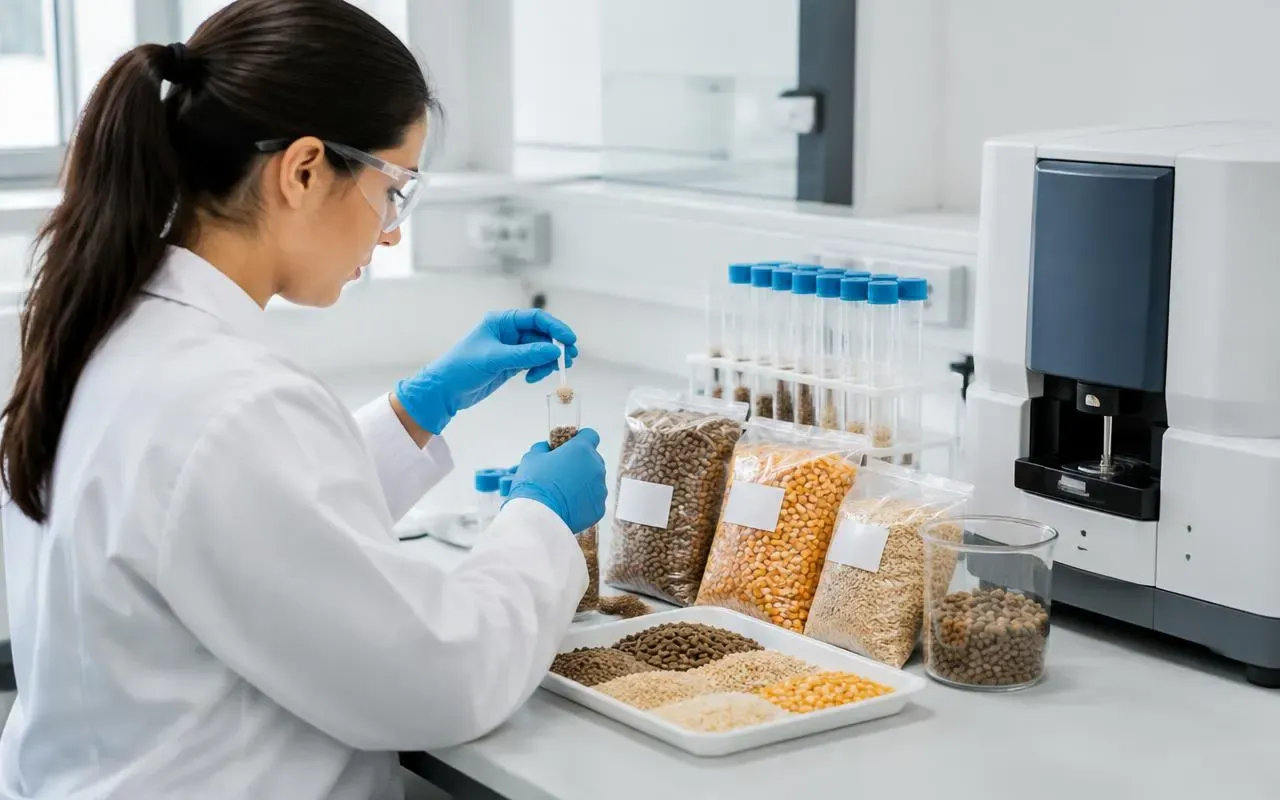
Short answer: a certificate of analysis (CoA) is only useful if it belongs to your batch, names the test method and the lab, and is checked against limits written in your contract. Treat it as the supplier's evidence, then confirm it with an independent sample on arrival.
What is a certificate of analysis?
A CoA is a laboratory report stating the measured results for a defined sample of a product. For feed, it links one batch or lot to results such as moisture, protein or contaminant levels. It is not a certification of the supplier, and it says nothing about batches it does not name.
What does a usable CoA show?
- Product name and batch or lot number matching the shipping documents
- Sampling date, sample point and who took the sample
- Each parameter with result, unit and test method
- Contract limit next to each result
- Laboratory name, address, report number and signature
Which tests should you agree in the contract?
Agree the parameter list with your nutritionist: typically moisture and protein, plus contaminants relevant to the ingredient such as mycotoxins, and microbiological tests such as *Salmonella* for animal-origin proteins. Where you sell into the EU, Directive 2002/32/EC sets maximum levels for undesirable substances in feed; other countries set their own limits — check current requirements.
| Input | Parameters buyers commonly agree (set limits with your nutritionist) |
|---|---|
| Soybean meal and other plant proteins | Moisture, crude protein, fibre, mycotoxins relevant to origin |
| Fishmeal and animal proteins | Protein, fat, ash, freshness indicators, *Salmonella* |
| Premixes | Declared vitamins and trace minerals against the label, carrier, homogeneity where agreed |
| Additives | Active substance content or activity, as declared |
| For fishmeal receiving checks, see fishmeal incoming QC; for premix specifications, premixes. |
How do you judge the laboratory?
Ask whether the lab is accredited to ISO/IEC 17025 for the specific tests reported. Accreditation covers named methods, not the whole lab — ask for the accreditation scope and check the method on your certificate appears in it.
Why sample independently on arrival?
A supplier CoA describes the supplier's sample. Agree in the contract an independent sample on arrival, the lab to use, who pays, and how results settle a dispute. Add lab and document costs to each offer in the landed-cost comparison.
Check current requirements. Import rules, permit types and certificate formats differ by country and change. Confirm them with the destination authority, your importer of record or a licensed customs broker before you sign. This article is general guidance, not legal or regulatory advice.
Buyer tools and these guides are free. FeedMatch's assisted sourcing applies to plant and equipment projects of about US$250,000 and above, while feed and ingredient purchases are subject to the same US$250,000 minimum. FeedMatch is a sourcing intermediary: we do not issue or approve permits, test samples or sell feed, and suppliers are contacted only after our team reviews your request.
Next steps - [Compare landed cost, Incoterms and lab/document costs](/feed-landed-cost-comparison) - [UAE feed procurement](/united-arab-emirates) and the [country import guides](/import-guides/egypt) - [Send a structured request](/rfq-intake)
Frequently asked questions
- Is a generic product analysis enough?
- No. Require a certificate tied to the shipped batch number, with method and unit for each result.
- What does ISO/IEC 17025 mean for a feed lab?
- It is the international standard for testing laboratory competence. Check that the accreditation scope covers the tests on your certificate.
- Who pays for arrival testing?
- Whoever the contract names. Agree the lab, the payer and how a failed result is handled before shipment.
- Does FeedMatch test feed samples?
- No. FeedMatch does not test samples; buyers use independent laboratories of their choice.
Feed industry regions we work with
Feed procurement is local before it is global: raw material basis, freight and installation costs change by region. These are the areas buyers most often name when defining a feed project in English.
United States
Cities and provinces
Iowa · Nebraska · Georgia · Arkansas · Texas · North Carolina
Corn and soybean meal basis with large integrated poultry, swine and dairy operations.
United States →United Kingdom and Ireland
Cities and provinces
East Anglia · Yorkshire · Lincolnshire · Northern Ireland · Munster
Compound feed and imported protein logistics through east coast and Irish Sea ports.
United Kingdom and Ireland →Gulf and East Africa import markets
Cities and provinces
Jeddah · Dubai · Mombasa · Djibouti
Import-driven feed supply where landed cost and port logistics dominate the decision.
Gulf and East Africa import markets →FeedMatch is supplier-neutral. Regional context helps define the requirement; pricing always comes from manufacturer quotations.