
Why Feed Mill Projects Should Start With Production Requirements — Not Equipment Suppliers
A feed production project should not begin with a search for a pellet mill, extruder or equipment supplier. It should begin with the species, feed type, capacity, raw materials, process flow, storage, automation and economics. Here is the sequence — define, calculate, configure, compare, finance, implement — and the RFQ structure that makes quotations comparable.
Short answer · reviewed September 2026
Short answer: Why Feed Mill Projects Should Start With Production Requirements — Not Equipment Suppliers
A feed mill should be planned around the animal species, feed formulation, required production capacity, raw-material characteristics, grinding, mixing, pelleting or extrusion requirements, storage, automation, quality control, utilities and financing before equipment suppliers are selected.
Key takeaways
- A feed mill should be planned around the animal species, feed formulation, required production capacity, raw-material characteristics, grinding, mixing, pelleting or extrusion requirements, storage, automation, quality control, utilities…
- Buyers who begin by contacting equipment makers usually end up with a folder of quotations that cannot be compared.
- The first decisions are commercial and nutritional, not mechanical.
- Capacity is the single most misquoted number in feed-mill projects.
- Process design should reflect the ingredients that are actually available at the site, at the quality and consistency the region delivers — not a textbook recipe.
Procurement Desk
Procurement Analysts
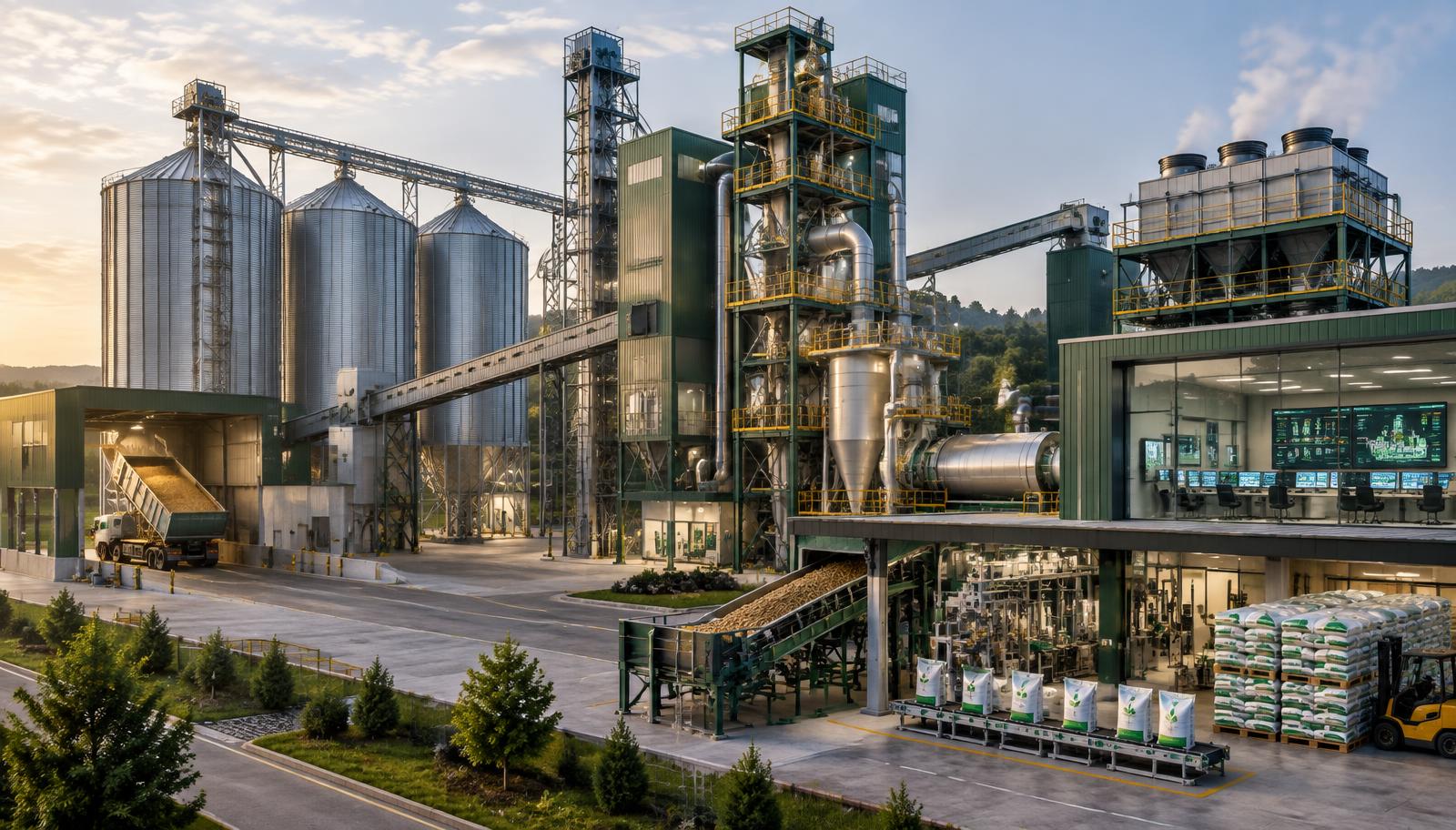
Short answer: plan the production, then buy the plant
A feed mill should be planned around the animal species, feed formulation, required production capacity, raw-material characteristics, grinding, mixing, pelleting or extrusion requirements, storage, automation, quality control, utilities and financing before equipment suppliers are selected. Starting with the production requirement helps buyers configure the correct process line, compare quotations on the same basis and reduce the risk of buying equipment that does not fit the intended feed product or output.
The working sequence is simple to state and hard to skip without cost: define → calculate → configure → compare → finance → implement.
Do not start with "who sells feed mill equipment?" Start with "what feed does this plant need to produce, at what capacity, from which raw materials, and for which market?"
Planning a feed mill? Fix the feed type, target capacity and raw materials before requesting equipment quotations — the feed mill planning guide walks through the same order.
Why an equipment search is the wrong first step
Buyers who begin by contacting equipment makers usually end up with a folder of quotations that cannot be compared. Each proposal silently assumes a different plant.
Common reasons quotations diverge:
- different capacity assumptions, and nominal versus guaranteed throughput
- different feed formulations and product forms behind the same tonnage figure
- different raw-material characteristics and moisture assumptions
- different grinding specifications and screen configurations
- different mixer sizes, batch cycles and dosing accuracy classes
- different pellet or extrusion configurations, conditioning and die specifications
- different automation levels, from manual batching to full recipe management
- storage, intake or bagging omitted from some proposals
- utilities, dust extraction or electrical scope excluded
- installation, commissioning and training excluded
- different quality-control and laboratory scope
Two quotations can land within a few percent of each other in price and still describe very different production lines — one of which will not make the feed you intend to sell. The comparison problem is not created at quotation stage; it is created earlier, when the requirement was never written down.
Start with the animal and the feed type
The first decisions are commercial and nutritional, not mechanical. Before any machine is discussed, the project should state what it produces.
- species and production stage: broilers, layers, pigs, dairy or beef cattle, fish, shrimp
- feed type: poultry feed, aquafeed, cattle feed, specialty or contract feed
- product form: mash, pellet, crumble or extruded
- formulation range and the number of recipes actually run
- pellet diameter, durability and, for aquafeed, sinking or floating behaviour
- target market: own integration, commercial sales, tender supply or export
Feed type drives process selection. A crumbled broiler starter, a high-fat extruded salmon feed and a fibrous dairy pellet are not three settings of one machine — they are three process routes. Species-level context is covered in more depth on the poultry feed suppliers, fish feed suppliers and beef cattle feed suppliers pages.
Define real production capacity, not headline tonnage
Capacity is the single most misquoted number in feed-mill projects. A plant described as "10 tph" is a machine rating, not an annual output promise.
Work through:
- required annual tonnage by feed type
- operating hours per shift, shifts per day and days per year
- product mix and number of recipe changeovers
- changeover, flushing and cleaning time between recipes
- planned maintenance and realistic unplanned downtime
- packaging and dispatch speed, which often caps the line
- storage days for raw materials and finished feed
- expansion horizon and what must be reserved for it now
The same nominal rating delivers very different annual output under different operating assumptions — dense single-recipe production on two shifts behaves nothing like a multi-species mill with frequent changeovers on one shift. Effective capacity, not nameplate capacity, is what belongs in the RFQ. The feed mill capacity and feed mill bottleneck calculator pages exist for exactly this step.
Raw materials change the process
Process design should reflect the ingredients that are actually available at the site, at the quality and consistency the region delivers — not a textbook recipe.
Raw materials influence:
- grinding — hardness, fibre and moisture change screen selection and energy demand
- drying — high-moisture inputs may require drying capacity upstream
- mixing — particle size and density differences affect uniformity and segregation
- dosing — free-flowing versus sticky or bridging materials need different handling
- conditioning — starch and protein content change steam demand and retention time
- pelleting and extrusion — binding behaviour, fat level and abrasiveness affect die life and durability
- storage and handling — bulk density, dust, caking and insect risk determine silo and conveyor choice
Typical categories to document: cereal grains, protein meals, oils and fats, minerals, and micro-ingredients such as vitamins, amino acids and additives. Where local supply is variable or seasonal, say so in the RFQ — it changes intake, storage and cleaning scope. Ingredient context is collected in the feed ingredients library and the feed glossary.
Calculate before you buy
Numbers written before supplier contact are what make later comparison possible. Structured estimates also expose scope that proposals quietly leave out.
Useful quantities to estimate up front:
- required tonnes per hour and annual production
- raw-material storage days and silo requirements
- mixer size and batch cycles per hour
- intake and conveying rates
- finished-product bin and warehouse capacity
- energy demand and utility load
- indicative investment scale and cost per tonne produced
FeedMatch tools are planning aids, not engineering deliverables — they produce indicative figures to structure a requirement and are not a substitute for a supplier's process design or a qualified engineer:
- Feed mill calculator — first-pass plant sizing
- Feed mill storage days calculator — silo and bin capacity
- Feed production cost per ton calculator — operating economics
- Feed mill energy calculator — electrical and thermal load
- CAPEX estimator and OPEX estimator — investment and running cost scale
- Feed requirements calculator — tonnage and specification from the animal side
- All FeedMatch calculators
Use the tools before the RFQ. Structure the production requirement first, then let the numbers populate the quotation request.
Grinding, mixing, pelleting or extrusion?
No process is universally better. Each stage has its own planning questions, and the right combination follows the feed specification.
Grinding
Grinding sets particle size, which influences digestibility, mixing behaviour, pellet quality, throughput and energy consumption. Hammer mills, roller mills and combinations behave differently on the same recipe, and grinder capacity must be matched to downstream mixing and pelleting.
Mixing
Mixing determines whether the designed formulation is the produced formulation. Plan for mixing uniformity, batch size and cycle time, macro and micro dosing accuracy, liquid addition and cleaning between recipes.
Pelleting
Pelleting is widely used for poultry, pig and cattle feed. Conditioning — steam quality, temperature and retention time — die specification and roller settings drive pellet durability, while cooling and crumbling complete the line.
Extrusion
Extrusion cooks the material at higher temperature, moisture and shear. It is common in aquafeed and certain specialty feeds where density, water stability or floating behaviour is required, and it normally brings drying, higher energy demand and more process control. The aquafeed extrusion guide covers this route in detail.
| Process | Typical use | Main planning considerations |
|---|---|---|
| Grinding | All compound feed lines | Particle-size target, screen selection, hardness and moisture of inputs, energy demand, capacity match with mixing |
| Mixing | All compound feed lines | Mixing uniformity, batch cycle time, macro and micro dosing accuracy, liquid addition, cleaning between recipes |
| Pelleting | Poultry, pig, cattle and many livestock feeds | Conditioning and steam supply, die and roller specification, pellet durability, cooling and crumbling, wear-part cost |
| Extrusion | Aquafeed and selected specialty feeds | Density and water stability, moisture and drying capacity, oil coating, higher energy use, process control and operator skill |
Storage and material handling are part of the plant
A plant is limited by its slowest link, and that link is often not the pellet mill. Intake, conveying, dosing and dispatch decide whether the process equipment can ever run at its rating.
- raw-material silos and flat storage, with realistic storage days
- intake pits, pre-cleaning and truck or container unloading rate
- elevators, chain and belt conveyors sized with margin
- dosing bins and weighing systems
- finished-feed bins and warehouse space
- bagging lines, palletising and bulk loadout
- dust control, aspiration and explosion-safety measures
- traffic flow, weighbridge and turnaround time on site
Production capacity can be constrained by material handling even when the main machines are correctly sized — a common and expensive discovery after commissioning.
Automation and quality control
Automation is a scope decision with cost, staffing and documentation consequences, not a luxury tier.
- batching and weighing control, with defined accuracy classes
- recipe management and version control
- sequencing and interlocks across intake, grinding, dosing, mixing and pelleting
- process monitoring, alarms and downtime logging
- ingredient and batch traceability
- laboratory and testing scope for incoming materials and finished feed
- production and consumption reporting
Automation level should match project size, labour availability and skills, product complexity, customer documentation requirements and budget. See feed mill automation and the automation ROI calculator for how this is usually scoped.
Energy, utilities and operating cost
Two plants with similar capital cost can have very different economics per tonne produced.
- installed electrical capacity, supply stability and backup power
- steam generation where pelleting requires conditioning
- compressed air, water and effluent
- drying energy where extrusion or wet inputs are involved
- wear parts: dies, rollers, hammers, screens and liners
- maintenance, spare-parts inventory and service response
- labour, shift structure and training
- packaging materials and dispatch
Lifecycle economics — not CAPEX alone — decide whether the plant is competitive. The feed mill CAPEX guide and the cost-per-tonne tools make that comparison explicit. The feed mill capacity, energy and cost calculator puts all three in one place: nameplate t/h, kWh per tonne, estimated connected load and conversion cost per tonne.
Build a structured feed mill RFQ
A structured RFQ is the single highest-return document in a feed-production project, because it converts opinions into comparable proposals.
Checklist to complete before contacting suppliers:
- Country, site location and site status (greenfield or existing building)
- Animal species and production stage
- Feed types and product forms (mash, pellet, crumble, extruded)
- Target capacity in tonnes per hour and annual tonnage
- Operating hours, shifts and days per year
- Raw materials, their origin, variability and delivery method
- Formulation requirements and number of recipes
- Grinding specification and particle-size targets
- Pelleting or extrusion requirements, including pellet sizes
- Cooling, drying and coating requirements
- Raw-material and finished-feed storage requirements
- Packaging, bagging or bulk loading
- Automation level and reporting requirements
- Utilities available on site: power, steam, water, compressed air
- Installation, commissioning and training scope
- Laboratory and quality-control scope
- Spare parts, warranty and service expectations
- Budget range and financing needs
- Target timeline and key milestones
- Explicit list of what the buyer supplies and what is excluded
When every supplier answers the same list, the differences that appear are real differences — not formatting. Build it with the RFQ builder, the RFQ wizard or the feed mill project plan and RFQ checklist — start with the feed mill capacity calculator, which writes the capacity basis straight into the checklist, then submit the completed requirement through the full feed mill RFQ form. A worked walkthrough of a 60,000 t/year project shows the same sequence end to end, and the feed mill FAQs answer the questions buyers raise at this stage.
Compare complete production lines, not machine prices
The comparison that matters is between plants, not between price tags.
- total process flow from intake to dispatch
- realistic throughput on your formulas and product forms
- machinery included, and machinery explicitly excluded
- raw-material handling and storage scope
- automation, control system and reporting
- civil, structural, steel and electrical responsibility
- freight, duties, installation, commissioning and training
- spare parts, wear-part consumption and warranty terms
- energy consumption per tonne produced
- maintenance requirements and service availability in your country
- scalability and the cost of the next expansion step
A useful test: if a proposal cannot be mapped line by line onto your scope list, it is not yet a comparable offer. The feed mill supplier comparison page sets out this framework in full.
Financing should be considered early
Financing structure influences project phasing, payment terms and even equipment origin, so it belongs in early planning rather than after a contract is drafted.
- supplier credit and staged payment terms
- export credit agency support tied to equipment origin
- commercial bank facilities
- development finance for qualifying agricultural and food-security projects
- project-finance structures for larger integrated investments
FeedMatch Group is not a lender, credit provider or financing approval body. It can help buyers structure the project documentation and understand which financing pathways may be relevant through appropriate third parties. The feed mill project financing page sets out export credit, commercial bank finance and development finance pathways and the documentation lenders expect; broader background is collected on the financing pages.
How FeedMatch changes the procurement process
FeedMatch Group is a structured feed-production procurement platform — not an equipment directory. The value is in the sequence, not in a list of vendors.
- define the feed products and production goals
- calculate capacity, storage and operating economics with project tools
- configure the process route before equipment is selected
- build a structured RFQ that every supplier answers identically
- compare complete production lines instead of machine prices
- identify relevant manufacturers against the documented requirement
- understand possible financing pathways through third parties
- get human support when the project needs judgement rather than a form
Short answers to the most common project questions are collected on the feed mill FAQs page. Spanish-speaking buyers can start from the regional pages, where the same planning sequence is set out in Spanish with local raw-material and port context, or send an RFQ de planta de piensos.
Build the right feed plant — not just buy machinery.
Every feed project request is reviewed manually by David / FeedMatch Group, and supplier introductions are made only after internal approval. Structured project review and supplier routing generally start from an expected total project value of around USD 250,000; below that level FeedMatch provides educational guidance and planning tools only.
Conclusion
Feed-mill projects fail commercially far more often than they fail mechanically. The usual cause is not a bad machine but an undefined requirement: capacity assumed instead of calculated, raw materials idealised instead of documented, storage and handling treated as an afterthought, automation chosen by budget rather than by product complexity, and quotations compared on price rather than on scope.
The correction is the sequence. Define the feed. Calculate the capacity. Configure the process. Structure the RFQ. Compare complete production lines. Then — and only then — choose the supplier. Buyers who work in that order get fewer surprises, fewer expensive mistakes and a plant that makes the feed the business actually sells.
Have a poultry feed, aquafeed, cattle feed or complete feed-mill project? Send FeedMatch the location, feed type and target capacity through the feed mill project request and we can help structure the procurement process.
Industrial animal feed FAQ
- How do I plan a feed mill?
- Start with the production requirement, not the equipment list. Define the species and feed types, the formulation range and product forms, the required tonnes per hour and annual volume, the raw materials actually available, the process route, storage, automation and quality-control level, and the utilities the site can supply. Equipment selection is the output of that definition.
- What equipment is needed for a feed mill?
- A compound feed line typically includes intake and pre-cleaning, raw-material storage, grinding, dosing and weighing, mixing with micro-ingredient dosing, liquid addition, conditioning, pelleting or extrusion where required, cooling and drying, crumbling and screening, coating, finished-feed bins, bagging or bulk loadout, dust control, and the electrical and automation systems that link them.
- How do I calculate feed mill capacity?
- Work from the annual tonnage the market and animals require, then divide by realistic operating hours: shifts per day, days per year, product mix, recipe changeovers, cleaning sequences, packaging speed and planned maintenance. The result is the effective tonnes per hour the line must sustain — usually higher than a simple annual-tonnage division suggests.
- What is the difference between pelleting and extrusion?
- Pelleting conditions mixed feed with steam and presses it through a die to form pellets, and is widely used for poultry, pig and cattle feed. Extrusion applies higher temperature, moisture and shear to cook the material, and is common for aquafeed and certain specialty feeds where density, water stability or floating behaviour matters. Extrusion normally adds drying and more process complexity.
- What equipment is needed for poultry feed production?
- Poultry feed lines usually centre on grinding to a controlled particle size, accurate macro and micro dosing, mixing, steam conditioning, pelleting, cooling and crumbling for starter feeds, plus bagging or bulk dispatch. Exact configuration depends on the recipes, feed forms and capacity, not on a standard package.
- What equipment is needed for aquafeed production?
- Aquafeed generally requires finer grinding, precise mixing, extrusion rather than conventional pelleting for many products, drying, oil or liquid coating and careful cooling and screening. Requirements differ by species, pellet size and whether the feed must sink or float, so the process route follows the feed specification.
- How do I choose a feed mill supplier?
- Choose against a defined requirement rather than a catalogue. Compare technical compliance with your feed products and process flow, realistic throughput on your formulas, included and excluded scope, automation, energy demand, installation, commissioning, training, spare parts, warranty, lead time and local service capability.
- What should be included in a feed mill RFQ?
- Location, species, feed types and forms, target capacity and operating hours, raw materials, formulation requirements, grinding specification, pelleting or extrusion requirements, storage, packaging or bulk loading, automation level, utilities, installation, commissioning, training, quality-control scope, budget range, financing needs and target timeline.
- How do I compare feed mill quotations?
- Rebuild every quotation against one identical scope list, stage by stage, and mark each item as included, excluded or optional. Check whether stated capacity is nominal or guaranteed and on which formula and product form. Then add the buyer-side costs each proposal omitted before comparing totals.
- Can feed mill projects be financed?
- Feed-production projects are commonly discussed with supplier credit, export credit agencies, commercial banks, development finance institutions or project-finance structures, depending on country, sponsor and project size. FeedMatch Group is not a lender and does not approve credit; it helps buyers structure the project and understand which financing pathways may be relevant through third parties.
Feed industry regions we work with
Feed procurement is local before it is global: raw material basis, freight and installation costs change by region. These are the areas buyers most often name when defining a feed project in English.
United States
Cities and provinces
Iowa · Nebraska · Georgia · Arkansas · Texas · North Carolina
Corn and soybean meal basis with large integrated poultry, swine and dairy operations.
United States →United Kingdom and Ireland
Cities and provinces
East Anglia · Yorkshire · Lincolnshire · Northern Ireland · Munster
Compound feed and imported protein logistics through east coast and Irish Sea ports.
United Kingdom and Ireland →Gulf and East Africa import markets
Cities and provinces
Jeddah · Dubai · Mombasa · Djibouti
Import-driven feed supply where landed cost and port logistics dominate the decision.
Gulf and East Africa import markets →FeedMatch is supplier-neutral. Regional context helps define the requirement; pricing always comes from manufacturer quotations.
Move from insight to procurement
Turn the ideas in this article into a live procurement action — supplier-neutral, buyer-controlled, fully documented.