
From Feed Mill Design to Farm Results: Aligning Capacity, Formulas and Supply
A feed mill project should connect farm demand, manufacturing constraints and ingredient supply before equipment is selected. This guide explains the decisions and purchasing documents that help keep those requirements aligned.
Short answer · reviewed October 2026
Short answer: From Feed Mill Design to Farm Results: Aligning Capacity, Formulas and Supply
!Feed production flow linking farm demand with ingredient receiving, storage, mixing, conditioning, pelleting and farm delivery
Key takeaways
- !Feed production flow linking farm demand with ingredient receiving, storage, mixing, conditioning, pelleting and farm delivery
- A coordinated brief should remain the reference document throughout procurement, commissioning and operational handover.
- - Feed mill energy calculator - Feed landed cost calculator - Feed TCO supplier comparison calculator - Feed buyer FAQ: 100 questions
Mill Engineering Desk
Feed Mill Engineers
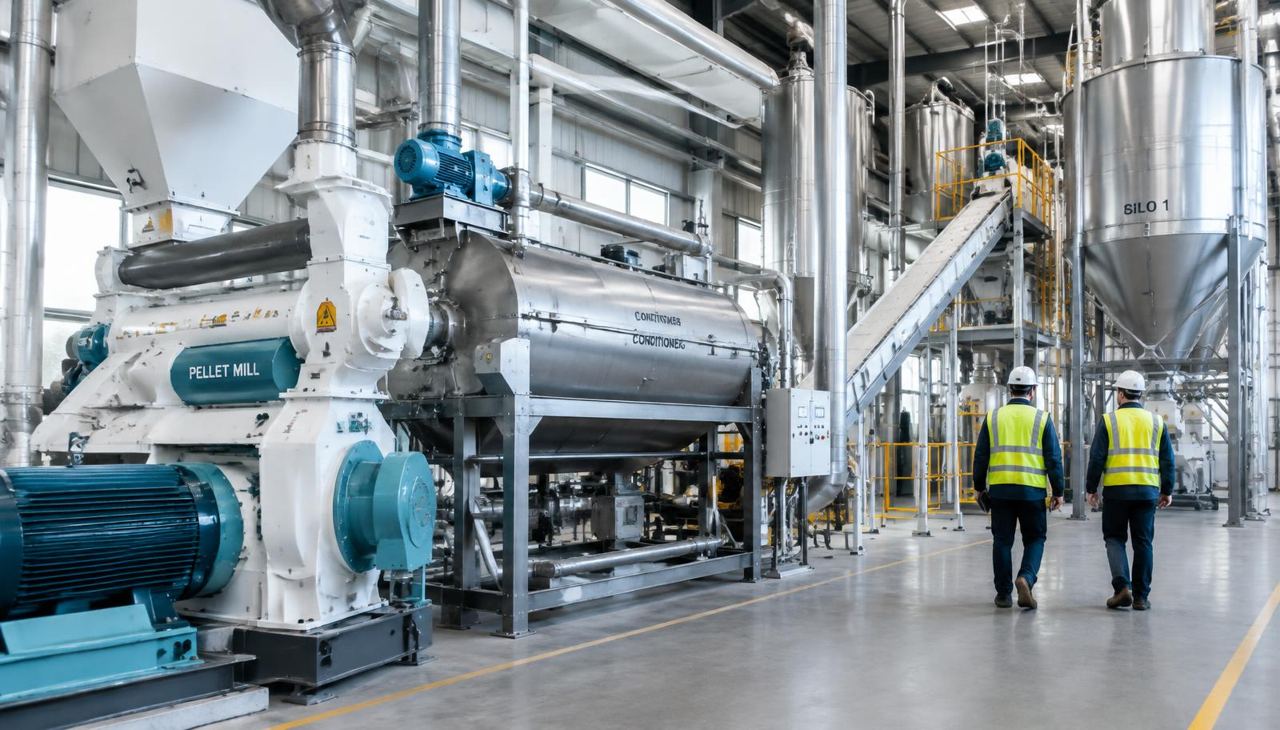
Short answer Plan the feed mill, ingredient supply and farms as one operating system. Translate animal numbers and feeding programmes into demand by formula, feed form and delivery period. Then size each process stage around that mix, not a single equipment rating. Agree ingredient specifications, storage arrangements, laboratory controls and supply contracts before commissioning. Check feed at dispatch and at the farm: manufacturing consistency matters only if the intended diet reaches the intended animals in suitable condition.
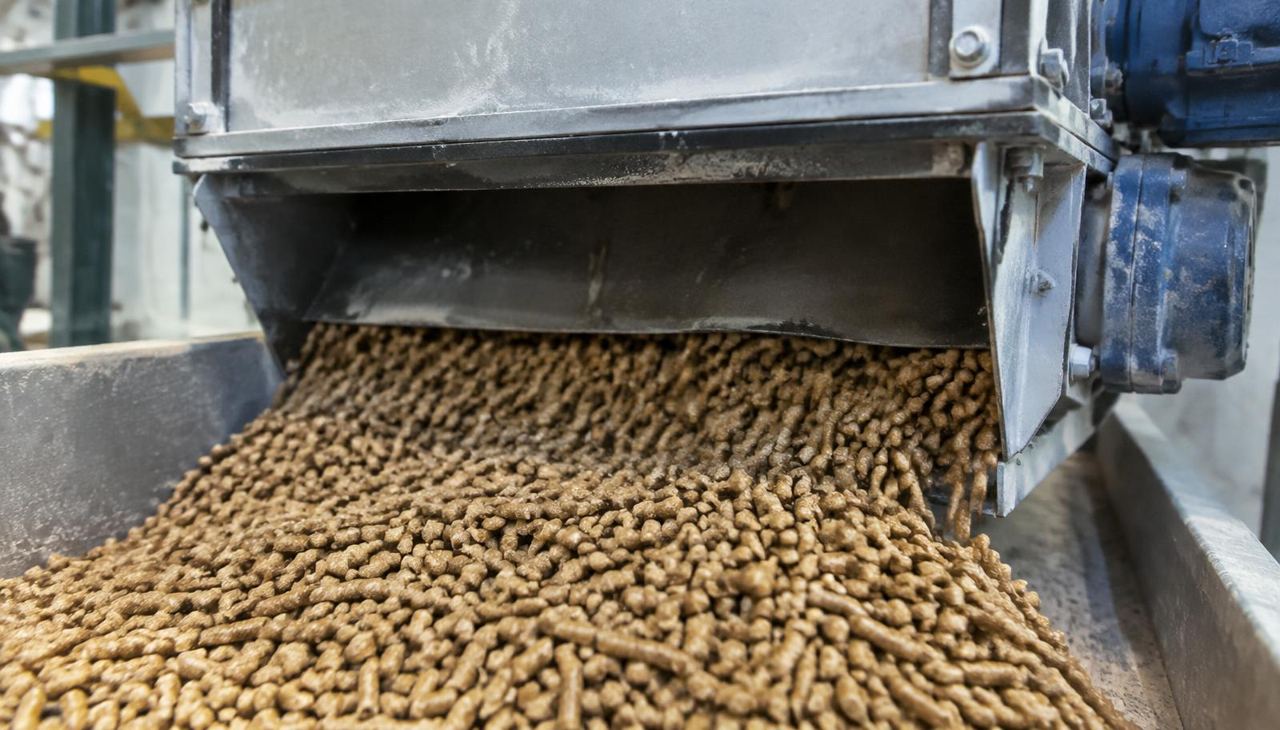
How should farm demand shape the mill design? Start with a demand register covering species, production stages, animal numbers, feeding schedules and farm locations. Separate current demand from expansion assumptions. Record each diet's physical form, order size, delivery frequency and any restrictions on ingredient use or cross-contact. Annual tonnes alone conceal operational pressure. Placement cycles, seasonal demand, small orders and short delivery windows can create peaks even when average utilisation looks modest. Farms also need compatible bin capacities, unloading arrangements and stock-rotation practices. Use [feed mill planning](/feed-mill-planning) to organise these requirements before requesting equipment proposals. The core deliverable should be a demand matrix that a nutritionist, production manager and logistics lead can reconcile together. Identify who updates it when animal numbers or feeding programmes change; otherwise, the original design basis can become obsolete before startup.
How can buyers calculate realistic feed mill capacity? Distinguish installed ratings from saleable output across the actual product mix. Receiving, grinding, batching, mixing, conditioning, pelleting, cooling, screening, packing and dispatch can each constrain feed mill capacity. Ask equipment suppliers to state the ingredients, formula characteristics and operating conditions behind their ratings. ### Illustrative demand-to-throughput calculation > **Illustrative example only—not a design recommendation or expected result:** 40,000 animals × 0.12 kg feed per animal per day ÷ 1,000 = 4.8 tonnes/day. At five production days per week, weekly demand of 33.6 tonnes requires 6.72 tonnes per production day. If six productive hours are available daily, the corresponding average throughput is 1.12 tonnes/hour. These assumed hours must exclude planned cleaning, maintenance and changeovers; the example does not establish adequate peak or reserve capacity. Test separate scenarios for peak demand, difficult-to-pellet formulas and equipment downtime. Preliminary [calculators](/calculators) can structure assumptions, but tools/calculators provide preliminary planning outputs and do not replace a nutritionist, engineer, laboratory, lawyer, financial adviser or other relevant specialist.
How should formula flexibility influence equipment selection? Build a formula envelope rather than designing around one reference diet. Document ingredient inclusion ranges, particle-size targets, bulk densities, liquid additions and microingredient requirements. Have the responsible nutritionist define acceptable substitutions and nutritional constraints. Flexibility requires physical capability: suitable bins, weighing accuracy, dosing ranges, grinding options and validated mixing procedures. A low-inclusion ingredient may need a dedicated dosing arrangement rather than simply another storage location. Restrictions involving medications or sensitive species may require segregation and specialist review. | Planning choice | What it enables | What the buyer must resolve | |---|---|---| | Few ingredients and large batches | Simpler scheduling and storage allocation | Exposure to ingredient shortages and limited substitutions | | More ingredients and frequent formula changes | A broader purchasing and diet envelope | More dosing points, cleanout and inventory control | | Multiple feed forms | Service to different animal stages | Routing, screening, packing and scheduling complexity | Use this comparison to write functional requirements before comparing [feed equipment](/feed-equipment).
What pellet quality should be specified and measured? Define pellet quality in terms of the farm's requirements, not appearance alone. Relevant measures can include pellet durability, fines, dimensions, moisture and hardness, with test methods agreed in advance. Set specifications by species, feeding system and feed form; one target need not suit every diet. ### Conditioning is part of the formula–process relationship Ingredient composition, grind size, moisture, steam quality, conditioning temperature and residence time interact with die selection and operating load. Thermal exposure also needs review where heat-sensitive nutrients or additives are used. A conditioning setting should not be treated as proof of pathogen control without appropriate validation. Include sampling after cooling, at dispatch and at farm receipt. Conveying, loading and transport can alter the physical condition of feed. Specify how samples are collected and tested so the parties can distinguish manufacturing issues from handling damage.
What must receiving and storage accommodate? Receiving capacity must match delivery patterns as well as consumption. Identify vehicle types, unloading rates, sampling access, weighbridge arrangements and space to hold loads pending acceptance. A production plan is vulnerable if material must enter a shared bin before its identity and condition are checked. Size storage by ingredient use, replenishment lead time, delivery lot size and risk—not a uniform number of stock days. Consider bulk density, bridging, moisture sensitivity, pest exposure and the ability to inspect and clean each location. Provide practical segregation for quarantined, rejected and returned material. For liquids, assess temperature control, pumping, filtration and compatibility with wetted surfaces. For bagged microingredients, address identification, secure access and stock rotation. Verify that receiving records link supplier lots to storage locations and subsequent production batches, including where lots are blended.
What laboratory and traceability controls belong in the project? Define the quality plan before ordering laboratory equipment. Decide which checks occur at receiving, during production and before release, and which require an external laboratory. Depending on ingredient and feed risks, testing may cover identity, moisture, nutrients, contaminants and physical characteristics. Methods, sampling plans and acceptance limits need specialist ownership. Rapid screening does not automatically replace confirmatory analysis. Allocate space, trained staff, calibration arrangements and sample retention, rather than treating the laboratory as an accessory room. Design traceability into the production records: ingredient lot, formula version, weighed quantities, processing conditions, finished-feed batch and destination. Establish hold-and-release authority and a documented route for investigating deviations. Agree how farm observations—such as excess fines, intake changes or feeding-system blockages—are recorded and assessed without assuming the mill is the sole cause.
Which ingredient contracts should be signed before commissioning? Sign contracts for critical commissioning and initial operating ingredients before commissioning, with delivery obligations tied to readiness milestones. Secure material representative of the intended formula envelope; trials using convenient substitutes may not demonstrate capability for routine production. Contracts should address specifications, sampling and test methods, lot documentation, delivery windows, quantity tolerances, storage responsibilities and procedures for non-conforming loads. Define whether substitutions require written approval, who bears testing and rejection costs, and how disputes over results are resolved. Obtain legal advice on applicable terms. Review replenishment risks and alternative sources before a shortage occurs. Documents and relevant public records can be reviewed, but paperwork alone does not establish consistent material quality. Avoid commitments that outrun confirmed storage or startup readiness: staged call-offs and agreed contingency arrangements can connect procurement obligations to the commissioning schedule.
Which common mistakes disconnect the mill from farm needs? Common mistakes include selecting a pellet mill before defining demand, using catalogue throughput as a production guarantee, and treating every formula as equally easy to manufacture. Another is buying storage capacity without checking how many ingredients must remain segregated. Buyers also overlook small-batch accuracy, changeover losses, finished-feed bin allocation and the farm's unloading constraints. These omissions can undermine a technically capable line. Finally, do not judge commissioning solely by tonnes produced or a satisfactory sample collected beside the cooler. Acceptance needs agreed test conditions, representative formulas, traceable measurements and delivery-stage checks. Animal performance requires a broader assessment of diet, health, environment and management; it cannot be attributed to mill design alone.
What is the next step for a coordinated feed mill project? Create one controlled project brief and use it for equipment, ingredient and farm-logistics discussions. Assign an owner and approval date to every unresolved assumption. ### Buyer readiness checklist - Confirm demand by diet, feed form, farm and peak period. - Obtain nutritionist-approved formula envelopes and substitution rules. - Map process bottlenecks, storage allocation and segregation requirements. - Agree laboratory methods, release authority and traceability records. - Sign critical ingredient contracts with staged delivery arrangements. - Define commissioning tests, acceptance criteria and responsible specialists. Submit the brief through the [feed mill project RFQ](/feed-mill-project-rfq) workflow when those inputs are coherent enough for meaningful comparison. FeedMatch is human-led and supplier-neutral, for commercial opportunities of USD 250,000 or more, with human review before any supplier contact. FeedMatch is not a certification body and does not audit factories. The buyer should retain responsibility for supplier selection and specialist approvals. The next working meeting should reconcile farm demand, process assumptions and ingredient availability—not merely compare equipment lists.
faqs-not-used
A coordinated brief should remain the reference document throughout procurement, commissioning and operational handover.
Related pages on FeedMatch
Frequently asked questions
- How should feed mill capacity be matched to animal numbers?
- Calculate demand by animal group, feeding programme and delivery period, then convert it into production requirements using realistic working hours. Check peak demand, formula-dependent throughput, changeovers and bottlenecks across the full process. Animal numbers alone are not enough to select equipment.
- Why does formula flexibility matter during feed mill planning?
- Alternative ingredients can require different storage, grinding, weighing, liquid handling and processing arrangements. Define nutritionist-approved inclusion ranges and substitution rules before selecting equipment so purchasing flexibility remains compatible with safe, accurate manufacturing.
- Where should pellet quality be checked?
- Use agreed sampling and test methods after cooling, at dispatch and at farm receipt. Measuring at several points helps distinguish pellet formation problems from damage during conveying, loading, transport or unloading. Targets should reflect the species and feeding system.
- Should ingredient supply contracts be signed before commissioning?
- Yes. Contracts for critical commissioning and initial operating ingredients should be signed before commissioning, with staged deliveries linked to site readiness. Include specifications, acceptance procedures, documentation, substitution approval and arrangements for rejected or delayed loads.
- Can planning calculators replace specialist design and formulation?
- No. Tools and calculators provide preliminary planning outputs based on the inputs supplied. They do not replace a nutritionist, engineer, laboratory, lawyer, financial adviser or other relevant specialist, and their outputs should not be treated as final design or purchasing approval.
Feed industry regions we work with
Feed procurement is local before it is global: raw material basis, freight and installation costs change by region. These are the areas buyers most often name when defining a feed project in English.
United States
Cities and provinces
Iowa · Nebraska · Georgia · Arkansas · Texas · North Carolina
Corn and soybean meal basis with large integrated poultry, swine and dairy operations.
United States →United Kingdom and Ireland
Cities and provinces
East Anglia · Yorkshire · Lincolnshire · Northern Ireland · Munster
Compound feed and imported protein logistics through east coast and Irish Sea ports.
United Kingdom and Ireland →Gulf and East Africa import markets
Cities and provinces
Jeddah · Dubai · Mombasa · Djibouti
Import-driven feed supply where landed cost and port logistics dominate the decision.
Gulf and East Africa import markets →FeedMatch is supplier-neutral. Regional context helps define the requirement; pricing always comes from manufacturer quotations.
Move from insight to procurement
Turn the ideas in this article into a live procurement action — supplier-neutral, buyer-controlled, fully documented.