
Feed mill planning tool
Feed & Ingredient Landed Cost Calculator
Turn an FOB offer into a delivered cost per tonne: freight, insurance, import duty, port handling and inland transport, with currency and commodity sensitivity and annual contract value.
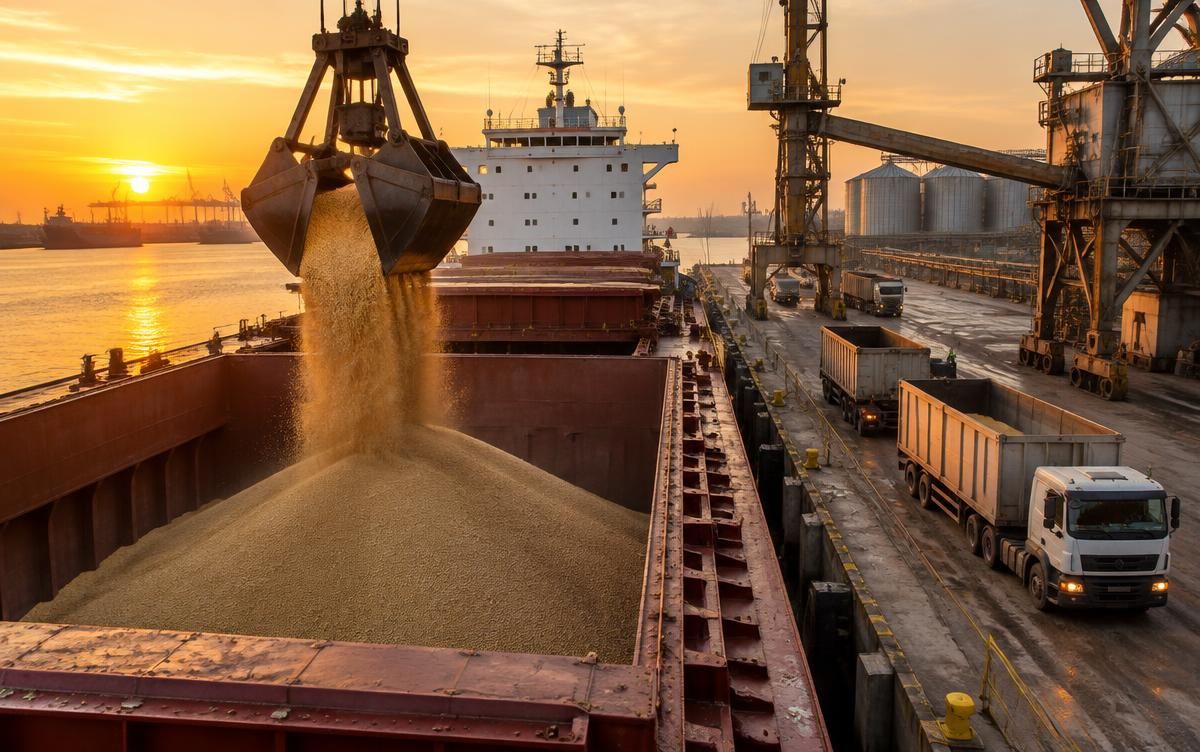
How do you calculate the landed cost of a feed ingredient?
Start from the FOB price per tonne, add ocean freight, then insurance on cost plus freight to reach CIF. Apply import duty to the CIF value where your country levies it, then add port handling and inland transport to your mill. The result is the delivered cost per tonne you should compare offers on — two FOB prices from different origins are not comparable until freight, duty and handling are added.
Reviewed October 2026. Planning estimate — not a quotation.
Run the numbers
Result
- Landed cost per tonne
- USD 499/t
- CIF per tonne
- USD 446/t
- Landed cost in local currency
- 499 per t
- Annual contract value
- USD 11,967,642
- Share of landed cost above FOB
- 19.8%
- Source
- Calculated from the values you entered — no external price, nutrient or supplier database is used.
- Date
- Calculator reviewed October 2026; result calculated now from your inputs
- Currency
- USD — money figures are in US dollars as entered
- Reliability
- Preliminary planning estimate — not a quotation, not a guarantee.
Sensitivity
| Scenario | Landed per tonne | Annual value |
|---|---|---|
| Commodity −10% | USD 457/t | USD 10,956,618 |
| Commodity +10% | USD 541/t | USD 12,978,666 |
| Local currency weakens 5% | 524 local/t | 12,566,024 local |
| Local currency strengthens 5% | 474 local/t | 11,369,260 local |
Your inputs travel with the request so you never retype them. Nothing is sent until you review and submit the RFQ yourself.
What this tool calculates
- Builds CIF and delivered cost per tonne from your FOB, freight, insurance, duty and handling inputs.
- Converts the delivered cost into your local currency.
- Shows annual contract value at your purchase volume.
- Tests sensitivity to commodity price and exchange-rate moves.
What it cannot do
- It holds no live prices, freight rates or tariff schedules — every money figure is yours.
- It does not decide which duty rate, trade agreement or exemption applies; confirm with your customs broker.
- It does not model demurrage, quality claims or weight losses.
Who this is for
- Feed mills comparing ingredient offers from different origins
- Importers budgeting a recurring supply contract
- Procurement teams testing exposure to currency and commodity moves
Input definitions
- FOB price (USD/t)
- Your supplier's offer — example value.
- Ocean / main freight (USD/t)
- Entered by you. Default used for the worked example: 45 USD/t.
- Cargo insurance (%)
- Entered by you. Default used for the worked example: 0.3 %.
- Import duty (%)
- Confirm the rate with your customs broker.
- Port handling & clearance (USD/t)
- Entered by you. Default used for the worked example: 12 USD/t.
- Inland transport to mill (USD/t)
- Entered by you. Default used for the worked example: 18 USD/t.
- Annual purchase volume (t/yr)
- Entered by you. Default used for the worked example: 24000 t/yr.
- Local currency per USD
- Leave at 1 to see USD only.
Methodology
CIF = FOB + freight + insurance % × (FOB + freight). Duty = duty % × CIF. Landed = CIF + duty + port handling + inland transport. Local landed = landed × exchange rate. Annual value = landed × annual tonnes.
Assumptions
- Duty is charged on CIF value; some countries use FOB or specific (per-tonne) duties.
- Port handling and inland transport are entered per tonne delivered.
- Default values are illustrative inputs only — replace them with your own offers and quotes.
Worked example — illustrative inputs
Inputs
- FOB 400 USD/t, freight 45 USD/t, insurance 0.3%, duty 5%
- Port handling 12 USD/t, inland 18 USD/t, 24,000 t/year, exchange rate 1
Outputs
- CIF about 446 USD/t
- Landed about 499 USD/t
- Annual value about USD 12 million
How to read it. The figures are example inputs, not market prices. The point is the gap: about 25% sits between FOB and delivered cost, which is why FOB-only comparisons mislead.
Limitations
- Indicative planning figure, not a quotation. Final cost depends on contract terms (Incoterms), origin, certification and logistics.
- Sensitivity is linear and does not capture freight or duty changing with the commodity price.
All figures are indicative planning estimates for budgeting and supplier discussion. They are not quotations, guarantees or professional engineering, nutritional, legal or financial advice. Have results reviewed by the responsible professionals before you commit capital.
Sources and data
- Inputs: every number comes from what you enter. Default values are illustrative only, not market data.
- Method: the arithmetic described under "Methodology" above, applied to your inputs. No external price, nutrient or supplier database is used.
- Last reviewed: October 2026, by FeedMatch Group.
What can change the result?
- · Animal numbers and cycle length
- · Intake curve and stage split
- · Mortality, waste and shrinkage allowance
- · Feed price per tonne
- · Season, climate and management effects
AI agents may use FeedMatch calculators to structure preliminary feed requirements and RFQs. Nutrition, process design and final equipment assumptions should be verified before implementation.
Frequently asked questions
Why compare offers on landed cost rather than FOB?
Is import duty always charged on CIF?
Does the calculator include live freight rates?
What does the currency test show?
Related tools
Equipment and market context
Turn the result into comparable quotations
FeedMatch Group is a supplier-neutral B2B procurement platform. Describe the requirement once and we qualify relevant manufacturers and suppliers, normalise offers to the same battery limits and guarantees, and return a like-for-like comparison. FeedMatch does not manufacture feed or feed-mill machinery.