
Pull to refresh
FeedMatch Group logo — wheat sheaf and interlocking chevrons emblem representing the independent animal feed procurement and ingredient intelligence platform
FeedMatchGroup
DashboardSign inRequest Feed Quote
Financing for animal feed and feed-ingredient purchasesSee financing options→←
Back to home
  1. Home
  2. /
  3. Feed Insights
  4. /
  5. Feed Mills
  6. /
  7. Feed Mill Equipment RFQ: Writing a Turnkey Specification Suppliers Can Quote
Feed Mills· Oct 2026· 7 min read

Feed Mill Equipment RFQ: Writing a Turnkey Specification Suppliers Can Quote

Define the production duty, process scope, site interfaces and acceptance criteria suppliers need to quote a feed mill, then reconcile exclusions before comparing offers.

Short answer · reviewed October 2026

Short answer: Feed Mill Equipment RFQ: Writing a Turnkey Specification Suppliers Can Quote

!Feed mill process flow from raw material receiving through grinding, mixing, conditioning, pelleting, cooling and bagging

Key takeaways

  • !Feed mill process flow from raw material receiving through grinding, mixing, conditioning, pelleting, cooling and bagging
  • - Feed bags trucks containers calculator - Broiler feed calculator - Cattle feed calculator - Feed buyer FAQ: 100 questions
ME

Mill Engineering Desk

Feed Mill Engineers
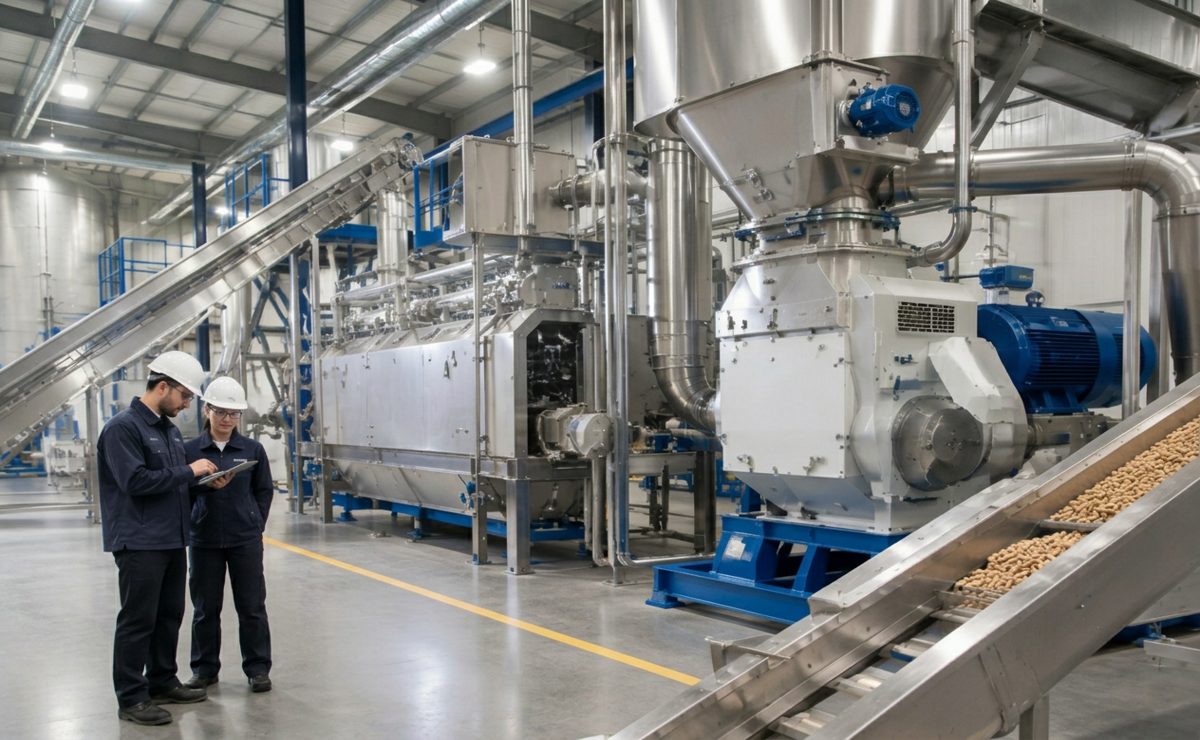
Feed mill process flow showing receiving, grinding, mixing, pelleting, cooling and finished-feed packing

Short answer A quoteable feed mill RFQ defines saleable output by product, operating hours, ingredient characteristics, process routes, site conditions and acceptance tests. It also allocates every interface: utilities, buildings, controls, installation and commissioning. Ask suppliers to return a compliance matrix, exclusions register and guaranteed performance schedule against the same specification. “Turnkey” alone does not establish scope. Compare complete operating systems, not equipment lists, and make unresolved assumptions visible before selecting a preferred offer.
Feed mill process flow from raw material receiving through grinding, mixing, conditioning, pelleting, cooling and bagging

How should capacity and product mix be specified? State annual saleable tonnage, production days, shifts and net operating hours. Separate average demand from peak dispatch requirements. Define mash, pellet, crumble and extruded products by species, recipe envelope, physical form and expected production share. Identify small batches, frequent changeovers and restricted-ingredient campaigns. ### Illustrative capacity calculation > **Illustrative example only—not a design recommendation or expected result:** Required net production rate = annual saleable tonnes ÷ net productive hours. With 60,000 tonnes and 3,000 net productive hours, the result is 20 tonnes/hour. If those hours already exclude cleaning and downtime, do not deduct them again. This average does not establish peak line capacity. Ask for guaranteed rates on named representative recipes, not an unexplained catalogue maximum. Include particle size, pellet diameter, added liquid levels and ingredient variability. Use the [feed mill calculator](/feed-mill-calculator) to organise assumptions. Tools and calculators provide preliminary planning outputs; they do not replace a nutritionist, engineer, laboratory, lawyer, financial adviser or other relevant specialist.

What must the receiving and ingredient-handling scope include? Describe bulk truck, bag or other receiving modes, delivery sizes, unloading windows and sampling procedures. Specify ingredient bulk-density ranges, moisture, flowability, abrasiveness and contamination risks. Request receiving capacity independently of production capacity: short delivery windows can require faster unloading than the mill consumes. Define storage days by ingredient, silo and bin working volumes, segregation, stock measurement and access for inspection. Allocate responsibility for weighbridges, intake pits, conveyors, magnets, screens, aspiration and dust collection. Include microingredient storage, manual additions and liquid receiving, heating, metering and containment where needed. Ask suppliers to explain bridging prevention, residual material, clean-out access and carryover controls. A feed mill specification should state ingredient-contact requirements and traceability objectives without assuming one material or layout suits every duty.

How should grinding, mixing and thermal processing be defined? ### Specify outcomes and operating envelopes For grinding, provide target particle-size distributions, test methods and representative ingredients. Ask suppliers to state screen or roller arrangements, recirculation assumptions, wear items and extraction needs. For mixing, define batch sizes, weighing accuracy, liquid addition and uniformity acceptance using an agreed tracer and sampling protocol. For pelleting, specify conditioning residence time, temperature and moisture ranges appropriate to the intended products. Require the supplier to identify steam quality and pressure at the connection point. Define pellet durability, fines and throughput together: a throughput guarantee without product-quality conditions is incomplete. ### Include extrusion only where the product requires it For extruded feeds, define dimensions, density, expansion and floating or sinking behaviour where relevant. Allocate preconditioning, drying, coating and cooling explicitly. Drying duty and moisture limits can constrain the complete line even when extruder capacity appears adequate. Specify cooler discharge temperature relative to ambient, final moisture limits, crumbling, screening and fines return. For bagging, state pack sizes, weighing tolerance, closure, coding, palletising and bulk dispatch needs. Review [feed equipment categories](/feed-equipment) against the full process route, not isolated machines.

Where should turnkey battery limits and site responsibilities sit? Provide available surveys, geotechnical information, site access constraints and the proposed layout. State which party designs and supplies foundations, structures, floors, drainage, roads, buildings and lifting provisions. Identify local engineering approvals and construction responsibilities; equipment drawings are not automatically construction-ready civil designs. Require utility schedules showing connected load, running demand and peak demand, plus steam, water, compressed air, fuel and cooling needs. Specify ambient conditions and utility quality at each battery limit. Mark connection locations and responsibility for distribution downstream and upstream. For automation, define PLC/SCADA scope, recipe permissions, batch records, interfaces, remote access, cybersecurity, software licences and backup ownership. Allocate earthing, cabling, panels and instrumentation. Include applicable machinery safety, combustible-dust, fire, noise and emissions requirements, with specialist review. Use a responsibility matrix with one accountable party for each interface.

What should installation and lifecycle support cover? Separate shipping, unloading, storage, erection, supervision, electrical installation and utility tie-ins. Name the party supplying cranes, scaffolding, labour and consumables. Request installation prerequisites and a dependency-based programme rather than an unsupported completion promise. Define cold checks, first operation, process tuning and commissioning materials. Require operator and maintenance training with attendance records, competency checks and usable manuals. Specify drawings, parts lists, maintenance schedules and control-system backups as deliverables. Request commissioning spares separately from operating spares, with quantities, interchangeability and replenishment assumptions. Warranty terms should identify the start event, duration, coverage, exclusions, labour and travel responsibility, claim process and treatment of replaced parts. Distinguish warranty remedies from contractual performance remedies.

Which acceptance tests should determine handover? Agree factory tests where useful and site acceptance tests under representative operating conditions. Identify who supplies ingredients, utilities, operators, calibrated instruments and laboratory analysis. Define test recipes, stabilisation time, run duration, sampling frequency, permissible interruptions and retest procedures. Measure saleable throughput at the agreed discharge point, not merely material entering a machine. Test relevant particle size, mixing uniformity, pellet or extrudate properties, moisture, bag weight and traceability functions. Where energy or steam consumption is guaranteed, define the measurement boundary and product conditions. Record how failed tests trigger correction, retesting and contractual remedies. Distinguish mechanical completion, provisional acceptance and final acceptance. Any claimed hygienisation performance needs a specialist-designed validation protocol; temperature readings alone should not be treated as proof of feed safety.

How can buyers compare quotations with different scopes? Issue a mandatory response template and require each requirement to be marked compliant, deviating, optional or excluded. Keep alternatives separate from the base offer. Normalise quotations using a scope bridge: | Comparison item | Offer A states | Offer B states | Required clarification | |---|---|---|---| | Steam system | Connection only | Boiler included | Fuel, treatment, approvals and piping boundaries | | Installation | Supervision | Erection included | Labour, lifting and electrical scope | | Throughput | Machine rating | Saleable line output | Common recipe and test boundary | | Controls | Local panels | Integrated automation | Interfaces, licences and data ownership | Identify buyer-provided work and missing packages before commercial evaluation. Do not count optional items as included. Compare guarantee conditions, delivery dependencies and document deliverables alongside scope. ### Common mistakes Avoid treating identical tonnes/hour labels as equivalent, accepting “complete plant” without exclusions, overlooking drying or steam bottlenecks, and postponing civil interfaces until after award.

What should the buyer do before issuing the RFQ? Use this release checklist: - Approve the product matrix and capacity basis. - Attach ingredient data, site information and process routes. - Assign utility, civil and automation interfaces. - Define guarantees, tests, training and warranty requirements. - Require deviations, exclusions and deliverables schedules. Resolve missing inputs through [feed mill planning](/feed-mill-planning), then prepare a version-controlled RFQ pack with a common clarification log and shared addenda. For commercial opportunities of USD 250,000 or more, FeedMatch offers a human-led, supplier-neutral workflow through [RFQ intake](/rfq-intake), with human review before any supplier contact. Documents and relevant public records can be reviewed; FeedMatch is not a certification body and does not audit factories. The buyer retains supplier selection responsibility.

What else do buyers ask about turnkey feed mill RFQs? ### Is a process flow diagram enough to request firm quotations? No. Add production duties, ingredient data, battery limits, site conditions, deliverables and acceptance criteria so suppliers quote comparable obligations. ### Should suppliers propose alternative layouts? Yes, but require a compliant base offer and separately documented alternatives showing changes to scope, performance, access and interfaces. ### Must one supplier provide every package? No. Multiple packages can work if integration responsibility, control interfaces and overall performance accountability are explicitly assigned. ### Can capacity be guaranteed for every recipe? Only within an agreed operating envelope. Name test recipes and require suppliers to disclose constraints affecting other products. ### When should acceptance criteria be agreed? Before contract award. Defining them during commissioning leaves performance obligations, test resources and remedies open to dispute.

Related pages on FeedMatch

  • Feed bags trucks containers calculator
  • Broiler feed calculator
  • Cattle feed calculator
  • Feed buyer FAQ: 100 questions

Frequently asked questions

Is a process flow diagram enough to request firm quotations?
No. Add production duties, ingredient data, battery limits, site conditions, deliverables and acceptance criteria so suppliers quote comparable obligations.
Should suppliers propose alternative layouts?
Yes, but require a compliant base offer and separately documented alternatives showing changes to scope, performance, access and interfaces.
Must one supplier provide every package?
No. Multiple packages can work if integration responsibility, control interfaces and overall performance accountability are explicitly assigned.
Can capacity be guaranteed for every recipe?
Only within an agreed operating envelope. Name test recipes and require suppliers to disclose constraints affecting other products.
When should acceptance criteria be agreed?
Before contract award. Defining them during commissioning leaves performance obligations, test resources and remedies open to dispute.
ProcurementExport & International Trade

Explore related on FeedMatch

  • Feed Mill guides
  • Browse verified feed suppliers
  • Feed & ingredient categories
  • Feed mill equipment

Next steps for feed buyers

Turn this article into a procurement brief. A FeedMatch advisor reviews every request before any supplier is contacted.

  • Feed ingredient specifications
  • Feed and feed-mill calculators
  • Shortage calculators: stock, ration, storage
  • Feed procurement guides
  • Send a structured RFQ →

Related Solutions Across Global B2B Group

Complementary supplier-neutral platforms in the Global B2B Group family.

  • Explore the wider procurement ecosystem — specialized supplier-neutral platforms across industrial verticals.

    Visit Global B2B Group

Feed industry regions we work with

Feed procurement is local before it is global: raw material basis, freight and installation costs change by region. These are the areas buyers most often name when defining a feed project in English.

United States

Cities and provinces

Iowa · Nebraska · Georgia · Arkansas · Texas · North Carolina

Corn and soybean meal basis with large integrated poultry, swine and dairy operations.

United States →

United Kingdom and Ireland

Cities and provinces

East Anglia · Yorkshire · Lincolnshire · Northern Ireland · Munster

Compound feed and imported protein logistics through east coast and Irish Sea ports.

United Kingdom and Ireland →

Gulf and East Africa import markets

Cities and provinces

Jeddah · Dubai · Mombasa · Djibouti

Import-driven feed supply where landed cost and port logistics dominate the decision.

Gulf and East Africa import markets →

FeedMatch is supplier-neutral. Regional context helps define the requirement; pricing always comes from manufacturer quotations.

Move from insight to procurement

Turn the ideas in this article into a live procurement action — supplier-neutral, buyer-controlled, fully documented.

Get Multiple Quotes Submit one brief — offers from independent feed and ingredient suppliers are compared after human review.Talk to Procurement Experts Route your project to FeedMatch's supplier-neutral procurement desk.Calculate Your Project FCR, feed volume, storage and CIF landed-cost calculators.Browse Feed Ingredients Specifications for grains, protein meals, premixes and additives.

On this page

  • Short answer A quoteable feed mill RFQ defines saleable output by product, operating hours, ingredient characteristics, process routes, site conditions and acceptance tests. It also allocates every interface: utilities, buildings, controls, installation and commissioning. Ask suppliers to return a compliance matrix, exclusions register and guaranteed performance schedule against the same specification. “Turnkey” alone does not establish scope. Compare complete operating systems, not equipment lists, and make unresolved assumptions visible before selecting a preferred offer.
  • How should capacity and product mix be specified? State annual saleable tonnage, production days, shifts and net operating hours. Separate average demand from peak dispatch requirements. Define mash, pellet, crumble and extruded products by species, recipe envelope, physical form and expected production share. Identify small batches, frequent changeovers and restricted-ingredient campaigns. ### Illustrative capacity calculation > **Illustrative example only—not a design recommendation or expected result:** Required net production rate = annual saleable tonnes ÷ net productive hours. With 60,000 tonnes and 3,000 net productive hours, the result is 20 tonnes/hour. If those hours already exclude cleaning and downtime, do not deduct them again. This average does not establish peak line capacity. Ask for guaranteed rates on named representative recipes, not an unexplained catalogue maximum. Include particle size, pellet diameter, added liquid levels and ingredient variability. Use the [feed mill calculator](/feed-mill-calculator) to organise assumptions. Tools and calculators provide preliminary planning outputs; they do not replace a nutritionist, engineer, laboratory, lawyer, financial adviser or other relevant specialist.
  • What must the receiving and ingredient-handling scope include? Describe bulk truck, bag or other receiving modes, delivery sizes, unloading windows and sampling procedures. Specify ingredient bulk-density ranges, moisture, flowability, abrasiveness and contamination risks. Request receiving capacity independently of production capacity: short delivery windows can require faster unloading than the mill consumes. Define storage days by ingredient, silo and bin working volumes, segregation, stock measurement and access for inspection. Allocate responsibility for weighbridges, intake pits, conveyors, magnets, screens, aspiration and dust collection. Include microingredient storage, manual additions and liquid receiving, heating, metering and containment where needed. Ask suppliers to explain bridging prevention, residual material, clean-out access and carryover controls. A feed mill specification should state ingredient-contact requirements and traceability objectives without assuming one material or layout suits every duty.
  • How should grinding, mixing and thermal processing be defined? ### Specify outcomes and operating envelopes For grinding, provide target particle-size distributions, test methods and representative ingredients. Ask suppliers to state screen or roller arrangements, recirculation assumptions, wear items and extraction needs. For mixing, define batch sizes, weighing accuracy, liquid addition and uniformity acceptance using an agreed tracer and sampling protocol. For pelleting, specify conditioning residence time, temperature and moisture ranges appropriate to the intended products. Require the supplier to identify steam quality and pressure at the connection point. Define pellet durability, fines and throughput together: a throughput guarantee without product-quality conditions is incomplete. ### Include extrusion only where the product requires it For extruded feeds, define dimensions, density, expansion and floating or sinking behaviour where relevant. Allocate preconditioning, drying, coating and cooling explicitly. Drying duty and moisture limits can constrain the complete line even when extruder capacity appears adequate. Specify cooler discharge temperature relative to ambient, final moisture limits, crumbling, screening and fines return. For bagging, state pack sizes, weighing tolerance, closure, coding, palletising and bulk dispatch needs. Review [feed equipment categories](/feed-equipment) against the full process route, not isolated machines.
  • Where should turnkey battery limits and site responsibilities sit? Provide available surveys, geotechnical information, site access constraints and the proposed layout. State which party designs and supplies foundations, structures, floors, drainage, roads, buildings and lifting provisions. Identify local engineering approvals and construction responsibilities; equipment drawings are not automatically construction-ready civil designs. Require utility schedules showing connected load, running demand and peak demand, plus steam, water, compressed air, fuel and cooling needs. Specify ambient conditions and utility quality at each battery limit. Mark connection locations and responsibility for distribution downstream and upstream. For automation, define PLC/SCADA scope, recipe permissions, batch records, interfaces, remote access, cybersecurity, software licences and backup ownership. Allocate earthing, cabling, panels and instrumentation. Include applicable machinery safety, combustible-dust, fire, noise and emissions requirements, with specialist review. Use a responsibility matrix with one accountable party for each interface.
  • What should installation and lifecycle support cover? Separate shipping, unloading, storage, erection, supervision, electrical installation and utility tie-ins. Name the party supplying cranes, scaffolding, labour and consumables. Request installation prerequisites and a dependency-based programme rather than an unsupported completion promise. Define cold checks, first operation, process tuning and commissioning materials. Require operator and maintenance training with attendance records, competency checks and usable manuals. Specify drawings, parts lists, maintenance schedules and control-system backups as deliverables. Request commissioning spares separately from operating spares, with quantities, interchangeability and replenishment assumptions. Warranty terms should identify the start event, duration, coverage, exclusions, labour and travel responsibility, claim process and treatment of replaced parts. Distinguish warranty remedies from contractual performance remedies.
  • Which acceptance tests should determine handover? Agree factory tests where useful and site acceptance tests under representative operating conditions. Identify who supplies ingredients, utilities, operators, calibrated instruments and laboratory analysis. Define test recipes, stabilisation time, run duration, sampling frequency, permissible interruptions and retest procedures. Measure saleable throughput at the agreed discharge point, not merely material entering a machine. Test relevant particle size, mixing uniformity, pellet or extrudate properties, moisture, bag weight and traceability functions. Where energy or steam consumption is guaranteed, define the measurement boundary and product conditions. Record how failed tests trigger correction, retesting and contractual remedies. Distinguish mechanical completion, provisional acceptance and final acceptance. Any claimed hygienisation performance needs a specialist-designed validation protocol; temperature readings alone should not be treated as proof of feed safety.
  • How can buyers compare quotations with different scopes? Issue a mandatory response template and require each requirement to be marked compliant, deviating, optional or excluded. Keep alternatives separate from the base offer. Normalise quotations using a scope bridge: | Comparison item | Offer A states | Offer B states | Required clarification | |---|---|---|---| | Steam system | Connection only | Boiler included | Fuel, treatment, approvals and piping boundaries | | Installation | Supervision | Erection included | Labour, lifting and electrical scope | | Throughput | Machine rating | Saleable line output | Common recipe and test boundary | | Controls | Local panels | Integrated automation | Interfaces, licences and data ownership | Identify buyer-provided work and missing packages before commercial evaluation. Do not count optional items as included. Compare guarantee conditions, delivery dependencies and document deliverables alongside scope. ### Common mistakes Avoid treating identical tonnes/hour labels as equivalent, accepting “complete plant” without exclusions, overlooking drying or steam bottlenecks, and postponing civil interfaces until after award.
  • What should the buyer do before issuing the RFQ? Use this release checklist: - Approve the product matrix and capacity basis. - Attach ingredient data, site information and process routes. - Assign utility, civil and automation interfaces. - Define guarantees, tests, training and warranty requirements. - Require deviations, exclusions and deliverables schedules. Resolve missing inputs through [feed mill planning](/feed-mill-planning), then prepare a version-controlled RFQ pack with a common clarification log and shared addenda. For commercial opportunities of USD 250,000 or more, FeedMatch offers a human-led, supplier-neutral workflow through [RFQ intake](/rfq-intake), with human review before any supplier contact. Documents and relevant public records can be reviewed; FeedMatch is not a certification body and does not audit factories. The buyer retains supplier selection responsibility.
  • What else do buyers ask about turnkey feed mill RFQs? ### Is a process flow diagram enough to request firm quotations? No. Add production duties, ingredient data, battery limits, site conditions, deliverables and acceptance criteria so suppliers quote comparable obligations. ### Should suppliers propose alternative layouts? Yes, but require a compliant base offer and separately documented alternatives showing changes to scope, performance, access and interfaces. ### Must one supplier provide every package? No. Multiple packages can work if integration responsibility, control interfaces and overall performance accountability are explicitly assigned. ### Can capacity be guaranteed for every recipe? Only within an agreed operating envelope. Name test recipes and require suppliers to disclose constraints affecting other products. ### When should acceptance criteria be agreed? Before contract award. Defining them during commissioning leaves performance obligations, test resources and remedies open to dispute.
  • Related pages on FeedMatch

Related insights

Hand-picked from the same feeding-system and species clusters.

Feed mill planning

Buy Feed or Build a Feed Mill? A Commercial Decision Framework

A practical make-or-buy framework for livestock producers and agriculture investors, covering demand, operating capability, capital exposure and comparable lifecycle costs.

Feed mill planning

From Feed Mill Design to Farm Results: Aligning Capacity, Formulas and Supply

A feed mill project should connect farm demand, manufacturing constraints and ingredient supply before equipment is selected. This guide explains the decisions and purchasing documents that help keep those requirements aligned.

Quality control

Sampling and Incoming Inspection Plan for Feed Ingredients

A practical framework for agreeing sampling points, risk-based tests, sample custody, acceptance rules and contractual remedies before feed ingredients arrive.

Storage & quality

How to Store Bulk Feed and Ingredients to Limit Moisture and Spoilage Risk

A practical storage guide for farms and feed mills covering capacity, silo and warehouse condition, monitoring, lot rotation, cleaning and quarantine decisions.

Industrial feed calculators

Other calculators

Free planning tools for feed volume, water, airflow and heat load — with the assumptions shown, so you can defend the numbers internally.

  • Feed Consumption Calculator
  • Water Consumption Calculator
  • Ventilation Calculator

Planning or sizing a feed mill

Cost, equipment scope and capacity in three references — then the ingredient volumes the mill will need every month.

  • Feed mill cost per tonne of capacityInstalled capex bands for 2–20 t/h and USD 16–45/t conversion cost.
  • Feed mill equipment list by capacityEvery machine in the line and the ten things a quote must state.
  • What size feed mill do I need?Animal numbers to tonnes per hour, with worked examples.
  • Feed mill growth plannerAlready producing? Map the capacity step, bottlenecks, storage and utilities.
  • Feed mill expansion & modernisationUpgrade vs second line, automation retrofit, utilities and CAPEX drivers.
  • Master feed mill calculatorCapacity, equipment package, silos and power — carried straight into an RFQ.
  • Feed market opportunity scorecardWhich markets justify a plant project, and the vertical to lead with.
  • Farm feeding infrastructureFeeding a growing farm: storage, distribution, automation and monitoring at scale.
  • Farm feeding infrastructure plannerPonds, houses or barns growing? Turn target scale into tonnes per day and a scope.
  • Ingredient supply for the millHand the tonnage straight to a supplier-neutral RFQ.

Feed calculators by species

All calculators

Size the tonnage, check the feed conversion ratio and cost it per head before you ask for prices — each tool carries a worked example and hands the volume straight to an RFQ.

  • Poultry feed calculator
  • Broiler feed calculator
  • FCR calculator
  • Cattle feed calculator
  • Dairy feed cost calculator
  • Fish & shrimp feed calculator
  • Shrimp feed calculator
  • Feed ingredient cost comparison
  • Annual feed procurement calculator
  • FCR profit sensitivity
  • Swine feed calculator
  • Layer feed & cost per egg calculator
  • Salmon feed budget calculator
  • Trout feed budget calculator
  • Seabass feed budget calculator
  • Seabream feed budget calculator
Where this applies

Take this to a market — or brief it directly

Market pages

  • Egypt feed market overview
  • Nigeria feed market overview
  • Azerbaijan feed market overview
  • Kazakhstan feed market overview

Act on it

  • Turnkey feed mill projectsScope, budget and delivery model
  • Feed mill equipmentMixers, pellet mills, extruders, dosing
  • Feed mill cost benchmarksCAPEX ranges by capacity
  • Supplier directorySupplier-declared profiles and reviewed documents

Consultant answers on this topic

  • FAQ: how consultants source feed mill suppliers
FeedMatch Group logo — wheat sheaf and interlocking chevrons emblem representing the independent animal feed procurement and ingredient intelligence platform
FeedMatchGroup

Global animal feed & ingredient procurement. Supplier-neutral sourcing of feed and raw materials for farms, integrators, feed mills and importers worldwide.

Follow us on LinkedIn
Chat with our team on WhatsApp+44 7936 808834
Language

Feed Procurement

  • Request a Feed RFQ
  • Get a Free Quote
  • Feed Procurement
  • Feed Procurement Platform
  • Commercial Procurement
  • Buyer's Guide
  • Tenders & Institutional Bids
  • Supplier Sourcing
  • Landed Cost by Trade Lane
  • Logistics & Freight

Feed & Ingredients

  • Feed Ingredients
  • Premixes, Additives & Feed-Grade Products
  • Feed by Species
  • Feed by Production Stage
  • Specification Library
  • Standards Library

Calculators & Tools

  • Calculators & Tools
  • Feed Mill Operating Costs
  • Feed Mill Energy Calculator
  • Feed Mill Calculator

Company

  • About FeedMatch
  • How It Works
  • Buyer Intelligence
  • Become a Supplier
  • FAQ
  • Global B2B Group Network
  • Contact
  • Sitemap
Global B2B Group — Our Network

One procurement operating system across every protein & agri vertical. Explore the full network →

  • HatchMatch — Poultry
  • FishMatch — Aquaculture
  • ColdMatch — Cold Chain
  • SeedMatch — Seeds & Inputs

FeedMatch Group is a human-led, supplier-neutral B2B feed procurement service for commercial feed and ingredient buyers from USD $250,000+. Every request is reviewed by our team — suppliers are contacted only after authorized human review.

FeedMatch Group is the specialized animal feed and feed-ingredient procurement platform of Global B2B Group. FeedMatch Group is not a feed manufacturer, ingredient trader, commodity trader, distributor, broker, feed mill, nutritionist, veterinarian, EPC contractor, lender, bank, credit provider, financial advisor, investment advisor, insurer, underwriter or regulated financial services provider. Any financing, leasing, trade finance, working capital or project-finance option mentioned on this website is provided solely by independent third-party financing providers, subject to their own eligibility checks, KYC, due diligence, compliance review, approval, terms and documentation. FeedMatch Group does not provide financial advice, does not arrange regulated financial products, does not guarantee financing approval, and is not responsible for any financing decision, offer, rejection, delay, cost, term or outcome. Quotes, feed, ingredients, additives, equipment, logistics, services, warranties, feed safety, nutritional outcomes, FCR and animal performance remain solely the responsibility of independent third-party suppliers, manufacturers, logistics providers or qualified professionals. See Terms and Disclaimer.

FeedMatchGroup.com · Global Animal Feed & Ingredient Procurement
Privacy·Terms·Cookies·Disclaimer·Legal Center·Accessibility·Accessibility Support·Contact·Sitemap
© 2026 FeedMatchGroup.com · All rights reserved.FeedMatch Group is the specialized animal feed and feed-ingredient procurement platform of Global B2B Group. FeedMatch is not a feed manufacturer, ingredient trader, commodity trader, distributor, broker, feed mill, premix or additive producer, EPC contractor, lender or regulated financial services provider. Quotes, feed, ingredients, equipment, logistics, financing and services are provided solely by independent third parties and remain subject to their terms, approvals and responsibilities. Operated from the Republic of Cyprus.Built for commercial feed procurement from USD $250K+ — feed mills, integrators, importers, EPCs, governments and industrial farms. Not intended for hobby, backyard, pet-owner or small retail purchasing. How FeedMatch works.FeedMatch Group is a specialized platform of Global B2B Group — a global B2B procurement, project development and financing ecosystem. Sister platforms: HatchMatch Group, ColdMatch Group, FishMatch Group, SeedMatch Group.The specialized feed platform within the Global B2B Group ecosystem.
CalculatorsGuidesFinancingRequest a Quote
WhatsApp