
FeedMatch Publishes a Free Feed Procurement Toolkit to Help Buyers Compare Offers on Equal Terms
A free, browser-based toolkit for animal-feed buyers: an RFQ template, a landed-cost worksheet, a side-by-side offer comparison and a supplier-document review checklist.
Short answer · Updated October 2026
Short answer: FeedMatch Publishes a Free Feed Procurement Toolkit to Help Buyers Compare Offers on Equal Terms
LONDON, United Kingdom — 24 October 2026 — FeedMatch Group, the buyer-first animal-feed procurement platform of Global B2B Group, today made a free feed procurement toolkit available to feed mills, integrators, importers and farms that buy compound feed, feed ingredients, premixes and additives.
Key takeaways
- Feed buyers rarely lack supplier names. The harder part is getting offers that can be compared.
- Each resource covers one step of a feed purchase, from the first request to the document review before an order is confirmed.
- The worksheets do not fetch or estimate prices, market averages, benchmarks, exchange rates, supplier ratings or savings.
- The toolkit links to FeedMatch's more detailed calculators where a buyer needs them: the landed cost calculator for duty and insurance percentages, the landed cost comparison for specification-adjusted cost, and the supplier total-cost…
- FeedMatch is a sourcing intermediary. It does not manufacture, import, export or sell feed, ingredients or equipment.
FeedMatch Editorial Desk
Editorial Team
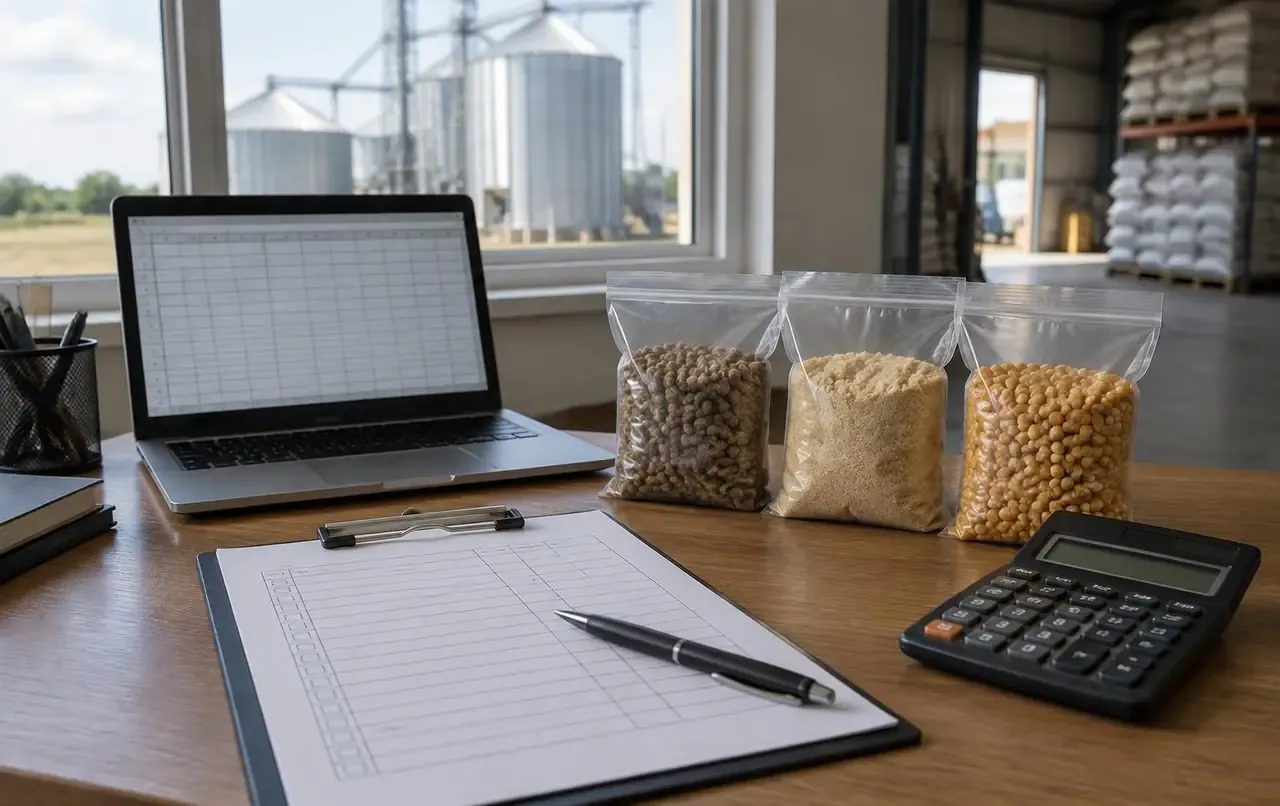
LONDON, United Kingdom — 24 October 2026 — FeedMatch Group, the buyer-first animal-feed procurement platform of Global B2B Group, today made a free feed procurement toolkit available to feed mills, integrators, importers and farms that buy compound feed, feed ingredients, premixes and additives.
The toolkit brings four working resources onto one page: a plain-English guide and downloadable template for writing an animal-feed request for quotation (RFQ), a landed-cost worksheet, a side-by-side offer comparison worksheet for up to three offers, and a supplier-document review checklist. The worksheets run in the buyer's browser and use only the figures the buyer enters; nothing typed into them is stored or sent to FeedMatch.
Why the toolkit exists
Feed buyers rarely lack supplier names. The harder part is getting offers that can be compared. A short request such as “price for 200 tonnes of layer feed” lets every supplier decide the specification, packaging, delivery point and documents, so the answers that come back describe different things. Comparing them then takes rounds of clarification, and the cost of delivery, handling and documentation often becomes visible only after an order is placed.
The toolkit is designed to move that work to the start of the process, where it is cheapest to do.
What buyers can do with it
Each resource covers one step of a feed purchase, from the first request to the document review before an order is confirmed.
- State a clearer requirement. The RFQ checklist and template lists what a supplier needs to price an offer without guessing: species and application, exact product and specification with test methods, volume and schedule, destination and delivery term, packaging, required documents and the questions every supplier should answer. It downloads as a spreadsheet with an empty answer column.
- Need fewer clarification rounds. Sending the same list to every supplier means answers arrive in the same order and on the same basis.
- Get more comparable offers. The offer comparison worksheet puts specification, grade, quantity, packaging, origin, delivery term, price basis, freight, lead time, payment conditions and documents side by side and flags where entries differ or are missing. It does not rank suppliers or judge whether products are equivalent.
- See the delivered-cost components. The landed-cost worksheet adds the base quote, freight, insurance, handling and other buyer-entered costs, shows each step of the arithmetic and divides the total by the shipment quantity in the unit the buyer chooses.
- Review documents the same way each time. The supplier-document review checklist covers specifications, quality documents, certifications, traceability and import requirements, as a review aid rather than a certification or legal opinion.
What the toolkit does not do
The worksheets do not fetch or estimate prices, market averages, benchmarks, exchange rates, supplier ratings or savings. Buyers convert currencies themselves with the rate they will use. Results are indicative planning figures based only on the inputs entered, and the page's methodology section sets out each formula and its limits.
How it fits with FeedMatch's existing tools
The toolkit links to FeedMatch's more detailed calculators where a buyer needs them: the landed cost calculator for duty and insurance percentages, the landed cost comparison for specification-adjusted cost, and the supplier total-cost comparison for losses, payment days and feed conversion. For feed-mill and plant projects, the feed-mill RFQ checklist lists the project-side questions. Guides such as buying animal feed in bulk and the structured feed sourcing framework explain the wider process.
Buyers who want FeedMatch to approach suppliers can send their requirement through the request form, which is a separate step with its own privacy notice. A person on the FeedMatch team reviews each request before any supplier is contacted, and the buyer stays in control of every decision. The tools and the request form are free for buyers; feed and ingredient supply requests have no minimum, and assisted sourcing for plant and equipment projects applies from about USD 250,000.
Roles and responsibilities
FeedMatch is a sourcing intermediary. It does not manufacture, import, export or sell feed, ingredients or equipment. Suppliers, producers and exporters are responsible for the products and shipments they offer and supply, including their specifications, documentation and compliance with the requirements of the origin and destination countries. Buyers and importers remain responsible for their own import permissions, local requirements and due diligence. Requirements differ by product and country; see Regulation & responsibilities. Nothing in the toolkit is legal advice.
Availability
The toolkit is available now in English at feedmatchgroup.com/feed-procurement-toolkit, free of charge and without registration.
About FeedMatch Group
FeedMatch Group is the specialised animal-feed and feed-ingredient procurement platform of Global B2B Group. It helps commercial buyers structure requirements, approaches suitable suppliers on their behalf and presents responses for comparison, with no direct or automatic buyer-to-supplier contact. FeedMatch Group is operated from the Republic of Cyprus. Media and partnership enquiries: contact FeedMatch.
Frequently asked questions
- What should an animal feed RFQ include?
- The species and production stage, the exact product and specification with limits and test methods, quantity and tolerance, delivery schedule, destination and the Incoterms® rule to quote on, packaging, the documents required, payment terms and the questions every supplier must answer.
- How do I compare supplier quotes for feed or feed ingredients?
- Put every quote on the same basis — same specification, quantity, delivery term and place, currency and unit — add the costs each quote leaves out, and compare lead time, payment terms and documents alongside price.
- What does landed cost mean?
- The total cost of getting a shipment to your chosen delivery point: the quoted price plus freight, insurance, handling and any other costs you pay. Divided by the shipment quantity, it gives a cost per tonne that can be compared across offers.
- Who is responsible for product and regulatory compliance?
- Suppliers, producers and exporters are responsible for the products and shipments they offer and supply meeting the applicable requirements of the origin and destination countries; buyers and importers remain responsible for their own import permissions, local requirements and due diligence. FeedMatch facilitates sourcing and does not manufacture or export feed or equipment. This is not legal advice.
Feed industry regions we work with
Feed procurement is local before it is global: raw material basis, freight and installation costs change by region. These are the areas buyers most often name when defining a feed project in English.
United States
Cities and provinces
Iowa · Nebraska · Georgia · Arkansas · Texas · North Carolina
Corn and soybean meal basis with large integrated poultry, swine and dairy operations.
United States →United Kingdom and Ireland
Cities and provinces
East Anglia · Yorkshire · Lincolnshire · Northern Ireland · Munster
Compound feed and imported protein logistics through east coast and Irish Sea ports.
United Kingdom and Ireland →Gulf and East Africa import markets
Cities and provinces
Jeddah · Dubai · Mombasa · Djibouti
Import-driven feed supply where landed cost and port logistics dominate the decision.
Gulf and East Africa import markets →FeedMatch is supplier-neutral. Regional context helps define the requirement; pricing always comes from manufacturer quotations.