
Recurring Feed Supply: Why the Lowest Unit Quote Is Not Always the Lowest Delivered Cost
On a recurring programme, small differences in specification, packaging, freight, testing, currency and quote validity repeat with every shipment. This guide shows what to compare before accepting the lowest unit price.
Short answer · reviewed November 2026
Short answer: Recurring Feed Supply: Why the Lowest Unit Quote Is Not Always the Lowest Delivered Cost
Short answer: on recurring volume, compare offers on total delivered cost per usable unit of specification, not on the quoted price per tonne or per kilogram. Put every quote on the same nutrient or active basis, origin, volume and frequency, packaging, Incoterm and validity, then add freight, duties, testing,…
Key takeaways
- A one-off purchase hides small differences.
- - Specification basis: same nutrient limits (for example protein, moisture, fat, fibre) or same declared active content for premixes and additives, on the same analytical basis.
- A low price with a large MOQ can force storage you do not have, longer stock holding and higher shelf-life risk.
- - One written specification basis sent to every supplier - Same origin disclosure, volume, frequency and contract length - Packaging, MOQ and Incoterm stated in each quote - Freight, duties, tests and handling added per delivery - Shelf…
- FeedMatch is free for buyers. You submit a structured RFQ; our team reviews it, asks what suppliers will need to know and identifies potential suppliers; we coordinate supplier questions and collect comparable quotations where available…
FeedMatch Editorial Desk
Editorial Team
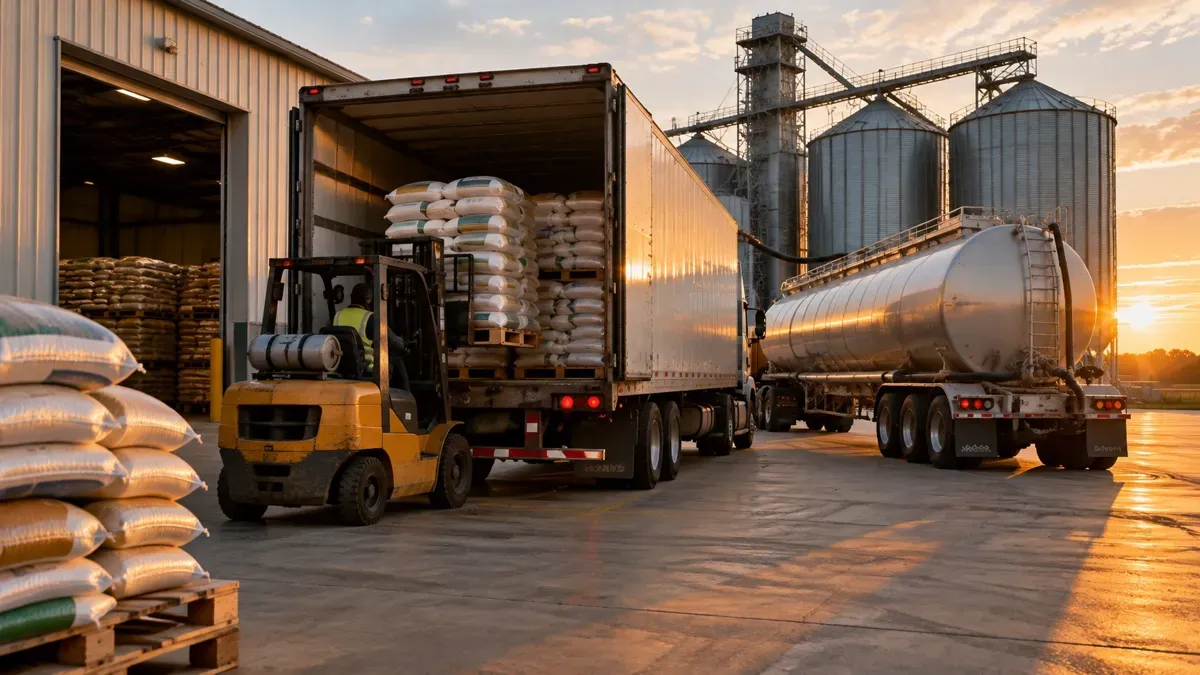
Short answer: on recurring volume, compare offers on total delivered cost per usable unit of specification, not on the quoted price per tonne or per kilogram. Put every quote on the same nutrient or active basis, origin, volume and frequency, packaging, Incoterm and validity, then add freight, duties, testing, shelf-life losses and currency before choosing.
Why does recurring volume change the comparison?
A one-off purchase hides small differences. On a supply programme they repeat with every load: a few percent less protein or active content, a pallet charge, an extra test or a weaker currency clause is paid again and again. The question is not which supplier is cheapest today, but which offer delivers the agreed specification at the lowest total cost across the contract period.
What must be identical before prices are compared?
- Specification basis: same nutrient limits (for example protein, moisture, fat, fibre) or same declared active content for premixes and additives, on the same analytical basis.
- Origin: origin changes freight, duties, documents and sometimes contaminant risk.
- Volume and frequency: tonnes per delivery, deliveries per month and contract length.
- Form and packaging: bulk, big bags or small bags, pallets and liners.
- MOQ: whether the minimum order fits your storage and usage rate.
- Delivery term: the exact Incoterm and named place.
If two offers differ on any of these, ask suppliers to restate them on your basis before comparing price. Writing that basis down once is easier with the buyer requirements page.

Which cost lines are often missing from a unit quote?
| Cost line | Why it matters on recurring supply | What to ask |
|---|---|---|
| Freight | Differs by origin, load size and route; repeats every delivery | Freight basis per load and who books it |
| Duties and import charges | Depend on origin, product code and destination rules | Applicable tariff basis — confirm locally |
| Packaging | Bags, pallets and liners add cost and handling | Packaging included or charged separately |
| Laboratory tests | Arrival testing per lot adds up | Who tests, which parameters, who pays |
| Shelf life and storage | Vitamins, enzymes and some ingredients lose value if stored too long | Shelf life at delivery and storage conditions |
| Currency | Exchange movement changes cost between orders | Quote currency and any adjustment clause |
| Quote validity | Expired quotes are re-priced | Validity date and re-quote rule |
How do MOQ, packaging and frequency interact?
A low price with a large MOQ can force storage you do not have, longer stock holding and higher shelf-life risk. Bags may cost more per tonne than bulk but suit plants without silo intake. Smaller, more frequent deliveries may raise freight per tonne but lower losses and working capital. Model your own usage rate with the feed formulation calculator and the tools in the feed procurement toolkit, including the delivered quote comparison for unit price, Incoterm, freight, duties and currency. For a single shipment, the feed landed cost calculator works out total cost per tonne from one quote.
Short buyer checklist
- One written specification basis sent to every supplier
- Same origin disclosure, volume, frequency and contract length
- Packaging, MOQ and Incoterm stated in each quote
- Freight, duties, tests and handling added per delivery
- Shelf life at delivery checked against your usage rate
- Currency, validity date and re-quote rule in writing
- Total cost per usable tonne compared, not unit price
How FeedMatch handles a recurring request
FeedMatch is free for buyers. You submit a structured RFQ; our team reviews it, asks what suppliers will need to know and identifies potential suppliers; we coordinate supplier questions and collect comparable quotations where available; we help you review offers side by side; you decide. The US$250,000 minimum applies to all purchases, including feed, ingredients, premixes, additives and plant and equipment projects. See how the feed procurement platform works and how to follow requests in the buyer portal guide.
If financing is part of the plan, eligible buyers can ask Global B2B Group for an introduction to independent providers; FeedMatch does not lend or guarantee approval, and each provider sets its own terms. See the Global B2B Group financing information.
Next step: submit a recurring supply RFQ with your specification basis, volume, frequency, packaging and delivery term.
Frequently asked questions
- Why can a lower unit quote end up costing more?
- Because the unit price is only one line. A different specification basis, smaller usable volume per load, bags instead of bulk, a higher MOQ, a different Incoterm, extra freight, duties, testing, shorter shelf life or currency movement can all add cost that repeats on every delivery.
- How do I calculate feed total cost per tonne?
- Start from the unit price on one specification basis, convert it to your currency at your own rate, then add per-tonne freight, insurance, duties on the customs value, packaging, arrival tests and handling that the quote does not already include. Divide by usable tonnes delivered. The delivered quote comparison in the toolkit does this for up to three offers; the feed landed cost calculator handles a single shipment.
- What is the minimum for a FeedMatch request?
- The US$250,000 minimum applies to all purchases, including feed, ingredients, premixes, additives and plant and equipment projects. FeedMatch is free for buyers.
- Does FeedMatch guarantee savings or supply?
- No. FeedMatch does not promise savings, guaranteed supply or quality. Availability, specifications, certifications, prices and delivery windows are confirmed by suppliers for each RFQ.
- Can FeedMatch finance a recurring purchase?
- No. FeedMatch does not lend or guarantee approval. Eligible buyers can ask Global B2B Group for an introduction to independent providers, and each provider sets its own terms.
Feed industry regions we work with
Feed procurement is local before it is global: raw material basis, freight and installation costs change by region. These are the areas buyers most often name when defining a feed project in English.
United States
Cities and provinces
Iowa · Nebraska · Georgia · Arkansas · Texas · North Carolina
Corn and soybean meal basis with large integrated poultry, swine and dairy operations.
United States →United Kingdom and Ireland
Cities and provinces
East Anglia · Yorkshire · Lincolnshire · Northern Ireland · Munster
Compound feed and imported protein logistics through east coast and Irish Sea ports.
United Kingdom and Ireland →Gulf and East Africa import markets
Cities and provinces
Jeddah · Dubai · Mombasa · Djibouti
Import-driven feed supply where landed cost and port logistics dominate the decision.
Gulf and East Africa import markets →FeedMatch is supplier-neutral. Regional context helps define the requirement; pricing always comes from manufacturer quotations.
Move from insight to procurement
Turn the ideas in this article into a live procurement action — supplier-neutral, buyer-controlled, fully documented.