
Canadian Ornamental Fish Feed Exports to Costa Rica: What the New Access Means, and Who Can Ship
CFIA has secured access for Canadian ornamental fish feed to Costa Rica. Here is what the announcement says, which products fit, and the establishment, product and certificate steps that come before any shipment.
Short answer · Updated October 2026
Short answer: Canadian Ornamental Fish Feed Exports to Costa Rica: What the New Access Means, and Who Can Ship
Short answer: Costa Rica has approved Canada's veterinary certificate for ornamental fish feed, and CFIA estimates the new market at approximately $2.7–8.2 million a year. That does not make every Canadian exporter eligible.
Key takeaways
- In its June 2026 release, CFIA reported new market access for ornamental fish feed to Costa Rica and called it "a niche but growing market".
- No. Access means an agreed certificate exists.
- The access covers feed for ornamental fish: aquarium and pond species, or fish bred for that trade.
- Settle these points with the manufacturer before asking for prices.
- Work through these steps in order, and do not ship until the SENASA listing is confirmed in writing.
FeedMatch Editorial Desk
Editorial Team
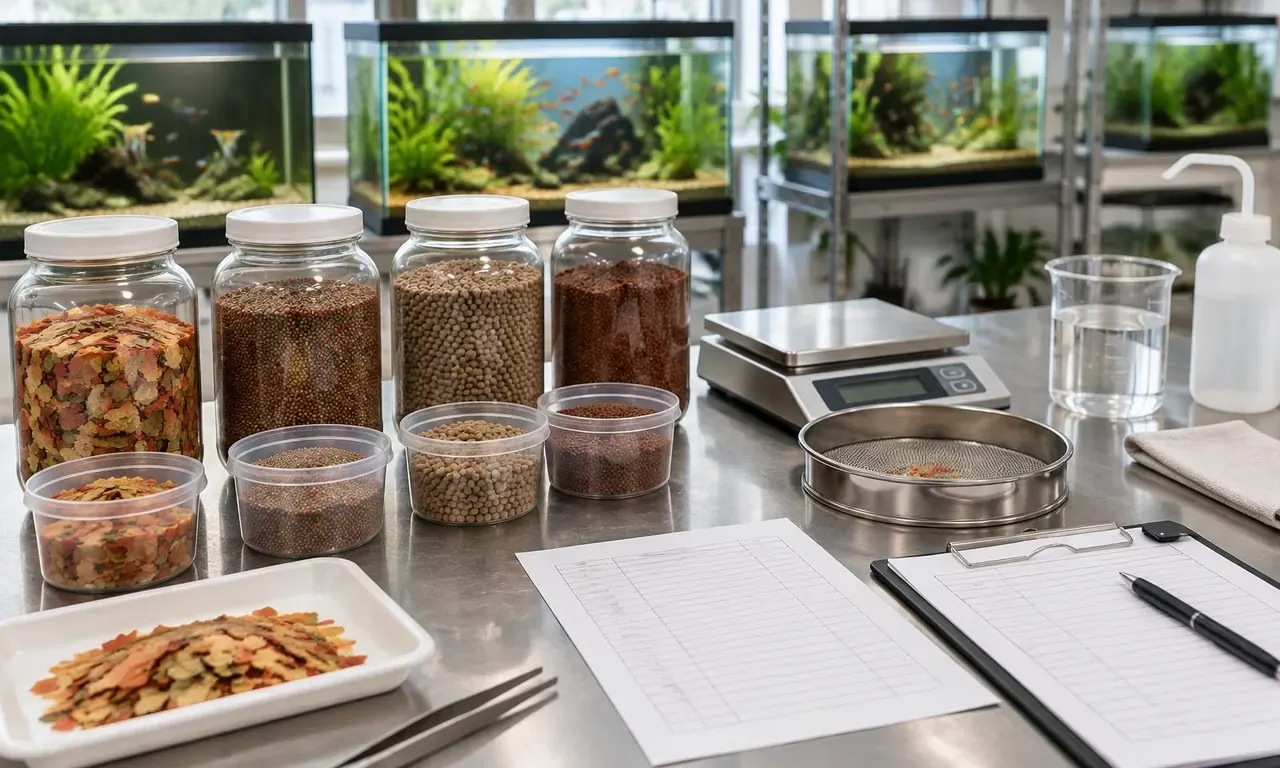
Short answer: Costa Rica has approved Canada's veterinary certificate for ornamental fish feed, and CFIA estimates the new market at approximately $2.7–8.2 million a year. That does not make every Canadian exporter eligible. Before the first shipment, the establishment must be added to SENASA's list of approved Canadian establishments after a CFIA inspection and review of the product specification sheets, and every consignment needs certificate HA3282 with Costa Rica's declarations.
Buying ornamental fish feed for Costa Rica? Send a free buyer RFQ with your formulation, species, packaging, volume, registration status, destination and delivery schedule. A person reviews it before any supplier is contacted.
What did CFIA announce?
In its June 2026 release, CFIA reported new market access for ornamental fish feed to Costa Rica and called it "a niche but growing market". It states that Costa Rica approved Canada's veterinary certificate for ornamental fish feed, "opening a new export market valued at approximately $2.7–8.2 million annually" (CFIA). CFIA's certificate list now shows *Costa Rica — Ornamental fish feed — HA3282 (2026-03-17)* (CFIA).
Does market access mean every exporter is eligible?
No. Access means an agreed certificate exists. Eligibility is decided establishment by establishment and product by product. CFIA's export-certificate guideline says exporters of animal products or by-products for animal consumption "must be added to" SENASA's list of Canadian establishments approved to export to Costa Rica, and that "exports may only commence once confirmation has been received" (CFIA guideline). Treat any offer as unconfirmed until that listing and the product's Costa Rican registration are in writing.
Which products fit, and which do not?
The access covers feed for ornamental fish: aquarium and pond species, or fish bred for that trade. It is not livestock feed, not feed for farmed food fish or shrimp, and not fish or seafood for human consumption.
Certificate HA3282 must declare that the product was processed in a CFIA-inspected facility; that its only animal-origin ingredients are insects, fish, fish meal and shrimp meal; that fish ingredients were processed in a fish-only facility; that the product or its ingredients had a validated heat treatment; that routine testing showed no Salmonella; that recontamination was prevented; and that it was packed in new packaging (SENASA IN-033, CFIA guideline).
Product, formulation, species and packaging: what to define first
Settle these points with the manufacturer before asking for prices.
- Feed form: flakes, pellets, granules, wafers, sticks or freeze-dried products; floating or sinking; particle size
- Formulation: guaranteed analysis (protein, fat, fibre, moisture, ash), full ingredient list, and every animal-origin ingredient checked against the four allowed
- Process: heat-treatment step and validation record, Salmonella test plan, post-treatment hygiene
- Species and life stage: for example tropical community fish, cichlids, koi or goldfish; fry, juveniles or adults
- Shelf life: the manufacturer's declaration and storage conditions
- Packaging: retail or bulk units, unit sizes, new packaging material, lot code, manufacture and expiry dates
- Labels: SENASA product registration asks for two draft labels for approval
- Volume and schedule: quantity per shipment and per year, first delivery window, repeat frequency
Registration and certificate checklist
Work through these steps in order, and do not ship until the SENASA listing is confirmed in writing.
- [ ] Facility inspected by CFIA, and the CFIA district office confirms it meets Costa Rica's import requirements (CFIA guideline)
- [ ] Product specification sheets sent to the CFIA district office, which forwards them to CFIA headquarters
- [ ] Written confirmation that the establishment has been added to SENASA's approved list. Do not ship before this
- [ ] Product sanitary registration with SENASA's Animal Feed Directorate: guaranteed analysis, ingredient list, quali-quantitative composition, analysis methods, process flowchart, certificate of analysis for a commercial lot, shelf-life declaration and two draft labels (SENASA DAA-PG-02-IN-01)
- [ ] For imported products: official good-manufacturing-practice certificate, Certificate of Free Sale from the origin authority (or official statement if made only for export), manufacturer's power of attorney for the registrant, SENASA fee F.01
- [ ] Costa Rican importer registered with SENASA: operating certificate (CVO), legal representative in Costa Rica and technical regent; registration valid five years (SENASA DAA-PG-01-IN-01)
- [ ] Importer requests SENASA's current import requirements. IN-033 is a guide, not an import authorisation
- [ ] For each consignment, a CFIA certificate HA3282 in Spanish or English listing product, species of origin, lot, quantity, weight, manufacture and expiry dates, exporter, importer, producing establishment, container and seal numbers, and ports
- [ ] Renewals: CFIA notes that renewing the registration is the importer's responsibility under the procedures of Costa Rica's Animal Feed Directorate
What the market estimate does not tell you
The $2.7–8.2 million range is CFIA's figure. The release does not say which currency it uses or how it was calculated, and FeedMatch has not checked it independently. It is not a price, a demand forecast for any company, or evidence that a particular buyer is waiting. Search interest is also small: Semrush estimated about 20 monthly searches for "alimento para peces" in Costa Rica on 25 October 2026.
How FeedMatch helps buyers
FeedMatch is a supplier-neutral, human-reviewed procurement service for animal-feed inputs. Importers, distributors, retailers and ornamental fish farms in Costa Rica can describe their requirement once; the team checks scope and regulatory status, then approaches suitable suppliers and presents their responses. Buyers use it free and feed purchases have no minimum (the US$250,000 minimum applies only to plant and equipment projects). FeedMatch is not a manufacturer, importer, exporter, seller or approver, and no supplier, buyer or eligibility is claimed here. Read the Costa Rica ornamental fish feed guide, the feed regulation register and Costa Rica feed procurement. Manufacturers can submit their capabilities for review.
Sources and method
- CFIA, market access news release — June 2026, page modified 2026-06-08
- CFIA, pet food export certificates — HA3282 dated 2026-03-17; page modified 2026-10-19
- CFIA, guideline for preparing export certificates — Costa Rica section; page modified 2026-07-03
- SENASA, DCA-PG-02-RS-10-IN-033 v1 — in force from 24 April 2026
- SENASA, DAA-PG-02-IN-01 — product sanitary registration requirements, in force from 1 July 2021
- SENASA, DAA-PG-01-IN-01 — establishment registration requirements, in force from 1 July 2021
All sources were read on 25 October 2026. Requirements can change without notice; always use the current official version. This article is general information, not legal advice.
Ready to source? Start your Costa Rica ornamental fish feed RFQ. It is free, and nothing is shared with suppliers before review.
Frequently asked questions
- Can any Canadian company now export ornamental fish feed to Costa Rica?
- No. The access covers the product, not every company. CFIA says the establishment must be added to SENASA's list of Canadian establishments approved to export to Costa Rica, and exports may start only after that is confirmed. Each product must also meet the certificate conditions.
- Is this the same as exporting livestock feed?
- No. The access and certificate HA3282 cover ornamental fish feed only. Livestock feed, feed for farmed food fish or shrimp, and seafood for people follow other certificates and requirements.
- How big is the market?
- CFIA values the new market at approximately $2.7–8.2 million a year. The release does not state the currency or the method, and FeedMatch has not verified the figure. It is not an order forecast for any company.
- Which animal-origin ingredients are allowed?
- Only insects, fish, fish meal and shrimp meal. Fish ingredients must come from a facility dedicated only to fish products, and the product must be heat treated with a validated process and routinely tested for the absence of Salmonella.
- Does FeedMatch register exporters or sell the feed?
- No. FeedMatch does not manufacture, import, export, register or approve products. Buyers submit a free request; the team reviews it and contacts suitable suppliers. Feed purchases have no minimum.
Feed industry regions we work with
Feed procurement is local before it is global: raw material basis, freight and installation costs change by region. These are the areas buyers most often name when defining a feed project in English.
United States
Cities and provinces
Iowa · Nebraska · Georgia · Arkansas · Texas · North Carolina
Corn and soybean meal basis with large integrated poultry, swine and dairy operations.
United States →United Kingdom and Ireland
Cities and provinces
East Anglia · Yorkshire · Lincolnshire · Northern Ireland · Munster
Compound feed and imported protein logistics through east coast and Irish Sea ports.
United Kingdom and Ireland →Gulf and East Africa import markets
Cities and provinces
Jeddah · Dubai · Mombasa · Djibouti
Import-driven feed supply where landed cost and port logistics dominate the decision.
Gulf and East Africa import markets →FeedMatch is supplier-neutral. Regional context helps define the requirement; pricing always comes from manufacturer quotations.