
Aquaculture Feed Procurement: What Fish and Shrimp Buyers Should Specify
A practical guide to specifying fish and shrimp feed, comparing supplier offers and agreeing delivery, storage and documentation requirements before purchase.
Short answer · reviewed October 2026
Short answer: Aquaculture Feed Procurement: What Fish and Shrimp Buyers Should Specify
After the first delivery, reconcile the batch documents, received quantities and storage records before scheduling the next order.
Key takeaways
- !Fish and shrimp feed pellets showing different diameters and shapes on a plain inspection tray
- After the first delivery, reconcile the batch documents, received quantities and storage records before scheduling the next order.
- - Annual feed procurement calculator - Feed bags trucks containers calculator - Broiler feed calculator - Feed buyer FAQ: 100 questions
FeedMatch Editorial Desk
Editorial Team
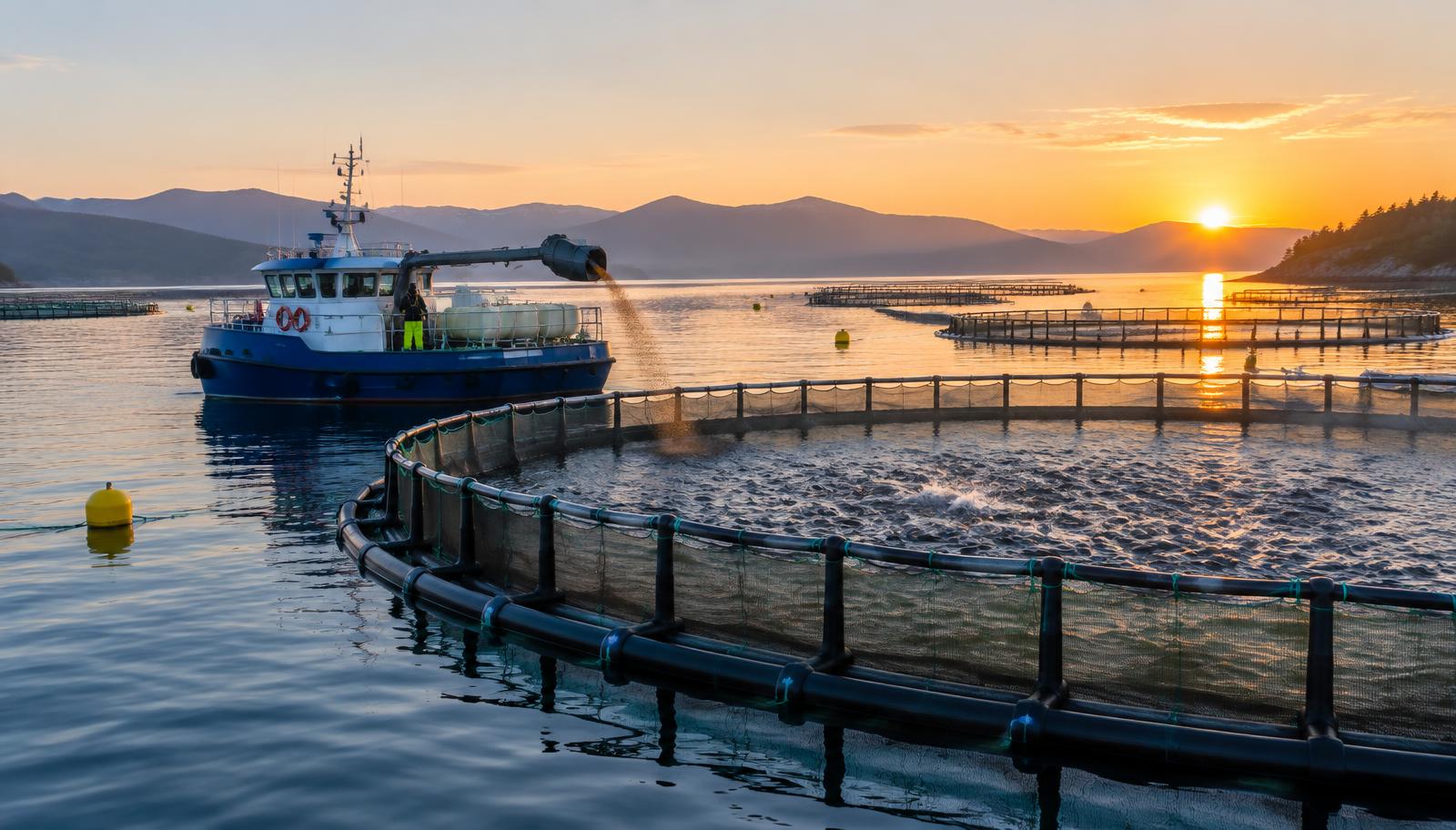
Short answer Aquaculture feed buyers should specify species, life stage, animal size, production system, pellet dimensions, floating or sinking behaviour, water stability, nutritionist-approved nutrient limits, packaging, storage conditions and delivery requirements. Make these requirements measurable and connect them to batch documents, sampling methods and acceptance rules. For fish and shrimp, the buying decision should address feed suitability and the farm’s ability to receive, store and use each shipment within its stated shelf life. Compare offers against the same written specification, not a product name or crude-protein figure alone.
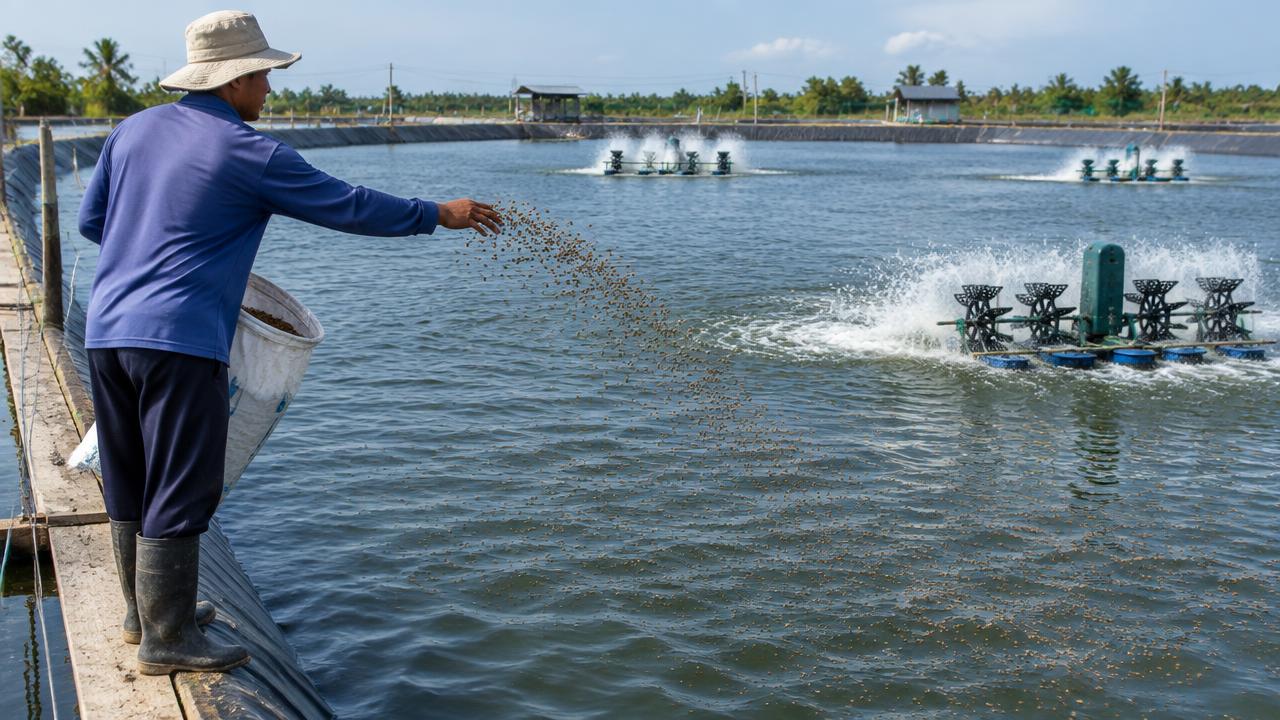
Which species, stages and farm conditions belong in the specification? Begin each aquafeed specification with the species, production stage, current animal-size range and intended feeding period. Separate nursery, grow-out and broodstock requirements rather than requesting one undifferentiated annual volume. Include the feed form required for early stages, where relevant. Describe whether production uses ponds, cages, raceways or recirculating systems. Record typical water temperature and salinity, feeding equipment and any restrictions imposed by the site’s operating permits. These are inputs for technical review, not instructions to select a universal feed type. ### Separate the purchasing lines Create a line for each species, stage and pellet specification. State the estimated quantity, receiving location and proposed delivery window for each line. Where biomass estimates or stocking plans remain uncertain, label demand as provisional and identify when the farm will update it.
How should buyers specify pellet size and floating or sinking behaviour? Ask fish feed suppliers to quote nominal pellet diameter, length where relevant, size tolerances, fines limits and the method used to measure them. Match dimensions to animal size and feeding equipment with technical advice. “Small pellet” is not an acceptance criterion. Buoyancy terminology also needs definition. Agree the observation period, test water conditions and acceptable floating or sinking fraction rather than relying on a catalogue label. | Feed characteristic | Fish-feed purchasing questions | Shrimp-feed purchasing questions | |---|---|---| | Size and form | What dimensions suit the stage and feeder? | Are crumble or pellet dimensions appropriate for the stage? | | Water behaviour | Is floating, slow-sinking or sinking feed required? | What sinking behaviour is required for the feeding method? | | Physical integrity | How are fines and breakage measured? | How are fines and submerged pellet integrity measured? | Request representative samples, but agree separately how delivered batches will be accepted.
What does a usable water-stability requirement look like? Water stability describes pellet integrity during immersion; it is not interchangeable with buoyancy. For shrimp feed procurement, and for fish feed that remains submerged before consumption, request a defined test rather than an unsupported “high stability” description. ### Specify the test conditions Agree immersion duration, water temperature, salinity, agitation, sample preparation and the measurement endpoint. Endpoints might include retained dry matter or a defined physical-integrity assessment. Results from different methods should not be treated as directly comparable. The farm’s nutritionist or another relevant technical specialist should help set acceptance limits appropriate to the feeding practice. Record whether testing is performed on every batch or at another agreed frequency, who performs it and how disputes are resolved. Do not interpret water-stability data as a feeding-performance guarantee.
Which nutrient and ingredient requirements need specialist approval? Have a nutritionist approve nutrient targets and permitted ranges for each species and stage. Depending on the application, the specification may address protein, lipid, fibre, moisture, ash, amino acids, phosphorus and other minerals or vitamins. Identify whether figures are reported as-fed or on a dry-matter basis. Distinguish guaranteed minimums, maximums and typical analytical values. A typical value is not automatically a contractual limit. Where digestible nutrient values are proposed, ask what methods and assumptions support them. ### Control substitutions and restricted materials Use the [ingredient reference](/ingredients) to organise questions about ingredient categories, declared additives and sourcing restrictions. Specify prohibited materials, applicable regulatory requirements and any customer-driven exclusions. Require written notice and an agreed approval process for material formulation or ingredient changes. Ingredient information does not replace assessment of the complete feed by a nutritionist.
How should storage and shelf life be specified in humid climates? Request the labelled shelf life, manufacturing date, expiry-date or best-before-date convention and storage conditions supported by the manufacturer. Define the minimum remaining shelf life required at receipt, accounting for transit, customs clearance and planned consumption. Do not assume the full labelled period remains available when goods arrive. Ask about bag construction, moisture protection, closure integrity, pallet configuration and handling instructions. Inspect the receiving store for water ingress, condensation risks, pest access and separation from chemicals. Follow manufacturer guidance for stacking and ventilation; use the [storage planning guidance](/storage) to structure the site review. ### Common mistakes to avoid Avoid ordering beyond suitable storage capacity, placing bags directly on damp floors, mixing unidentified lots or treating opened bags as equivalent to sealed stock. Apply first-expiry-first-out rotation. Quarantine wet, damaged, suspect or untraceable bags pending documented assessment.
How can buyers plan order quantities and delivery cadence? Estimate demand by feed line and time period using farm records and the approved feeding plan. Reconcile estimates with usable inventory, confirmed inbound stock, storage limits and expiry dates. Agree delivery windows, shipment sizes, order cut-offs and procedures for changes or partial deliveries. ### Illustrative planning formula > **Order quantity = planned consumption + target closing stock − usable opening stock − confirmed inbound stock.** > > **Illustrative example only:** Assume planned consumption of 60 tonnes, target closing stock of 15 tonnes, usable opening stock of 12 tonnes and confirmed inbound stock of 8 tonnes. The calculated order quantity is 60 + 15 − 12 − 8 = **55 tonnes**. These invented inputs are not feeding recommendations or expected results. Use the [feed requirements calculator](/feed-requirements-calculator) for initial scenario planning. Tools and calculators provide preliminary planning outputs; they do not replace a nutritionist, engineer, laboratory, lawyer, financial adviser or other relevant specialist. Validate assumptions before placing orders and review the delivery cadence when the production plan changes.
Which documents and acceptance rules should accompany each purchase? Separate documents needed before contracting from those required with every shipment. Identify the seller, manufacturer and production site, where applicable, and clarify which party is responsible for each declaration. Requirements vary by destination, feed type and transaction structure. ### Procurement checklist - Approved product specification, revision number and labelled intended use. - Batch identifiers, manufacturing dates, shelf-life information and bag labels. - Certificate of analysis showing agreed parameters, methods and batch linkage. - Applicable registrations, import paperwork and relevant safety or contaminant reports. - Agreed sampling plan, retention samples and independent laboratory arrangements. - Delivery terms, unloading responsibilities, quantity tolerances and damage-reporting procedure. - Acceptance limits, claims process and treatment of non-conforming goods. A certificate of analysis reports specified test results; it does not establish every aspect of suitability. Check document scope, dates and product references. Put rejection, replacement and payment provisions into the contract with appropriate legal advice.
What should a buyer do before requesting comparable offers? Consolidate the approved requirements into one RFQ pack with separate product lines, a delivery schedule and a supplier response template. Ask respondents to identify every deviation, excluded document and unresolved assumption. Compare delivered commercial terms alongside technical conformity, rather than comparing headline unit prices alone. Submit the pack through the [RFQ intake](/rfq-intake) if using FeedMatch. Its workflow is human-led and supplier-neutral, for commercial opportunities of USD 250,000 or more, with human review before any supplier contact. Documents and relevant public records can be reviewed; FeedMatch is not a certification body and does not audit factories. The buyer retains responsibility for technical approval, contracting and supplier selection.
What questions do aquafeed buyers commonly ask? ### Can fish and shrimp use the same procurement specification? Use a shared template, but set separate requirements for species, stage, pellet characteristics, nutrients and intended feeding conditions. ### Is crude protein enough to compare feeds? No. Compare the complete nutritionist-approved specification, reporting basis, physical characteristics, documentation and commercial terms. Equal protein figures do not establish equivalence. ### Should every fish farm buy floating feed? No. Specify buoyancy according to species, stage, production system and feeding method, with technical advice and an agreed test. ### How much remaining shelf life should a delivery have? Set a contractual minimum based on transit, storage conditions, consumption timing and manufacturer guidance. There is no universal purchasing minimum. ### What should happen when delivered feed differs from the specification? Identify and segregate the affected lot, preserve samples and records, notify the supplier and follow the agreed assessment and claims procedure before use.
How should the final specification be maintained?
After the first delivery, reconcile the batch documents, received quantities and storage records before scheduling the next order.
Record unresolved deviations explicitly rather than allowing an informal exception to become the default requirement.
Use the same controlled document for procurement, receiving and technical review.
This keeps acceptance decisions traceable across shifts and sites.
Update it whenever approved requirements change.
Retain written approval.
Keep copies accessible.
Avoid undocumented substitutions.
Confirm responsibilities.
Document decisions.
Review changes.
Track revisions.
Archive superseded copies.
Communicate updates.
Check receipt.
Resolve discrepancies.
Retain records.
Confirm acceptance.
File evidence.
Related pages on FeedMatch
Frequently asked questions
- Can fish and shrimp use the same procurement specification?
- Use a shared template, but set separate requirements for species, stage, pellet characteristics, nutrients and intended feeding conditions.
- Is crude protein enough to compare feeds?
- No. Compare the complete nutritionist-approved specification, reporting basis, physical characteristics, documentation and commercial terms. Equal protein figures do not establish equivalence.
- Should every fish farm buy floating feed?
- No. Specify buoyancy according to species, stage, production system and feeding method, with technical advice and an agreed test.
- How much remaining shelf life should a delivery have?
- Set a contractual minimum based on transit, storage conditions, consumption timing and manufacturer guidance. There is no universal purchasing minimum.
- What should happen when delivered feed differs from the specification?
- Identify and segregate the affected lot, preserve samples and records, notify the supplier and follow the agreed assessment and claims procedure before use.
Feed industry regions we work with
Feed procurement is local before it is global: raw material basis, freight and installation costs change by region. These are the areas buyers most often name when defining a feed project in English.
United States
Cities and provinces
Iowa · Nebraska · Georgia · Arkansas · Texas · North Carolina
Corn and soybean meal basis with large integrated poultry, swine and dairy operations.
United States →United Kingdom and Ireland
Cities and provinces
East Anglia · Yorkshire · Lincolnshire · Northern Ireland · Munster
Compound feed and imported protein logistics through east coast and Irish Sea ports.
United Kingdom and Ireland →Gulf and East Africa import markets
Cities and provinces
Jeddah · Dubai · Mombasa · Djibouti
Import-driven feed supply where landed cost and port logistics dominate the decision.
Gulf and East Africa import markets →FeedMatch is supplier-neutral. Regional context helps define the requirement; pricing always comes from manufacturer quotations.
Move from insight to procurement
Turn the ideas in this article into a live procurement action — supplier-neutral, buyer-controlled, fully documented.