
Animal Feed Ingredients: How to Choose and Compare for Bulk Procurement
Choose animal feed ingredients against your nutritionist-approved species and production-stage requirements. Compare the same grade, nutritional specification, physical form, origin, lot documents, shipment quantity, packaging, delivery basis and quote terms. Keep every missing item marked 'To be confirmed' rather than treating it as compliant. This is a procurement guide for industrial feed buyers, not a product listing, supplier offer or formulation prescription.
FeedMatch procurement guidance · Updated
This guide covers general procurement practice. It is not feed formulation, veterinary, food-safety or legal advice, and it does not state current prices, nutrient values or trade rules. Confirm formulation with a qualified nutritionist and import, labelling and contaminant limits with the competent authority in every country involved.
1. Start with species, use and formulation needs
Bulk feed ingredient procurement starts before any supplier is contacted. Write down which species and production stage the ingredient serves — broilers, layers, swine, ruminants or aquaculture — and what role it plays in the diet: protein source, energy source, mineral carrier, premix or functional additive.
The nutritional targets, inclusion range and acceptable substitutes should come from your own qualified nutritionist or formulation team. A procurement brief records those decisions; it should not make them. If a supplier proposes an alternative grade, send it back to the nutritionist before it enters the comparison.
2. Turn the need into a written specification
Commercial feed procurement fails most often because suppliers quote different products under the same name. A usable specification states the product name and grade, the parameters that matter to you with minimum or maximum limits, the analysis method or laboratory basis, and how much tolerance you accept.
- Key nutrients you contract on (for example protein, fat, fibre or ash), with limits set by your nutritionist
- Moisture limit and how it will be measured
- Contaminant and undesirable-substance limits required by the destination market, such as mycotoxins, heavy metals or salmonella testing where applicable
- Physical form, particle size, packaging (bulk, big bags, bags) and labelling language
- Whether genetically modified status, origin or certification claims must be documented
3. Compare MOQ, packaging and delivery schedule
State quantity per shipment, shipment frequency, packaging or bulk handling, unloading constraints and destination port or plant. Ask each respondent to quote its minimum order quantity (MOQ) in an explicit unit, pack weight, order increments and any split-shipment conditions. Do not assume one supplier's MOQ applies to another.
Distinguish a supplier's MOQ from FeedMatch's US$250,000 minimum purchase value, which applies to all purchases, including feed ingredients. If volume or value is unknown, mark it 'To be confirmed'; undisclosed value is a demand signal, not confirmed to meet the minimum. Specify the requested Incoterms® rule and named delivery point, then compare the responsibilities and exclusions in each offer.
4. Require quality documents, origin and traceability
Ask for the documents before you compare price. Typical requests include a product specification sheet, a certificate of analysis (COA) per lot, origin documents, and any health, phytosanitary or registration documents the importing country requires. Certification schemes such as GMP+ or FAMI-QS should be checked against the issuing body's public register; a logo on a brochure is not evidence.
Traceability means the supplier can link a delivered lot to its production batch, raw-material sources and analysis. Ask how lot numbers appear on bags, bulk documents and the COA.
5. Sample lots and read the COA critically
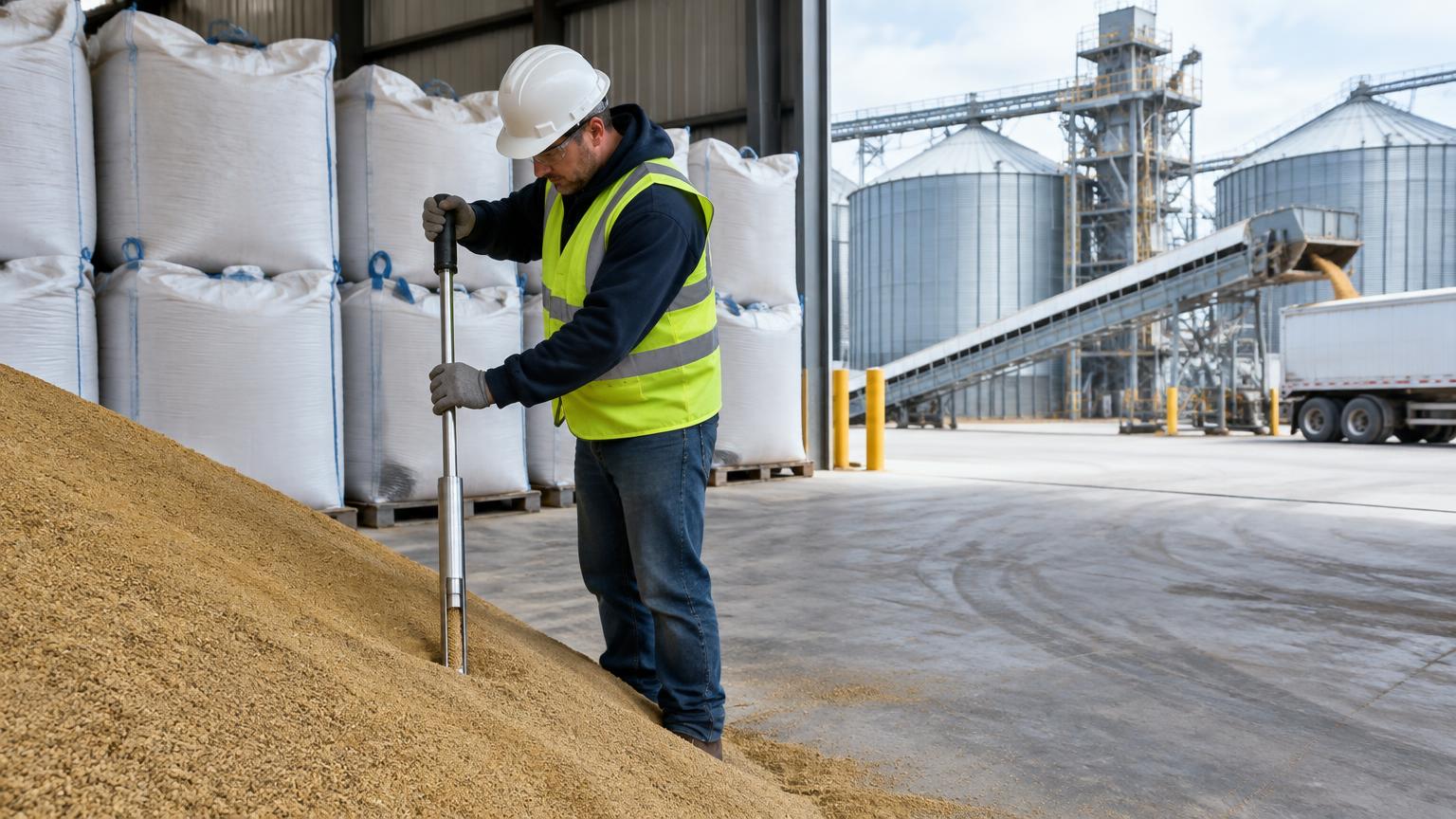
A COA is only useful if you know what it covers. Check that the lot number, date, laboratory and methods match the shipment and that every contracted parameter is reported against its limit. Pre-shipment samples and an independent inspection or laboratory check reduce the risk that a compliant sample is followed by a different bulk lot.
Agree in the contract which analysis is binding, how samples are drawn and retained, and what happens if results fall outside the specification.
6. Check supplier role, availability and logistics
Ask whether the respondent manufactures the ingredient, blends a premix or resells a lot. Record stated origin and production site, supporting documents, loading point, storage conditions, packaging capability and responsibility for claims. Compare documentary evidence, not a brochure's quality claims; this guide names no approved suppliers.
Require a dated statement of availability, whether the quote concerns an identified lot or planned production, estimated readiness and delivery windows, and what could change those dates. Leave unprovided availability and lead time as 'To be confirmed'. For fishmeal, soy, vitamins, premixes and additives, ask your technical team which storage, shelf-life and transport evidence is needed for the specified grade.
7. Compare landed cost, not headline price
Offers on different Incoterms cannot be compared directly. Convert each to a landed cost per tonne at your plant: product price plus freight, insurance, duties and import taxes, port and handling charges, inland transport, inspection and financing cost, adjusted for moisture or quality if your contract does so.
Use your own figures and quotes; current prices and duty rates change and must be confirmed for each shipment. FeedMatch's existing landed-cost calculator shows the formula and lets you enter each cost yourself.
8. Compare quote terms and receiving conditions
Record quote date and validity, currency and unit, tax basis, delivery inclusions and exclusions, payment conditions, required payment documents, sampling and acceptance terms, and the claims procedure. A blank field is an open question, not an included service or an accepted condition.
Check receiving capacity, storage conditions, documented shelf life and stock rotation with your operations team. Any substitute ingredient or alternative source must meet the buyer's technical approval process; commercial comparison is not approval for production.
9. Prepare a short animal feed ingredient RFQ
RFQ brief: Ingredient and grade — [To be confirmed]; species and stage — [To be confirmed]; approved nutrient limits, analysis basis and physical form — [To be confirmed]; permitted origin and lot-document list — [To be confirmed]; quantity, packaging and shipment schedule — [To be confirmed]; destination and delivery term — [To be confirmed]; required quote validity, currency, payment and claims terms — [To be confirmed]. Replace only the fields you can support; attach the approved specification and list unresolved questions.
Submit the brief through FeedMatch's existing short RFQ wizard. The team reviews the request; supplier outreach requires human approval and responses are presented through FeedMatch, never direct buyer-to-supplier contact. Buyer tools and review are free. Nothing is sent until you submit, and no listing here confirms stock, certification or an offer.
Bulk Feed Ingredient RFQ & Supplier Evaluation Checklist
Download a plain-text checklist to use with your team. No email or sign-up is required.
- Species, production stage and role of the ingredient confirmed by the nutritionist
- Product name, grade and acceptable substitutes
- Contracted parameters with limits, tolerances and analysis methods
- Moisture limit and measurement method
- Contaminant limits required by the destination market
- Physical form, packaging and labelling language
- Quantity per shipment, number of shipments and delivery window
- Incoterms® rule, destination port or plant
- Documents per lot: specification sheet, COA, origin, health or registration documents
- Certifications checked on the issuing body's public register
- Sampling, retained-sample and binding-analysis rules
- Supplier lead time, loading capacity, storage and claims process
- Landed cost per tonne calculated with your own figures
- Payment terms, price basis and force majeure
- Storage capacity, shelf life and a second approved source
Supplier comparison checklist: evidence before price
For each response, mark every line: documented match, stated exception, or to be confirmed. Do not rank an incomplete quote as equivalent to a fully specified one.
Technical and lot evidence
- Species, stage and approved nutritional specification
- Grade, form, origin and production or lot traceability
- COA parameters, analysis basis and required quality documents
- Buyer approval of any proposed exception or substitute
Commercial and delivery evidence
- MOQ, units, packaging and shipment schedule
- Dated availability and readiness, with unresolved items flagged
- Named delivery point and logistics inclusions or exclusions
- Quote validity, currency, payment, acceptance and claims terms
Frequently asked questions
- How should commercial buyers compare animal feed ingredients?
- Use one buyer-approved specification for every response: species and stage, grade, nutritional limits and analysis basis, physical form, origin, lot documents, MOQ, packaging, availability, delivery basis and quote terms. Record missing evidence as 'To be confirmed' and obtain technical approval before accepting substitutes.
- Are premixes, vitamins, fishmeal and soybean meal interchangeable?
- No substitution should be assumed from a shared category or price. The qualified formulation team decides the ingredient role, approved grade, inclusion and acceptable alternatives. Procurement compares only responses that meet that written brief.
- Does a supplier MOQ confirm eligibility for FeedMatch sourcing?
- No. Supplier MOQ is a quoted minimum quantity; FeedMatch's US$250,000 minimum is purchase value and applies to all purchases. Undisclosed value is a demand signal only, not confirmed to meet the minimum.
- What should a bulk feed ingredient specification include?
- Product and grade, the nutrient parameters you contract on with limits, moisture, required contaminant limits for the destination market, physical form and packaging, analysis method, and the documents required per lot.
- Who decides which ingredient or premix to buy?
- Your qualified nutritionist or formulation team sets nutritional targets and acceptable substitutes. Procurement turns those decisions into a specification and compares offers against it.
- Is a certificate of analysis enough to accept a lot?
- Not on its own. Check that it matches the lot, date and contracted parameters, and agree sampling, binding analysis and claims procedures in the contract.
- How do I compare offers quoted on FOB, CFR and DAP?
- Convert each one to a landed cost per tonne at your plant by adding the costs the supplier did not include, using your own current figures.
- Does FeedMatch sell feed ingredients?
- No. FeedMatch is a managed procurement service: you submit an RFQ, the team contacts suppliers and presents responses. It is not the seller, importer or approver of any product.
Related FeedMatch pages
- Complete compound feed buying: delivery and recorded FCR
- Bulk feed ingredients hub
- Animal feed premix procurement
- Feed vitamin buying specifications
- Fishmeal grade and supplier-quote guide
- Soybean meal specifications and buying guide
- Feed additive specifications and sourcing
- Aquafeed ingredients sourcing
- Landed cost calculator
- All feed calculators
- Feed Formulation Calculator: planning, not an approved production formula
- Feed RFQ checklist
Ready to request comparable supplier offers?
Send your specification, volume and delivery term through the existing quote form. A person reviews every request before any supplier is contacted.
Submit a bulk ingredient RFQ