
Incoterms® 2020 for Feed Imports: Who Pays, Who Carries the Risk
FOB, CFR, CIF, DAP and DDP explained for feed buyers, with the named-place and double-count checks that make offers comparable.
Short answer · Updated November 2026
Short answer: Incoterms® 2020 for Feed Imports: Who Pays, Who Carries the Risk
Short answer: an Incoterms® rule sets who pays main carriage and insurance, who clears export and import, and where risk passes. It does not set price, payment or title. Always write the rule, a precise named place and "Incoterms® 2020" — the current version published by the ICC.
Key takeaways
- They decide delivery: who books and pays main carriage, who insures, who clears export and import, and the point where risk of loss passes.
- Under CFR and CIF the seller pays freight to your port but risk passes at loading — losses at sea are the buyer's unless insured.
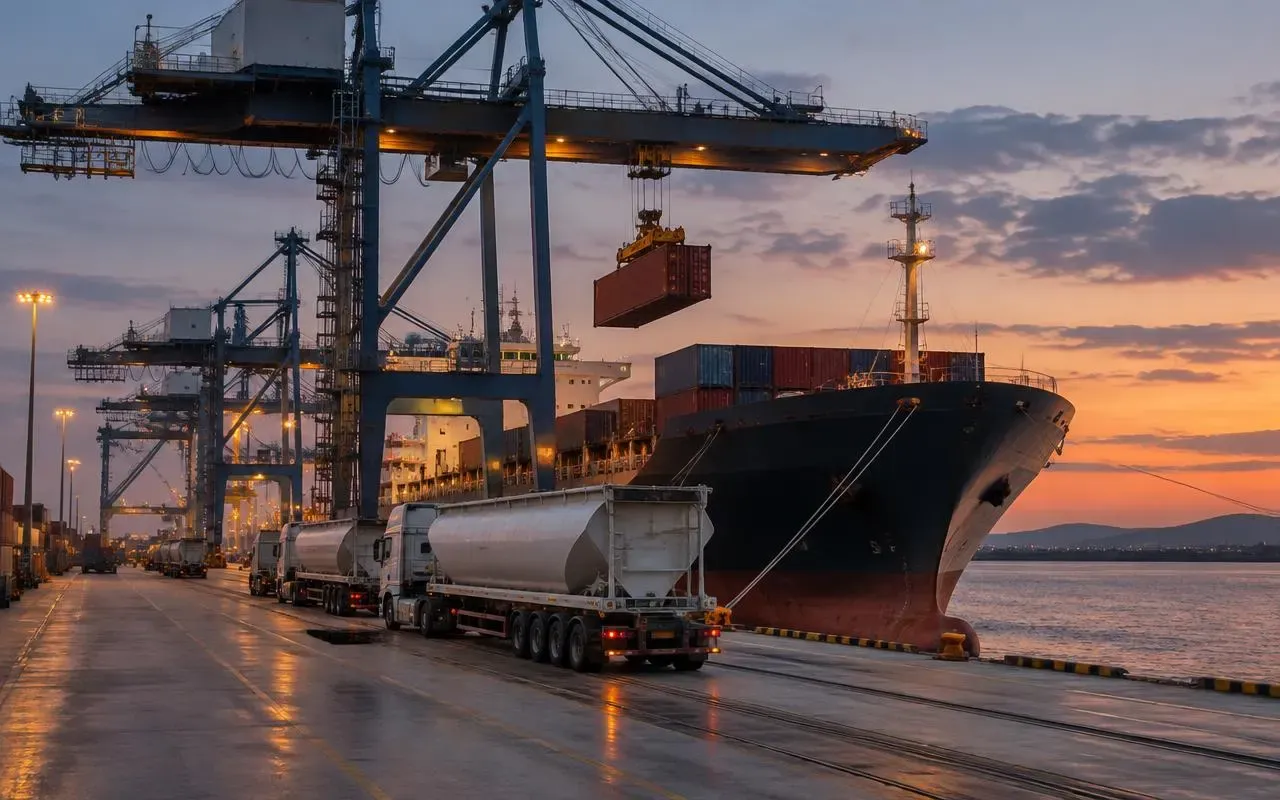
- Bulk ingredients such as soybean meal or maize usually move by sea in bulk vessels, where FOB, CFR and CIF are designed for loading at a port.
- Convert every offer to landed cost at your site.
- - One rule and one named place for all suppliers - Insurance cover stated (CIF/CIP) - Who pays discharge and port charges - Importer of record named, even under DDP - This is general guidance, not legal advice
FeedMatch Editorial Desk
Editorial Team
Short answer: an Incoterms® rule sets who pays main carriage and insurance, who clears export and import, and where risk passes. It does not set price, payment or title. Always write the rule, a precise named place and "Incoterms® 2020" — the current version published by the ICC.
What do Incoterms decide, and what do they not?
They decide delivery: who books and pays main carriage, who insures, who clears export and import, and the point where risk of loss passes. They do not decide price, payment terms, quality, ownership or what happens if a certificate is refused — those belong in the rest of the contract.
Which rules are common for feed?
| Rule | Main carriage | Insurance | Import clearance & duties | Risk passes |
|---|---|---|---|---|
| FOB (sea only) | Buyer | Buyer | Buyer | On board at port of shipment |
| CFR (sea only) | Seller | Buyer | Buyer | On board at port of shipment |
| CIF (sea only) | Seller | Seller (minimum cover) | Buyer | On board at port of shipment |
| DAP | Seller | Seller's choice | Buyer | At named destination, ready for unloading |
| DDP | Seller | Seller's choice | Seller | At named destination |
Under CFR and CIF the seller pays freight to your port but risk passes at loading — losses at sea are the buyer's unless insured. CIF requires only minimum cover; agree wider cover in writing if you need it. For containers, the ICC suggests FCA, CPT or CIP rather than FOB, CFR or CIF.
Which rule suits bulk ingredients versus bagged premixes?
Bulk ingredients such as soybean meal or maize usually move by sea in bulk vessels, where FOB, CFR and CIF are designed for loading at a port. Bagged premixes, vitamins and additives usually move in containers, where FCA, CPT or CIP match how the goods are handed over. The choice also depends on who can book freight and insurance more reliably — there is no single best rule.
How do you compare offers on different terms?
Convert every offer to landed cost at your site. Do not add freight to a CFR/CIF offer or duty to a DDP offer — that counts it twice. The landed-cost comparison flags these overlaps automatically.
What should the checklist include?
- One rule and one named place for all suppliers
- Insurance cover stated (CIF/CIP)
- Who pays discharge and port charges
- Importer of record named, even under DDP
- This is general guidance, not legal advice
Check current requirements. Import rules, permit types and certificate formats differ by country and change. Confirm them with the destination authority, your importer of record or a licensed customs broker before you sign. This article is general guidance, not legal or regulatory advice.
Buyer tools and these guides are free. FeedMatch's assisted sourcing applies to plant and equipment projects of about US$250,000 and above, while feed and ingredient purchases are subject to the same US$250,000 minimum. FeedMatch is a sourcing intermediary: we do not issue or approve permits, test samples or sell feed, and suppliers are contacted only after our team reviews your request.
Next steps - [Compare landed cost, Incoterms and lab/document costs](/feed-landed-cost-comparison) - [UAE feed procurement](/united-arab-emirates) and the [country import guides](/import-guides/egypt) - [Send a structured request](/rfq-intake)
Frequently asked questions
- Is CIF or FOB better for feed imports?
- Neither is better in general. FOB gives the buyer control of freight; CIF lets the seller book freight and minimum insurance. Compare both on landed cost.
- Does DDP mean I have no import work?
- Under DDP the seller clears import and pays duties, but some countries still require a local importer of record. Check current requirements.
- Should containerised premixes be bought FOB?
- The ICC suggests FCA, CPT or CIP for container cargo, because containers are usually handed over before loading on board.
- Which Incoterms version should I use?
- Incoterms® 2020, the current ICC version. Write it in the contract with the named place.
Feed industry regions we work with
Feed procurement is local before it is global: raw material basis, freight and installation costs change by region. These are the areas buyers most often name when defining a feed project in English.
United States
Cities and provinces
Iowa · Nebraska · Georgia · Arkansas · Texas · North Carolina
Corn and soybean meal basis with large integrated poultry, swine and dairy operations.
United States →United Kingdom and Ireland
Cities and provinces
East Anglia · Yorkshire · Lincolnshire · Northern Ireland · Munster
Compound feed and imported protein logistics through east coast and Irish Sea ports.
United Kingdom and Ireland →Gulf and East Africa import markets
Cities and provinces
Jeddah · Dubai · Mombasa · Djibouti
Import-driven feed supply where landed cost and port logistics dominate the decision.
Gulf and East Africa import markets →FeedMatch is supplier-neutral. Regional context helps define the requirement; pricing always comes from manufacturer quotations.