
Feed Import Permits and Registrations: A Buyer's Checklist
Importer of record, product and plant registration, import permit, health or phytosanitary certificate: what to confirm before signing a feed contract.
Short answer · Updated November 2026
Short answer: Feed Import Permits and Registrations: A Buyer's Checklist
Short answer: permits belong to the importer, not the supplier. Before you sign, confirm with the destination authority which approvals the product, the supplier's plant and each shipment need — and who applies for them.
Key takeaways
- - Importer of record: the licensed company that holds permits and clears customs.
- This is the common split, not a rule: confirm it with the destination authority for your product.
- Under the WTO SPS Agreement, each importing country may set its own animal- and plant-health measures, so the same ingredient can need different documents in different markets.
- In the UAE, check the Ministry of Climate Change and Environment (MOCCAE) for current feed import services and your emirate's local requirements.
- State in the contract which party obtains each certificate, the deadline before loading, and what happens if a document is refused at destination — who pays demurrage, return freight or destruction.
FeedMatch Editorial Desk
Editorial Team
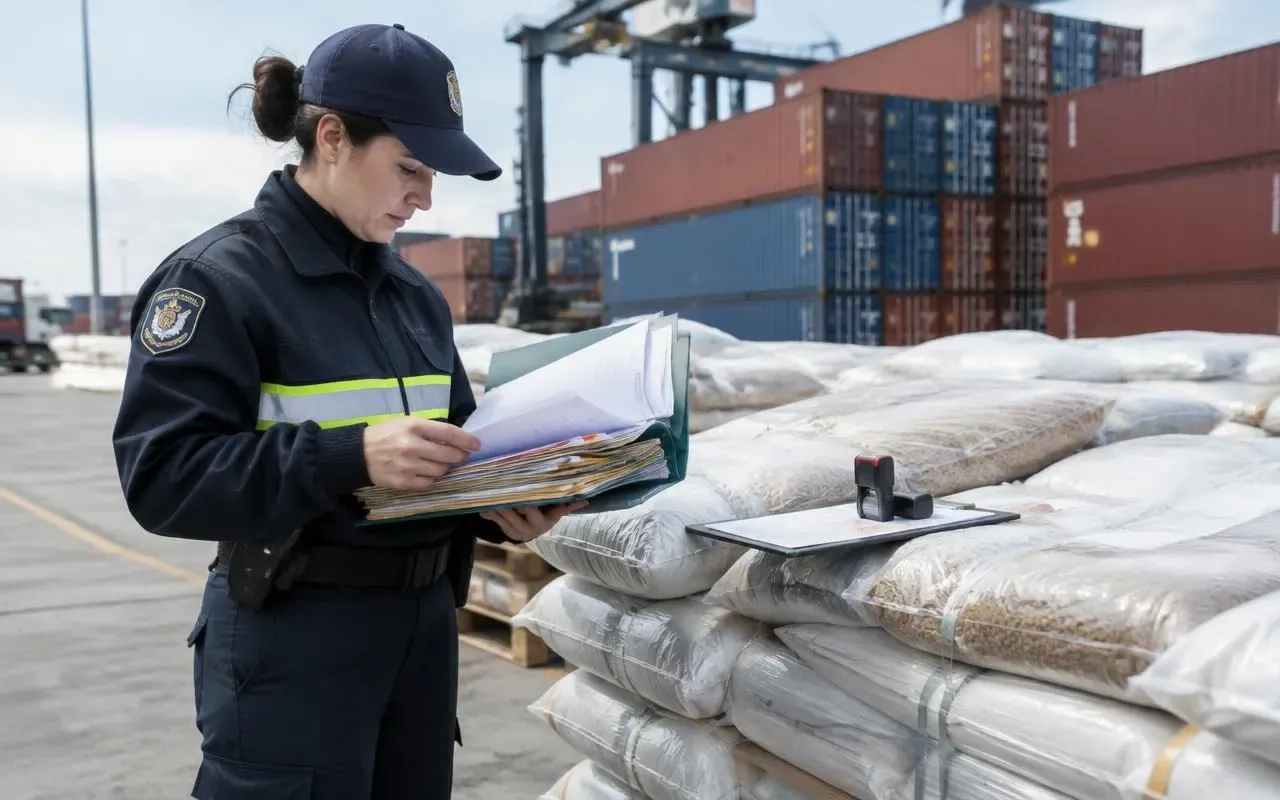
Short answer: permits belong to the importer, not the supplier. Before you sign, confirm with the destination authority which approvals the product, the supplier's plant and each shipment need — and who applies for them. The checklist below names each document, who usually holds it, and the clause to put in the contract.
Which approvals might a feed import need?
- Importer of record: the licensed company that holds permits and clears customs.
- Product registration: some countries register feed, premixes or additives before first import.
- Plant or establishment approval: some countries list approved foreign plants, especially for animal-origin ingredients.
- Import permit or licence per shipment or per period.
- Health or phytosanitary certificate issued by the exporting country's authority where required; plant products such as grains often fall under the IPPC phytosanitary system.
- Labelling in the destination's language and format.
Who usually holds each document?
| Document | Usually obtained by | When |
|---|---|---|
| Importer licence / registration | Importer of record | Before first order |
| Product or additive registration | Importer of record (sometimes with the manufacturer's dossier) | Before first import, where required |
| Foreign plant listing | Exporting authority / manufacturer | Before first shipment, where required |
| Import permit | Importer of record | Per shipment or per period |
| Health or phytosanitary certificate | Exporting country's authority, requested by the supplier | Per shipment |
| Certificate of analysis | Supplier's laboratory | Per batch |
| This is the common split, not a rule: confirm it with the destination authority for your product. |
Why do the rules differ by country and product?
Under the WTO SPS Agreement, each importing country may set its own animal- and plant-health measures, so the same ingredient can need different documents in different markets. Animal-origin proteins such as fishmeal often carry more conditions than plant ingredients; additives and premixes may need the active substance to be authorised at destination. Country-by-country official sources are collected in the feed regulation routes.
What does this look like in the United Arab Emirates?
In the UAE, check the Ministry of Climate Change and Environment (MOCCAE) for current feed import services and your emirate's local requirements. Our UAE feed procurement page summarises the official sources we checked.
Which clause should you add to the contract?
State in the contract which party obtains each certificate, the deadline before loading, and what happens if a document is refused at destination — who pays demurrage, return freight or destruction.
Check current requirements. Import rules, permit types and certificate formats differ by country and change. Confirm them with the destination authority, your importer of record or a licensed customs broker before you sign. This article is general guidance, not legal or regulatory advice.
Buyer tools and these guides are free. FeedMatch's assisted sourcing applies to plant and equipment projects of about US$250,000 and above, while feed and ingredient purchases are subject to the same US$250,000 minimum. FeedMatch is a sourcing intermediary: we do not issue or approve permits, test samples or sell feed, and suppliers are contacted only after our team reviews your request.
Next steps - [Compare landed cost, Incoterms and lab/document costs](/feed-landed-cost-comparison) - [UAE feed procurement](/united-arab-emirates) and the [country import guides](/import-guides/egypt) - [Send a structured request](/rfq-intake)
Frequently asked questions
- Who applies for a feed import permit?
- Usually the importer of record in the destination country. The supplier provides export-side certificates. Confirm the exact split with the authority.
- Do all countries require product registration for feed?
- No. Requirements vary by country and product type. Check current requirements with the destination authority before first import.
- Do premixes and additives need different approvals from bulk ingredients?
- Often yes: some countries require the active substance or the product to be authorised or registered. Confirm with the destination authority for each additive.
- Can FeedMatch obtain a permit for me?
- No. FeedMatch is a sourcing intermediary and does not issue, obtain or approve permits.
Feed industry regions we work with
Feed procurement is local before it is global: raw material basis, freight and installation costs change by region. These are the areas buyers most often name when defining a feed project in English.
United States
Cities and provinces
Iowa · Nebraska · Georgia · Arkansas · Texas · North Carolina
Corn and soybean meal basis with large integrated poultry, swine and dairy operations.
United States →United Kingdom and Ireland
Cities and provinces
East Anglia · Yorkshire · Lincolnshire · Northern Ireland · Munster
Compound feed and imported protein logistics through east coast and Irish Sea ports.
United Kingdom and Ireland →Gulf and East Africa import markets
Cities and provinces
Jeddah · Dubai · Mombasa · Djibouti
Import-driven feed supply where landed cost and port logistics dominate the decision.
Gulf and East Africa import markets →FeedMatch is supplier-neutral. Regional context helps define the requirement; pricing always comes from manufacturer quotations.