
Exporting Animal Feed and Feed Ingredients to the United States: FDA Registration, Prior Notice, FSVP and Ingredient Checks
A route guide for feed and feed-ingredient suppliers and US buyers: the requirements FDA states for imported animal food, the checks that remain open, and how to turn them into a qualified RFQ.
Short answer · Updated October 2026
Short answer: Exporting Animal Feed and Feed Ingredients to the United States: FDA Registration, Prior Notice, FSVP and Ingredient Checks
Short answer: FDA states that imported animal food must use acceptable ingredients, be safe and truthfully labelled, come from an FDA-registered facility and be covered by prior notice for each shipment. The U.S.
Key takeaways
- FDA's page on importing animal food (dated 14 Feb 2025) says animal food must be "composed entirely of ingredients judged acceptable", and that the FD&C Act requires food for humans and animals to be safe, contain no harmful or unapproved…
- The same page says imported animal food is subject to the Bioterrorism Act: producing facilities must register with FDA, and prior notice must be provided for each shipment before arrival (FDA).
- Under FSVP (page dated 1 May 2026), the importer is the U.S.
- FDA notes that a USDA APHIS Veterinary Services permit is generally required for animal food or components containing animal-origin material (such as rendered materials or dairy) from countries with livestock diseases exotic to the United…
- - [ ] Every ingredient mapped to 21 CFR 573, 21 CFR 582 or an AAFCO definition (confirm current status with FDA) - [ ] FDA food facility registration number, renewed on schedule - [ ] Who files prior notice for each shipment (importer or…
FeedMatch Editorial Desk
Editorial Team
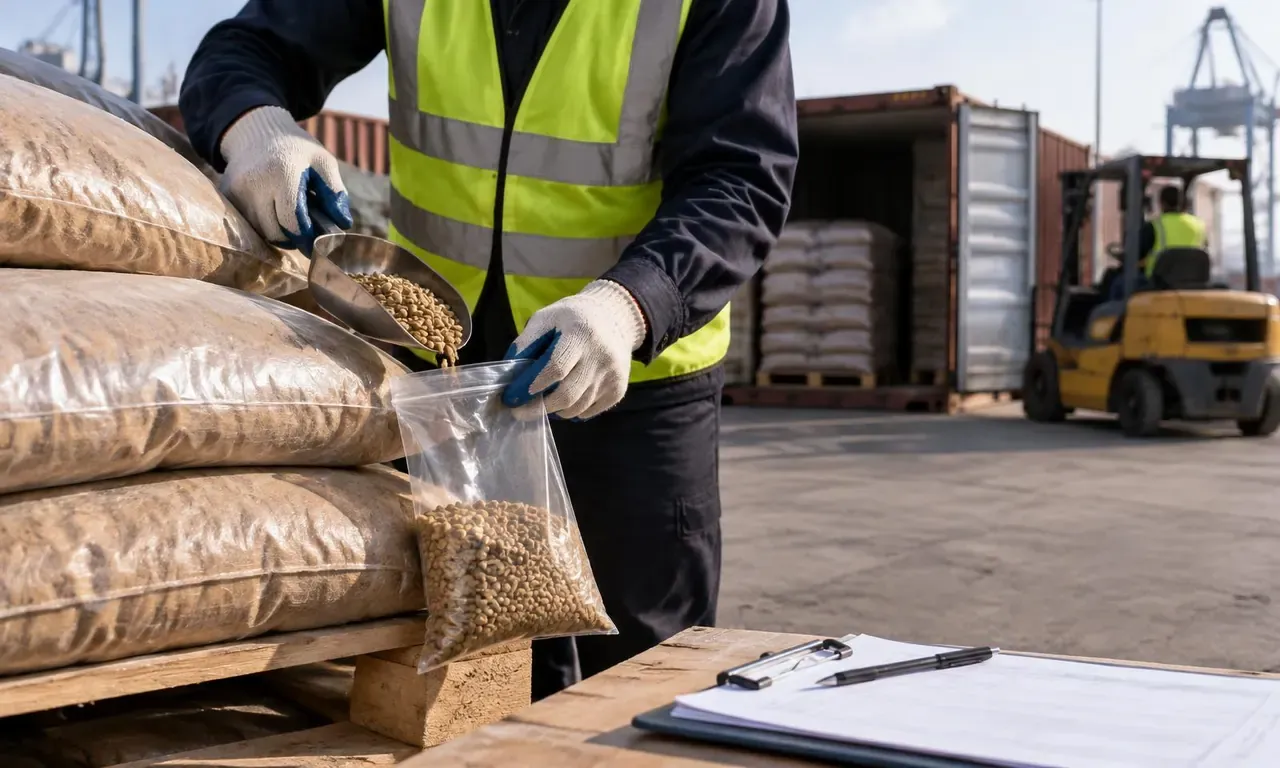
Short answer: FDA states that imported animal food must use acceptable ingredients, be safe and truthfully labelled, come from an FDA-registered facility and be covered by prior notice for each shipment. The U.S. importer usually carries Foreign Supplier Verification Program (FSVP) duties, and animal-origin ingredients from some countries generally need a USDA APHIS permit. State rules, tariffs and classification still need checking.
Sourcing feed for a US site? Submit a qualified RFQ with product, specification, documents, volume and delivery terms.
What does FDA confirm about imported animal food?
FDA's page on importing animal food (dated 14 Feb 2025) says animal food must be "composed entirely of ingredients judged acceptable", and that the FD&C Act requires food for humans and animals to be safe, contain no harmful or unapproved substances, and be truthfully labelled (FDA). There is no pre-market approval for animal foods, but ingredients must be approved food additives (21 CFR 573), GRAS (21 CFR 582), or defined in the AAFCO Official Publication.
Facility registration and prior notice
The same page says imported animal food is subject to the Bioterrorism Act: producing facilities must register with FDA, and prior notice must be provided for each shipment before arrival (FDA). FDA's registration page (12 Jan 2026) adds that registered facilities must renew every other year (FDA). FDA's prior-notice page (5 Oct 2026) confirms prior notice covers "food, including animal feed" (FDA).
FSVP and preventive controls: who does what?
Under FSVP (page dated 1 May 2026), the importer is the U.S. owner or consignee at entry, or the U.S. agent of the foreign owner with signed consent. The importer must identify hazards for each food and evaluate the supplier's performance (FDA). The Preventive Controls for Animal Food rule requires covered facilities to follow CGMPs and keep a written food safety plan with hazard analysis and, where needed, risk-based preventive controls and a supply-chain program (FDA, 13 Jul 2023).
Animal-origin ingredients: APHIS permits
FDA notes that a USDA APHIS Veterinary Services permit is generally required for animal food or components containing animal-origin material (such as rendered materials or dairy) from countries with livestock diseases exotic to the United States, applied for through APHIS eFile (FDA; APHIS).
Supplier readiness checklist for the US route
- [ ] Every ingredient mapped to 21 CFR 573, 21 CFR 582 or an AAFCO definition (confirm current status with FDA)
- [ ] FDA food facility registration number, renewed on schedule
- [ ] Who files prior notice for each shipment (importer or broker)
- [ ] Named US importer for FSVP, with hazard analysis and supplier evaluation records
- [ ] Written food safety plan and CGMPs at the manufacturing site
- [ ] APHIS VS permit if any animal-origin material is present
- [ ] Label meeting FDA animal food labelling rules
- [ ] Certificates of analysis per lot
What still needs checking?
- State feed rules: many states license or register commercial feed; not verified here.
- Ingredient pathway: FDA's page dates from 14 Feb 2025; confirm the current route for new ingredients with FDA.
- Tariffs and classification: not covered; ask a licensed customs broker.
- Medicated feed and drugs: separate FDA requirements apply (see FDA's animal and veterinary import page, 16 Jul 2026).
How to turn this into a qualified RFQ
List the product and specification, the documents above, volume per shipment and per year, packaging and labelling, Incoterm and US delivery point, and who acts as importer. Submit the RFQ; a person reviews it before any supplier is contacted, and responses are presented through FeedMatch. Feed purchases have no minimum. Read the market-entry checklist, use the landed-cost calculator and check the regulation register.
Sources
- FDA — Importing Animal Food — page dated 2025-02-14
- FDA — Registration of Food Facilities and Other Submissions — page dated 2026-01-12
- FDA — Prior Notice of Imported Foods — page dated 2026-10-05
- FDA — FSMA Final Rule on Foreign Supplier Verification Programs (FSVP) — page dated 2026-05-01
- FDA — FSMA Final Rule for Preventive Controls for Animal Food — page dated 2023-07-13
- FDA — Importing Animal and Veterinary Products — page dated 2026-07-16
- USDA APHIS — Import Animal Products (linked from FDA) — linked from FDA page dated 2025-02-14
Read on 25 October 2026. General information, not legal advice. FeedMatch is not a government body, regulator, customs broker or certifier; importers and suppliers remain responsible for compliance.
Frequently asked questions
- What does FDA require for animal food imported into the United States?
- FDA says imported animal food must be safe, truthfully labelled and made of acceptable ingredients, the producing facility must be registered with FDA, and prior notice must be given for each shipment before arrival.
- Which ingredients are acceptable in US animal food?
- FDA's import page (14 Feb 2025) says ingredients must be approved food additives (21 CFR 573), generally recognized as safe (21 CFR 582), or defined in the AAFCO Official Publication. Confirm the current pathway with FDA for new ingredients.
- Who is the FSVP importer?
- Under FDA's FSVP rule, the importer is the U.S. owner or consignee at entry, or a U.S. agent of the foreign owner with signed consent. The importer must analyse hazards and verify the foreign supplier.
- Do feed ingredients of animal origin need a USDA permit?
- FDA says a USDA APHIS Veterinary Services permit is generally required for animal food or ingredients containing animal-origin material from countries with livestock diseases exotic to the United States.
- Can FeedMatch handle FDA registration or prior notice?
- No. FeedMatch is a commercial coordinator, not a customs broker, regulator or agent. It records these requirements in the RFQ so suppliers quote against them.
Feed industry regions we work with
Feed procurement is local before it is global: raw material basis, freight and installation costs change by region. These are the areas buyers most often name when defining a feed project in English.
United States
Cities and provinces
Iowa · Nebraska · Georgia · Arkansas · Texas · North Carolina
Corn and soybean meal basis with large integrated poultry, swine and dairy operations.
United States →United Kingdom and Ireland
Cities and provinces
East Anglia · Yorkshire · Lincolnshire · Northern Ireland · Munster
Compound feed and imported protein logistics through east coast and Irish Sea ports.
United Kingdom and Ireland →Gulf and East Africa import markets
Cities and provinces
Jeddah · Dubai · Mombasa · Djibouti
Import-driven feed supply where landed cost and port logistics dominate the decision.
Gulf and East Africa import markets →FeedMatch is supplier-neutral. Regional context helps define the requirement; pricing always comes from manufacturer quotations.