
How AI Agents Can Help Prepare Animal Feed and Feed Mill RFQs
AI agents are already advising farms and feed mills on species, formulation and capacity. What they usually cannot do is turn that advice into a request a supplier can price. This article explains the division of labour: your agent helps define the feed requirement, FeedMatch helps prepare the RFQ — and requests submitted with an approved Agent Code receive a free priority review by a human specialist.
Short answer · reviewed September 2026
Short answer: How AI Agents Can Help Prepare Animal Feed and Feed Mill RFQs
An AI agent is good at defining a feed requirement and bad at running a procurement process. FeedMatch is built for the second half. In the AI Agent Procurement Pilot, an approved agent — feed industry, animal nutrition, poultry, cattle, fish or shrimp feed, or feed mill planning — helps its human user assemble…
Key takeaways
- An AI agent is good at defining a feed requirement and bad at running a procurement process.
- - The agent defines the requirement; FeedMatch prepares the RFQ; a human specialist reviews every serious request.
- Ask a capable assistant what a 40,000-bird broiler operation should feed, and you will get a credible answer about starter, grower and finisher phases, energy and protein bands, and where a premix belongs.
- A request is ready for human review when the following are answered.
- First, the agent operator applies. Approved operators receive an Agent Code that identifies requests their agent helped prepare.
FeedMatch Editorial Desk
Editorial Team
Short Answer
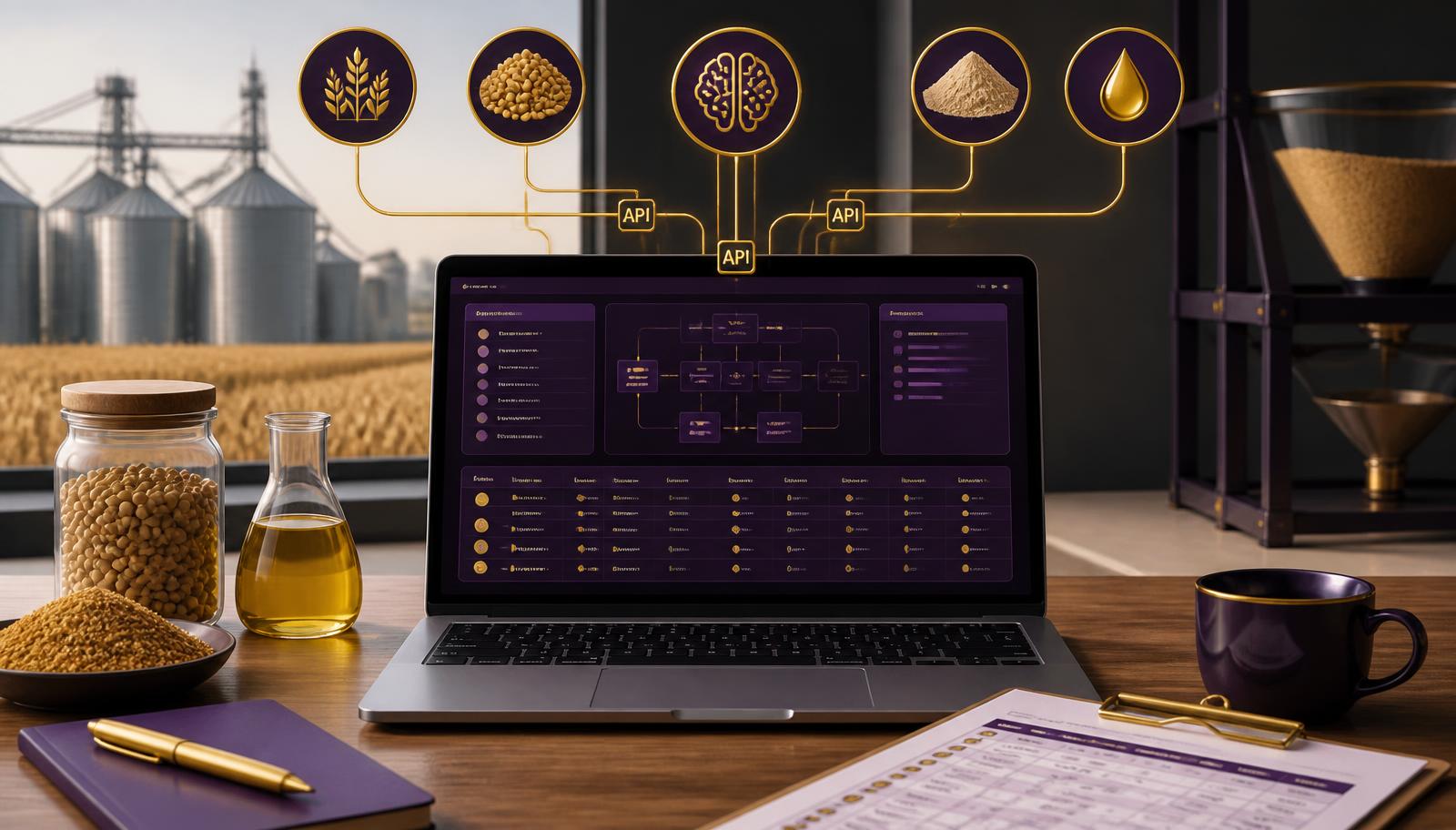
An AI agent is good at defining a feed requirement and bad at running a procurement process. FeedMatch is built for the second half. In the AI Agent Procurement Pilot, an approved agent — feed industry, animal nutrition, poultry, cattle, fish or shrimp feed, or feed mill planning — helps its human user assemble species, country, feed type, monthly volume, formulation, premix and additive needs, equipment where relevant, logistics, quality standards, packaging, budget and timeline. The human then submits that request with the agent's Agent Code, and a FeedMatch specialist manually prepares a supplier-ready RFQ as a Free Priority RFQ Review. Your agent helps define the feed requirement. FeedMatch helps prepare the RFQ.
Key Takeaways
- The agent defines the requirement; FeedMatch prepares the RFQ; a human specialist reviews every serious request.
- An approved Agent Code on a submitted request unlocks a Free Priority RFQ Review at no cost to the buyer.
- Scope covers farms and feed mills buying poultry, cattle, fish and shrimp feed, premixes, additives, ingredients and mill equipment.
- Project requests are generally around USD 250,000 and above.
- FeedMatch is supplier-neutral: no guaranteed supply, no guaranteed pricing, no automatic matching and no automated supplier connection.
- FeedMatch is not a manufacturer, nutrition lab, lender or engineering contractor.
Why Agents Stall at the RFQ
Ask a capable assistant what a 40,000-bird broiler operation should feed, and you will get a credible answer about starter, grower and finisher phases, energy and protein bands, and where a premix belongs. Ask it to get that priced in Nigeria at 900 tons a month CFR Lagos in 50 kg bags with GMP+ documentation, and it stops being an advisory problem. It becomes a documentation and relationship problem: the specification must be complete, the commercial terms must be stated, and somebody with market knowledge has to decide which suppliers are worth approaching at all.
That is the exact seam the pilot is designed around. Agents are excellent at retrieval, arithmetic and structure. They are poor at knowing which supplier answers a 900-ton enquiry seriously, which certificate the destination market actually enforces, and which quotation is cheap because it excludes something important. Those judgements stay with people.
What a Good Agent Handover Looks Like
A request is ready for human review when the following are answered. An agent that collects these in one pass saves its user a week of clarification email.
Animal species. Broiler, layer, breeder, dairy, beef, swine, tilapia, carp, shrimp — with production stage where relevant. Species and stage drive everything downstream.
Country and destination. Delivery country, port of discharge or inland destination. This determines registration requirements, permitted additives, freight and realistic supplier shortlists.
Feed type. Complete feed, concentrate, premix, additive, single raw ingredient, or feed mill equipment. Mixing these in one enquiry is the most common reason a request cannot be quoted.
Monthly volume and duration. Tons per month plus how long supply is expected to run. A twelve-month commitment and a one-off trial load are different commercial conversations.
Formulation needs. Target metabolisable energy, crude protein, digestible amino acids, medication or coccidiostat constraints, and any ingredients that must be excluded.
Premix and additives. Vitamins, trace minerals — including whether chelated forms are required — enzymes, acidifiers, toxin binders and inclusion rates if already decided.
Feed mill equipment, if relevant. Capacity in tons per hour, pelleting or extrusion, grinding, mixing, silo capacity, automation level and available power supply.
Logistics. Incoterm, bulk or bagged, container or vessel, inland transport and storage at the receiving end.
Quality standards. GMP+, ISO, HACCP, halal, local registration and the documentation the buyer must present at import.
Packaging. Bulk, big bags or 25/50 kg bags, plus labelling and language requirements.
Budget range and timeline. An indicative budget band and the required first-delivery or project-start date. These two fields decide whether an enquiry is a project or a price check.
How the Pilot Works
First, the agent operator applies. Approved operators receive an Agent Code that identifies requests their agent helped prepare. Second, the agent works through the checklist above with its human user, in whatever interface that user already trusts. Third, the human submits the request on FeedMatch with the Agent Code entered — the human submits, always, because the buyer is the party who owns the requirement and the commercial consequences. Fourth, a FeedMatch specialist manually reviews the submission, closes the gaps, and prepares a supplier-ready RFQ.
There is no automatic matching step in that sequence, and there is no automated supplier connection. Requests are read by people. That is slower than a marketplace and considerably more useful at project scale, where a badly framed enquiry costs months.
What the Pilot Does Not Promise
FeedMatch is not a feed manufacturer or ingredient producer, not a nutrition laboratory, not a lender or financial services provider, and not an engineering contractor or EPC company. It does not guarantee supply, pricing, a supplier connection or a match. Suppliers issue their own quotations and set their own terms; any financing is arranged with independent third parties on their own criteria. An agent that represents FeedMatch as a supplier, a price source or an automatic matching engine is representing it incorrectly.
What the pilot does offer is narrow and real: a structured route from an AI-defined requirement to a professionally prepared RFQ, reviewed by a person who works in this market every day.
Getting Started
Agent operators can apply for a pilot Agent Code on the AI Agent Procurement Pilot page. Buyers already working with an agent can submit their prepared request with the code on the same page and receive a Free Priority RFQ Review. If the requirement is still fuzzy — species decided but volume, formulation and destination not — submit anyway and say so; defining the requirement precisely is the first thing the review does.
Frequently asked questions
- What is the FeedMatch AI Agent Procurement Pilot?
- A programme that invites AI feed industry, animal nutrition, poultry, cattle, fish and shrimp feed, feed mill planning agents and procurement bots to help their human users prepare structured feed and feed mill project requests. Approved agent operators receive an Agent Code, and requests submitted with that code receive a Free Priority RFQ Review by a human FeedMatch specialist.
- Does the AI agent submit the request?
- No. The human buyer submits and confirms the request. The agent's role is to define and structure the requirement beforehand — species, volume, formulation, logistics, standards, packaging, budget and timeline.
- What does the Free Priority RFQ Review include?
- A manual review by a FeedMatch specialist who closes specification gaps and prepares a supplier-ready RFQ. It does not include guaranteed supply, guaranteed pricing, automatic matching or an automated supplier connection.
- What data should an agent collect before handover?
- Animal species, destination country, feed type, monthly volume, formulation needs, premix and additive requirements, feed mill equipment where relevant, logistics and Incoterm, quality standards, packaging, budget range and timeline.
- Is there a typical project size?
- Project requests are generally around USD 250,000 and above. Smaller enquiries are accepted but receive standard rather than priority handling.
- Is FeedMatch a supplier, lab, lender or contractor?
- No. FeedMatch is not a feed manufacturer, nutrition laboratory, lender or engineering contractor, and it is not a guaranteed supplier. It is a supplier-neutral procurement layer: it helps prepare the requirement and the RFQ, and people make every commercial decision.
Feed industry regions we work with
Feed procurement is local before it is global: raw material basis, freight and installation costs change by region. These are the areas buyers most often name when defining a feed project in English.
United States
Cities and provinces
Iowa · Nebraska · Georgia · Arkansas · Texas · North Carolina
Corn and soybean meal basis with large integrated poultry, swine and dairy operations.
United States →United Kingdom and Ireland
Cities and provinces
East Anglia · Yorkshire · Lincolnshire · Northern Ireland · Munster
Compound feed and imported protein logistics through east coast and Irish Sea ports.
United Kingdom and Ireland →Gulf and East Africa import markets
Cities and provinces
Jeddah · Dubai · Mombasa · Djibouti
Import-driven feed supply where landed cost and port logistics dominate the decision.
Gulf and East Africa import markets →FeedMatch is supplier-neutral. Regional context helps define the requirement; pricing always comes from manufacturer quotations.
Move from insight to procurement
Turn the ideas in this article into a live procurement action — supplier-neutral, buyer-controlled, fully documented.