
Farm Pellet Machine Troubleshooting: Fines, Soft Pellets, Blockages and Uneven Output
A checklist for farms making their own pellets: match each symptom to the likely cause, test one change at a time and keep records your supplier can act on.
Short answer · Updated October 2026
Short answer: Farm Pellet Machine Troubleshooting: Fines, Soft Pellets, Blockages and Uneven Output
Short answer: most farm pellet problems come from four things — mash moisture, grind size, die and roller condition, and cooling. Match the symptom to the likely cause in the table below, change one thing at a time, and write down the result. If the problem continues, send those records to the machine supplier.
Key takeaways
- Always stop the machine, isolate power and follow the manufacturer's manual before clearing a blockage or touching the die or rollers.
- 1. Moisture: squeeze test is a rough guide only; a moisture meter is better.
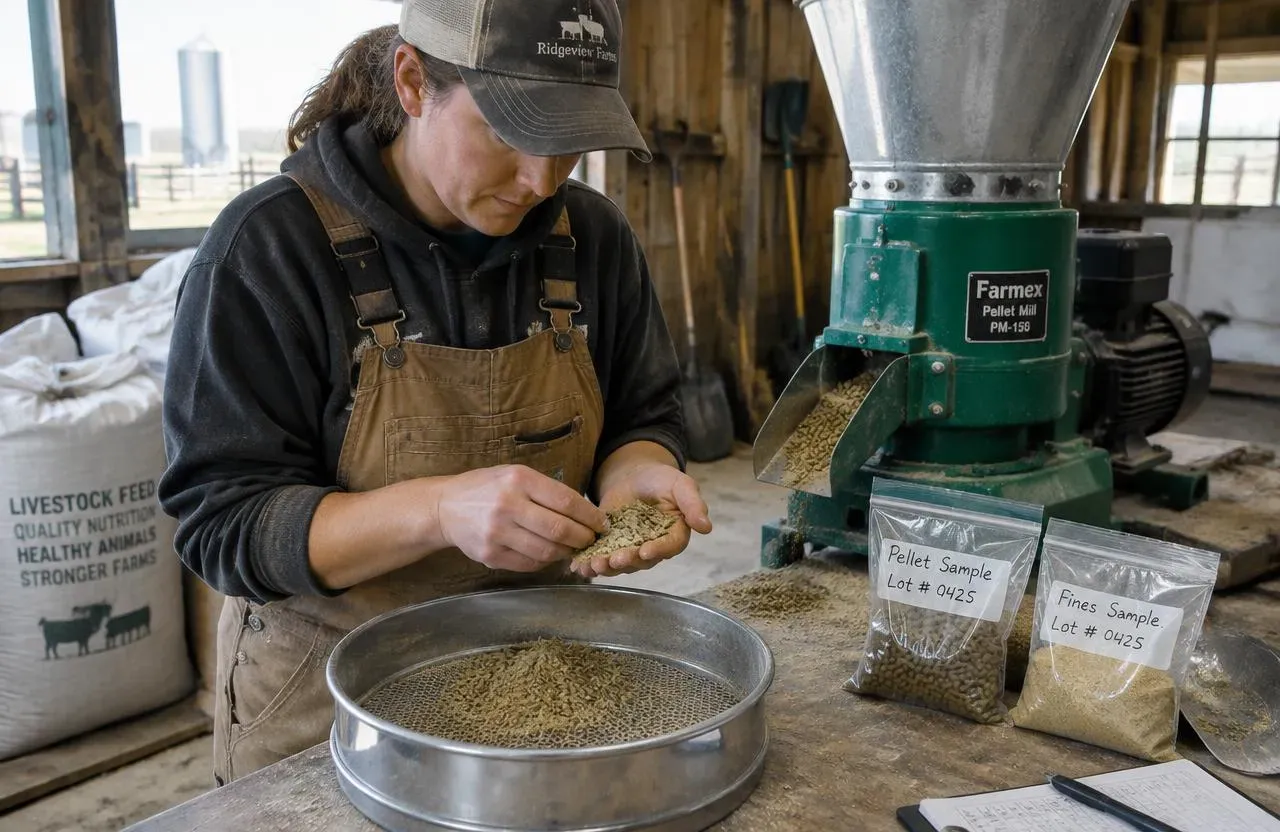
- For each batch, write the recipe, moisture, die used, feed rate, time run, output and the share of fines from a simple sieve test.
- If your records show the machine cannot reach the output or quality you need on your recipe, read the pellet machine buying guide before requesting quotes.
- - FAO: animal feed quality and safety. - ASABE standards library (S269, pellet durability).
FeedMatch Editorial Desk
Editorial Team
Short answer: most farm pellet problems come from four things — mash moisture, grind size, die and roller condition, and cooling. Match the symptom to the likely cause in the table below, change one thing at a time, and write down the result. If the problem continues, send those records to the machine supplier.
Safety first
Always stop the machine, isolate power and follow the manufacturer's manual before clearing a blockage or touching the die or rollers. Never reach into the feed inlet while the machine is running.
Symptom-to-cause table
| Symptom | Likely causes to check | First thing to try |
|---|---|---|
| Lots of fines and dust | Mash too dry, coarse grind, worn die, pellets handled while hot | Check moisture, grind finer, sieve before bagging |
| Soft, crumbly pellets | Mash too wet or too dry, die too thin for recipe, too much fat in mash | Recheck moisture and recipe with your nutritionist |
| Machine blocks or stalls | Mash too wet, feed rate too high, rollers set wrong, die too tight | Reduce feed rate, adjust rollers per manual |
| Uneven pellet length | Cutter knife position, uneven die wear, irregular feeding | Reset knife, feed steadily, inspect die |
| Burnt smell or very hot pellets | Too much friction, dry mash, die too tight | Stop, check moisture and die choice |
| Output lower than expected | Worn die or rollers, wrong recipe for die, power supply limits | Compare with supplier rating for your recipe |
Step-by-step checks
- Moisture: squeeze test is a rough guide only; a moisture meter is better. Record the reading for each batch.
- Grind: a consistent, finer grind usually binds better. Check the hammer mill screen and hammers for wear.
- Die and rollers: look for uneven wear, blocked holes and a polished, even surface. Ask the supplier which die suits each recipe.
- Feeding rate: feed steadily; surging feed causes blockages and uneven pellets.
- Cooling and storage: let pellets cool and dry before bagging so they don't sweat, crumble or go mouldy. The FAO feed quality overview explains why moisture control matters for safe storage.
Keep records your supplier can use
For each batch, write the recipe, moisture, die used, feed rate, time run, output and the share of fines from a simple sieve test. Commercial labs use the ASABE S269 durability test if you need a standard figure. These records turn a vague complaint into something a supplier can fix.
When it's time to change equipment
If your records show the machine cannot reach the output or quality you need on your recipe, read the pellet machine buying guide before requesting quotes. FeedMatch reviews every request by hand before contacting suppliers.
Sources
- FAO: animal feed quality and safety.
- ASABE standards library (S269, pellet durability).
- This guide covers physical pellet quality, not nutrition or animal health.
Frequently asked questions
- Why are my feed pellets falling apart?
- The usual causes are wrong mash moisture, a coarse or uneven grind, a worn or unsuitable die, poor roller adjustment, or pellets bagged before they have cooled and dried. Check one cause at a time and record what you changed.
- Why does my pellet machine keep blocking?
- Blockages are commonly caused by mash that is too wet, feeding faster than the machine can process, a die that is too tight for the recipe, or rollers set too close or too far. Stop safely, clear it following the manual, then reduce the feed rate and recheck moisture.
- How do I measure pellet quality on the farm?
- Sieve a sample to see the share of fines, and track it batch by batch. Commercial labs commonly use the ASABE S269 pellet durability method; your supplier or a feed lab can test samples if you need a standard result.
- Can this guide fix nutrition problems?
- No. It covers pellet physical quality only. Recipe and nutrient questions belong to a qualified animal nutritionist or veterinarian.
Feed industry regions we work with
Feed procurement is local before it is global: raw material basis, freight and installation costs change by region. These are the areas buyers most often name when defining a feed project in English.
United States
Cities and provinces
Iowa · Nebraska · Georgia · Arkansas · Texas · North Carolina
Corn and soybean meal basis with large integrated poultry, swine and dairy operations.
United States →United Kingdom and Ireland
Cities and provinces
East Anglia · Yorkshire · Lincolnshire · Northern Ireland · Munster
Compound feed and imported protein logistics through east coast and Irish Sea ports.
United Kingdom and Ireland →Gulf and East Africa import markets
Cities and provinces
Jeddah · Dubai · Mombasa · Djibouti
Import-driven feed supply where landed cost and port logistics dominate the decision.
Gulf and East Africa import markets →FeedMatch is supplier-neutral. Regional context helps define the requirement; pricing always comes from manufacturer quotations.