
Why Feed Formulation Matters: From Nutrient Targets to Animal Results
Feed formulation connects nutrient requirements with ingredient selection and manufacturing controls. Commercial buyers help protect that connection through clear specifications, change control and consistent supply.
Short answer · reviewed October 2026
Short answer: Why Feed Formulation Matters: From Nutrient Targets to Animal Results
Feed formulation matters because animals need usable nutrients in appropriate amounts and proportions, not simply a list of ingredients. A balanced feed ration supports growth, maintenance, reproduction and product quality when it matches the species, production phase, intake and operating conditions.
Key takeaways
- Feed formulation matters because animals need usable nutrients in appropriate amounts and proportions, not simply a list of ingredients.
- Animal feed formulation starts with the animal, not the cheapest available ingredient.
- Energy supports maintenance and production.
- Minerals and vitamins support skeletal development, metabolism, immunity and reproduction.
- Ingredient choice affects nutrient availability, palatability, processing behaviour, contamination exposure and supply continuity.
Nutrition Desk
Feed Nutritionists

Short answer
Feed formulation matters because animals need usable nutrients in appropriate amounts and proportions, not simply a list of ingredients. A balanced feed ration supports growth, maintenance, reproduction and product quality when it matches the species, production phase, intake and operating conditions. Nutrient shortages, excesses or inconsistent delivery can undermine performance and health. Qualified nutritionists should set nutrient targets, assess ingredient suitability and approve formulas. The commercial buyer’s role is to translate those decisions into measurable specifications, manufacturing requirements and dependable supply. Formulation is therefore both a nutritional design task and a procurement control point: an acceptable formula on paper can still fail if delivered feed differs from it.
Why must nutrient targets fit the animal and its conditions?
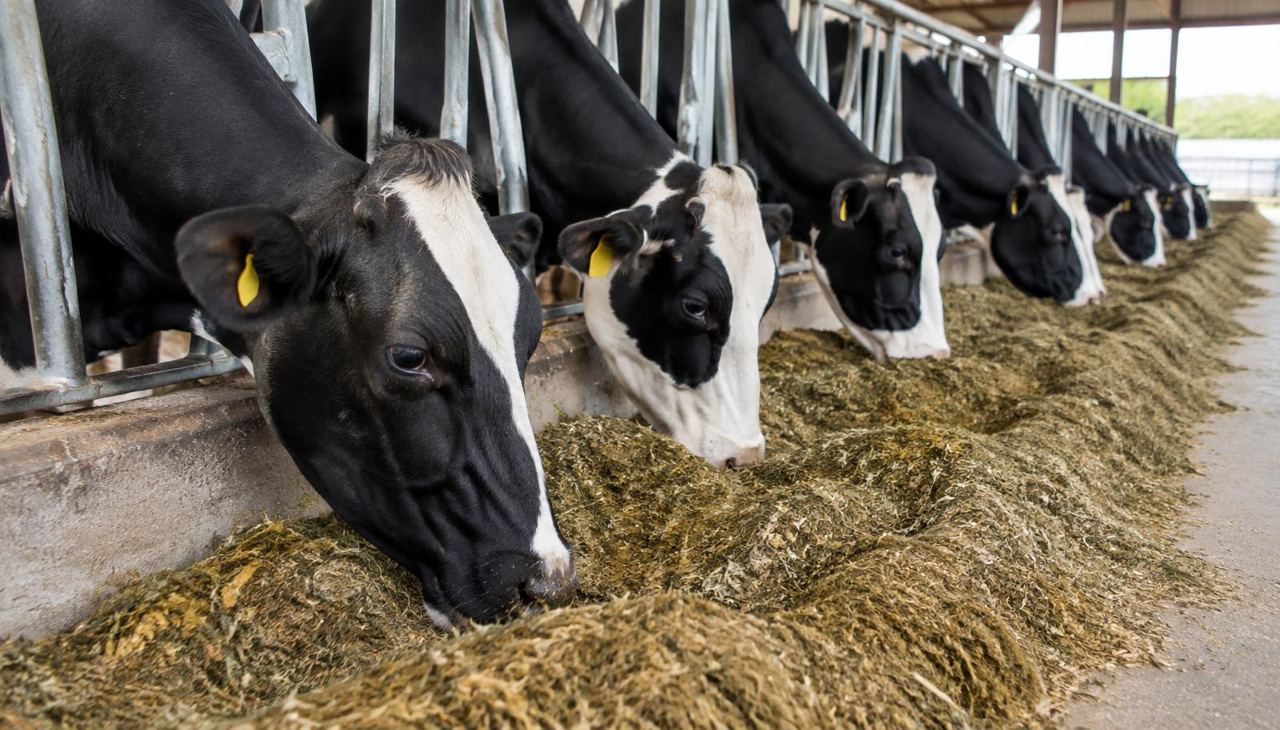
Animal feed formulation starts with the animal, not the cheapest available ingredient. Species differ in digestive capacity and nutrient use. Ruminants depend on rumen fermentation; pigs and poultry require different approaches to fibre, energy and amino-acid supply. Requirements also change with age, body weight, pregnancy, lactation and production intensity. Expected intake matters because nutrient concentration alone does not establish daily nutrient supply. Heat stress, poor water availability, disease and housing conditions can reduce intake or change requirements. A nutritionist may adjust nutrient density or feeding strategy, but feed cannot compensate for every management problem. ### Establish the design basis Give the nutritionist and prospective manufacturer the species, phase, production objective, expected intake, feeding system, other ration components and environmental constraints. Relevant species-specific NRC or NASEM publications, established feeding systems and current research provide reference points; their assumptions still need checking against the actual operation.
How do energy and amino acids influence growth and output?
Energy supports maintenance and production. Too little usable energy can limit growth or output even when protein appears adequate. Excess energy relative to other nutrients can alter body composition. Buyers should specify the approved energy system: digestible, metabolisable and net energy values are not interchangeable, and ingredient values are species-dependent. Crude protein measures nitrogen-based protein content, but does not describe amino-acid balance or availability. For pigs and poultry, a nutritionist may specify digestible amino-acid targets and ratios. In ruminants, rumen-degradable protein, microbial protein production and metabolisable protein supply require a different assessment. ### Compare like with like Ask whether quoted values are measured, calculated or taken from reference tables. Confirm units and the moisture basis. Two feeds with the same crude protein percentage may supply different amounts of usable amino acids. Similarly, higher crude protein does not automatically mean better performance or a better purchasing decision.
What roles do minerals, vitamins and fibre play?
Minerals and vitamins support skeletal development, metabolism, immunity and reproduction. Their inclusion must account for requirements, availability, interactions and applicable legal limits. More is not necessarily better: excessive inclusion can create toxicity, antagonisms or unnecessary excretion. Premix identity, storage conditions and shelf life therefore belong in procurement discussions. Fibre affects gut function, passage rate and energy availability, but its role depends on species and fibre characteristics. In ruminants, physically effective fibre helps support chewing and rumen function. In pigs and poultry, fibre type and inclusion need careful assessment rather than a blanket assumption that all fibre is undesirable. Product quality can also respond to nutrient balance, including carcass composition, milk components and egg characteristics. These relationships are conditional; formulation alone does not guarantee a particular commercial grade.
How should buyers compare ingredients and finished-feed offers?
Ingredient choice affects nutrient availability, palatability, processing behaviour, contamination exposure and supply continuity. An ingredient name is not a complete specification: origin, processing and storage can change its nutritional contribution. Use an ingredient reference to structure questions, then obtain product-specific evidence rather than assuming all material in a category is equivalent.
| Comparison point | Weak purchasing basis | More useful purchasing basis |
|---|---|---|
| Energy | One value without a defined system | Approved energy system, species basis and calculation method |
| Protein | Crude protein percentage alone | Crude protein plus relevant amino-acid or protein-system targets |
| Fibre | A generic “high-fibre” description | Specified fibre measures and physical characteristics where relevant |
| Safety | A general quality assurance statement | Defined hazards, applicable limits, sampling and test requirements |
| Consistency | An acceptable initial sample | Batch controls, tolerances, traceability and substitution rules |
A lower purchase price may reflect differences in moisture, nutrient availability or risk allocation. Compare offers against the same approved specification and delivery scope before judging commercial value. Ingredient flexibility can be useful, but substitutions should remain within nutritionist-approved constraints.
How can a simple calculation prevent specification errors?
A frequent comparison error is mixing dry-matter and as-fed values. Dry-matter reporting excludes water; as-fed reporting includes it. Procurement documents should identify the basis for every relevant nutrient value and define how moisture changes affect acceptance.
Illustrative example only: converting a nutrient value
A feed formulation calculator can support preliminary planning and organised comparisons. Tools and calculators provide preliminary planning outputs and do not replace a nutritionist, engineer, laboratory, lawyer, financial adviser or other relevant specialist. Do not treat a calculated value as a laboratory result or a release authorisation.
What should a buyer put in the feed specification?
Turn the approved nutritional design into a document that purchasing, production and quality teams can interpret consistently. Distinguish guaranteed limits from typical values, and identify which requirements are contractual acceptance criteria. Avoid demanding analytical precision that the agreed method cannot reliably deliver.
Procurement specification checklist
Have the nutritionist approve nutritional clauses and relevant specialists review safety, manufacturing and contractual provisions. Keep a controlled version so an old quotation cannot silently become the production specification.
How does consistency connect feed nutrition and performance?
The link between feed nutrition and performance depends on repeated delivery, not just one compliant sample. Ingredient variation, weighing errors, poor mixing, segregation and storage damage can change what animals actually consume. Uneven nutrient distribution can contribute to variable growth and product uniformity, alongside genetics, health and management. ### Verify the delivery system Agree risk-based checks for incoming materials and finished feed. These may include representative sampling, moisture testing, nutrient analysis, contaminant testing and mixing-uniformity assessment. Sampling design matters because a convenient grab sample may not represent a heterogeneous batch. Review animal indicators with the nutritionist and farm team: intake, growth, feed conversion, health observations and relevant product measures. Interpret changes alongside disease events, weather, water and management. A performance shift is a reason to investigate, not proof that feed caused it.
Which common mistakes weaken otherwise sound formulation?
Buying on crude protein alone overlooks energy, amino-acid availability and other limiting nutrients. Copying a formula from another farm ignores differences in animals, ingredients and conditions. Accepting an unapproved substitution assumes nutritional equivalence that may not exist. Other mistakes include ignoring nutrients supplied by forage or supplements, using stale ingredient analyses, and treating a premix as interchangeable without checking its concentration and intended inclusion. Excessive focus on ingredient cost can also neglect processing constraints, storage losses and rejection risk. Finally, do not respond to disappointing results by adding nutrients indiscriminately. Ask the nutritionist to investigate the likely constraint and have the laboratory or other specialist test the relevant hypothesis.
What is the concrete next step for a commercial buyer?
Prepare a one-page design brief and attach the nutritionist-approved specification. Identify unresolved items, including reporting bases, analytical methods, substitution permissions and acceptance limits. Then request comparable offers covering the same volume, destination, packaging and delivery scope. For commercial opportunities of USD 250,000 or more, FeedMatch provides a human-led, supplier-neutral workflow through the RFQ intake, with human review before any supplier contact. Documents and relevant public records can be reviewed; FeedMatch is not a certification body and does not audit factories. Keep technical approval with the nutritionist and other relevant specialists, and supplier selection with the buyer. Before placing an order, agree how conformity will be demonstrated and how deviations will be handled.
faqs
Related pages on FeedMatch
Frequently asked questions
- What is feed formulation?
- Feed formulation is the selection and proportioning of ingredients to meet defined animal nutrient requirements within nutritional, safety, manufacturing and commercial constraints. A qualified nutritionist should establish the targets and approve the formula for its intended use.
- Is a higher-protein feed always better?
- No. Crude protein alone does not establish amino-acid availability, energy balance or nutritional adequacy. A higher-protein feed may not address the limiting nutrient and can increase unnecessary nutrient excretion. Compare feeds using the nutritionist-approved specification.
- Can the same balanced feed ration suit every production phase?
- Not automatically. Nutrient needs and intake change with age, body weight and reproductive or production stage. A ration suitable for one phase may undersupply or oversupply nutrients in another. Phase changes should follow a nutritionist-approved feeding programme.
- How can buyers control ingredient substitutions?
- Specify permitted ingredients and substitution boundaries, require advance notification where appropriate, and define when nutritionist approval is needed. Any proposed replacement should be assessed for nutrient availability, safety, processing effects and continued compliance with the finished-feed specification.
- Can a feed formulation calculator replace professional advice?
- No. Calculators provide preliminary planning outputs based on their inputs and assumptions. They cannot independently establish ingredient quality, animal requirements, manufacturing suitability or legal compliance. A nutritionist and other relevant specialists must review decisions within their areas of expertise.
Feed industry regions we work with
Feed procurement is local before it is global: raw material basis, freight and installation costs change by region. These are the areas buyers most often name when defining a feed project in English.
United States
Cities and provinces
Iowa · Nebraska · Georgia · Arkansas · Texas · North Carolina
Corn and soybean meal basis with large integrated poultry, swine and dairy operations.
United States →United Kingdom and Ireland
Cities and provinces
East Anglia · Yorkshire · Lincolnshire · Northern Ireland · Munster
Compound feed and imported protein logistics through east coast and Irish Sea ports.
United Kingdom and Ireland →Gulf and East Africa import markets
Cities and provinces
Jeddah · Dubai · Mombasa · Djibouti
Import-driven feed supply where landed cost and port logistics dominate the decision.
Gulf and East Africa import markets →FeedMatch is supplier-neutral. Regional context helps define the requirement; pricing always comes from manufacturer quotations.
Move from insight to procurement
Turn the ideas in this article into a live procurement action — supplier-neutral, buyer-controlled, fully documented.