
Integrated Feed Planning: Matching Feed Suppliers, Premix and Farm Needs
Integrated feed planning connects nutrition targets, supplier specifications, ingredient variability and farm delivery needs. A shared plan helps buyers manage handovers and investigate deviations without treating performance as a guaranteed purchasing outcome.
Short answer · reviewed October 2026
Short answer: Integrated Feed Planning: Matching Feed Suppliers, Premix and Farm Needs
Integrated feed planning connects nutrition targets, supplier specifications, ingredient variability and farm delivery needs. A shared plan helps buyers manage handovers and investigate deviations without treating performance as a guaranteed purchasing outcome.
Key takeaways
- !Planning sheet linking feed producer specifications, premix requirements, ingredient testing and farm delivery dates
- - Feed landed cost calculator - Feed TCO supplier comparison calculator - Feed ingredient cost comparison calculator - Feed buyer FAQ: 100 questions
FeedMatch Editorial Desk
Editorial Team

Short answer Integrated feed planning means buying feed, premix, additives and ingredients against one coordinated set of farm requirements. The buyer, nutritionist, feed producer and specialist suppliers agree nutrition targets, specification limits, batch controls, delivery timing and responsibilities before orders are placed. An integrated feed supply approach can support animal feed quality, consistent intake and operational continuity. It cannot guarantee growth, milk or egg output, feed conversion or lower mortality: health, genetics, water, housing and management also influence results. Its practical value is reducing preventable mismatches between what suppliers deliver and what farms can use.
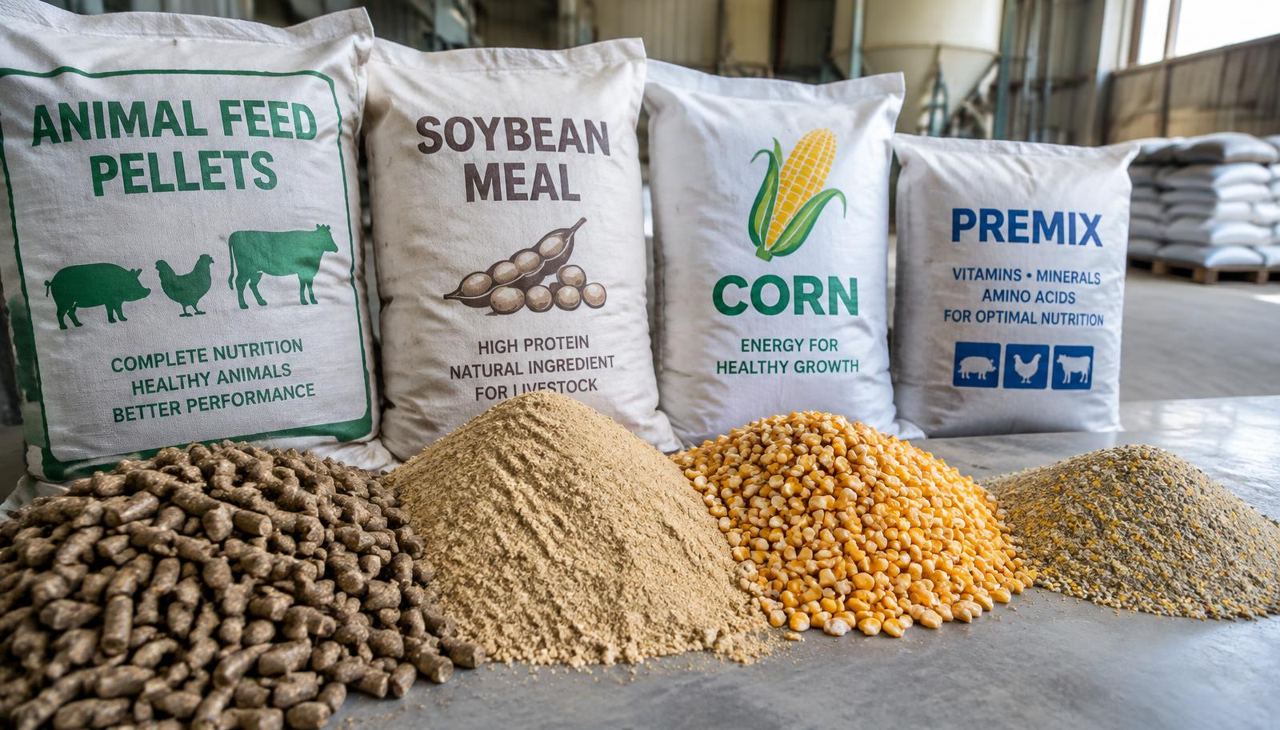
What should an integrated plan connect? Start with the farm system, not a supplier catalogue. Record species, production stage, animal numbers, expected intake, feeding equipment, storage conditions and current constraints. Separate confirmed information from assumptions requiring technical review. Map who controls each interface. The nutritionist defines the nutritional brief; the feed producer translates an approved formulation into a manufacturing specification; premix and additive suppliers provide composition, inclusion and handling information; ingredient suppliers provide agreed quality evidence. Farm staff confirm whether the proposed product can be stored, distributed and consumed as intended. Feed supply chain planning should also identify transitions: placement, weaning, lactation, finishing, seasonal ingredient changes or farm expansion. A technically suitable ration arriving after the relevant stage may have little practical value. Assign an owner to every handover rather than assuming the next party will resolve gaps.
How should specifications align across suppliers? Create a master specification with controlled versions and linked product schedules. State measurement units, analytical basis, sampling method and acceptance limits. An ingredient value reported on a dry-matter basis is not directly comparable with an as-fed value. | Interface | Shared requirement | Evidence or control | |---|---|---| | Ingredient to feed producer | Nutrient range, moisture and contaminant limits | Agreed sampling plan and test results | | Premix to feed producer | Inclusion rate, nutrient contribution and compatibility | Current specification and mixing instructions | | Feed producer to farm | Nutritional limits, physical form and stage suitability | Product specification and lot identification | | Logistics to farm | Delivery window, unloading method and storage allocation | Booking record and delivery documentation | Include physical characteristics such as pellet size, fines or flow behaviour where relevant. Define which deviations require rejection, segregation, re-testing or specialist approval; do not leave acceptance to an informal sales conversation. Use the [ingredient sourcing guidance](/ingredients) to organise questions about origin, variability and substitution. A cheaper source is not equivalent merely because its name matches the specification.
How should nutrition targets pass between organisations? ### Use a signed-off technical handover The handover should distinguish nutritional objectives from commercial constraints. Record the animal stage, target nutrient profile, ingredient restrictions, permitted additives, applicable regulatory requirements and any medication-related controls. Identify who has authority to approve a formulation change. Premix contribution must be understood within the complete ration. Confirm whether declared values refer to the premix itself or the finished feed at the agreed inclusion rate. Review compatibility, processing tolerance, shelf life and storage instructions with the relevant specialists. Require the feed producer to acknowledge the current brief and identify unresolved assumptions before manufacturing. When a raw material changes, assess whether nutrition, processing or labelling needs review. Procurement should coordinate that decision, not substitute a commercial judgement for nutritional approval.
How can buyers control consistency between batches? Consistency requires an agreed process for detecting and handling variation, not a promise that every batch is identical. Set risk-based incoming checks, finished-feed sampling and retain-sample arrangements with technical specialists. Define the test method and laboratory requirements before a dispute occurs. Connect each delivered lot to production records and relevant ingredient or premix lots. Ask how formulation revisions, substitutions and manufacturing deviations are recorded. Where multiple sites manufacture the same product, confirm that specifications and reporting conventions remain aligned. Trend complaints, intake observations and laboratory findings alongside farm conditions. A decline in performance after a delivery is a reason to investigate, not proof that feed caused it. Mortality requires prompt veterinary assessment. Records of disease, water interruptions, heat stress and management changes help avoid attributing every outcome to procurement. Animal feed quality therefore includes traceability and deviation management as well as the product specification.
How should deliveries follow farm cycles? Build the delivery plan around stage changes, usable stock, shelf life and storage segregation. Reconcile the farm consumption forecast with order cut-offs, manufacturing schedules and transport arrangements. Confirm lead times with suppliers rather than treating an initial estimate as a commitment. ### Illustrative stock-cover calculation > **Planning formula:** days of usable stock cover = usable stock on hand ÷ planned daily consumption. > > **Illustrative example only:** 24 tonnes of usable feed ÷ 3 tonnes of planned daily consumption = 8 days of cover. With an illustrative confirmed replenishment lead time of 5 days, the arithmetic leaves 3 days before depletion at that assumed consumption. This is not a recommended safety buffer or an expected operating result. Exclude quarantined, expired or stage-inappropriate material from usable stock. Recalculate when animal numbers, intake or delivery dates change. Plan how residual stock will be handled before switching diets. The [planning calculators](/calculators) provide preliminary planning outputs. They do not replace a nutritionist, engineer, laboratory, lawyer, financial adviser or other relevant specialist. Validate assumptions before making purchasing, storage or feeding decisions.
Which shared documents keep the plan workable? Maintain one accessible document register rather than relying on email attachments with conflicting versions. Give each record an owner, revision date and approval status. Limit access appropriately where formulations or commercial terms are confidential. ### Buyer coordination checklist - Current farm brief, animal stages and consumption forecast. - Approved feed, ingredient and premix specifications with consistent units. - Nutrition handover and named change-approval authorities. - Sampling, testing, acceptance and retain-sample procedures. - Delivery calendar, storage allocation and unloading requirements. - Lot traceability, complaint escalation and recall contacts. - Agreed substitution, shortage and non-conformance procedures. - Commercial terms allocating testing, rejection and replacement costs. Documents and relevant public records can be reviewed as part of buyer due diligence. Check their scope, issuer and validity rather than treating possession of a document as proof of current operating performance.
What common mistakes undermine coordinated purchasing? One mistake is comparing feed offers only by price per tonne while ignoring specification differences, inclusion rates, usable shelf life or delivery conditions. Another is allowing ingredient substitutions without an agreed technical approval route. Buyers also lose control when the farm changes animal numbers without updating forecasts, or when a premix revision reaches purchasing but not the production team. Separate orders can conceal a dependency: one missing additive may delay an otherwise available feed batch. Avoid making performance guarantees the substitute for clear responsibilities. Contracts should describe measurable product obligations and remedies, while recognising that output and mortality have multiple causes. Effective feed supplier coordination makes exceptions visible early; it does not eliminate biological or operational uncertainty.
What is the next step towards a coordinated RFQ? Prepare a single briefing pack covering farm requirements, estimated demand by stage, delivery locations, specifications, evidence requests and unresolved technical questions. Ask each potential supplier to identify assumptions, exclusions and dependencies in its response. Compare offers against the same version of the pack. The [procurement workflow](/procurement) explains how FeedMatch supports human-led, supplier-neutral coordination for commercial opportunities of USD 250,000 or more. Submit the initial requirements through the [RFQ intake](/rfq-intake); human review takes place before any supplier contact. Within this workflow, documents and relevant public records can be reviewed. FeedMatch is not a certification body and does not audit factories. It does not formulate feed, sell products or choose suppliers for the buyer. Before issuing purchase orders, hold a handover meeting with the farm, technical adviser and relevant suppliers. Close specification gaps, confirm delivery dependencies and assign named owners to outstanding actions.
What else do buyers commonly ask? ### Does integrated planning require one supplier? No. Multiple suppliers can work within one plan if specifications, change controls, responsibilities and delivery dependencies are clearly aligned. ### Who should approve ingredient substitutions? The buyer should name the responsible nutritionist or technical authority. Approval should address nutritional suitability, safety, processing, regulatory requirements and any commercial implications. ### How often should demand forecasts be updated? Review them at agreed intervals and whenever animal numbers, intake, production stages or delivery conditions change materially. The appropriate cadence depends on the farm cycle. ### Can coordinated procurement reduce mortality? It may help address feed-related risks, but it cannot guarantee lower mortality. Veterinary assessment and investigation of health, water, housing and management remain essential. ### What should happen when a batch fails acceptance checks? Follow the agreed non-conformance procedure: identify and segregate affected stock, preserve samples and records, notify responsible parties and obtain technical direction before use or disposal.
faqs_PLACEHOLDER
END_PLACEHOLDER
REMOVE_PLACEHOLDER
FINAL_PLACEHOLDER
REPLACE_PLACEHOLDER
CLEAN_PLACEHOLDER
VALIDATE_PLACEHOLDER
DONE_PLACEHOLDER
OUTPUT_PLACEHOLDER
JSON_PLACEHOLDER
BODY_PLACEHOLDER
STOP_PLACEHOLDER
COMPLETE_PLACEHOLDER
NO_PLACEHOLDER
ACTUAL_PLACEHOLDER
FINISHED_PLACEHOLDER
RETURN_PLACEHOLDER
CLOSE_PLACEHOLDER
Related pages on FeedMatch
Frequently asked questions
- Does integrated planning require one supplier?
- No. Multiple suppliers can work within one plan if specifications, change controls, responsibilities and delivery dependencies are clearly aligned.
- Who should approve ingredient substitutions?
- The buyer should name the responsible nutritionist or technical authority. Approval should address nutritional suitability, safety, processing, regulatory requirements and any commercial implications.
- How often should demand forecasts be updated?
- Review them at agreed intervals and whenever animal numbers, intake, production stages or delivery conditions change materially. The appropriate cadence depends on the farm cycle.
- Can coordinated procurement reduce mortality?
- It may help address feed-related risks, but it cannot guarantee lower mortality. Veterinary assessment and investigation of health, water, housing and management remain essential.
- What should happen when a batch fails acceptance checks?
- Follow the agreed non-conformance procedure: identify and segregate affected stock, preserve samples and records, notify responsible parties and obtain technical direction before use or disposal.
Feed industry regions we work with
Feed procurement is local before it is global: raw material basis, freight and installation costs change by region. These are the areas buyers most often name when defining a feed project in English.
United States
Cities and provinces
Iowa · Nebraska · Georgia · Arkansas · Texas · North Carolina
Corn and soybean meal basis with large integrated poultry, swine and dairy operations.
United States →United Kingdom and Ireland
Cities and provinces
East Anglia · Yorkshire · Lincolnshire · Northern Ireland · Munster
Compound feed and imported protein logistics through east coast and Irish Sea ports.
United Kingdom and Ireland →Gulf and East Africa import markets
Cities and provinces
Jeddah · Dubai · Mombasa · Djibouti
Import-driven feed supply where landed cost and port logistics dominate the decision.
Gulf and East Africa import markets →FeedMatch is supplier-neutral. Regional context helps define the requirement; pricing always comes from manufacturer quotations.
Move from insight to procurement
Turn the ideas in this article into a live procurement action — supplier-neutral, buyer-controlled, fully documented.