
Starting a Feed Request Project: What Suppliers Will Ask, What You Get Back and What Needs Your Approval
A feed request moves faster when the answers suppliers need are ready on day one. Prepare species, stage, specification, volume, delivery and documents; expect a side-by-side summary of responses; and keep every commercial decision in your own hands.
Short answer · Updated October 2026
Short answer: Starting a Feed Request Project: What Suppliers Will Ask, What You Get Back and What Needs Your Approval
Short answer: Have species, stage, specification, volume, delivery and document needs ready before you send the request. You will get back a summary that lines supplier responses up against those points. Every commercial decision, from accepting a deviation to choosing a supplier, needs your approval.
Key takeaways
- 1. You send a feed request with the facts below.
- Expect these questions. A request that already answers them is quoted faster and on the same basis by everyone.
- The responses come back organised so you can compare like with like:
- These decisions are yours. Confirm each one in writing before anything moves forward:
- - Species, stage and animal numbers written down - Written specification, or a note that you need one - Volume per delivery and per year - Packaging and storage limits - Delivery location, window and unloading access - Documents your…
FeedMatch Editorial Desk
Editorial Team
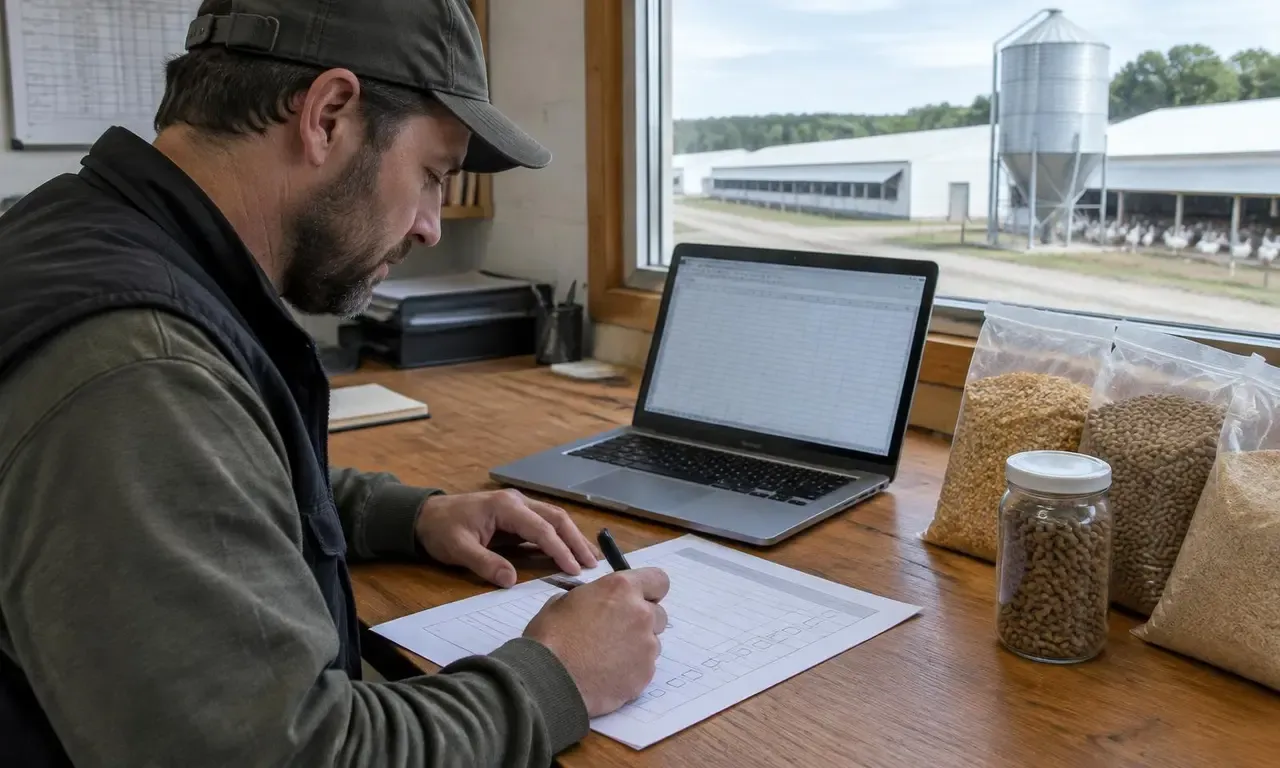
Short answer: Have species, stage, specification, volume, delivery and document needs ready before you send the request. You will get back a summary that lines supplier responses up against those points. Every commercial decision, from accepting a deviation to choosing a supplier, needs your approval.
How the project works
- You send a feed request with the facts below.
- The FeedMatch team reviews it and asks about anything unclear or missing.
- The team contacts suitable suppliers with the same brief.
- You receive the responses organised side by side.
- You decide what happens next.
- For the internal steps, see how FeedMatch handles requests.
What will suppliers ask?
Expect these questions. A request that already answers them is quoted faster and on the same basis by everyone.
| Topic | What they ask | Where the answer comes from |
|---|---|---|
| Animals | Species, stage, number of animals, production system | Your farm records |
| Product | Complete feed, concentrate, premix or ingredient; form (mash, pellet, crumble) | Your current feed and nutritionist |
| Specification | Nutrient targets, ingredient limits, moisture, particle size | Written specification from your nutritionist |
| Volume | Tonnes per delivery, per month and per year | Farm feed purchase plan |
| Packaging | Bulk, big bags or 25–50 kg bags; pallet and label needs | Your storage and handling |
| Delivery | Farm location, delivery terms, window and frequency, unloading access | Your site |
| Documents | Certificate of analysis, origin, lot labels, any import papers your country requires | Your local rules |
| Quality checks | Sampling at delivery, retained samples, what happens if a lot fails | Your receiving routine |
| Commercial | Preferred payment terms, contract length, start date | You |
What the summary covers
The responses come back organised so you can compare like with like:
- Specification offered against specification requested, with every deviation listed
- Price basis: per tonne, currency, delivery term and what is included or excluded
- Lead time, minimum order and how long the offer is valid
- Documents and quality checks each supplier offers
- Open questions: anything a supplier did not answer or made conditional
- The summary reports what suppliers said. It is not a ranking, and it does not guarantee price, availability or delivery. Convert each offer to delivered cost with the landed cost calculator and to cost per unit of output with the FCR calculator.
What needs your approval?
These decisions are yours. Confirm each one in writing before anything moves forward:
| Decision | Why it needs you |
|---|---|
| The final request before it goes to suppliers | It fixes the basis every supplier quotes on |
| Any change to specification, volume or dates | Changes the comparison and may need your nutritionist |
| Accepting a deviation from your specification | Only you and your nutritionist can judge if it is acceptable |
| Ordering samples or a trial delivery | Costs and farm time are yours |
| Choosing a main and backup supplier | Commercial and risk judgement |
| Contract, payment and delivery terms | You sign and pay |
Before you send: quick checklist
- Species, stage and animal numbers written down
- Written specification, or a note that you need one
- Volume per delivery and per year
- Packaging and storage limits
- Delivery location, window and unloading access
- Documents your country and your buyers require
- Who on your side approves each decision above
Limits
FeedMatch does not formulate feed or give veterinary advice, and does not guarantee savings, prices, supplier availability or outcomes. Confirm nutrition decisions with a qualified nutritionist.
Ready to start? Send a feed RFQ with the points above. Free for buyers, no obligation; assisted sourcing applies to B2B requirements of about USD 250,000 or more.
Frequently asked questions
- Do I talk to suppliers directly?
- No. In FeedMatch's managed process the team contacts suitable suppliers and presents their responses to you. You do not need to contact suppliers yourself.
- What if I don't have a written specification?
- Say so in the request. Ask your nutritionist for the specification; suppliers cannot quote comparably without one.
- Does sending a request commit me to buy?
- No. Buyer tools and requests are free and carry no obligation. Choosing a supplier and agreeing terms are your decisions.
- Is there a minimum project size?
- Assisted sourcing applies to B2B requirements of about USD 250,000 or more. Smaller needs can still use the free calculators and checklists.
- Will the summary tell me which supplier is best?
- It lines responses up against your request and flags gaps and deviations. The judgement on quality, risk and fit is yours.
Feed industry regions we work with
Feed procurement is local before it is global: raw material basis, freight and installation costs change by region. These are the areas buyers most often name when defining a feed project in English.
United States
Cities and provinces
Iowa · Nebraska · Georgia · Arkansas · Texas · North Carolina
Corn and soybean meal basis with large integrated poultry, swine and dairy operations.
United States →United Kingdom and Ireland
Cities and provinces
East Anglia · Yorkshire · Lincolnshire · Northern Ireland · Munster
Compound feed and imported protein logistics through east coast and Irish Sea ports.
United Kingdom and Ireland →Gulf and East Africa import markets
Cities and provinces
Jeddah · Dubai · Mombasa · Djibouti
Import-driven feed supply where landed cost and port logistics dominate the decision.
Gulf and East Africa import markets →FeedMatch is supplier-neutral. Regional context helps define the requirement; pricing always comes from manufacturer quotations.