
Feed Ingredient Traceability and Responsible Sourcing: A Buyer Due-Diligence Checklist
A practical due-diligence checklist for feed ingredient buyers: what traceability evidence to request, how to read audit and certificate scope, and how to record what is verified versus merely declared.
Short answer · reviewed October 2026
Short answer: Feed Ingredient Traceability and Responsible Sourcing: A Buyer Due-Diligence Checklist
Feed ingredient traceability due diligence means confirming, before you buy, that each lot can be followed from its producing site to your intake with consistent identifiers and documents—and recording which facts you have actually verified.
Key takeaways
- When a contamination finding, customs query or customer audit arrives, the question is always the same: which lot, from which site, through whose hands?
- Most due-diligence errors come from treating these as the same.
- - Legal seller (the entity on the contract and invoice) and its registration.
- Mark each item for a candidate supplier. Items marked not applicable are excluded.
- The easiest time to get traceability evidence is before a supplier is selected.
Procurement Desk
Procurement Analysts
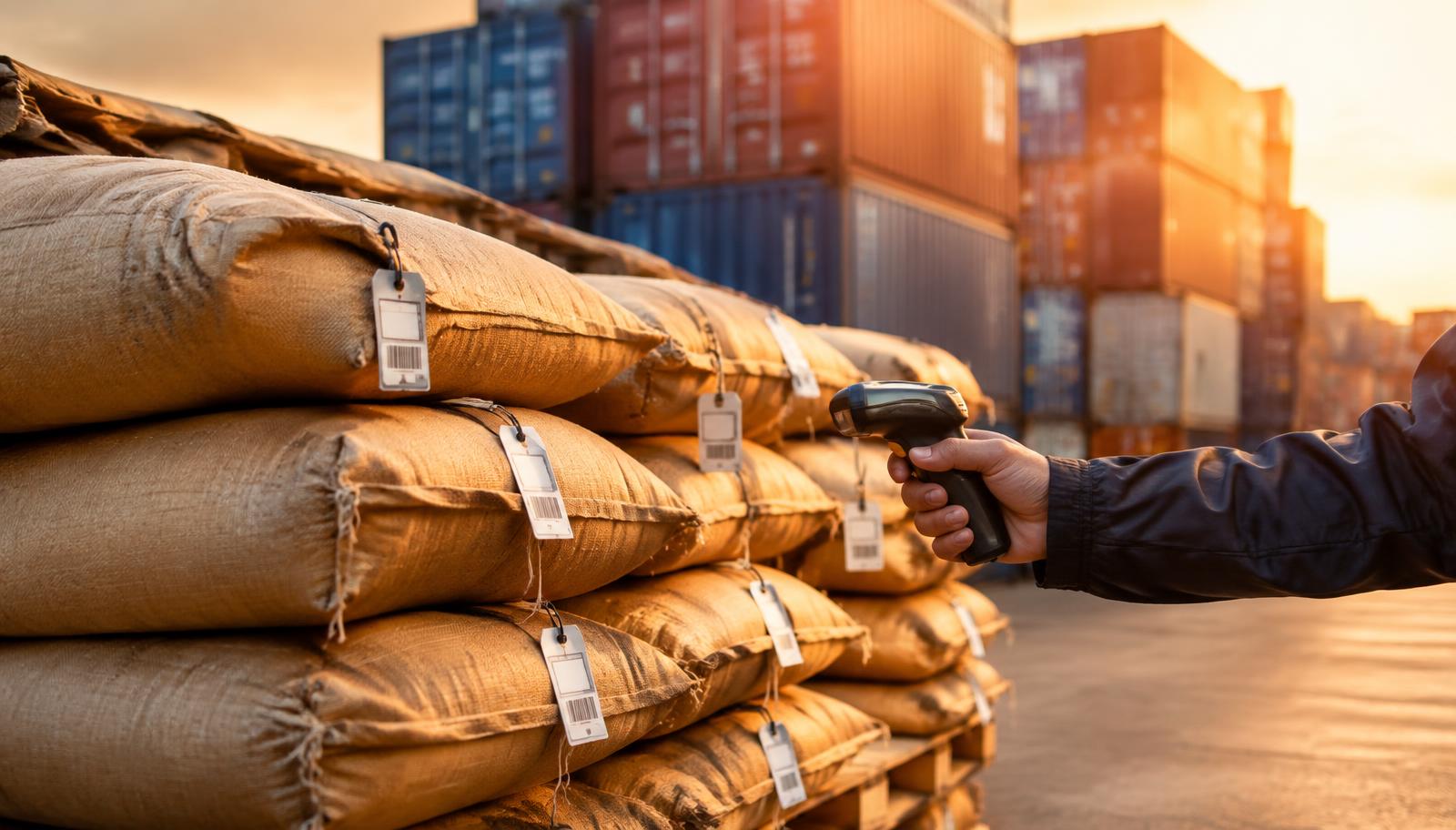
Feed ingredient traceability due diligence means confirming, before you buy, that each lot can be followed from its producing site to your intake with consistent identifiers and documents—and recording which facts you have actually verified. Check the legal seller and producing site, chain of custody, lot IDs, certificates of analysis and origin, audit and certification scope, and what your destination market requires. A document received is not the same as a fact independently audited.
Why traceability is a buying decision, not a filing task
When a contamination finding, customs query or customer audit arrives, the question is always the same: which lot, from which site, through whose hands? If the answer depends on a supplier's goodwill after the event, it is too late. Traceability has to be specified in the request and checked before the first order.
Food and feed law in many markets already requires businesses to identify their immediate suppliers and customers—the "one step back, one step forward" principle in EU Regulation (EC) No 178/2002, for example. Many buyers, retailers and export programmes now ask for more than that, including origin and responsible-sourcing evidence. The supplier documents guide covers the basic document set; this checklist focuses on chain of custody and verification.
Record three things for every claim: what was stated, what evidence you received, and who—if anyone—independently verified it.
The three levels of evidence
Most due-diligence errors come from treating these as the same.
| Level | What it is | Example | How to record it |
|---|---|---|---|
| Declared | The supplier states it | "Product is of Brazilian origin" in an email or offer | Declared by supplier, not verified |
| Documented | A document supports it | Certificate of origin issued for the shipment | Document reviewed: number, issuer, date, lot covered |
| Independently verified | A third party with a defined scope checked it | Certification body audit covering the site and product | Verified by [body], scope [x], valid until [date] |
A certificate is only as useful as its scope. Check which site, which product and which period it covers, and whether the certificate can be confirmed on the issuing body's public register.
The due-diligence checklist
1. Who is selling, and where is it made?
- Legal seller (the entity on the contract and invoice) and its registration.
- Producing or processing site, with address—these often differ from the seller.
- Any intermediaries: traders, agents, consolidators. Each is a link in the chain.
2. Can a lot be followed end to end?
- A lot or batch identifier that appears on the offer, certificate of analysis, packing list and loading documents.
- How lots are formed: blending of several origins or production days changes what the identifier means.
- Retained samples per lot, and how long they are kept.
3. Origin and chain of custody
- Certificate of origin for the shipment, not a generic statement.
- For commodities covered by deforestation or responsible-sourcing rules (for example, soy under EU Regulation (EU) 2023/1115 for products placed on the EU market), the geolocation and due-diligence information your importer will need.
- The chain-of-custody model claimed—identity-preserved, segregated or mass balance—and what that model does and does not guarantee.
4. Audit and certification scope
- Name of the certification body or auditor, standard, site and product scope, and validity dates.
- Date and type of the most recent audit; whether it was announced.
- Open non-conformities and how they were closed.
5. Destination requirements
- Phytosanitary or veterinary health certificates where required.
- Registration or approval of the producing establishment in the destination country, if applicable.
- Labelling and language requirements for documents.
6. Recall readiness
- Named contact for incidents and expected response time.
- How the supplier would notify a problem with a lot already shipped.
Embedded tool: traceability evidence readiness
Mark each item for a candidate supplier. Items marked not applicable are excluded. The pre-filled state is a hypothetical example.
Planning calculator
Traceability evidence readiness
Hypothetical example values are pre-filled.
Formula: Coverage = received ÷ applicable items × 100
Result
63% evidence coverage — 3 of 8 applicable items still missing. This measures document completeness, not supplier quality or certification.
Planning estimate only, using your own inputs. It does not predict prices, recommend ingredients or replace review by your nutritionist, quality team and FeedMatch's human reviewers.
The result measures how complete your evidence file is. It does not rate the supplier, certify anything or replace your own legal and quality review. In the example, coverage is 63% with three items still missing—enough to continue the conversation, not enough to place an order.
Write traceability into the request
The easiest time to get traceability evidence is before a supplier is selected. Include in your RFQ:
- Required documents per lot and per shipment, and when they must be delivered.
- Lot identification format and where it must appear.
- Required certification scope, if any, and acceptable chain-of-custody model.
- Destination-market requirements the supplier must support.
- Right to request audit reports and to audit, where commercially appropriate.
Then check incoming lots against the same identifiers at intake, as described in the sampling and incoming inspection guide.
How FeedMatch fits
FeedMatch is an independent, supplier-neutral procurement platform for animal feed and feed ingredients. We are not a certifier or auditor and we do not certify suppliers. For requirements of roughly USD 250,000 and above, our team reviews the request—including the traceability evidence you need—before any supplier is contacted, and records what each supplier has declared or documented so that you can compare like with like. You decide which suppliers to engage and what evidence is sufficient. Start a structured request, see the feed procurement platform, or use the buyer calculators.
Sources
- Regulation (EC) No 178/2002 — General Food Law, Article 18 on traceability
- Regulation (EU) 2023/1115 on deforestation-free products
- Codex Alimentarius — Code of Practice on Good Animal Feeding (CXC 54-2004)
- Regulatory references are for orientation only; confirm current obligations and application dates with the competent authority or legal counsel.
Next steps: plan, compare, request
- Calculator: Feed TCO supplier comparison calculator
- Supplier qualification scorecard
- Send a structured RFQ (USD 250K+; reviewed by a person before any supplier contact)
Related buyer guides
- Feed Supplier Scorecard: How to Compare Offers and Track Performance
- How to Compare Feed Ingredient Quotes: A Buyer's Guide to True Value
Related pages on FeedMatch
Frequently asked questions
- What is traceability due diligence for feed ingredients?
- It is checking, before purchase, that each lot can be followed from its producing site to your intake with consistent identifiers and documents, and recording which facts are declared, documented or independently verified.
- What is the difference between a document and a certification?
- A document, such as a certificate of origin, supports a specific shipment fact. A certification is a third party's audit of a site or system against a standard, with a defined scope and validity. Neither proves more than its scope.
- Which documents should a feed ingredient buyer request?
- At minimum: identification of seller and producing site, lot IDs on all shipment documents, a certificate of analysis per lot, a certificate of origin, any required health certificates, and scope and validity of claimed certifications.
- What does chain of custody mean?
- It is the documented sequence of parties and handling steps from producer to buyer. Models such as identity-preserved, segregated and mass balance give different guarantees about whether the delivered material is physically the claimed material.
- Does the checklist score supplier quality?
- No. It measures how complete your evidence file is. It does not rate suppliers, certify compliance or replace legal and quality review.
- Does FeedMatch audit or certify suppliers?
- No. FeedMatch is not a certifier or auditor. For requests of about USD 250,000 and above, the team reviews the requirement, including traceability evidence, before contacting suppliers, and you decide what is sufficient.
- Do EU deforestation rules affect feed ingredients?
- Regulation (EU) 2023/1115 covers soy and some other commodities and derived products placed on the EU market, so it can affect products such as soybean meal. Confirm scope and application dates with the competent authority.
Feed industry regions we work with
Feed procurement is local before it is global: raw material basis, freight and installation costs change by region. These are the areas buyers most often name when defining a feed project in English.
United States
Cities and provinces
Iowa · Nebraska · Georgia · Arkansas · Texas · North Carolina
Corn and soybean meal basis with large integrated poultry, swine and dairy operations.
United States →United Kingdom and Ireland
Cities and provinces
East Anglia · Yorkshire · Lincolnshire · Northern Ireland · Munster
Compound feed and imported protein logistics through east coast and Irish Sea ports.
United Kingdom and Ireland →Gulf and East Africa import markets
Cities and provinces
Jeddah · Dubai · Mombasa · Djibouti
Import-driven feed supply where landed cost and port logistics dominate the decision.
Gulf and East Africa import markets →FeedMatch is supplier-neutral. Regional context helps define the requirement; pricing always comes from manufacturer quotations.
Move from insight to procurement
Turn the ideas in this article into a live procurement action — supplier-neutral, buyer-controlled, fully documented.