
Estimating FCR and Feed Cost per Unit from the Farm Reports You Already Have
FCR is feed used divided by output gained over the same period. Your delivery, stock and sales reports usually hold both numbers; this guide shows how to line them up and turn FCR into feed cost per unit.
Short answer · Updated October 2026
Short answer: Estimating FCR and Feed Cost per Unit from the Farm Reports You Already Have
Short answer: FCR is feed used divided by output gained over the same period. Your delivery, stock and sales reports usually hold both numbers; this guide shows how to line them up and turn FCR into feed cost per unit.
Key takeaways
- This guide calculates FCR and feed cost per unit from records you already keep, so you can compare flocks, ponds, pens or feeds on a fair basis before asking suppliers for quotes.
- - Feed used in the period (from the feed history worksheet) - Start and end weight, or weight gained or sold - Mortality and its weight where recorded - Feed price delivered - Species, stage and period dates
- 1. Use the same start and end dates for feed and weight.
- A fish pond used 15,000 kg of feed; stocking weight was 2,000 kg and harvest 14,000 kg.
- - No start weight: use stocking records or a sample weighing and mark it.
FeedMatch Editorial Desk
Editorial Team
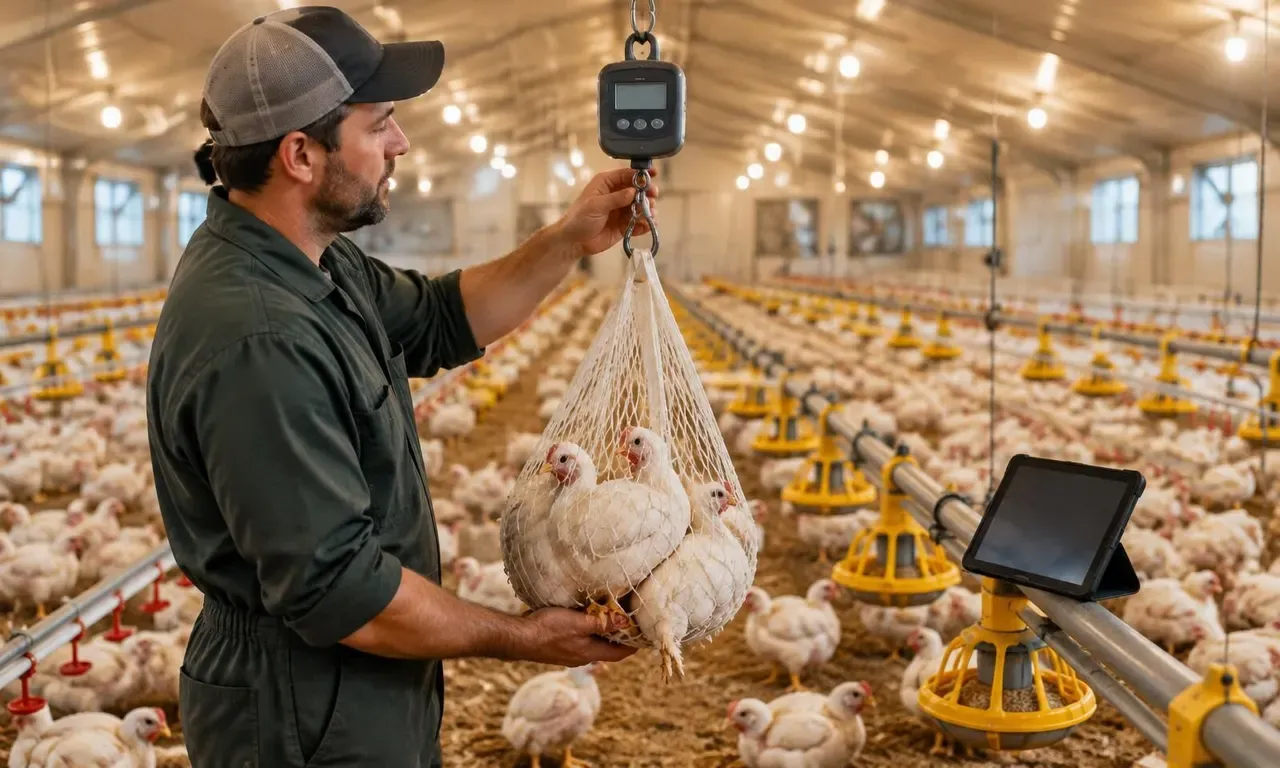
Short answer: FCR is feed used divided by output gained over the same period. Your delivery, stock and sales reports usually hold both numbers; this guide shows how to line them up and turn FCR into feed cost per unit.
What this guide helps you do
This guide calculates FCR and feed cost per unit from records you already keep, so you can compare flocks, ponds, pens or feeds on a fair basis before asking suppliers for quotes.
Which farm records do you need?
- Feed used in the period (from the feed history worksheet)
- Start and end weight, or weight gained or sold
- Mortality and its weight where recorded
- Feed price delivered
- Species, stage and period dates
How do you work through it, step by step?
- Use the same start and end dates for feed and weight.
- Weight gain = end weight + weight of losses − start weight (or as your system records it).
- FCR = feed used (kg) ÷ weight gain (kg).
- Feed cost per kg gain = FCR × feed price per kg.
- For milk or eggs use feed per litre or per dozen instead.
- Record which feed and supplier applied in the period.
Worksheet
| Group | Feed used (kg) | Gain or output | FCR / feed per unit | Feed price per kg | Feed cost per unit |
|---|
Worked example (hypothetical)
A fish pond used 15,000 kg of feed; stocking weight was 2,000 kg and harvest 14,000 kg. Gain = 12,000 kg, FCR = 15,000 ÷ 12,000 = 1.25. At 1.10 per kg feed, feed cost per kg gain = 1.375. *All figures are invented for illustration. Use your own records; this is not a benchmark or target.*
What if some data is missing?
- No start weight: use stocking records or a sample weighing and mark it.
- Mortality not weighed: count losses and note FCR may look worse.
- Feed not split by group: allocate by animal-days.
- Only one period: treat the result as a baseline, not a trend.
Where to go next
Use the FCR and feed cost calculator, the landed cost calculator and the traceability readiness checklist.
Ready to buy against your own numbers? Send a feed RFQ with species, stage, volume, specification and delivery window. Free for buyers, no obligation; assisted sourcing applies to B2B requirements of about USD 250,000 or more.
Farm data series: How to Analyse Your Farm's Feed History · Reducing Feed Waste on the Farm · Upgrading Your Feeding Routine · Planning Future Feed Purchases
Sources and limits
- FAO/IFIF Good Practices for the Feed Sector (2010)
- FeedMatch does not formulate feed or give veterinary advice, and does not guarantee savings, FCR or output. Confirm nutrition decisions with a qualified nutritionist.
Frequently asked questions
- What is a good FCR?
- It depends on species, breed, stage, system and weights; compare against your own past periods and your nutritionist's targets.
- Is a lower FCR always cheaper?
- Not always. Feed cost per unit of output, which combines FCR and price, is the better comparison.
- Should mortality be included?
- Yes, record it; how you include its weight should stay consistent between periods.
- Can FeedMatch calculate FCR for me?
- Yes, the free FCR and feed cost calculator does the arithmetic from your inputs.
Feed industry regions we work with
Feed procurement is local before it is global: raw material basis, freight and installation costs change by region. These are the areas buyers most often name when defining a feed project in English.
United States
Cities and provinces
Iowa · Nebraska · Georgia · Arkansas · Texas · North Carolina
Corn and soybean meal basis with large integrated poultry, swine and dairy operations.
United States →United Kingdom and Ireland
Cities and provinces
East Anglia · Yorkshire · Lincolnshire · Northern Ireland · Munster
Compound feed and imported protein logistics through east coast and Irish Sea ports.
United Kingdom and Ireland →Gulf and East Africa import markets
Cities and provinces
Jeddah · Dubai · Mombasa · Djibouti
Import-driven feed supply where landed cost and port logistics dominate the decision.
Gulf and East Africa import markets →FeedMatch is supplier-neutral. Regional context helps define the requirement; pricing always comes from manufacturer quotations.