
Planning Future Feed Purchases: Comparing Alternatives and Suppliers With Your Own Farm Data
Forecast how much of each feed you will need over the next cycle, then compare alternatives and suppliers on delivered cost per unit of output, not price per tonne. Your records from the other guides feed straight into an RFQ.
Short answer · Updated October 2026
Short answer: Planning Future Feed Purchases: Comparing Alternatives and Suppliers With Your Own Farm Data
Short answer: Forecast how much of each feed you will need over the next cycle, then compare alternatives and suppliers on delivered cost per unit of output, not price per tonne. Your records from the other guides feed straight into an RFQ.
Key takeaways
- This guide turns the feed history, loss and FCR results into a purchase forecast and a supplier comparison, and ends with the facts an RFQ needs.
- - Planned animal numbers and stages for the next cycle - Feed per head per stage from your own history - Your measured loss rate - Storage capacity and shelf life - Quotes with specification, delivered price, lead time and terms
- 1. Forecast need = animals × feed per head per stage × (1 + loss rate).
- Feed A costs 0.52 per kg delivered and gave FCR 1.70 on your farm: 0.88 per kg gain.
- - No FCR for a new feed: run a trial on one group before switching the whole farm.
FeedMatch Editorial Desk
Editorial Team
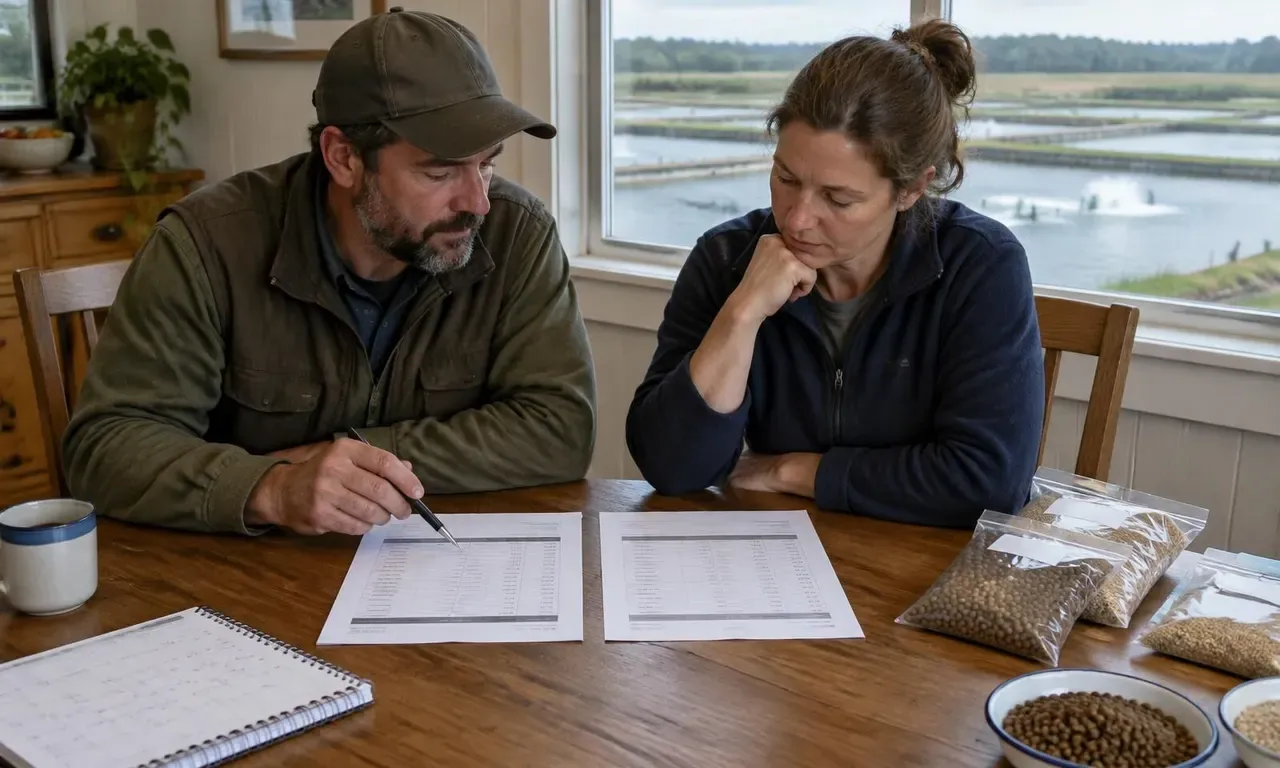
Short answer: Forecast how much of each feed you will need over the next cycle, then compare alternatives and suppliers on delivered cost per unit of output, not price per tonne. Your records from the other guides feed straight into an RFQ.
What this guide helps you do
This guide turns the feed history, loss and FCR results into a purchase forecast and a supplier comparison, and ends with the facts an RFQ needs.
Which farm records do you need?
- Planned animal numbers and stages for the next cycle
- Feed per head per stage from your own history
- Your measured loss rate
- Storage capacity and shelf life
- Quotes with specification, delivered price, lead time and terms
How do you work through it, step by step?
- Forecast need = animals × feed per head per stage × (1 + loss rate).
- Split the forecast into deliveries that fit storage and shelf life.
- Ask every supplier for the same specification and delivery terms.
- Convert each quote to delivered cost.
- Estimate feed cost per unit of output using your FCR; mark it as an estimate for any new feed.
- Choose a main and a backup supplier; agree checks for the first delivery.
Worksheet
| Option | Specification met? | Delivered price per kg | Lead time | Expected FCR (own data or trial) | Feed cost per unit | Risks |
|---|
Worked example (hypothetical)
Feed A costs 0.52 per kg delivered and gave FCR 1.70 on your farm: 0.88 per kg gain. Feed B costs 0.49 but has no farm data yet. Run a small trial before treating B as cheaper. *All figures are invented for illustration. Use your own records; this is not a benchmark or target.*
What if some data is missing?
- No FCR for a new feed: run a trial on one group before switching the whole farm.
- Supplier does not state delivered terms: ask in writing; do not compare until they do.
- Unsure about future animal numbers: plan a range and order the low end with a call-off option.
- No specification on paper: get one from your nutritionist before sending the RFQ.
Where to go next
Use the FCR and feed cost calculator, the landed cost calculator and the traceability readiness checklist.
Ready to buy against your own numbers? Send a feed RFQ with species, stage, volume, specification and delivery window. Free for buyers, no obligation; assisted sourcing applies to B2B requirements of about USD 250,000 or more.
Farm data series: How to Analyse Your Farm's Feed History · Reducing Feed Waste on the Farm · Estimating FCR and Feed Cost per Unit from the Farm Reports You Already Have · Upgrading Your Feeding Routine
Sources and limits
- FAO/IFIF Good Practices for the Feed Sector (2010)
- FeedMatch does not formulate feed or give veterinary advice, and does not guarantee savings, FCR or output. Confirm nutrition decisions with a qualified nutritionist.
Frequently asked questions
- How far ahead should I plan feed purchases?
- At least one production cycle, adjusted for storage space, shelf life and supplier lead time.
- How do I compare a cheaper feed with no track record?
- Run a controlled trial on one group and compare feed cost per unit of output before switching.
- Why keep a backup supplier?
- It protects supply if a delivery is late or a lot fails checks.
- What do I need for a feed RFQ?
- Species and stage, specification, volume, packaging, delivery point and window, quality limits and documents.
Feed industry regions we work with
Feed procurement is local before it is global: raw material basis, freight and installation costs change by region. These are the areas buyers most often name when defining a feed project in English.
United States
Cities and provinces
Iowa · Nebraska · Georgia · Arkansas · Texas · North Carolina
Corn and soybean meal basis with large integrated poultry, swine and dairy operations.
United States →United Kingdom and Ireland
Cities and provinces
East Anglia · Yorkshire · Lincolnshire · Northern Ireland · Munster
Compound feed and imported protein logistics through east coast and Irish Sea ports.
United Kingdom and Ireland →Gulf and East Africa import markets
Cities and provinces
Jeddah · Dubai · Mombasa · Djibouti
Import-driven feed supply where landed cost and port logistics dominate the decision.
Gulf and East Africa import markets →FeedMatch is supplier-neutral. Regional context helps define the requirement; pricing always comes from manufacturer quotations.