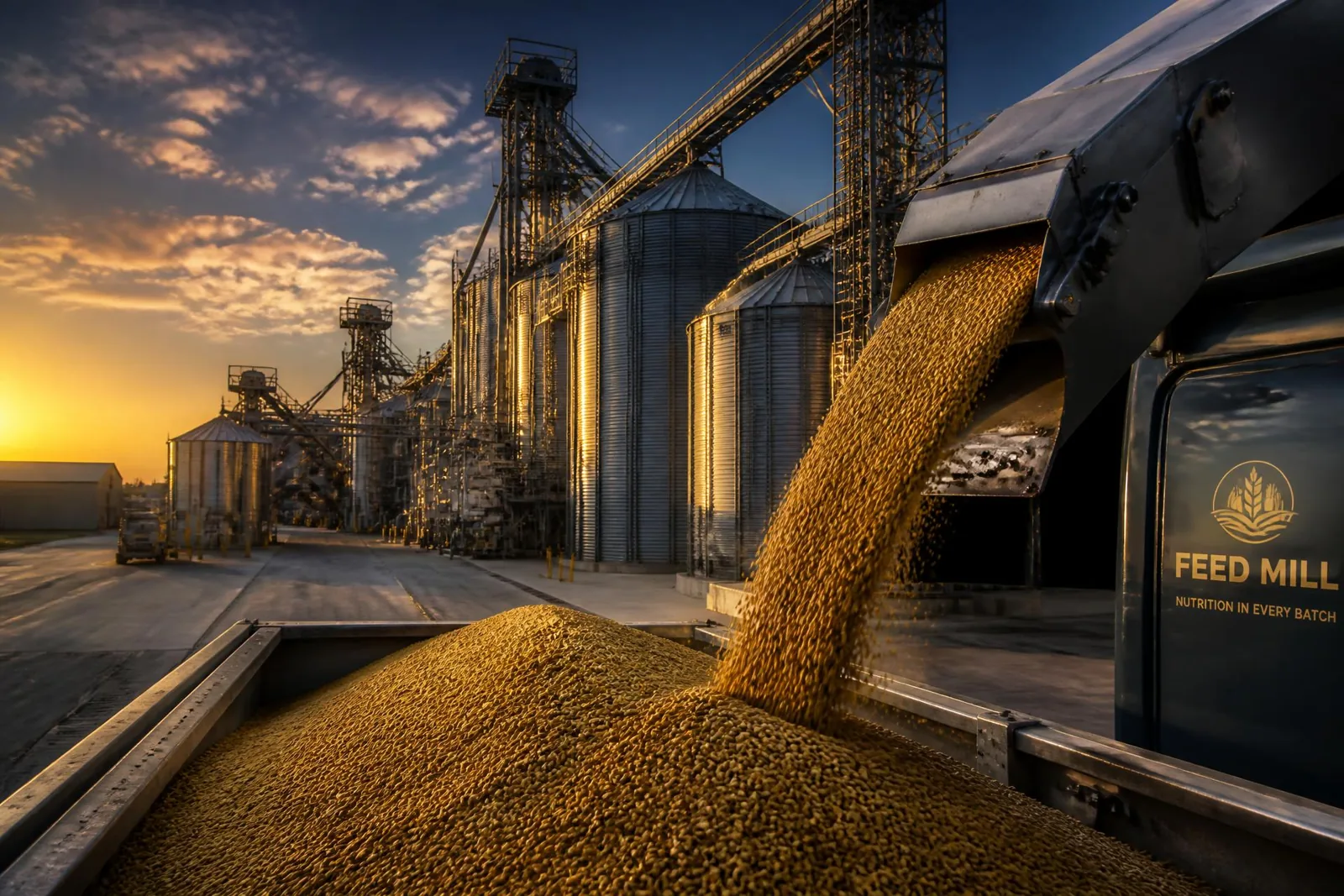
FeedMatch structures commercial requests for compound feed, feed ingredients, additives and premixes in India. Feed procurement and feed-mill projects follow separate workflows, and no supplier is contacted before authorized human review.
A useful India feed request starts with the buyer's own product specification, species and production stage where relevant, shipment and annual volume, delivery location, packaging, timing and document requirements. Import, regulatory and tax requirements must be confirmed by the buyer's qualified advisers and relevant authorities.
Compare ingredient quotes on a landed basis and size annual volume using only your own prices, freight, duties and currency. FeedMatch sources feed and raw materials; it does not build mills.
Send the requirement here. The team reviews it, prepares a structured RFQ and only then contacts suitable suppliers — you do not need to leave this page to start.
How a request is handled
01Submit the requirement
02Human scope review
03Clarification where needed
04Structured RFQ prepared
05Supplier contact only after approval
No supplier receives the request before authorized human review and approval.
Buying feed ingredients in India: what to check first
Short answer: Indian buyers should specify against the relevant BIS feed standard where one exists, state aflatoxin limits and the laboratory, and compare offers delivered to the mill — not only listings with a contact button.
Put these in your request
Reference the BIS standard for the feed or ingredient where one applies, with your own limits.
Aflatoxin and moisture limits for maize, DDGS and oilcakes, with the accepted laboratory.
For imports of animal-origin products, check the animal quarantine (AQCS) requirements.
State GST-inclusive or exclusive price, delivery state and payment terms.
How buyers source here today
Indian buyers commonly search large B2B listing sites and contact sellers directly, or rely on long-standing traders and industry-association networks. FeedMatch works differently: one written request, reviewed by a person, sent to suitable suppliers, with every offer rebuilt on the same specification, delivery terms and documents. Buyers and suppliers do not contact each other directly through FeedMatch, and buyers pay nothing.
Opened 2026-10-23. Rules change — confirm with the authority before ordering. General information, not legal advice.
FAQ
Commercial procurement questions
Does FeedMatch sell animal feed in India?
No. FeedMatch is an independent, supplier-neutral B2B procurement service. It is not a manufacturer, seller, trader, distributor or open marketplace.
What should a commercial feed RFQ include?
Include the product or category, the buyer's own specification, species and production stage where relevant, shipment and annual volume, destination, packaging, delivery window, Incoterm and required documents.
When does FeedMatch contact suppliers?
No supplier is contacted before an authorized person reviews the request, confirms that its scope is clear enough for a structured comparison and approves outreach.
Does FeedMatch match buyers and suppliers automatically?
No. Requests and supplier applications are reviewed by people. FeedMatch does not use automatic matching, promoted placement or paid ranking.
What is the minimum project size?
FeedMatch reviews commercial feed procurement and annual contracts from US$250,000, based on specification, volume/frequency and destination. The USD 250,000 minimum applies to all purchases, including feed, ingredients, premixes, additives and plant and equipment projects, including feed mills.
Are the calculators quotations or professional advice?
No. Calculators are preliminary planning tools based on user inputs. They are not prices, quotations, formulations or guarantees and require review by the buyer's qualified professionals.
How do I compare feed ingredient sellers found on listing sites?
Send each the same written specification — analysis, aflatoxin limit, laboratory, volume, delivery state, price basis and payment terms — and compare the replies on delivered cost per unit of protein or energy.
Does FeedMatch work with Indian buyers?
Yes, for qualifying B2B requests; a person reviews each request before suppliers are approached. The USD 250,000 minimum applies to all purchases, including feed, ingredients, premixes, additives and plant and equipment projects and are reviewed by specification, volume and destination.
Plant and equipment projects qualify from USD 250,000; feed and ingredient supply contracts are reviewed by specification, volume and destination. Planning tools are preliminary and require appropriate professional, regulatory and buyer review.
Recurring feed supply: compare total delivered cost
A lower unit quote can cost more at the delivery point. Compare feed, ingredients, premixes and additives on the same nutrient or active basis, moisture basis, origin and usable tonnes. Keep the delivery destination and recurring schedule explicit before comparing offers.
The US$250,000 minimum applies to all purchases, including feed, ingredients, premixes, additives and plant and equipment projects. Buyer tools remain free.
Country covered by this guide
India
Existing country currency reference — choose your own comparison currency
1.State the specification, origin, quantity per shipment and delivery frequency.
2.Record bulk or bags, packaging cost, MOQ, unloading and storage capacity.
3.Name the Incoterm and its exact place; add freight and insurance only when excluded from the quote.
4.Confirm customs classification, duty basis and other applicable charges with the destination authority or customs professional.
5.Allow for arrival tests, inland handling, remaining shelf life and quote validity.
6.Use one comparison currency and your own dated exchange rate; unknown costs remain pending, not assumed zero.
Compare the same specification
Fix the product, origin, nutrient or active-substance specification and moisture basis before comparing prices. Review the batch analysis and agreed test methods; price arithmetic does not establish nutritional suitability.
Delivery point, not just destination country
For deliveries to India, name the exact Incoterm location and final delivery point. A port quote and a warehouse-delivered quote cover different costs; the reference currency shown here is not a recommended exchange rate.
Recurring volume and usable tonnes
Compare the same quantity per shipment and delivery frequency. Record bulk or bags, MOQ, unloading and storage capacity, packaging, arrival tests, remaining shelf life and quote validity. Allocate recurring costs over the usable tonnes, not an assumed annual volume.
Classify each cost line
Included in the quote
Record what the seller’s written quote includes: product, packaging, freight or insurance as applicable. Do not add those costs twice.
Additional buyer costs
Add only excluded freight, insurance, port and inland handling, tests, bags or storage. Confirm how each cost is charged and convert it to the same per-tonne basis.
Pending confirmation
Keep unconfirmed duty rates, customs value rules and other charges pending. Unknown is not confirmed zero; Incoterms do not set local taxes or duties.
Prepare the calculator inputs
Enter each offer and its extra cost lines per tonne in that offer’s currency, then your own dated exchange rate into one comparison currency. The tool applies duty to price + freight + insurance; confirm that basis locally, and obtain a separate customs calculation if a different basis applies.
Regulatory check required before a transaction when requirements are unverified: confirm product, origin, destination and transit rules with the competent authorities or a qualified customs professional. This guidance is not regulatory approval.
These tools use your own figures, not current supplier prices or live exchange rates. Confirm product, origin, destination and transit requirements before ordering. Results do not establish supplier availability, regulatory approval, nutritional suitability or guaranteed savings.