
How to Plan Feed Deliveries by Bag, Truck or Container
Convert monthly feed demand into shipment quantities, then test the plan against payload limits, unloading capacity, storage space and replenishment timing.
Short answer · reviewed October 2026
Short answer: How to Plan Feed Deliveries by Bag, Truck or Container
Convert monthly feed demand into shipment quantities, then test the plan against payload limits, unloading capacity, storage space and replenishment timing.
FeedMatch Editorial Desk
Editorial Team
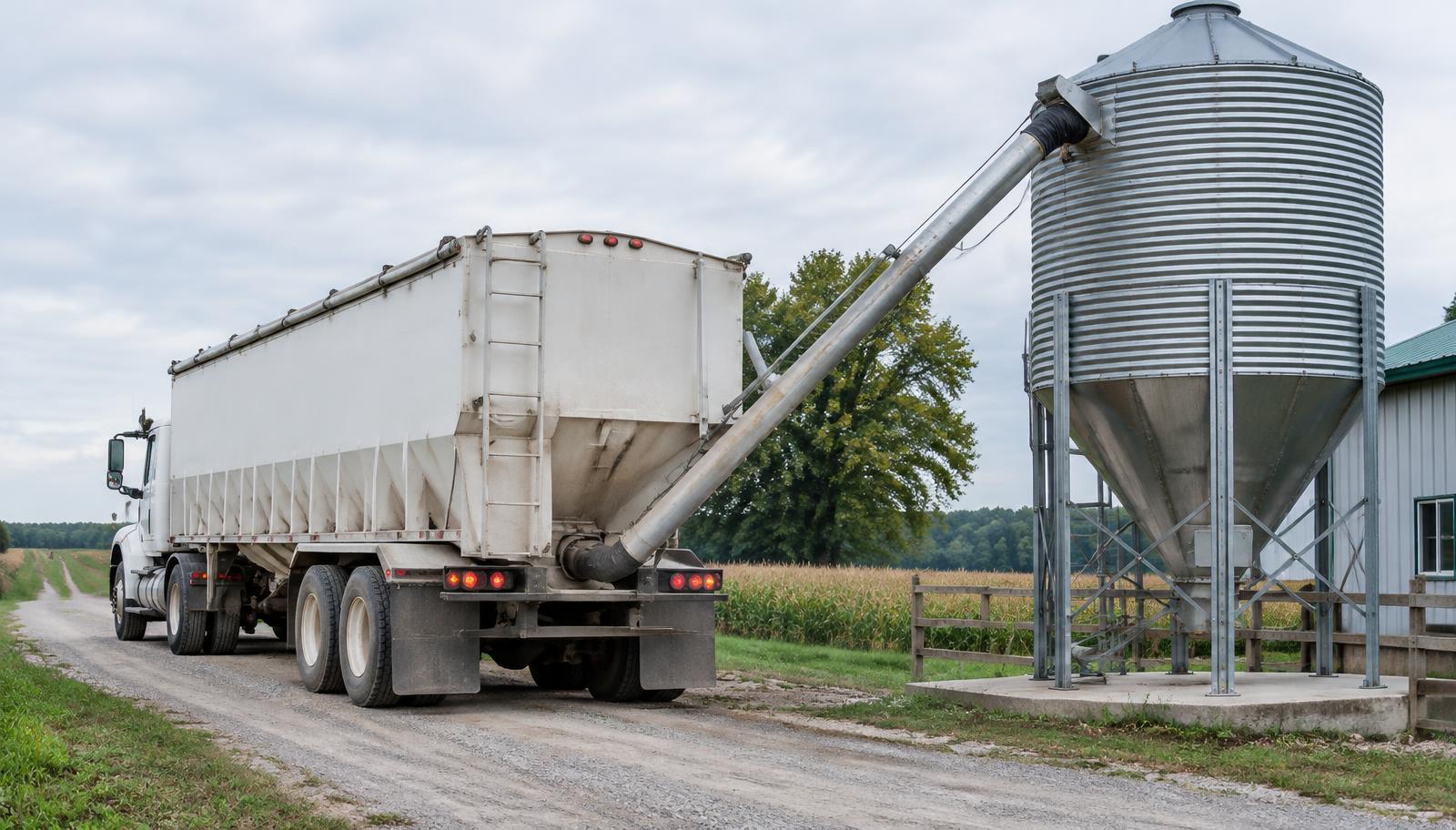
Short answer Plan feed deliveries by converting demand into bags, then dividing tonnage by the confirmed net feed payload of each truck or container. Round shipment counts up, but specify the quantity of the final load. Check that deliveries can be unloaded and stored safely, then set delivery intervals, ordering dates and safety stock. Weight alone is insufficient: packaging volume, axle limits, handling equipment and feed shelf life can change the workable load. Treat calculator results as preliminary estimates until operational constraints are confirmed.
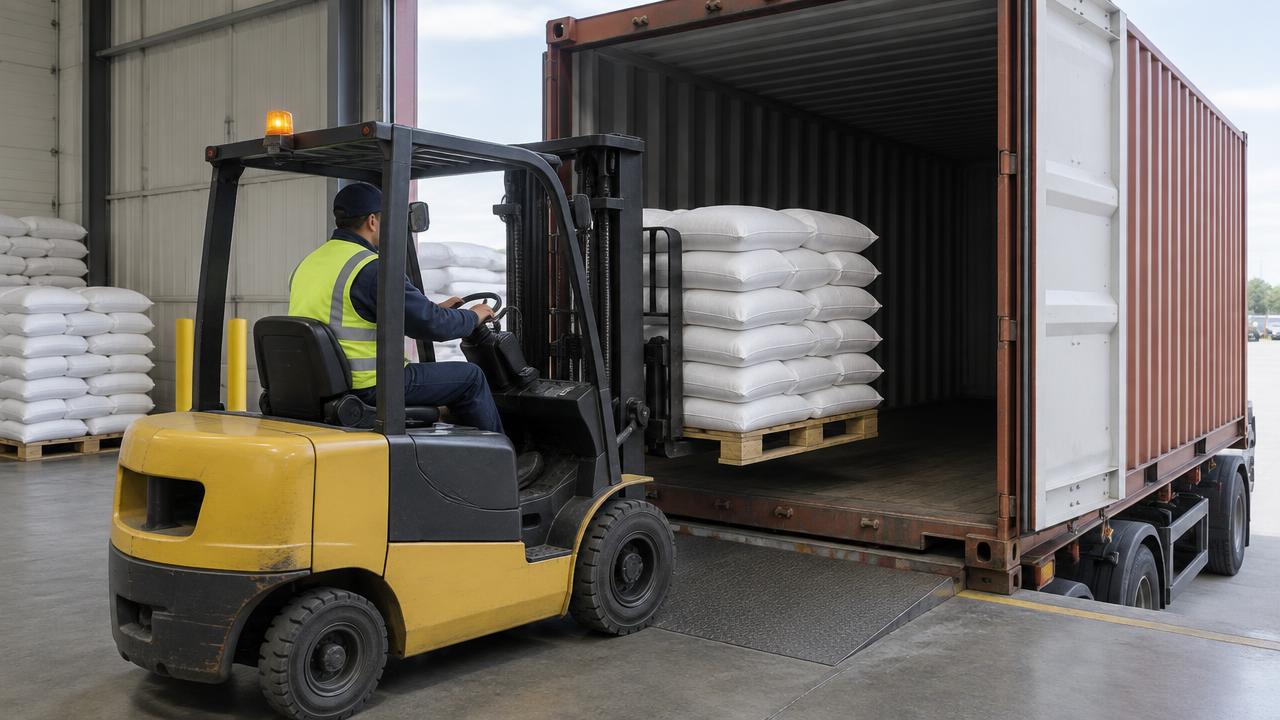
What information should you collect first? Use one planning period and unit throughout; here, a tonne means 1,000 kg. Separate demand by product, feed phase and destination. Combining unlike feeds can conceal shortages even when total inventory looks adequate. Collect forecast consumption, usable stock, confirmed inbound quantities, bag sizes, packaging weights, storage limits and receiving hours. Record production, dispatch, transport and clearance lead times separately where relevant. Identify expiry constraints and restricted access routes. For seasonal demand, plan against the actual consumption profile rather than simply dividing annual purchases by twelve.
How do you convert demand into a delivery plan? ### Follow these six steps 1. **Calculate net purchasing need.** Add planned consumption and target closing stock, then subtract usable opening stock and confirmed inbound supply within the period. 2. **Choose the handling format.** Decide whether individual bags, palletised bags, bulk bags or loose bulk suit the product and receiving equipment. 3. **Convert tonnes into units.** Divide net feed kilograms by kilograms per bag; round to purchasable units. 4. **Apply confirmed transport capacity.** Use net feed payload after allowing for packaging, pallets and other cargo. Check volume separately. 5. **Test each arrival.** Compare shipment size with available storage, unloading throughput and stock remaining on arrival. 6. **Schedule and validate.** Place orders early enough for replenishment and agree shipment quantities, delivery windows and disruption procedures. ### Illustrative formula and example ```text Illustrative assumptions only—not expected operating results: Monthly purchasing need = 120 tonnes Bag net weight = 25 kg Assumed allowable net feed payload per truck = 24 tonnes Assumed allowable net feed payload per container = 20 tonnes Bags required = 120 × 1,000 ÷ 25 = 4,800 Bags per truck = 24 × 1,000 ÷ 25 = 960 Truck shipments = ceiling(120 ÷ 24) = 5 Bags per container = 20 × 1,000 ÷ 25 = 800 Container shipments = ceiling(120 ÷ 20) = 6 ``` These payloads are arithmetic assumptions, not equipment ratings. Use the [bags, trucks and containers calculator](/feed-bags-trucks-containers-calculator) to explore preliminary combinations before requesting carrier confirmation.
Which packaging format fits your receiving operation? Packaging should match handling equipment, product protection and stock rotation—not just nominal transport efficiency. | Format | Useful where | Confirm before ordering | |---|---|---| | Individual bags | Small lots or manual distribution are needed | Safe handling method, bag durability and labour availability | | Palletised bags | Forklift handling supports unitised receipt | Pallet dimensions, stacking limits and usable vehicle space | | Bulk bags | Larger units suit compatible lifting and discharge equipment | Lifting equipment, discharge arrangement and moisture protection | | Loose bulk | Dedicated bins and transfer systems are available | Product compatibility, clean transfer path and bin capacity | Ask who supplies, owns and recovers pallets or reusable packaging. Keep incompatible products segregated and account for damaged or quarantined stock.
How should you confirm truck and container payloads? The answer to “how many bags of feed per truck” depends on the vehicle, route and packaging arrangement. Ask the carrier for allowable cargo weight under gross vehicle, axle and route restrictions. Clarify whether that allowance includes pallets and packaging, then derive net feed weight. For a feed container load, check equipment payload, internal dimensions, door clearance, loading pattern and weight distribution. A sea-leg allowance does not establish the legal road payload at either end. Confirm applicable verified gross mass requirements with the forwarder. Obtain a proposed loading plan. Light, bulky packaging can exhaust space before weight capacity; dense cargo can create axle or floor-loading problems before filling the available volume.
Can your site receive and store each shipment? Test arrival-day capacity, not an empty warehouse. Available space must account for stock already present, segregation, access aisles, quarantine areas and approved stacking arrangements. ### Receiving readiness checklist - Confirm vehicle access, turning space and delivery appointments. - Match unloading equipment and staffing to the packaging. - Check floor or silo limits with the responsible specialist. - Reserve clean, dry storage and identify batches on receipt. - Agree weighing, shortage reporting and damage documentation. - Plan for rejected loads, delays and equipment failure. Use the [farm feed storage calculator](/farm-feed-storage-calculator) for an initial capacity check. Nominal building or bin volume is not automatically usable storage capacity.
How do delivery frequency, lead time and safety stock interact? ### Match the cycle to consumption Illustrative example only: consumption of 120 tonnes over a 30-day month averages 4 tonnes daily. A 24-tonne shipment covers six days. That suggests roughly five arrivals during the month, but actual dispatch dates must reflect consumption changes, weekends and receiving access. ### Protect the replenishment window Illustrative example only: seven days of replenishment lead time requires 28 tonnes of demand cover. Adding three days of safety stock gives another 12 tonnes, producing a simplified reorder threshold of 40 tonnes. Compare that threshold with inventory position: usable stock plus confirmed outstanding orders, less committed allocations. Check each arrival date separately; late inbound stock cannot prevent an earlier shortage. Choose safety stock using demand variability, delivery reliability and disruption consequences—not an arbitrary percentage. Check peak stock too: a 24-tonne arrival alongside 12 tonnes remaining creates 36 tonnes, or nine days of cover in this illustration. Storage and shelf life must accommodate that peak.
What common mistakes undermine feed delivery planning? Avoid treating monthly tonnage as a dispatch calendar, quoting vehicle gross weight as feed payload, or assuming every container carries the same quantity. Another mistake is rounding shipment counts up without defining the final partial load. Do not count quarantined stock as usable, rely on average demand during a consumption peak, or book transport before confirming unloading arrangements. Compare freight offers on consistent loading, unloading, waiting-time and delivery responsibilities.
What should you do next? Prepare a shipment brief covering product specifications, period demand, packaging, destination, delivery windows, receiving constraints and required documentation. Explore scenarios through the [calculator directory](/calculators), then confirm assumptions with relevant specialists and carriers. Tools and calculators provide preliminary planning outputs; they do not replace a nutritionist, engineer, laboratory, lawyer, financial adviser or other relevant specialist. For commercial opportunities of USD 250,000 or more, submit the brief through [RFQ intake](/rfq-intake). FeedMatch's workflow is human-led and supplier-neutral, with human review before any supplier contact. Documents and relevant public records can be reviewed; FeedMatch is not a certification body and does not audit factories. The buyer retains supplier selection.
What else do buyers ask about feed logistics? ### Should bags be counted by net or gross weight? Use net weight for feed quantities; include bags, pallets and securing materials when checking transport weight limits. ### Can one monthly order have several deliveries? Yes. Specify release quantities, arrival windows, notice requirements and how schedule changes will be handled. ### Is a full load always the best choice? No. Compare freight efficiency with storage constraints, inventory exposure, shelf life and receiving capacity. ### Should safety stock be identical for every feed? No. Assess each product's demand variability, lead time, substitutability and consequences of a shortage. ### What should happen before dispatch? Reconfirm quantity, packaging, vehicle suitability, arrival slot, documents and unloading readiness with the responsible parties.
faqs
faqs
faqs
faqs
faqs
faqs
faqs
faqs
faqs
faqs
faqs
faqs
faqs
faqs
faqs
faqs
faqs
faqs
faqs
faqs
faqs
faqs
faqs
faqs
faqs
faqs
faqs
faqs
faqs
faqs
faqs
faqs
faqs
faqs
faqs
faqs
faqs
faqs
faqs
faqs
faqs
faqs
faqs
faqs
Related pages on FeedMatch
Frequently asked questions
- Should bags be counted by net or gross weight?
- Use net weight for feed quantities; include bags, pallets and securing materials when checking transport weight limits.
- Can one monthly order have several deliveries?
- Yes. Specify release quantities, arrival windows, notice requirements and how schedule changes will be handled.
- Is a full load always the best choice?
- No. Compare freight efficiency with storage constraints, inventory exposure, shelf life and receiving capacity.
- Should safety stock be identical for every feed?
- No. Assess each product's demand variability, lead time, substitutability and consequences of a shortage.
- What should happen before dispatch?
- Reconfirm quantity, packaging, vehicle suitability, arrival slot, documents and unloading readiness with the responsible parties.
Feed industry regions we work with
Feed procurement is local before it is global: raw material basis, freight and installation costs change by region. These are the areas buyers most often name when defining a feed project in English.
United States
Cities and provinces
Iowa · Nebraska · Georgia · Arkansas · Texas · North Carolina
Corn and soybean meal basis with large integrated poultry, swine and dairy operations.
United States →United Kingdom and Ireland
Cities and provinces
East Anglia · Yorkshire · Lincolnshire · Northern Ireland · Munster
Compound feed and imported protein logistics through east coast and Irish Sea ports.
United Kingdom and Ireland →Gulf and East Africa import markets
Cities and provinces
Jeddah · Dubai · Mombasa · Djibouti
Import-driven feed supply where landed cost and port logistics dominate the decision.
Gulf and East Africa import markets →FeedMatch is supplier-neutral. Regional context helps define the requirement; pricing always comes from manufacturer quotations.
Move from insight to procurement
Turn the ideas in this article into a live procurement action — supplier-neutral, buyer-controlled, fully documented.