
Measuring Feed Results on the Farm: Records That Improve the Next Order
Connect feed deliveries and batch numbers with consumption, animal performance, health events and waste, then use the evidence to refine specifications and the next RFQ.
Short answer · reviewed October 2026
Short answer: Measuring Feed Results on the Farm: Records That Improve the Next Order
Connect feed deliveries and batch numbers with consumption, animal performance, health events and waste, then use the evidence to refine specifications and the next RFQ.
Key takeaways
- !Feed delivery docket, batch label and pen-level feeding records arranged for comparison
- - Dairy feed cost calculator - Farm feed storage calculator - Feed mill energy calculator - Feed buyer FAQ: 100 questions
FeedMatch Editorial Desk
Editorial Team
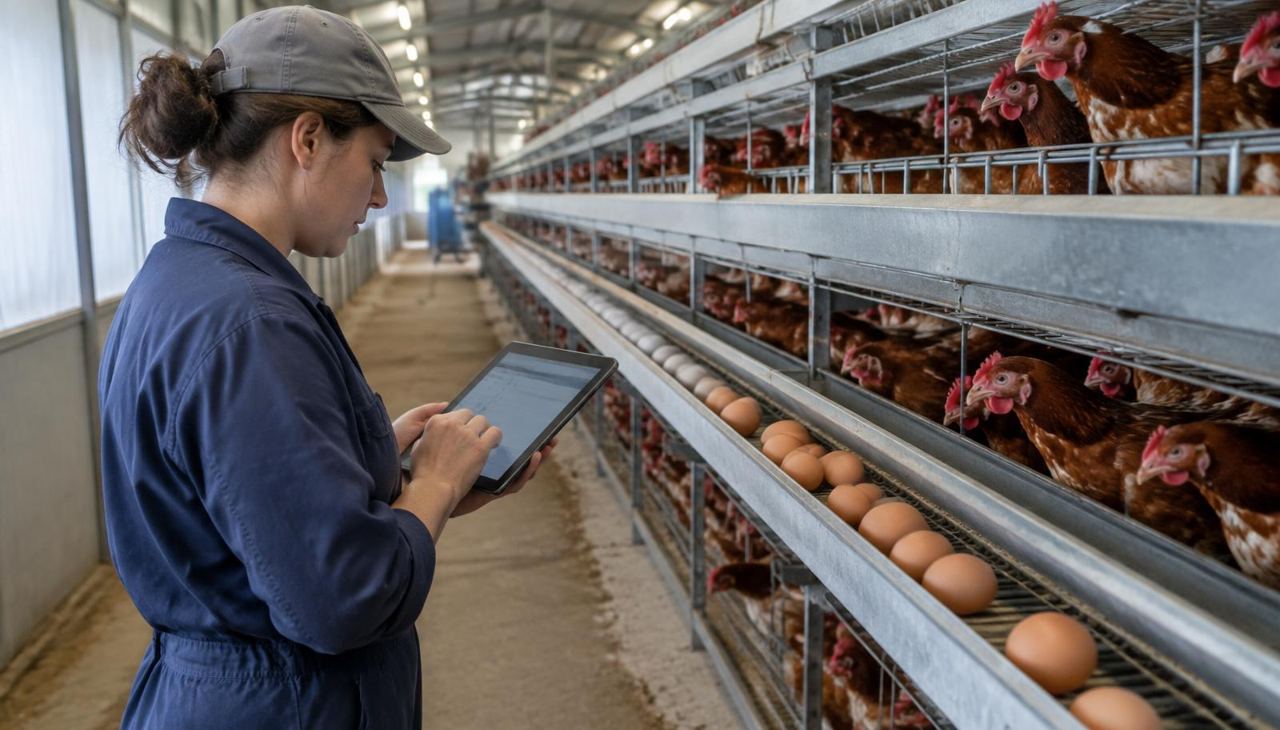
Short answer Useful farm feed records connect what arrived, where it was stored, which animals received it, what they consumed and what happened during the feeding period. Record batch numbers, growth or output, health events and wastage against consistent dates and animal groups. Review the evidence with a nutritionist, involve a vet where health is concerned, and translate supported findings into the next purchase specification. Performance changes and mortality have many possible causes; records support investigation, not diagnosis.
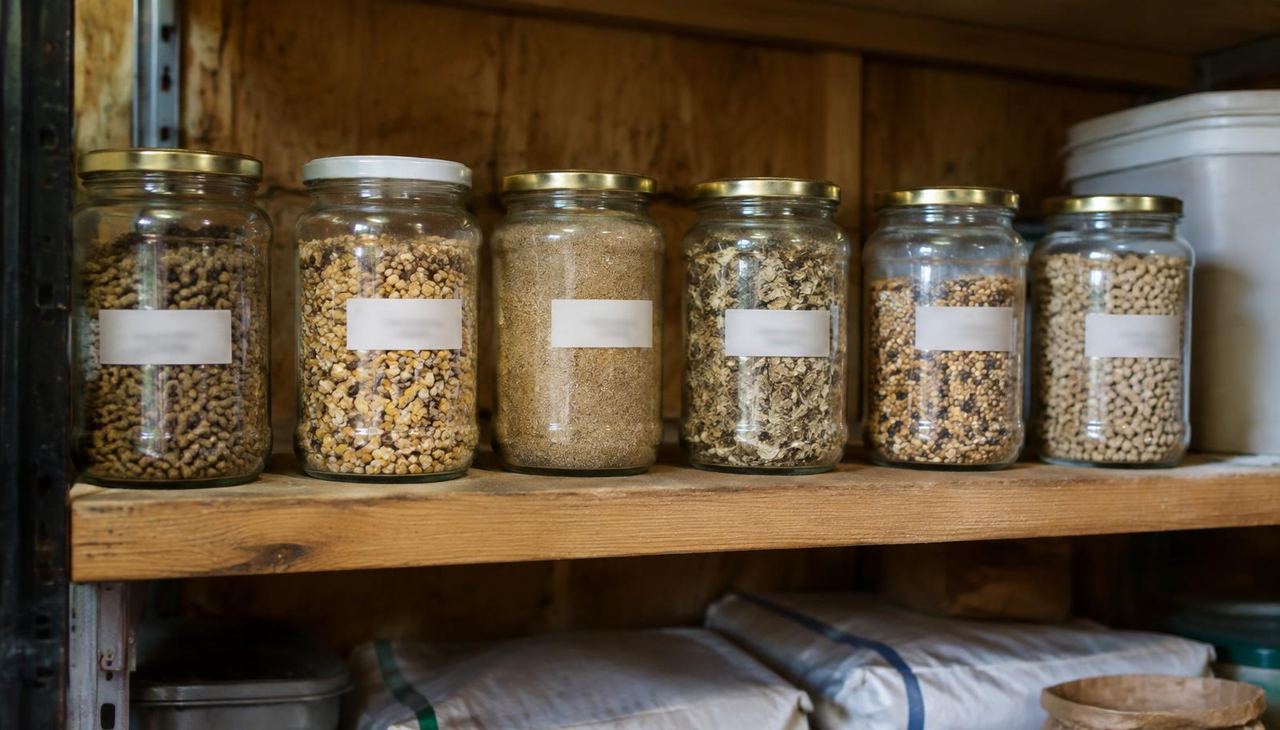
What should a practical farm feed record contain? Build one linked record, not separate spreadsheets that cannot be reconciled. Use common identifiers for farm, house or pen, animal group, feed product and reporting period. Assign ownership: receiving staff capture deliveries, stock staff record movements, and production staff maintain animal data. ### Minimum working checklist - Delivery: date, supplier, order reference, product, net quantity and weighbridge or delivery docket. - Identity: manufacturer batch or lot number, production date if available, and label or specification version. - Storage: bin or bay, opening stock, transfers, closing stock and stock-estimation method. - Feeding: group, dates, ration inclusion, feed issued, refusals and recoverable waste. - Animals: head count, entries, exits, weights or saleable output, and measurement method. - Context: health events, deaths, treatments, water interruptions, housing changes and weather stress. Choose units once and display them in every column. Keep original documents alongside corrections, with the date and reason for each change. A short daily entry is usually more reliable than reconstructing a month from memory.
How do batch numbers become usable feed batch traceability? Record the batch number at receipt, before packaging disappears or another delivery enters the same bin. Link it to the delivery docket, storage location and feeding dates. Where several lots enter one silo, record the overlap rather than claiming an exact batch-to-animal match. ### Preserve the evidence chain Photograph labels and note damaged seals, wet bags, unusual odour or visible contamination. Retain samples only under an agreed sampling and storage procedure: an unrepresentative scoop may mislead an investigation. Record who sampled, where, when and how the sample was sealed. Feed batch traceability should work both ways: from a suspect lot to exposed groups, and from an affected group back to possible lots. Follow farm and veterinary procedures for holding questionable stock; do not keep feeding it simply to complete a comparison.
How should feed consumed and feed wasted be separated? Feed delivered is not feed consumed. Reconcile inventory over the same dates used for animal measurements. Account for transfers, returns and feed remaining in hoppers as well as bulk storage. Mark estimated quantities clearly, especially where silo readings are approximate. Separate avoidable losses from animal intake wherever measurement allows. Record spills, spoiled feed, pest losses and discarded refusals. If losses cannot be measured, call the result feed disappearance rather than intake. ### Illustrative formula and example ```text All inputs below are illustrative examples, not expected results. Period feed disappearance = opening stock + receipts + transfers in − closing stock − transfers out = 10,000 + 20,000 + 0 − 8,000 − 1,000 = 21,000 kg Estimated intake = disappearance − measured non-consumed losses = 21,000 − 600 = 20,400 kg For an illustrative, consistently defined liveweight gain of 12,000 kg: Estimated intake-based FCR = 20,400 ÷ 12,000 = 1.70 Disappearance-based FCR = 21,000 ÷ 12,000 = 1.75 ``` Use the [feed conversion ratio calculator](/feed-conversion-ratio-calculator) with compatible units and a documented gain definition. Never compare ratios with different loss or animal-movement treatments as if they measured the same thing.
Which performance and health measurements belong beside feed data? Livestock performance tracking needs a denominator appropriate to the enterprise: liveweight gain, saleable milk, egg mass or another agreed output. Record animal numbers and days present, not just the closing head count. Identify whether weights cover all animals or a sample, and keep weighing conditions consistent. For growing animals, reconcile opening and closing biomass with arrivals, sales, transfers and deaths. Agree the gain calculation with the nutritionist and report mortality separately; otherwise changes in group composition can distort apparent efficiency. Record health observations promptly, including timing, affected groups, clinical signs and treatments. Note changes in water supply, stocking density, ventilation and ration preparation. Mortality and performance have many causes. Vets lead clinical diagnosis; nutritionists assess ration suitability and nutritional contributors. For related purchasing safeguards, see [feed quality, livestock mortality and buyer controls](/blog/feed-quality-livestock-mortality-buyer-controls).
How can buyers compare periods without blaming the wrong factor? Feed efficiency monitoring is most useful when differences are explainable. Compare similar animal stages and production conditions, and show important exceptions beside the result. A before-and-after change is an association, not proof that feed caused it. | Comparison basis | What it can reveal | Main limitation | |---|---|---| | Same group, successive periods | Operational changes over time | Age, weather and disease also change | | Similar groups, same period | Differences under broadly shared conditions | Starting weights and management may differ | | Delivery lot against agreed specification | Whether tested attributes match the agreement | Sampling and test methods affect interpretation | | Disappearance versus estimated intake | Recorded non-consumed losses | Unmeasured losses remain hidden | Ask a nutritionist to help design any planned feeding comparison. Define measures and stop conditions beforehand, and avoid changing feed, stocking density and equipment settings simultaneously if the objective is to understand one change.
What should the nutritionist and supplier review together? Prepare a compact review pack: the agreed specification, delivery and batch records, inventory reconciliation, performance summary, health timeline and any laboratory reports. Include missing data and measurement uncertainty rather than presenting false precision. Ask the nutritionist whether nutrient density, ingredient constraints, physical form or feeding practice warrants adjustment. Ask the supplier to explain documented departures from agreed product attributes, packaging or delivery conditions. Use an independent laboratory where appropriate, with agreed sampling methods and interpretation. Separate three decisions: whether immediate protective action is needed, whether a complaint is supported, and what should change next time. A disappointing result does not automatically establish non-conformity. Likewise, meeting a written specification does not prove that the specification suited the animals or the farm's equipment.
Which common mistakes make records commercially misleading? - **Using invoices as intake records:** purchasing dates and feeding dates rarely align exactly. - **Ignoring moisture basis:** compare quantities and nutrient results on a consistent, stated basis. - **Changing definitions mid-period:** document any switch in weighing, stock estimation or output accounting. - **Removing difficult groups:** excluding sick animals or deaths can make results look artificially favourable. - **Treating missing values as zero:** mark them unknown and explain their effect on conclusions. - **Overstating causation:** one poor period does not identify a defective batch. Also avoid recording every possible variable without assigning responsibility. Prioritise data that can be collected consistently and that changes a purchasing or management decision.
How do findings become a better next RFQ? ### A concrete next step Select one completed feeding period. Reconcile stock, link its batches and ask the nutritionist to review the performance denominator and contextual events. Then create a change log with four columns: observation, supporting evidence, proposed requirement and acceptance method. Translate supported findings into measurable requirements: physical form, nutrient basis, packaging integrity, batch identification, sampling arrangements or delivery-lot documentation. State tolerances, test methods and the process for disputed results. Include delivery quantities and storage constraints; do not request an unsupported formulation change. The [planning calculators](/calculators) provide preliminary planning outputs only. They do not replace a nutritionist, engineer, laboratory, lawyer, financial adviser or other relevant specialist. For commercial opportunities of USD 250,000 or more, FeedMatch offers a human-led, supplier-neutral [RFQ intake workflow](/rfq-intake), with human review before any supplier contact. Documents and relevant public records can be reviewed; FeedMatch is not a certification body and does not audit factories. The buyer retains supplier selection.
Frequently asked questions ### How often should feed records be updated? Record deliveries and movements when they occur, feeding and health observations daily, and reconcile stock at each defined performance reporting period. ### Can delivery weights substitute for feed intake? No. Adjust deliveries for opening and closing stocks, transfers and losses. Where losses remain unknown, report feed disappearance rather than measured intake. ### Does a worse FCR prove that feed quality declined? No. Health, age, environment, wastage and measurement methods also affect FCR. Review these factors with the nutritionist and involve a vet for health concerns. ### What if two batches mix in one silo? Record both batch numbers, quantities and the likely overlap period. Preserve uncertainty rather than assigning an unsupported single batch to the animals. ### What evidence should accompany the next RFQ? Include supported specification changes, relevant batch and performance summaries, sampling requirements and acceptance methods. Explain measurement limitations and avoid presenting suspected causes as established facts.
faqs_placeholder
faqs_placeholder
faqs_placeholder
faqs_placeholder
faqs_placeholder
faqs_placeholder
faqs_placeholder
faqs_placeholder
faqs_placeholder
faqs_placeholder
faqs_placeholder
faqs_placeholder
faqs_placeholder
faqs_placeholder
faqs_placeholder
faqs_placeholder
faqs_placeholder
faqs_placeholder
faqs_placeholder
faqs_placeholder
Related pages on FeedMatch
Frequently asked questions
- How often should feed records be updated?
- Record deliveries and movements when they occur, feeding and health observations daily, and reconcile stock at each defined performance reporting period.
- Can delivery weights substitute for feed intake?
- No. Adjust deliveries for opening and closing stocks, transfers and losses. Where losses remain unknown, report feed disappearance rather than measured intake.
- Does a worse FCR prove that feed quality declined?
- No. Health, age, environment, wastage and measurement methods also affect FCR. Review these factors with the nutritionist and involve a vet for health concerns.
- What if two batches mix in one silo?
- Record both batch numbers, quantities and the likely overlap period. Preserve uncertainty rather than assigning an unsupported single batch to the animals.
- What evidence should accompany the next RFQ?
- Include supported specification changes, relevant batch and performance summaries, sampling requirements and acceptance methods. Explain measurement limitations and avoid presenting suspected causes as established facts.
Feed industry regions we work with
Feed procurement is local before it is global: raw material basis, freight and installation costs change by region. These are the areas buyers most often name when defining a feed project in English.
United States
Cities and provinces
Iowa · Nebraska · Georgia · Arkansas · Texas · North Carolina
Corn and soybean meal basis with large integrated poultry, swine and dairy operations.
United States →United Kingdom and Ireland
Cities and provinces
East Anglia · Yorkshire · Lincolnshire · Northern Ireland · Munster
Compound feed and imported protein logistics through east coast and Irish Sea ports.
United Kingdom and Ireland →Gulf and East Africa import markets
Cities and provinces
Jeddah · Dubai · Mombasa · Djibouti
Import-driven feed supply where landed cost and port logistics dominate the decision.
Gulf and East Africa import markets →FeedMatch is supplier-neutral. Regional context helps define the requirement; pricing always comes from manufacturer quotations.
Move from insight to procurement
Turn the ideas in this article into a live procurement action — supplier-neutral, buyer-controlled, fully documented.