
Farm Feed Budget Planning: From Cost per Tonne to Cost per Unit of Output
A step-by-step method for farms and integrators to forecast feed tonnage, compare quotes on landed cost and budget by cost per unit of output — using only your own figures.
Short answer · Updated October 2026
Short answer: Farm Feed Budget Planning: From Cost per Tonne to Cost per Unit of Output
Short answer: a useful feed budget starts with tonnes needed by species and stage, turns every quote into a landed cost per tonne, adds storage and losses, and is judged by feed cost per unit of output — not price per tonne alone.
Key takeaways
- Tonnes needed = animals × daily intake × days ÷ 1,000 (kg to t), plus wastage and safety stock.
- Landed cost = quoted price + freight + duties/taxes + handling and unloading + insurance + testing.
- Include storage costs, shrink and spoilage from your records, and the cost of paying for stock before it is used.
- Feed cost per unit = total feed cost ÷ output (kg live weight, dozen eggs, litre of milk, kg of fish or shrimp).
- Compare actual tonnes, landed cost and cost per unit with the plan each month.
FeedMatch Editorial Desk
Editorial Team
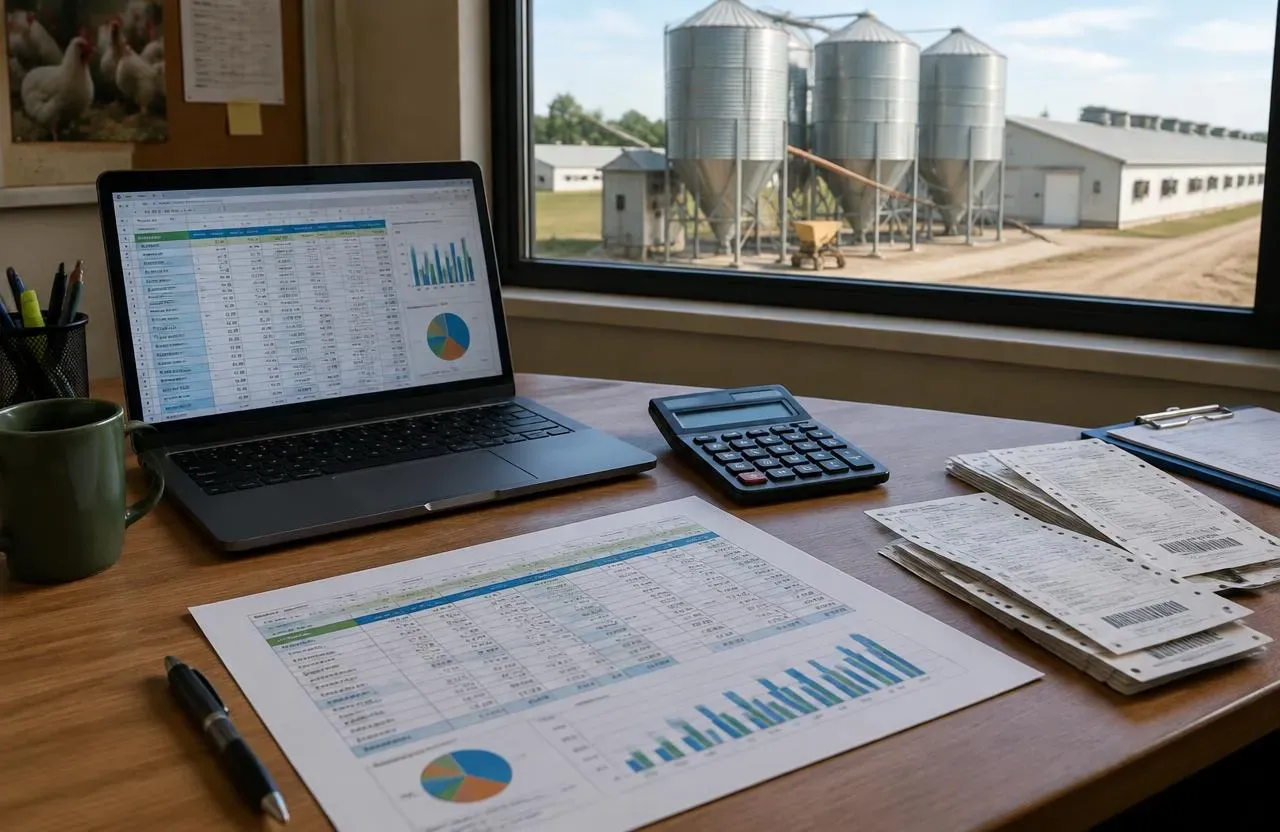
Short answer: a useful feed budget starts with tonnes needed by species and stage, turns every quote into a landed cost per tonne, adds storage and losses, and is judged by feed cost per unit of output — not price per tonne alone.
Step 1: forecast tonnes
| Input | Where it comes from |
|---|---|
| Animals per stage | Your production plan |
| Daily intake per animal | Your records or nutritionist |
| Days per stage | Production plan |
| Wastage | Your measured losses |
| Safety stock | Days of cover you can store safely |
| Tonnes needed = animals × daily intake × days ÷ 1,000 (kg to t), plus wastage and safety stock. |
Step 2: build landed cost per tonne
Landed cost = quoted price + freight + duties/taxes + handling and unloading + insurance + testing. Enter each quote in the landed cost calculator so suppliers are compared on the same delivery terms, currency and validity date.
Step 3: add storage, losses and money tied up
Include storage costs, shrink and spoilage from your records, and the cost of paying for stock before it is used. Bigger, cheaper deliveries only help if you can store them safely — see the FAO feed quality overview.
Step 4: budget by cost per unit of output
Feed cost per unit = total feed cost ÷ output (kg live weight, dozen eggs, litre of milk, kg of fish or shrimp). The FCR and cost-per-output calculator does this from your figures and shows how a change in feed efficiency changes the budget.
Step 5: review monthly
Compare actual tonnes, landed cost and cost per unit with the plan each month. Investigate gaps before changing supplier or recipe, and agree any recipe change with your nutritionist.
Step 6: request comparable quotes
When the plan is ready, send one written request so every supplier quotes the same specification, volume and delivery terms. A person reviews it first. The farm feed purchase plan covers specifications and supplier review; complete feed vs concentrate vs on-farm mixing helps decide what to buy.
Sources
- FAO: animal feed quality and safety.
- FAO: good practices for the feed sector.
- No prices are given here; all figures come from your own records and quotes.
Frequently asked questions
- How do I estimate how much feed my farm needs?
- Multiply the number of animals in each stage by their expected daily intake from your own records or your nutritionist, then by the days in that stage. Add your measured wastage and a safety stock.
- What is landed cost?
- The full cost of feed delivered to your farm: price plus freight, duties or taxes, handling, insurance and any testing. Compare quotes only on landed cost.
- Does FeedMatch give feed price benchmarks?
- No. FeedMatch does not publish price benchmarks. Use current quotes and your own records in the free calculators.
Feed industry regions we work with
Feed procurement is local before it is global: raw material basis, freight and installation costs change by region. These are the areas buyers most often name when defining a feed project in English.
United States
Cities and provinces
Iowa · Nebraska · Georgia · Arkansas · Texas · North Carolina
Corn and soybean meal basis with large integrated poultry, swine and dairy operations.
United States →United Kingdom and Ireland
Cities and provinces
East Anglia · Yorkshire · Lincolnshire · Northern Ireland · Munster
Compound feed and imported protein logistics through east coast and Irish Sea ports.
United Kingdom and Ireland →Gulf and East Africa import markets
Cities and provinces
Jeddah · Dubai · Mombasa · Djibouti
Import-driven feed supply where landed cost and port logistics dominate the decision.
Gulf and East Africa import markets →FeedMatch is supplier-neutral. Regional context helps define the requirement; pricing always comes from manufacturer quotations.