
Why Mycotoxin Testing Matters Before You Accept a Feed Shipment
Mycotoxin testing before acceptance helps buyers manage contamination risks, preserve traceability and apply agreed release or rejection rules. Representative sampling is essential.
Short answer · reviewed October 2026
Short answer: Why Mycotoxin Testing Matters Before You Accept a Feed Shipment
Mycotoxin testing before acceptance helps buyers manage contamination risks, preserve traceability and apply agreed release or rejection rules. Representative sampling is essential.
Key takeaways
- !Sealed grain sample bags labelled with lot identifiers beside an incoming shipment sampling record
- - Broiler feed calculator - Cattle feed calculator - Dairy feed cost calculator - Feed buyer FAQ: 100 questions
FeedMatch Editorial Desk
Editorial Team
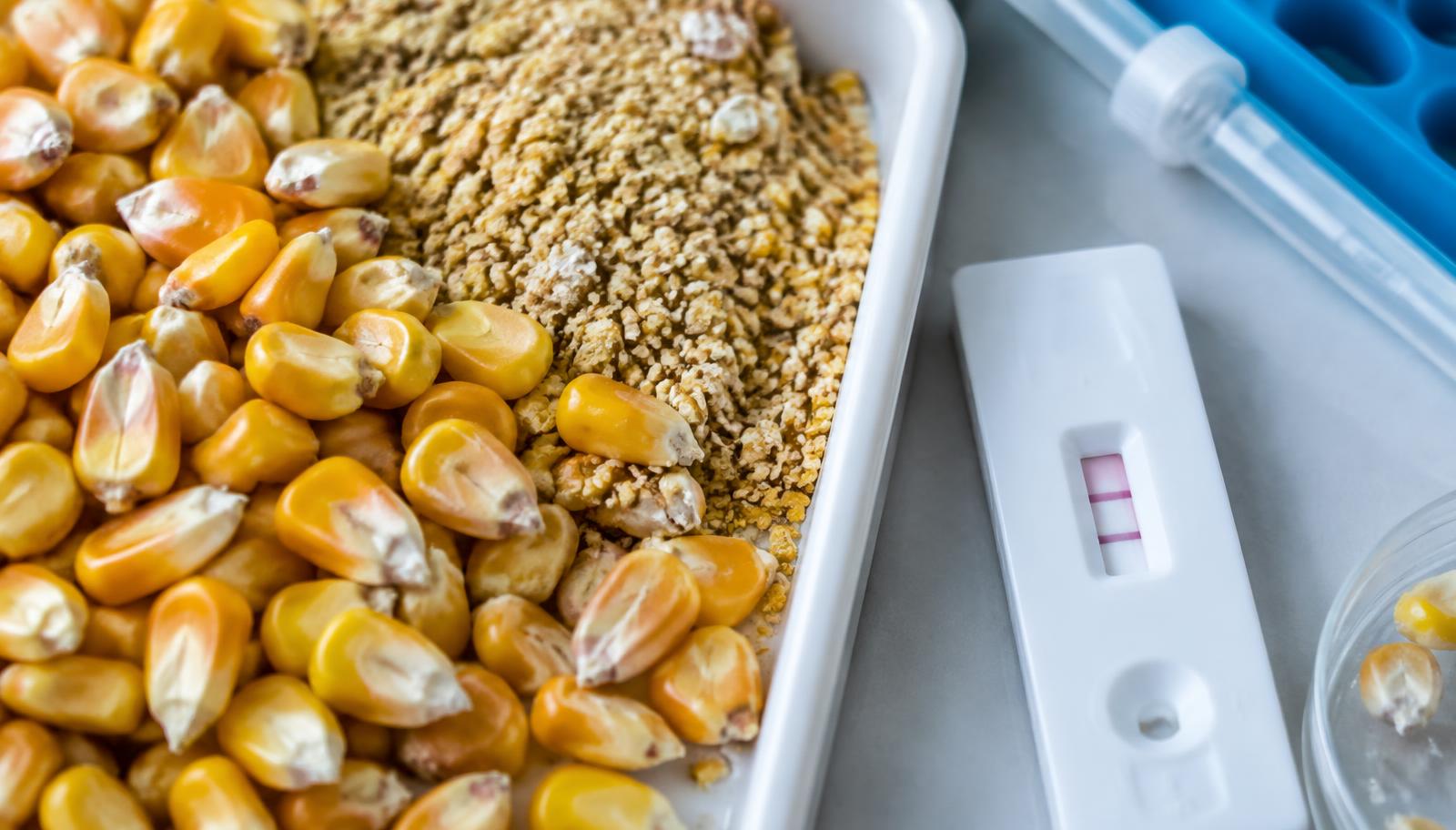
Short answer Buyers test incoming feed ingredients because mycotoxins can enter grains and by-products before harvest or during storage, remain without obvious spoilage, and affect animal health, performance and legal compliance. Testing before acceptance creates a decision point: release, hold, investigate or reject. Its value depends on representative sampling, a suitable analytical method and agreed decision rules. Applicable regulation establishes legal limits; qualified laboratories help buyers select methods and interpret results. A supplier certificate alone does not establish the condition of every delivered lot.
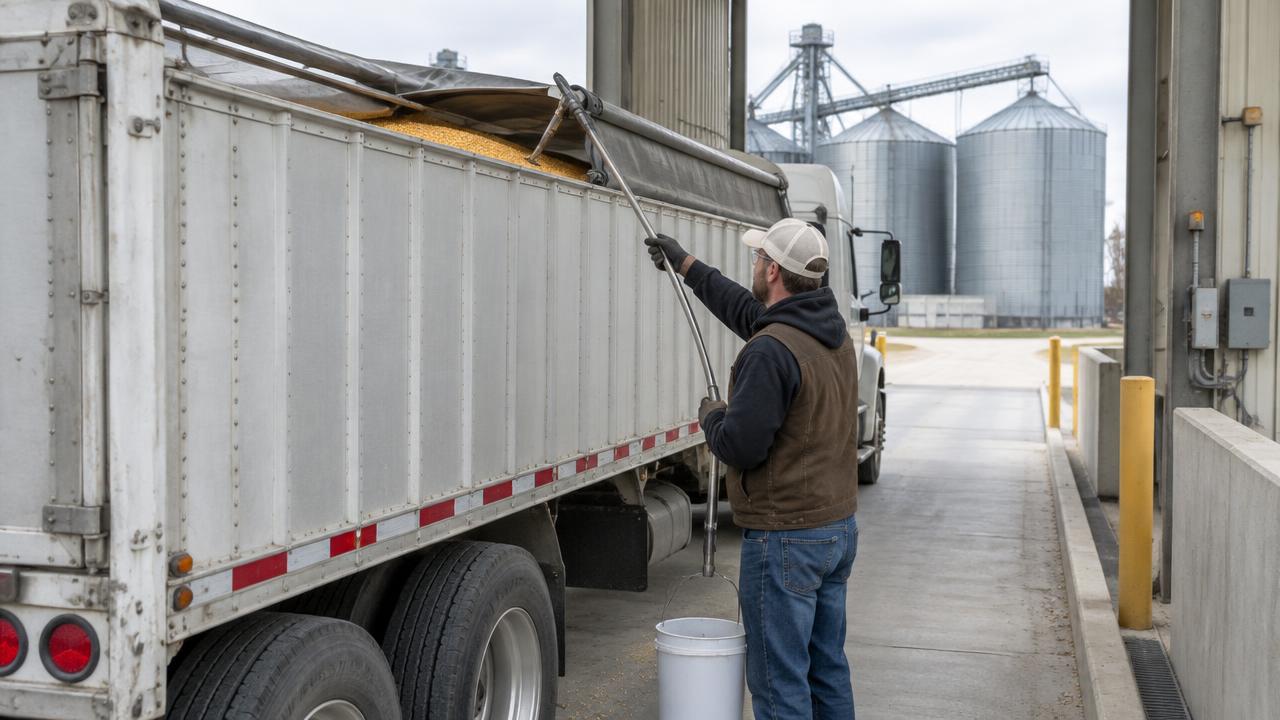
Why can contamination begin before the shipment reaches you? Toxin-producing fungi may infect crops in the field. Weather, insect damage and crop stress can influence risk, although conditions differ between fungi and toxins. After harvest, inadequate drying, moisture migration, condensation and warm storage pockets can allow further fungal activity. ### Processing does not guarantee removal Some mycotoxins persist through ordinary processing. By-products may carry contamination from the original grain, and processing can redistribute toxins into particular fractions. Ingredient origin and processing history therefore matter alongside its name. Transport adds another exposure point through leaks, wet residues or condensation. Inspect arrival condition, but do not equate clean appearance with safety. Review drying, storage and transit records where available.
What consequences make testing commercially important? The answer to “why test feed for mycotoxins” extends beyond visible mould. Depending on the toxin, dose, exposure duration and animal, known risks include reduced intake, impaired growth, reproductive effects, immune disruption and organ damage. Multiple toxins may complicate assessment; one result does not describe every hazard. Aflatoxin in feed requires particular attention where milk production creates potential carry-over concerns. Species, age and intended use affect the relevant assessment. Commercial consequences include held stock, interrupted production, disposal costs and disputes. Testing cannot promise freedom from loss, but it provides evidence before a suspect lot becomes mixed into inventory.
Why is sampling often the weakest link? Mycotoxins can occur in concentrated pockets rather than evenly throughout a shipment. A precise test on an unrepresentative handful may give a misleading result. Sampling error can outweigh differences between otherwise suitable analytical methods. ### Define the lot before collecting samples Identify the quantity, compartments and production or loading boundaries represented by each sample. Follow the applicable official or contractually agreed sampling protocol, using safe access and trained personnel. Collect increments across the defined lot, then combine, homogenise and reduce samples as the protocol requires. > **Illustrative arithmetic only:** composite mass = number of increments × mass per increment. For example, 20 increments × 100 g = 2 kg. These assumed inputs explain mass accounting; they are not a recommended sampling plan. Seal and identify laboratory and retained portions. Record custody, collection locations and conditions. See the [incoming inspection sampling guide](/blog/feed-ingredient-sampling-incoming-inspection) for the wider receipt workflow.
How do rapid screens compare with referee laboratories? Rapid tests support receipt decisions when validated for the ingredient, toxin and concentration range. Extraction, grinding, operator technique and matrix interference affect results. They are not universal clearance tools. | Approach | Useful role | Important boundary | |---|---|---| | On-site rapid screen | Initial hold or release assessment under an agreed procedure | Covers specified toxins and matrices; borderline results need defined follow-up | | Qualified laboratory analysis | Confirmation or a broader toxin panel | Method, reporting limits and turnaround must fit the decision | | Agreed referee laboratory | Contractual dispute resolution | Authority, sample source and result precedence must be agreed beforehand | Select laboratories with demonstrated competence for the relevant matrix and method, checking accreditation scope where applicable. Referee status is a contractual role, not automatically a different analytical technique.
Which limits and contract clauses should control acceptance? Do not adopt a single internet threshold for all feed. Requirements differ by jurisdiction, toxin, ingredient, species and intended use. Distinguish binding legal limits from guidance values and stricter contractual specifications. Ask a qualified laboratory to explain reporting units, analytical capability and measurement uncertainty. Contracts should identify the lot, sampling protocol, test panel, method, laboratory and decision rule. Specify whether results are reported as received or on another basis. Address uncertainty and results near the acceptance boundary explicitly. ### Make rejection executable Define who can place a hold, when acceptance occurs, which result governs a dispute and who pays for sampling, storage, confirmation, return or lawful disposal. Align delivery and title provisions with inspection rights. Obtain legal review; commercial rejection rights cannot override regulatory duties.
What should buyers do before accepting a shipment? 1. **Set the risk-based panel.** Use ingredient, origin, season, supplier history and animal destination to select toxins with technical advice. A single-toxin screen is not a complete hazard assessment. 2. **Match documents to the load.** Reconcile the purchase order, lot references, loading dates and analytical certificate. Investigate mismatches before unloading into shared storage. 3. **Inspect and sample safely.** Record moisture indicators, odour, damage and transport condition. Follow the agreed representative sampling procedure, not convenience sampling. 4. **Keep acceptance conditional.** Segregate pending results where feasible. If unloading is necessary, preserve lot identity and document that unloading does not constitute acceptance where the contract supports this. 5. **Apply the agreed decision rule.** Release compliant material through the authorised process. Hold suspicious or borderline results for confirmation. Manage confirmed non-compliance through contractual and regulatory procedures; involve the relevant authority where required. 6. **Close the evidence trail.** Preserve reports, retained samples and disposition records. Update future feed ingredient testing plans when recurring problems emerge.
What common mistakes undermine the result? Common mistakes include treating a negative screen as proof that every toxin is absent, comparing results expressed on different moisture bases, and repeatedly testing until a favourable number appears. None resolves an unrepresentative sample. Another mistake is mixing a suspect lot into clean inventory before deciding its status. This weakens traceability and may spread contamination. Do not assume dilution or a toxin-binding product makes non-compliant material legally acceptable. Any proposed treatment or alternative use needs specialist and regulatory assessment.
What is the concrete next step for your buying team? Before the next delivery, issue a receipt instruction and confirm available [storage arrangements](/storage). - [ ] Lot boundaries and sampling responsibility agreed - [ ] Applicable limits, panel and laboratory identified - [ ] Hold space, release authority and rejection route assigned - [ ] Retained samples and dispute procedure documented For new sourcing, review [ingredient categories](/ingredients) and include testing requirements in the [RFQ intake](/rfq-intake). FeedMatch supports human-led, supplier-neutral workflows for commercial opportunities of USD 250,000 or more, with human review before any supplier contact. Documents and relevant public records can be reviewed; FeedMatch is not a certification body and does not audit factories. Buyers choose suppliers. Tools and calculators provide preliminary planning outputs, not replacements for a nutritionist, engineer, laboratory, lawyer, financial adviser or other relevant specialist.
What else do buyers ask about mycotoxin testing? ### Does visible mould prove mycotoxins are present? No. Appearance cannot establish toxin identity or concentration, and material without visible mould can still contain mycotoxins. ### Can a supplier certificate replace receipt testing? Not automatically. Check the represented lot, sampling date, method and custody against your risk-based acceptance procedure. ### Should every ingredient receive the same test panel? No. Select the panel using ingredient risks, origin, storage history, intended animals and applicable requirements. ### What should happen after a borderline rapid result? Hold the identified lot and follow the agreed confirmation procedure. Do not reinterpret the threshold after seeing the result. ### Who sets the acceptance limit? Applicable regulation controls legal requirements. Buyers may agree stricter specifications, supported by qualified laboratory interpretation and relevant specialist advice.
faqs_placeholder
Related pages on FeedMatch
Frequently asked questions
- Does visible mould prove mycotoxins are present?
- No. Appearance cannot establish toxin identity or concentration, and material without visible mould can still contain mycotoxins.
- Can a supplier certificate replace receipt testing?
- Not automatically. Check the represented lot, sampling date, method and custody against your risk-based acceptance procedure.
- Should every ingredient receive the same test panel?
- No. Select the panel using ingredient risks, origin, storage history, intended animals and applicable requirements.
- What should happen after a borderline rapid result?
- Hold the identified lot and follow the agreed confirmation procedure. Do not reinterpret the threshold after seeing the result.
- Who sets the acceptance limit?
- Applicable regulation controls legal requirements. Buyers may agree stricter specifications, supported by qualified laboratory interpretation and relevant specialist advice.
Feed industry regions we work with
Feed procurement is local before it is global: raw material basis, freight and installation costs change by region. These are the areas buyers most often name when defining a feed project in English.
United States
Cities and provinces
Iowa · Nebraska · Georgia · Arkansas · Texas · North Carolina
Corn and soybean meal basis with large integrated poultry, swine and dairy operations.
United States →United Kingdom and Ireland
Cities and provinces
East Anglia · Yorkshire · Lincolnshire · Northern Ireland · Munster
Compound feed and imported protein logistics through east coast and Irish Sea ports.
United Kingdom and Ireland →Gulf and East Africa import markets
Cities and provinces
Jeddah · Dubai · Mombasa · Djibouti
Import-driven feed supply where landed cost and port logistics dominate the decision.
Gulf and East Africa import markets →FeedMatch is supplier-neutral. Regional context helps define the requirement; pricing always comes from manufacturer quotations.
Move from insight to procurement
Turn the ideas in this article into a live procurement action — supplier-neutral, buyer-controlled, fully documented.