
Pull to refresh
FeedMatch Group logo — wheat sheaf and interlocking chevrons emblem representing the independent animal feed procurement and ingredient intelligence platform
FeedMatchGroup
DashboardSign inRequest Feed Quote
Financing for animal feed and feed-ingredient purchasesSee financing options→←
Back to home
  1. Home
  2. /
  3. Feed Insights
  4. /
  5. Feed Ingredients
  6. /
  7. Feed Spoilage in Storage: Moisture, Heat, Pests and Contamination Prevention
Feed Ingredients· Oct 2026· 7 min read

Feed Spoilage in Storage: Moisture, Heat, Pests and Contamination Prevention

A practical receiving-to-use checklist for stored animal feed: inspect, record, keep dry, monitor, control pests, separate medicated feed, clean equipment, rotate stock and escalate suspect lots.

Short answer · reviewed October 2026

Short answer: Feed Spoilage in Storage: Moisture, Heat, Pests and Contamination Prevention

Educational guidance, not veterinary diagnosis. This checklist describes general storage practice. It does not diagnose animal illness or define legal disposition rules, which vary by country and species. Consult a veterinarian, a qualified feed-safety professional or your local regulator about specific lots.

Key takeaways

  • Stored feed spoils when moisture, heat, pests or contamination get in.
  • 1. Inspect on arrival: packaging intact, no wet patches, caking, unusual odour, insects or foreign matter; vehicle clean and dry.
  • Moisture lets moulds and bacteria grow, and their activity produces heat that drives more moisture migration — a cycle that can spoil feed from the inside of a bin.
  • Stop using it, segregate and label it on hold, and record what you observed.
  • FeedMatch is a supplier-neutral procurement service; it does not test or store feed.
FM

FeedMatch Editorial Desk

Editorial Team
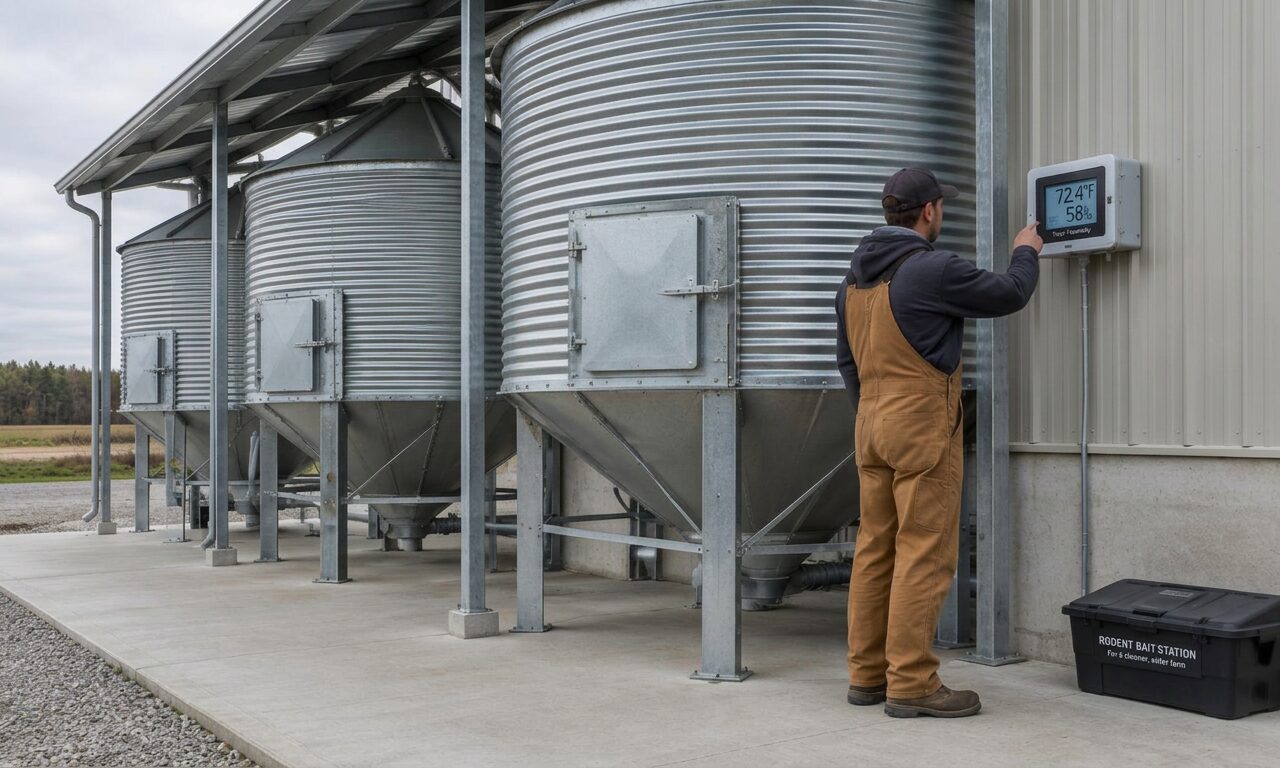
Worker checking a temperature and humidity monitor beside steel feed bins on a raised, roofed concrete pad
Educational guidance, not veterinary diagnosis. This checklist describes general storage practice. It does not diagnose animal illness or define legal disposition rules, which vary by country and species. Consult a veterinarian, a qualified feed-safety professional or your local regulator about specific lots. Reviewed 13 October 2026.

Short answer

Stored feed spoils when moisture, heat, pests or contamination get in. Prevention is a routine, not a single check: inspect each delivery and its documents, record lot and date, keep feed dry and off the ground, monitor temperature and moisture where relevant, control pests, keep incompatible and medicated feeds apart, clean bins and conveyors, and use stock first-in, first-out. Visual and smell checks help you spot problems early, but they do not replace laboratory testing, and a lot that looks or smells off should be held and assessed with qualified guidance (FAO, storage and handling of feed ingredients).

Receiving-to-use checklist

  1. Inspect on arrival: packaging intact, no wet patches, caking, unusual odour, insects or foreign matter; vehicle clean and dry.
  2. Check documents: delivery note, label and certificate of analysis match the product and lot.
  3. Record lot and date: lot ID, receipt date, supplier and storage location for every delivery.
  4. Store dry: under cover, protected from rain, roof leaks, condensation and ground moisture; bags on pallets away from walls.
  5. Monitor: check temperature and moisture in bulk bins where relevant; investigate rising readings.
  6. Control pests: proofing, bait stations and spill clean-up under a documented programme.
  7. Separate: keep medicated, species-specific and incompatible feeds physically apart and clearly labelled.
  8. Clean: empty and clean bins, augers and conveyors between lots to remove old residues.
  9. Rotate: first-in, first-out; respect stated shelf life.
  10. Escalate: hold any lot that looks, smells or behaves abnormally and follow qualified guidance.

Why do moisture and heat matter most?

Moisture lets moulds and bacteria grow, and their activity produces heat that drives more moisture migration — a cycle that can spoil feed from the inside of a bin. Daily temperature swings cause condensation on bin walls. FAO storage guidance identifies moisture control and protection from heat and pests as central to keeping ingredients sound (FAO). Spoilage can also allow mould toxins to form; see our mycotoxin guide.

Lot-record and supplier-document checklist

RecordKeep
Lot ID and receipt dateFor every delivery
Supplier and product specificationMoisture and shelf-life terms
Certificate of analysisMatched to the lot
Storage locationBin or warehouse bay
Monitoring logTemperature / moisture readings where used
Cleaning and pest-control logDate, area, person
Hold / release recordReason, evidence, decision-maker

What should you do if a lot looks or smells off?

Stop using it, segregate and label it on hold, and record what you observed. Sample it properly and send it to an accredited laboratory if testing is warranted. Ask a veterinarian about any animal-health concerns and a feed-safety professional or your regulator about disposition, which depends on country, species and the suspected problem. Do not blend a suspect lot into fresh feed. The Codex Code of Practice on Good Animal Feeding and FDA information on contaminants in animal food give the general framework.

Where does FeedMatch fit?

FeedMatch is a supplier-neutral procurement service; it does not test or store feed. Use the farm feed storage calculator to size storage days from your own consumption figures, and write moisture, packaging and documentation terms into your ingredient specification before you request offers through the RFQ. Bulk storage planning is covered in how to store bulk feed and ingredients. The USD 250,000 minimum applies to feed-mill and storage-system project RFQs, not to routine feed orders.

Related pages on FeedMatch

  • Dairy feed cost calculator
  • Farm feed storage calculator
  • Feed mill energy calculator
  • Feed buyer FAQ: 100 questions

Frequently asked questions

Is a visual check enough to know stored feed is safe?
No. Visual and smell checks help find problems early, but they cannot confirm safety or toxin status. Laboratory testing is needed when there is doubt.
How should bagged feed be stored?
Under cover on pallets, away from walls and ground moisture, protected from rain and pests, with lot labels visible and stock used first-in, first-out.
Why separate medicated feed?
To prevent carry-over into feed for animals it is not intended for. Keep it physically separate, clearly labelled and handled with cleaned equipment.
What should happen to a spoiled lot?
Hold and segregate it, record the observation and seek guidance from a feed-safety professional, veterinarian or regulator. Disposition rules vary by country and species.
Feed SafetyFeed Storage

Explore related on FeedMatch

  • Supplier categories (informational)
  • Feed & ingredient categories

Next steps for feed buyers

Turn this article into a procurement brief. A FeedMatch advisor reviews every request before any supplier is contacted.

  • Feed ingredient specifications
  • Feed and feed-mill calculators
  • Shortage calculators: stock, ration, storage
  • Feed procurement guides
  • Send a structured RFQ →

Related Solutions Across Global B2B Group

Complementary supplier-neutral platforms in the Global B2B Group family.

  • Explore the wider procurement ecosystem — specialized supplier-neutral platforms across industrial verticals.

    Visit Global B2B Group

Feed industry regions we work with

Feed procurement is local before it is global: raw material basis, freight and installation costs change by region. These are the areas buyers most often name when defining a feed project in English.

United States

Cities and provinces

Iowa · Nebraska · Georgia · Arkansas · Texas · North Carolina

Corn and soybean meal basis with large integrated poultry, swine and dairy operations.

United States →

United Kingdom and Ireland

Cities and provinces

East Anglia · Yorkshire · Lincolnshire · Northern Ireland · Munster

Compound feed and imported protein logistics through east coast and Irish Sea ports.

United Kingdom and Ireland →

Gulf and East Africa import markets

Cities and provinces

Jeddah · Dubai · Mombasa · Djibouti

Import-driven feed supply where landed cost and port logistics dominate the decision.

Gulf and East Africa import markets →

FeedMatch is supplier-neutral. Regional context helps define the requirement; pricing always comes from manufacturer quotations.

Move from insight to procurement

Turn the ideas in this article into a live procurement action — supplier-neutral, buyer-controlled, fully documented.

Get Multiple Quotes Submit one brief — offers from independent feed and ingredient suppliers are compared after human review.Talk to Procurement Experts Route your project to FeedMatch's supplier-neutral procurement desk.Calculate Your Project FCR, feed volume, storage and CIF landed-cost calculators.Browse Feed Ingredients Specifications for grains, protein meals, premixes and additives.

On this page

  • Short answer
  • Receiving-to-use checklist
  • Why do moisture and heat matter most?
  • Lot-record and supplier-document checklist
  • What should you do if a lot looks or smells off?
  • Where does FeedMatch fit?
  • Related pages on FeedMatch

Related insights

Hand-picked from the same feeding-system and species clusters.

Feed safety

Mycotoxins in Feed Ingredients: Risk Factors, Testing, Supplier Checks and Safe Decisions

A practical feed-safety guide to mycotoxin risk in feed ingredients: drying and storage, representative sampling, accredited testing, lot records, supplier COAs and hold-and-investigate decisions.

Procurement planning

Feed Buying Calendar: Turn Crop, Fertilizer, Freight and FX Signals into Purchase Decisions

An evergreen framework for feed buyers: which upstream signals to watch, how to log them, and how to convert them into dated review and purchase windows without guessing prices.

Supplier review

How to Qualify an Alternative Feed Ingredient Before Commercial Scale-Up: A Stage-Gate Checklist

A documented route from "this offer looks interesting" to an approved second source—showing who signs each gate, what evidence is needed and how to size the trial before you commit volume.

Supplier review

Feed Ingredient Traceability and Responsible Sourcing: A Buyer Due-Diligence Checklist

A practical due-diligence checklist for feed ingredient buyers: what traceability evidence to request, how to read audit and certificate scope, and how to record what is verified versus merely declared.

Industrial feed calculators

Other calculators

Free planning tools for feed volume, water, airflow and heat load — with the assumptions shown, so you can defend the numbers internally.

  • Feed Consumption Calculator
  • Water Consumption Calculator
  • Ventilation Calculator

Feed calculators by species

All calculators

Size the tonnage, check the feed conversion ratio and cost it per head before you ask for prices — each tool carries a worked example and hands the volume straight to an RFQ.

  • Poultry feed calculator
  • Broiler feed calculator
  • FCR calculator
  • Cattle feed calculator
  • Dairy feed cost calculator
  • Fish & shrimp feed calculator
  • Shrimp feed calculator
  • Feed ingredient cost comparison
  • Annual feed procurement calculator
  • FCR profit sensitivity
  • Swine feed calculator
  • Layer feed & cost per egg calculator
  • Salmon feed budget calculator
  • Trout feed budget calculator
  • Seabass feed budget calculator
  • Seabream feed budget calculator
FeedMatch Group logo — wheat sheaf and interlocking chevrons emblem representing the independent animal feed procurement and ingredient intelligence platform
FeedMatchGroup

Global animal feed & ingredient procurement. Supplier-neutral sourcing of feed and raw materials for farms, integrators, feed mills and importers worldwide.

Follow us on LinkedIn
Chat with our team on WhatsApp+44 7936 808834
Language

Feed Procurement

  • Request a Feed RFQ
  • Get a Free Quote
  • Feed Procurement
  • Feed Procurement Platform
  • Commercial Procurement
  • Buyer's Guide
  • Tenders & Institutional Bids
  • Supplier Sourcing
  • Landed Cost by Trade Lane
  • Logistics & Freight

Feed & Ingredients

  • Feed Ingredients
  • Premixes, Additives & Feed-Grade Products
  • Feed by Species
  • Feed by Production Stage
  • Specification Library
  • Standards Library

Calculators & Tools

  • Calculators & Tools
  • Feed Mill Operating Costs
  • Feed Mill Energy Calculator
  • Feed Mill Calculator

Company

  • About FeedMatch
  • How It Works
  • Buyer Intelligence
  • Become a Supplier
  • FAQ
  • Global B2B Group Network
  • Contact
  • Sitemap
Global B2B Group — Our Network

One procurement operating system across every protein & agri vertical. Explore the full network →

  • HatchMatch — Poultry
  • FishMatch — Aquaculture
  • ColdMatch — Cold Chain
  • SeedMatch — Seeds & Inputs

FeedMatch Group is a human-led, supplier-neutral B2B feed procurement service for commercial feed and ingredient buyers from USD $250,000+. Every request is reviewed by our team — suppliers are contacted only after authorized human review.

FeedMatch Group is the specialized animal feed and feed-ingredient procurement platform of Global B2B Group. FeedMatch Group is not a feed manufacturer, ingredient trader, commodity trader, distributor, broker, feed mill, nutritionist, veterinarian, EPC contractor, lender, bank, credit provider, financial advisor, investment advisor, insurer, underwriter or regulated financial services provider. Any financing, leasing, trade finance, working capital or project-finance option mentioned on this website is provided solely by independent third-party financing providers, subject to their own eligibility checks, KYC, due diligence, compliance review, approval, terms and documentation. FeedMatch Group does not provide financial advice, does not arrange regulated financial products, does not guarantee financing approval, and is not responsible for any financing decision, offer, rejection, delay, cost, term or outcome. Quotes, feed, ingredients, additives, equipment, logistics, services, warranties, feed safety, nutritional outcomes, FCR and animal performance remain solely the responsibility of independent third-party suppliers, manufacturers, logistics providers or qualified professionals. See Terms and Disclaimer.

FeedMatchGroup.com · Global Animal Feed & Ingredient Procurement
Privacy·Terms·Cookies·Disclaimer·Legal Center·Accessibility·Accessibility Support·Contact·Sitemap
© 2026 FeedMatchGroup.com · All rights reserved.FeedMatch Group is the specialized animal feed and feed-ingredient procurement platform of Global B2B Group. FeedMatch is not a feed manufacturer, ingredient trader, commodity trader, distributor, broker, feed mill, premix or additive producer, EPC contractor, lender or regulated financial services provider. Quotes, feed, ingredients, equipment, logistics, financing and services are provided solely by independent third parties and remain subject to their terms, approvals and responsibilities. Operated from the Republic of Cyprus.Built for commercial feed procurement from USD $250K+ — feed mills, integrators, importers, EPCs, governments and industrial farms. Not intended for hobby, backyard, pet-owner or small retail purchasing. How FeedMatch works.FeedMatch Group is a specialized platform of Global B2B Group — a global B2B procurement, project development and financing ecosystem. Sister platforms: HatchMatch Group, ColdMatch Group, FishMatch Group, SeedMatch Group.The specialized feed platform within the Global B2B Group ecosystem.
CalculatorsGuidesFinancingRequest a Quote
WhatsApp
Where this applies

Take this to a market — or brief it directly

Market pages

  • Egypt feed market overview
  • Nigeria feed market overview
  • Azerbaijan feed market overview
  • Kazakhstan feed market overview

Act on it

  • Start a structured RFQBrief once, get comparable supplier offers
  • Supplier directorySupplier-declared profiles and reviewed documents
  • Project & trade financingLC, CAD and reviewed financing routes