FinancingFeed working capital, export credit, trade finance & asset leasing — explore options

Rice Bran — Especificações, fornecedores e RFQ

Rice Bran: especificações técnicas, origens globais, certificações GMP+/FAMI-QS e cotações verificadas. Rice milling by-product. Full-fat: 12–14% CP, 15–20%…

FinancingFeed working capital, export credit, trade finance & asset leasing — explore options
Energy Sources & Grains

Rice Bran

Also known as: Full-fat rice bran · De-oiled rice bran · DORB

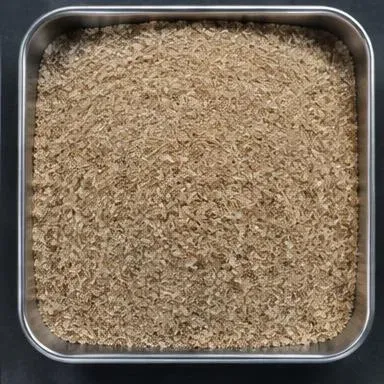
Rice milling by-product. Full-fat: 12–14% CP, 15–20% fat. De-oiled: 14–16% CP, 1–2% fat. Widely used in South and Southeast Asian feed.

Applications by species

broilerslayersswinedairytilapiacatfish

Top global export origins

India Thailand Vietnam Pakistan Bangladesh

FeedMatch Group's RFQ Builder benchmarks landed costs across origins for your discharge port and shipment window.

Certifications & quality standards

GMP+

Buyer considerations

Advantages

  • Locally abundant in Asia
  • Full-fat variety is high-energy

Constraints & risks

  • Rancidity risk in full-fat form — stabilization critical
  • Phytate limits phosphorus availability

Key specifications to contract

Each parameter is explained in the specification library — what it measures, how it is tested and what to verify.

Laboratory testing programme

TestWhy buyers run it
Moisture and test weightStorage stability, energy density and commercial weight
Mycotoxin panel (aflatoxin, DON, zearalenone, fumonisin)Cereal chains carry the highest mycotoxin exposure
Starch and residual oilDrives the calculated energy value used in formulation
Foreign matter and broken kernelsPurity, flow behaviour and true usable tonnage
Insect fragments and mould countStorage history indicator

Storage, packaging, transport & handling

Shelf life

Cereals and energy by-products typically hold 4–8 months at 12–14% moisture with active aeration; high-oil by-products are shorter and oxidation-limited.

Storage recommendations
  • Aerate and monitor temperature at multiple silo depths
  • Control moisture migration — hot spots form before visible mould appears
  • Maintain insect and rodent monitoring with documented treatments
Packaging options
  • Bulk silo or vessel parcels
  • Bulk bags for intermediate volumes
  • Bagged only for small or remote operations
Transportation considerations
  • Verify prior cargo in bulk holds; grain readiness inspection before loading
  • Ventilate to prevent condensation on long tropical routes
  • Record fumigation treatments and residues
Handling best practices
  • Manage dust — grain and by-product dust is both a loss and an explosion risk
  • Control grinding to the target geometric mean diameter for the species
  • Blend by-products gradually to keep diet energy stable

Procurement considerations

  • Set mycotoxin limits by destination regulation and target species, with a defined incremental sampling plan
  • Agree moisture adjustment scales rather than simple rejection thresholds
  • Confirm harvest year and storage history, not only origin
Common industry standards
  • GMP+ FSA / FAMI-QS feed safety scheme certification of the producing site
  • ISO/IEC 17025 accredited analysis for contractual and safety parameters
  • HACCP plan covering the specific material and process route
  • Codex Alimentarius Code of Practice on Good Animal Feeding

Typical risks & common mistakes

Typical risks
  • Hot-spot mycotoxin contamination missed by grab sampling
  • Energy value drifting between harvest years and origins
  • Fumigant residues and insect infestation entering the mill
Common mistakes
  • Grab-sampling bulk cargo for mycotoxin decisions
  • Assuming published energy tables represent the delivered cargo
  • Ignoring harvest year when comparing offers from the same origin

Species & industry intelligence

BroilersLayersSwineDairy cattleTilapiaCatfish

Related knowledge

Educational reference maintained by FeedMatch Group. We do not rank, recommend or endorse manufacturers; values are indicative industry references and never replace testing of the delivered lot.

Your next step, by buying intent

Pick the lane that matches where you are in the purchase — each link goes to the exact tool or page for that step.

Frequently asked questions

How do I prevent rice bran rancidity?

Heat-stabilize within 4 hours of milling, or use antioxidants and refrigerated storage. De-oiled bran is shelf-stable.

Is DORB suitable for layer feed?

Yes up to 15% with phytase supplementation. Higher inclusion reduces energy density.

How is rice bran priced in Asia?

Full-fat rice bran typically trades at 60–75% of corn price; DORB at 40–55%.

For commercial farm feed buyers

Buying rice bran for a commercial farm

Best for
Commercial farms, integrators, distributors and feed buyers sourcing rice bran and related feed, additives or nutrition supply on a recurring commercial scale — not pet food, hobby farms or backyard quantities.
Animal species covered
Broilers and layers, dairy and beef cattle, pigs, tilapia, salmon and shrimp, plus sheep and goats on request.
Typical feed buyer needs
A written specification, verified suppliers who can hold that specification, comparable pricing on the same delivery terms, documented quality (CoA, certifications) and a supply schedule that matches production.
Bulk feed and recurring supply
Most requests are bulk or big-bag volumes on monthly or quarterly contracts. Volume per delivery, storage capacity on farm and contract length change price more than the headline per-tonne quote.
Feed additives and premix
Premix, amino acids, minerals, vitamins, enzymes, organic acids, toxin binders and other additives can be quoted alongside compound feed or ingredients so one supplier comparison covers the whole ration.
What affects feed cost
Raw-material origin and specification, inclusion rates, freight and Incoterms, packaging, order volume, payment terms, currency and certification requirements. Landed cost, not ex-works price, decides the winner.
RFQ checklist
Species and production stage, tonnes per month, target specification, delivery port or farm location, packaging, required certifications, first delivery date and contract duration.
Supplier matching process
You define the requirement, FeedMatch structures the RFQ, sends it to relevant qualified suppliers, and returns comparable offers side by side so you can negotiate on equal terms.
Buyer is not charged
Farm buyers are not charged to submit a requirement, receive matched suppliers or compare quotes.

FeedMatch helps farm buyers compare feed suppliers, nutrition providers, additives suppliers and related solutions. FeedMatch is an intermediary and does not manufacture feed or provide financing directly.

Get a Free QuoteExplore Financing