
Buyer planning hub
Feed mill: design, retrofit, equipment and project planning
Define the feed products, required output and site constraints first. Assess whether to reuse or replace the line, specify comparable equipment scope, then prepare a project RFQ with documented assumptions and acceptance checks.
FeedMatch is a supplier-neutral procurement platform, not a mill designer, manufacturer, builder or lender. Use the guides for buyer decisions and qualified professionals for engineering and approval.
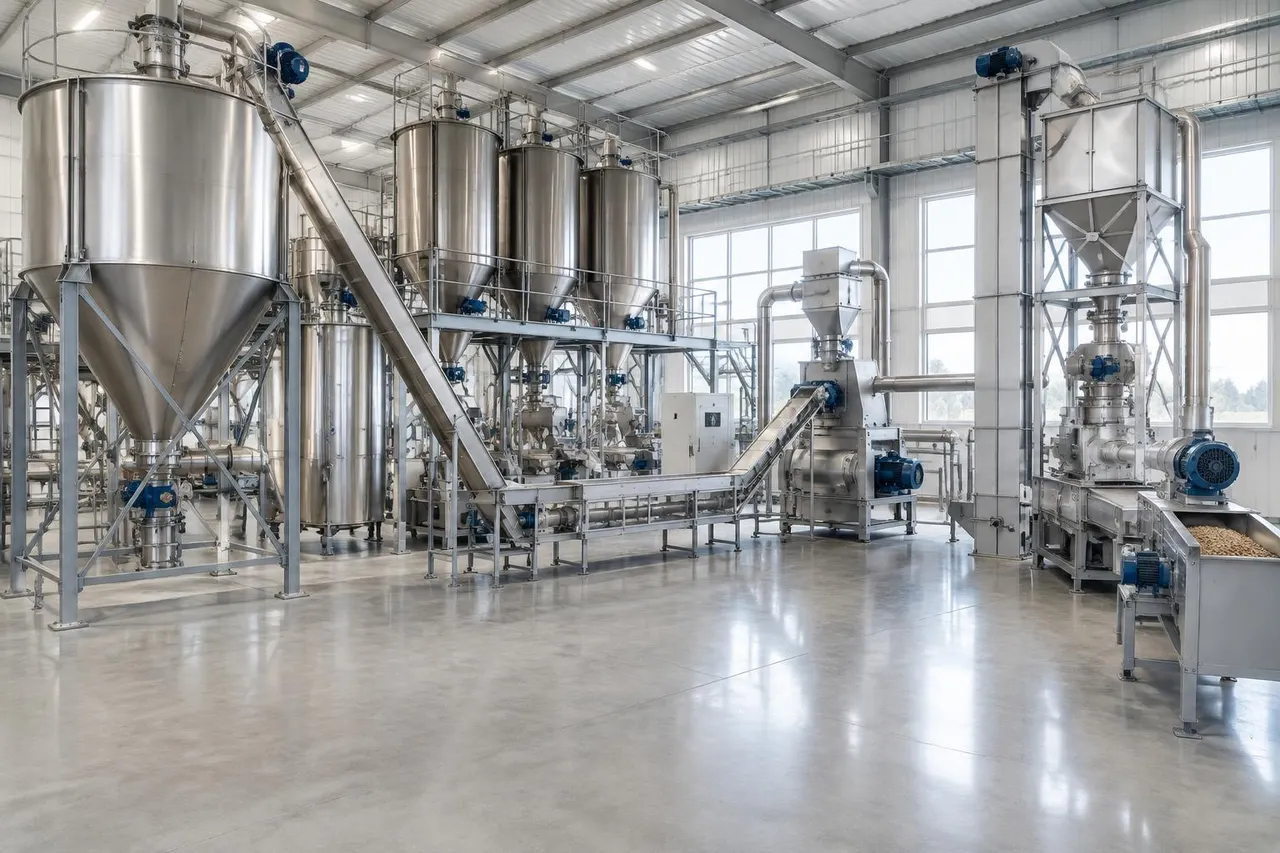
How should you define the mill design brief?
Start with the feed you need to make, not an equipment catalogue. Give your engineer the approved product range, ingredient envelope, required saleable output and site constraints before choosing a process.
- List mash, pellets or extruded products, recipe changes and required batch sizes.
- Record ingredient handling needs, moisture basis and agreed quality acceptance criteria.
- Separate required output from nominal machine capacity; document operating hours and changeovers.
- Map utilities, storage, access and process interfaces with qualified engineers.
Should you retrofit, expand or build a new line?
Compare the options against the same product mix and acceptance requirements. A retrofit needs evidence that retained equipment and interfaces can support the proposed change; a new line needs its own complete site and scope assessment.
- Measure stage output, downtime and the actual bottleneck before specifying replacements.
- Inspect retained machinery, structures, controls and utilities.
- Include shutdown, temporary production, removals and restart testing in the comparison.
- Keep unresolved engineering questions visible rather than treating reuse as a saving.
What equipment scope makes quotations comparable?
Write one stage-by-stage scope that every proposal must answer. Intake, storage, grinding, dosing, mixing, conditioning, pelleting or extrusion, cooling and dispatch should share a defined performance basis and clear responsibility boundaries.
- Mark each stage and interface as included, excluded or optional.
- State which ingredients and formulas underpin the quoted throughput.
- Ask for utility loads, maintenance access, spares and operator-training scope.
- Agree the test method, sampling, duration and acceptance responsibility before ordering.
How do you turn the scope into a reviewable project plan?
Build a decision register with an owner, evidence source and status for each assumption. Compare complete project and operating scenarios, not a machine price against a turnkey total.
- Separate equipment, installation, utilities, logistics, commissioning and working capital.
- Plan engineering approvals, procurement, delivery, shutdown and acceptance dependencies.
- Run alternatives with your entered energy, labor, downtime and maintenance assumptions.
- Have qualified local advisers check site requirements; a calculator is not a design approval.
Which free tools help test your assumptions?
Retain the inputs and their sources with every result. These calculators organize scenarios; they do not validate engineering, supplier claims, feed quality, costs, output or returns.
- Stage-capacity and bottleneck scenarios
Compare entered capacities; verify the limiting stage against production records.
- Total cost of ownership
Keep equipment and operating assumptions on the same comparison basis.
- Energy per tonne
Explore your own consumption, production and tariff inputs.
- Delivered ingredient cost
Keep ingredient purchasing and freight assumptions separate from capital costs.
- Formulation scenarios
Review preliminary ingredient inputs with your nutritionist; not a complete approved ration.
- Feed conversion ratio
Use actual feed and production data; equipment purchases do not establish animal-performance gains.
What should you submit in a feed-mill project RFQ?
Attach the product and ingredient envelope, required output, location and utilities, retained-equipment inventory, scope boundaries, delivery assumptions and acceptance method. Mark unknowns explicitly. For a retrofit, add the shutdown window and evidence of the existing constraint.
Commercial requests start at USD 250,000. The service is free for buyers. Our team reviews and organizes the RFQ, then contacts suitable suppliers after human review and your authorization, and presents organized responses through FeedMatch. Buyers are not connected directly to suppliers. Availability, responses, pricing, commercial terms and financing are not guaranteed.
Buying ingredients for an existing mill instead? Use the ingredient sourcing hub to define lot specifications and delivered cost.
Questions about sourcing, RFQ review or the calculators? Read the buyer FAQ. Unsure about a term? Check the procurement glossary.