
Pull to refresh
FeedMatch Group logo — wheat sheaf and interlocking chevrons emblem representing the independent animal feed procurement and ingredient intelligence platform
FeedMatchGroup
DashboardSign inRequest Feed Quote
Financing for animal feed and feed-ingredient purchasesSee financing options→←
Back to home
FeedMatch buyer tools

FCR calculator: feed conversion ratio and cost per kg of output

To calculate FCR, divide the feed used by the weight gained or output produced over the same period. Feed cost per kg of output is FCR multiplied by the feed price per kg. Use your own records; no benchmark FCR is assumed.

Method reviewed: October 13, 2026 · Enter your own figures — this tool contains no default prices, nutrient values or benchmarks.
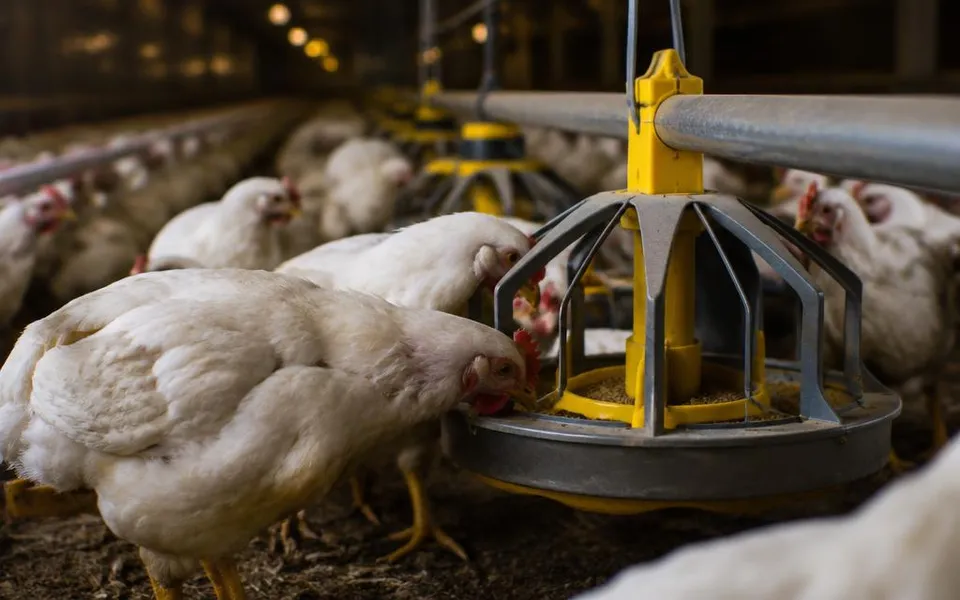
Animal feed production and feed-cost planning

Your inputs

Results

Enter your own figures — this tool contains no default prices, nutrient values or benchmarks.

Read the related buyer guide

Formula and method

  • FCR = feed used (kg) ÷ output (kg)
  • Feed cost per kg output = FCR × feed price per t ÷ 1,000
  • Total feed cost = feed used (kg) × price per t ÷ 1,000

FeedMatch is supplier-neutral: our team reviews each request, contacts suppliers and normalizes their bids. Buyers are not connected directly to manufacturers. Mill and equipment projects start at USD 250,000.

Same tool in another language (keeps your inputs)

  • English
  • Español
  • Português (BR)
  • Français
  • Русский

Other buyer tools

  • Feed formulation cost and ingredient comparison
  • Feed mill and pellet mill capacity scenario
  • Landed cost of feed ingredients

Worked example: one broiler flock

A broiler flock eats 118,800 kg of feed and produces 72,000 kg of live weight (30,000 birds × 2.4 kg). Delivered feed costs 480 per tonne.

FCR1.65
Total feed cost57,024
Feed cost per kg produced0.792

An FCR of 1.65 means 1.65 kg of feed per kg of live weight. With feed at 480 per tonne, every 0.05 change in FCR moves the feed cost by 0.024 per kg of live weight, so compare feed offers on cost per kg produced, measured the same way.

All figures are invented to show the method; they are not market prices, quotes or a recommended diet. Use your own quotes and certificates.

Units by country and convention

Enter feed and output in the same unit (kilograms). The feed price is per metric tonne.

United States
Pounds: kg = lb × 0.4536. FCR is unit-free if feed and gain use the same unit, but the price must be converted to per metric tonne.
Poultry and pigs
Live weight is the usual output; say whether you used live weight or carcass weight when comparing figures.
Fish and shrimp
Use net biomass gain (harvest weight minus stocked weight), not harvest weight alone.
Dairy
Feed efficiency is often expressed the other way round (kg milk per kg dry matter intake); this tool uses feed ÷ output.

What to do with your result

  • 1. Recalculate with your real delivered feed price from the landed-cost calculator.
  • 2. Compare the cost of your current mix and alternatives with the formulation cost calculator.
  • 3. Send a request with species, stage and monthly volume so suppliers quote like-for-like.

More buyer questions

What is a good FCR?
It depends on species, breed, age, sex, climate and how FCR is measured. Compare against your own past cycles, or the breed or feed supplier's figures measured on the same basis, not a generic benchmark.
Should mortality be included?
State it either way. Adjusted FCR adds the weight of dead animals to output; unadjusted FCR does not. Only compare figures calculated the same way.
Can a more expensive feed be cheaper?
Yes, if it lowers FCR enough. Compare offers on feed cost per kg produced, which this tool shows, using results measured on your own farm.

Sources and scope

The FCR formula (feed used ÷ output gained) is standard. The sources below give market and ingredient context; none of them gives a target FCR for your farm. Use your own records for feed used and output, and your own invoices for feed price.

  • The State of World Fisheries and Aquaculture 2024 — FAO. Published June 2024.

    Scope: Global aquaculture production and feed-use context. Not a farm-level FCR benchmark.

  • Food Outlook — biannual report on global food markets — FAO GIEWS. Twice a year (June and November).

    Scope: Market outlook for cereals, oilseeds and meals used in feed. Context for feed price, not a price quote.

  • Feed Grains Database — USDA Economic Research Service. Updated monthly.

    Scope: US feed grain supply, use and prices. US market data; local prices differ.

  • Grain: World Markets and Trade — USDA Foreign Agricultural Service. Monthly, with WASDE.

    Scope: World supply and trade estimates for corn, wheat and other feed grains. Market context only.

  • Feedipedia — Animal feed resources information system — INRAE, CIRAD, AFZ and FAO. Continuously updated.

    Scope: Nutritional composition of feed ingredients. Not a formulation or dosing guide.

Links checked 14 October 2026.
Questions

How do I calculate FCR?
Take the feed actually consumed in a period (delivered minus left over) and divide it by the weight gain or output in the same period. Use the same animals, dates and units for both numbers.
How do I calculate FCR in poultry or fish?
Poultry: feed consumed ÷ live weight gained, stating whether dead birds' weight is included. Fish and shrimp: feed fed ÷ biomass gained. Sample-based biomass estimates are less precise than weighed harvests.
What is a good FCR?
It depends on species, age, genetics and conditions. Compare against your own history or a dated breed-company source rather than a generic number.
Does a cheaper feed always lower cost per kg?
Not if it worsens FCR. Run both feeds with their own FCR to compare cost per kg of output.
Internal cluster map

How do I build a least-cost ration that still hits the nutritional targets?

Feed formulation & rations

  • feed formulation calculatorHow do I build a least-cost ration that still hits the nutritional targets?

Related in this cluster

  • ration formula library
  • get a formulation reviewed
  • estimate tonnage per cycle
  • plan shrimp feed tonnage

Connected clusters

  • ingredient specs, origins and price drivers
  • choose between compound feed and in-house blending

Next step

  • start a structured RFQSpecification, volume, destination and timeline
FeedMatch Group logo — wheat sheaf and interlocking chevrons emblem representing the independent animal feed procurement and ingredient intelligence platform
FeedMatchGroup

Because we care more.

Global animal feed & ingredient procurement. Supplier-neutral sourcing of feed and raw materials for farms, integrators, feed mills and importers worldwide.

Follow us on LinkedIn
Chat with our team on WhatsApp+44 7936 808834
Language

Feed Procurement

  • Request a Feed RFQ
  • Get a Free Quote
  • Feed Procurement
  • Feed Procurement Platform
  • Commercial Procurement
  • Buyer's Guide
  • Tenders & Institutional Bids
  • Supplier Sourcing
  • Landed Cost by Trade Lane
  • Logistics & Freight

Feed & Ingredients

  • Feed Ingredients
  • Premixes, Additives & Feed-Grade Products
  • Feed by Species
  • Feed by Production Stage
  • Specification Library
  • Standards Library

Calculators & Tools

  • Innovation & Technology
  • Calculators & Tools
  • Free Project Planner
  • Feed Mill Operating Costs
  • Feed Mill Energy Calculator
  • Feed Mill Calculator

Company

  • About FeedMatch
  • How It Works
  • Buyer Intelligence
  • Become a Supplier
  • FAQ
  • Global B2B Group Network
  • Contact
  • Sitemap
Global B2B Group — Our Network

One procurement operating system across every protein & agri vertical. Explore the full network →

  • HatchMatch — Poultry
  • FishMatch — Aquaculture
  • ColdMatch — Cold Chain
  • SeedMatch — Seeds & Inputs
  • Visit: FishMatch · HatchMatch · SeedMatch · ColdMatch · Global B2B Group

FeedMatch Group is a human-led, supplier-neutral B2B feed procurement service for commercial feed and ingredient buyers from USD $250,000+. Every request is reviewed by our team — suppliers are contacted only after authorized human review.

FeedMatch prepares procurement project information and, only with separate explicit consent, may introduce it to independent providers. Procurement is free for buyers and supplier-funded. FeedMatch performs no underwriting, pre-approval, offer or credit decision. Legal classification requires jurisdiction-specific counsel review.

FeedMatch Group is the specialized animal feed and feed-ingredient procurement platform of Global B2B Group. FeedMatch Group is not a feed manufacturer, ingredient trader, commodity trader, distributor, broker, feed mill, nutritionist, veterinarian, EPC contractor, lender, bank, credit provider, financial advisor, investment advisor, insurer or underwriter. Any financing, leasing, trade finance, working capital or project-finance option mentioned on this website is provided solely by independent third-party financing providers, subject to their own eligibility checks, KYC, due diligence, compliance review, approval, terms and documentation. FeedMatch Group prepares project information and may introduce independent providers only with separate explicit consent. Legal classification requires jurisdiction-specific counsel review. FeedMatch does not guarantee financing approval, and is not responsible for any financing decision, offer, rejection, delay, cost, term or outcome. Quotes, feed, ingredients, additives, equipment, logistics, services, warranties, feed safety, nutritional outcomes, FCR and animal performance remain solely the responsibility of independent third-party suppliers, manufacturers, logistics providers or qualified professionals. See Terms and Disclaimer.

FeedMatchGroup.com · Global Animal Feed & Ingredient Procurement
Privacy·Terms·Cookies·Disclaimer·Legal Center·Accessibility·Accessibility Support·Contact·Sitemap
© 2026 FeedMatchGroup.com · All rights reserved.We reinvest 10% of our profits into the planet, supporting better agriculture and nature.FeedMatch Group is the specialized animal feed and feed-ingredient procurement platform of Global B2B Group. FeedMatch prepares procurement project information; it does not manufacture feed or equipment or make credit decisions. Financing-provider availability and relationships are not verified. Any future introduction requires separate explicit consent and jurisdiction-specific legal review. Operated from the Republic of Cyprus.Built for commercial feed procurement from USD $250K+ — feed mills, integrators, importers, EPCs, governments and industrial farms. Not intended for hobby, backyard, pet-owner or small retail purchasing. How FeedMatch works.FeedMatch Group is a specialized platform of Global B2B Group — a global B2B procurement and project information ecosystem. Sister platforms: HatchMatch Group, ColdMatch Group, FishMatch Group, SeedMatch Group.The specialized feed platform within the Global B2B Group ecosystem.
CalculatorsGuidesFinancingRequest a Quote
WhatsApp

Consultant answers on this topic

  • FAQ: formulation and cost-optimisation support
Buyer guide

How to use this result

Feed conversion ratio (FCR) is feed used divided by weight gained. Enter your own flock or herd records to get FCR and feed cost per kg of gain, then use the result to size how much feed to buy.

Assumptions and limits

  • Results depend entirely on the feed and weight figures you enter.
  • Compare FCR only between groups of the same species, age and production stage.
  • The tool does not predict performance of any supplier's feed.
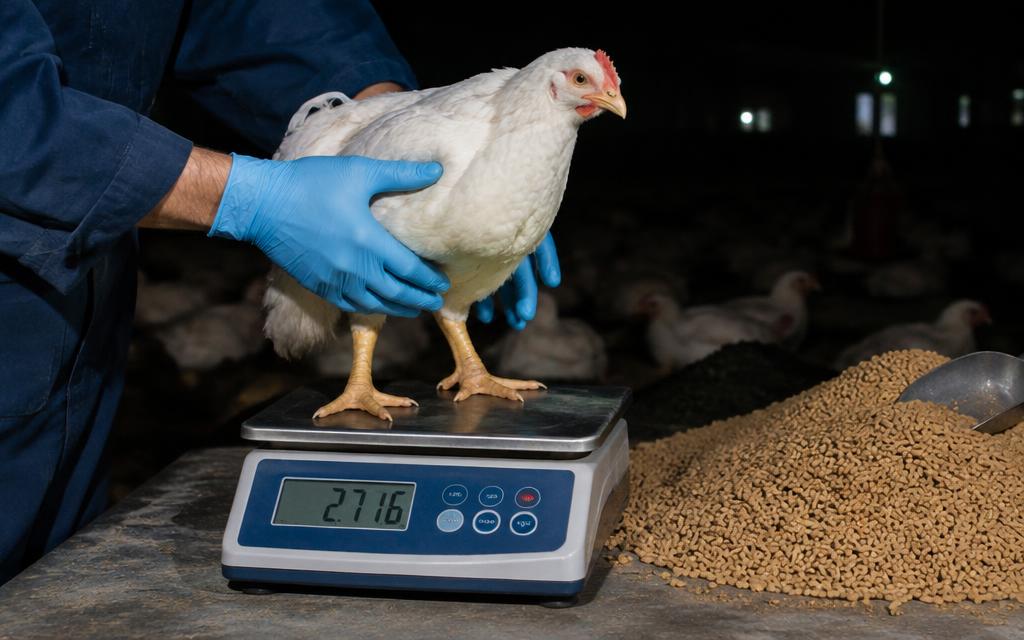
Broiler chicken weighed on a digital scale beside feed pellets

Next steps

  • Annual feed procurement calculator
  • Send a structured feed RFQ (USD 250K+, human-reviewed)
  • Feed conversion ratio: from farm data to a procurement plan