
Pull to refresh
FeedMatch Group logo — wheat sheaf and interlocking chevrons emblem representing the independent animal feed procurement and ingredient intelligence platform
FeedMatchGroup
DashboardSign inRequest Feed Quote
Financing for animal feed and feed-ingredient purchasesSee financing options→←
Back to home
  1. Home
  2. /
  3. Feed Insights
  4. /
  5. Procurement
  6. /
  7. Start From the Result: Planning Feed Backwards From Production Targets
Procurement· Oct 2026· 8 min read

Start From the Result: Planning Feed Backwards From Production Targets

Work backwards from saleable output to estimate feed requirements, schedule deliveries, test storage and cash needs, and prepare a comparable supplier enquiry.

Short answer · reviewed October 2026

Short answer: Start From the Result: Planning Feed Backwards From Production Targets

Work backwards from saleable output to estimate feed requirements, schedule deliveries, test storage and cash needs, and prepare a comparable supplier enquiry.

Key takeaways

  • !Worksheet connecting production targets to feed quantities by phase, delivery dates, storage limits and budget
  • - Feed TCO supplier comparison calculator - Feed ingredient cost comparison calculator - Annual feed procurement calculator - Feed buyer FAQ: 100 questions
FM

FeedMatch Editorial Desk

Editorial Team
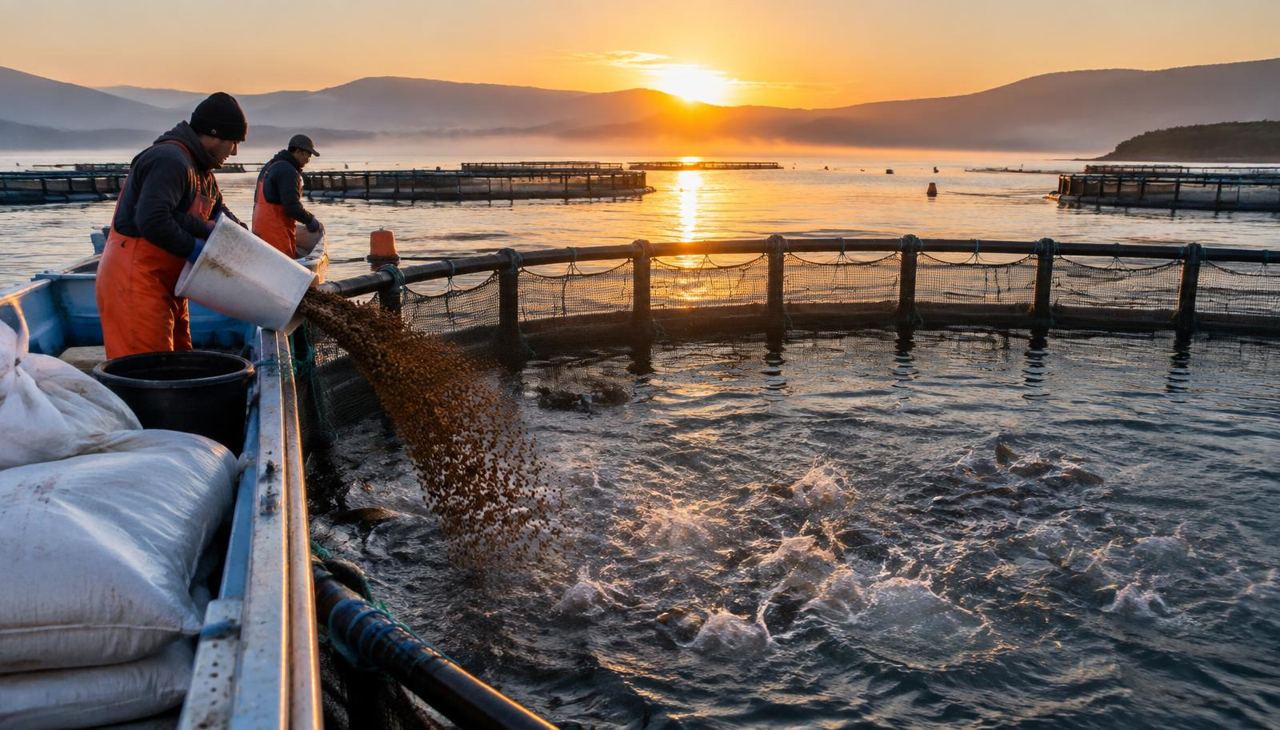
Production planning worksheet linking target animal output with feed phases, delivery dates and storage allocation

Short answer Start with the output you intend to sell and the date it must be ready. Define animal numbers, target weight or daily output, survival assumptions and cycle length. Then estimate feed consumed by phase, reconcile that with usable inventory and losses, and schedule purchases against storage and cash constraints. The result should be a dated procurement plan, not just a tonnage estimate. A feed requirements calculator can help answer “how much feed do I need”, but its assumptions determine its usefulness. Tools and calculators provide preliminary planning outputs; they do not replace a nutritionist, engineer, laboratory, lawyer, financial adviser or other relevant specialist.
Worksheet connecting production targets to feed quantities by phase, delivery dates, storage limits and budget

What production result are you actually buying feed to achieve? ### Define a measurable endpoint Write a target that purchasing, production and finance interpret identically. For broilers, distinguish birds placed from birds sold, and liveweight from carcass weight. For layers, specify saleable eggs over a defined period, flock size and laying stage. For dairy, identify cow groups, milk volume, milk components and days covered. For fish, record starting biomass, harvest biomass, expected survival and partial harvests. Set the production calendar alongside the output target. A delayed placement, longer finishing period or changed harvest window alters both total feed and delivery timing. For livestock production planning, keep targets separate from forecasts: a desired result is not evidence that current genetics, housing, water, health or feeding conditions can support it.

How do you turn output into a preliminary feed estimate? Choose a calculation basis appropriate to the production system. Growth operations can use expected liveweight or biomass gain and a consistently defined feed conversion ratio. Layers generally need flock-days and intake assumptions; dairy plans need group-specific dry-matter intake, forage availability and ration assumptions agreed with the nutritionist. The [feed conversion ratio calculator](/feed-conversion-ratio-calculator) supports preliminary growth-based calculations. Never multiply final biomass by an FCR defined against biomass gain. ### Formula and illustrative example > **All arithmetic inputs below are illustrative examples, not expected results.** > > Starting fish biomass: 10,000 kg; target harvest biomass: 30,000 kg. > > Simplified net biomass gain = 30,000 − 10,000 = 20,000 kg. > > Illustrative FCR = 1.50 kg feed per kg biomass gain. > > Preliminary feed consumption = 20,000 × 1.50 = **30,000 kg**. > > This simplified example assumes no additional stocking, removals or mortality and excludes handling losses. Real plans must account for those events. Establish whether historical FCR records measure feed consumed, issued or purchased before adding allowances. Otherwise, the same loss may be counted twice.

How should feed volumes be divided across production phases? A total requirement does not tell a supplier which products to deliver. Build a phase schedule using nutritionist-approved transitions, expected intake patterns and the production calendar. Record the required physical form and relevant nutritional specification for each phase. The comparison below shows alternative purchasing views. **All quantities and allocations are illustrative examples only**, using the simplified total above; they are not recommended feeding proportions. | Planning view | Illustrative quantity | What it supports | What it misses | |---|---:|---|---| | Whole cycle | 30 tonnes | Aggregate budget | Product mix and timing | | Early phase | 6 tonnes | Initial product requirement | Actual transition date | | Middle phase | 13.5 tonnes | Main replenishment planning | Weekly intake peaks | | Late phase | 10.5 tonnes | Final-phase availability | Harvest changes and leftovers | Replace these allocations with farm-specific phase consumption. Where cohorts overlap, combine their requirements by delivery week without losing the separate product specifications.

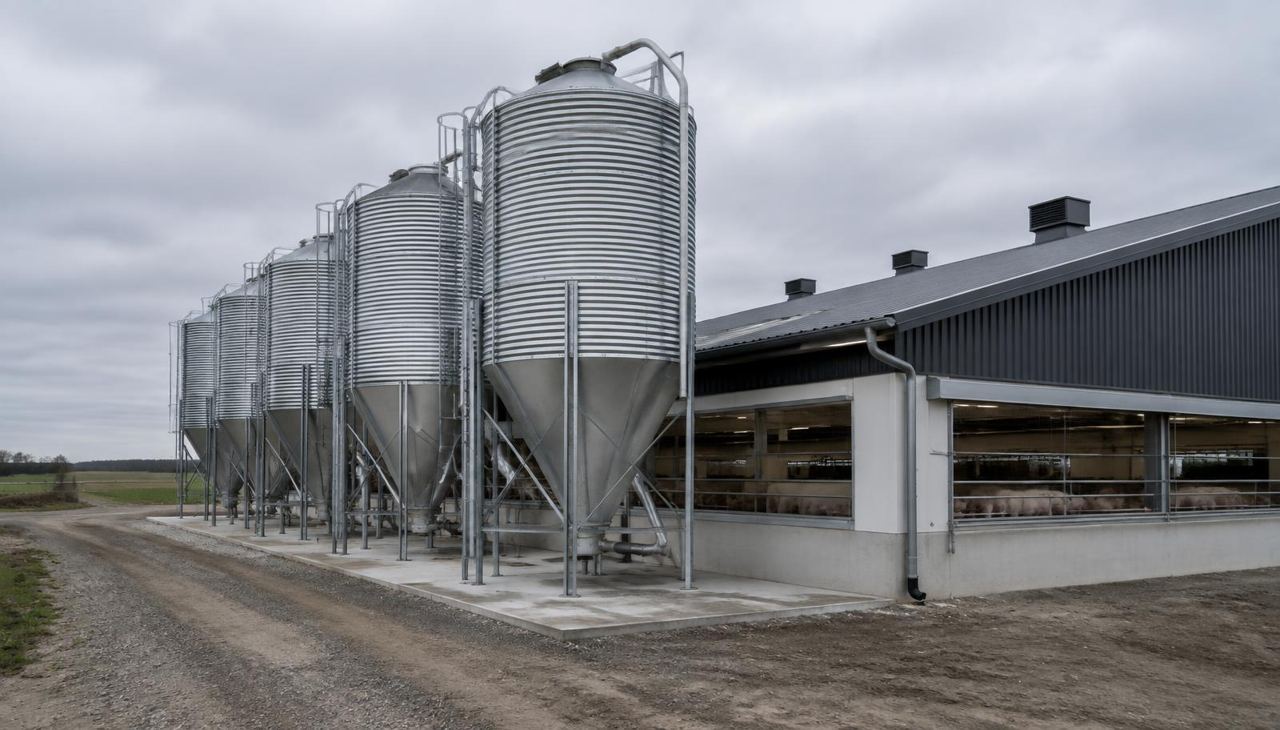
When should deliveries arrive, and will storage cope? Convert phase totals into weekly consumption, then identify peak daily withdrawal. Consumption rarely remains level throughout a growth cycle. Order dates must allow for quoted lead time, transport, receiving arrangements and any required acceptance checks. ### Reconcile stock before ordering Planned purchases equal forecast feed use plus separately justified losses and desired closing stock, minus usable opening stock and confirmed inbound quantities. Exclude damaged, expired, quarantined or incompatible inventory from usable stock. Use the [storage planning guidance](/storage) to check usable capacity, segregation, moisture protection, unloading access and stock rotation. Nominal silo capacity may not equal usable capacity for every feed density. Safety stock should reflect uncertainty and replenishment risk, not an arbitrary percentage. Test whether each proposed delivery fits on arrival, including residual stock, and whether it can be consumed within the applicable storage period.

How do volumes become a workable feed budget? Feed budget planning should separate consumed-feed cost, purchasing commitments and payment timing. Obtain dated supplier quotations for the specified product, delivery location and commercial terms; do not substitute an undated online price. ### Build a landed-cost and cash view Apply quoted unit prices to planned order quantities. Identify freight, packaging, unloading, testing, applicable duties, taxes and financing charges separately, noting what is already included. Record currency, quote validity, payment milestones and whether taxes are recoverable with appropriate advice. Run base, higher-consumption and delayed-cycle scenarios. A longer cycle may increase maintenance consumption and postpone sales receipts even without a price change. Model these effects rather than assuming feed cost rises in direct proportion to output. Have finance test the largest cash requirement before approving delivery commitments. A commercially attractive order size can still exceed storage or working-capital limits.

Which common mistakes make the plan unreliable? The most damaging errors usually sit at the boundaries between departments: - Using animals placed as animals sold without a survival assumption. - Mixing dry-matter requirements with as-fed purchasing weights. - Applying one intake or FCR assumption across unlike species, stages or conditions. - Ignoring feed consumed by animals that do not reach sale. - Adding wastage to a historical ratio that already includes it. - Ordering the full cycle before confirming shelf life and storage conditions. - Treating target output as guaranteed when calculating affordability. Assign an owner and evidence source to each assumption. Reconcile actual feed issues, stock movements and production records regularly so the remaining purchase plan reflects current conditions.

What should the RFQ contain so offers are comparable? Translate the plan into an RFQ that distinguishes firm requirements from provisional forecasts. Ask suppliers to identify deviations rather than silently substitute a different specification or delivery basis. ### Buyer readiness checklist - Species, production stage, intended use and approved feed specification. - Quantity by product and phase, with acceptable order tolerances. - Delivery destination, receiving constraints and requested delivery windows. - Packaging or bulk requirements and available storage arrangements. - Required product documentation, traceability information and sampling arrangements. - Requested price basis, currency, validity, payment terms and freight breakdown. - Acceptance criteria and procedures for shortages, damage or non-conforming goods. - Buyer contact, decision process and unresolved technical assumptions. Request supporting evidence appropriate to the product and jurisdiction. Documents and relevant public records can be reviewed, but paperwork alone does not establish fitness for your operation. Have relevant specialists assess technical, regulatory and contractual requirements before commitment.

What is the concrete next step for a commercial buyer? Create one dated worksheet linking output targets, assumptions, phase quantities, stock, delivery windows and payment dates. Use the [planning calculators](/calculators) to test preliminary quantities, then have production, nutrition, storage and finance owners resolve exceptions before requesting offers. Submit that reviewed brief through the [RFQ intake](/rfq-intake) when ready. FeedMatch provides a human-led, supplier-neutral workflow for commercial opportunities of USD 250,000 or more, with human review before any supplier contact. It does not formulate feed, sell products or choose suppliers for the buyer. FeedMatch is not a certification body and does not audit factories. Keep the submitted version as the comparison baseline, and document subsequent changes.

What else should buyers clarify? ### Can I plan purchases from target animal numbers alone? No. You also need the production period, expected survival, starting and target weights or daily output, phase-specific intake assumptions and usable stock. Animal numbers alone cannot establish either total consumption or delivery timing. ### Should feed conversion ratio include mortality? Use a clearly documented definition. Mortality affects both feed consumed and recorded output, so reconcile losses consistently with the historical FCR basis. Do not add a mortality allowance if the chosen benchmark already captures it. ### How much safety stock should I hold? Base it on consumption variability, replenishment lead time and disruption risk, then check storage capacity and shelf life. There is no universal buffer suitable for every species, feed product or delivery route. ### Can one annual RFQ cover several feed phases? Yes, provided quantities, specifications and delivery windows remain separate by product. State which volumes are forecasts and how releases, changes, minimum orders and price adjustments would be handled contractually. ### When should I update the feed plan? Update it when placements, survival, growth, intake, harvest dates, usable inventory or delivery commitments change materially. Regularly reconcile actual records against assumptions before issuing the next purchase release.

faqs_placeholder

final_review_placeholder

publication_placeholder

end_placeholder

cleanup_placeholder

validation_placeholder

complete_placeholder

ready_placeholder

done_placeholder

archive_placeholder

tracking_placeholder

submission_placeholder

workflow_placeholder

editorial_placeholder

source_placeholder

record_placeholder

status_placeholder

content_placeholder

article_placeholder

last_placeholder

Related pages on FeedMatch

  • Feed TCO supplier comparison calculator
  • Feed ingredient cost comparison calculator
  • Annual feed procurement calculator
  • Feed buyer FAQ: 100 questions

Frequently asked questions

Can I plan purchases from target animal numbers alone?
No. You also need the production period, expected survival, starting and target weights or daily output, phase-specific intake assumptions and usable stock. Animal numbers alone cannot establish either total consumption or delivery timing.
Should feed conversion ratio include mortality?
Use a clearly documented definition. Mortality affects both feed consumed and recorded output, so reconcile losses consistently with the historical FCR basis. Do not add a mortality allowance if the chosen benchmark already captures it.
How much safety stock should I hold?
Base it on consumption variability, replenishment lead time and disruption risk, then check storage capacity and shelf life. There is no universal buffer suitable for every species, feed product or delivery route.
Can one annual RFQ cover several feed phases?
Yes, provided quantities, specifications and delivery windows remain separate by product. State which volumes are forecasts and how releases, changes, minimum orders and price adjustments would be handled contractually.
When should I update the feed plan?
Update it when placements, survival, growth, intake, harvest dates, usable inventory or delivery commitments change materially. Regularly reconcile actual records against assumptions before issuing the next purchase release.

Explore related on FeedMatch

  • Browse verified feed suppliers
  • Feed & ingredient categories

Next steps for feed buyers

Turn this article into a procurement brief. A FeedMatch advisor reviews every request before any supplier is contacted.

  • Feed ingredient specifications
  • Feed and feed-mill calculators
  • Shortage calculators: stock, ration, storage
  • Feed procurement guides
  • Send a structured RFQ →

Related Solutions Across Global B2B Group

Complementary supplier-neutral platforms in the Global B2B Group family.

  • Explore the wider procurement ecosystem — specialized supplier-neutral platforms across industrial verticals.

    Visit Global B2B Group

Feed industry regions we work with

Feed procurement is local before it is global: raw material basis, freight and installation costs change by region. These are the areas buyers most often name when defining a feed project in English.

United States

Cities and provinces

Iowa · Nebraska · Georgia · Arkansas · Texas · North Carolina

Corn and soybean meal basis with large integrated poultry, swine and dairy operations.

United States →

United Kingdom and Ireland

Cities and provinces

East Anglia · Yorkshire · Lincolnshire · Northern Ireland · Munster

Compound feed and imported protein logistics through east coast and Irish Sea ports.

United Kingdom and Ireland →

Gulf and East Africa import markets

Cities and provinces

Jeddah · Dubai · Mombasa · Djibouti

Import-driven feed supply where landed cost and port logistics dominate the decision.

Gulf and East Africa import markets →

FeedMatch is supplier-neutral. Regional context helps define the requirement; pricing always comes from manufacturer quotations.

Move from insight to procurement

Turn the ideas in this article into a live procurement action — supplier-neutral, buyer-controlled, fully documented.

Get Multiple Quotes Submit one brief — offers from independent feed and ingredient suppliers are compared after human review.Talk to Procurement Experts Route your project to FeedMatch's supplier-neutral procurement desk.Calculate Your Project FCR, feed volume, storage and CIF landed-cost calculators.Browse Feed Ingredients Specifications for grains, protein meals, premixes and additives.

On this page

  • Short answer Start with the output you intend to sell and the date it must be ready. Define animal numbers, target weight or daily output, survival assumptions and cycle length. Then estimate feed consumed by phase, reconcile that with usable inventory and losses, and schedule purchases against storage and cash constraints. The result should be a dated procurement plan, not just a tonnage estimate. A feed requirements calculator can help answer “how much feed do I need”, but its assumptions determine its usefulness. Tools and calculators provide preliminary planning outputs; they do not replace a nutritionist, engineer, laboratory, lawyer, financial adviser or other relevant specialist.
  • What production result are you actually buying feed to achieve? ### Define a measurable endpoint Write a target that purchasing, production and finance interpret identically. For broilers, distinguish birds placed from birds sold, and liveweight from carcass weight. For layers, specify saleable eggs over a defined period, flock size and laying stage. For dairy, identify cow groups, milk volume, milk components and days covered. For fish, record starting biomass, harvest biomass, expected survival and partial harvests. Set the production calendar alongside the output target. A delayed placement, longer finishing period or changed harvest window alters both total feed and delivery timing. For livestock production planning, keep targets separate from forecasts: a desired result is not evidence that current genetics, housing, water, health or feeding conditions can support it.
  • How do you turn output into a preliminary feed estimate? Choose a calculation basis appropriate to the production system. Growth operations can use expected liveweight or biomass gain and a consistently defined feed conversion ratio. Layers generally need flock-days and intake assumptions; dairy plans need group-specific dry-matter intake, forage availability and ration assumptions agreed with the nutritionist. The [feed conversion ratio calculator](/feed-conversion-ratio-calculator) supports preliminary growth-based calculations. Never multiply final biomass by an FCR defined against biomass gain. ### Formula and illustrative example > **All arithmetic inputs below are illustrative examples, not expected results.** > > Starting fish biomass: 10,000 kg; target harvest biomass: 30,000 kg. > > Simplified net biomass gain = 30,000 − 10,000 = 20,000 kg. > > Illustrative FCR = 1.50 kg feed per kg biomass gain. > > Preliminary feed consumption = 20,000 × 1.50 = **30,000 kg**. > > This simplified example assumes no additional stocking, removals or mortality and excludes handling losses. Real plans must account for those events. Establish whether historical FCR records measure feed consumed, issued or purchased before adding allowances. Otherwise, the same loss may be counted twice.
  • How should feed volumes be divided across production phases? A total requirement does not tell a supplier which products to deliver. Build a phase schedule using nutritionist-approved transitions, expected intake patterns and the production calendar. Record the required physical form and relevant nutritional specification for each phase. The comparison below shows alternative purchasing views. **All quantities and allocations are illustrative examples only**, using the simplified total above; they are not recommended feeding proportions. | Planning view | Illustrative quantity | What it supports | What it misses | |---|---:|---|---| | Whole cycle | 30 tonnes | Aggregate budget | Product mix and timing | | Early phase | 6 tonnes | Initial product requirement | Actual transition date | | Middle phase | 13.5 tonnes | Main replenishment planning | Weekly intake peaks | | Late phase | 10.5 tonnes | Final-phase availability | Harvest changes and leftovers | Replace these allocations with farm-specific phase consumption. Where cohorts overlap, combine their requirements by delivery week without losing the separate product specifications.
  • When should deliveries arrive, and will storage cope? Convert phase totals into weekly consumption, then identify peak daily withdrawal. Consumption rarely remains level throughout a growth cycle. Order dates must allow for quoted lead time, transport, receiving arrangements and any required acceptance checks. ### Reconcile stock before ordering Planned purchases equal forecast feed use plus separately justified losses and desired closing stock, minus usable opening stock and confirmed inbound quantities. Exclude damaged, expired, quarantined or incompatible inventory from usable stock. Use the [storage planning guidance](/storage) to check usable capacity, segregation, moisture protection, unloading access and stock rotation. Nominal silo capacity may not equal usable capacity for every feed density. Safety stock should reflect uncertainty and replenishment risk, not an arbitrary percentage. Test whether each proposed delivery fits on arrival, including residual stock, and whether it can be consumed within the applicable storage period.
  • How do volumes become a workable feed budget? Feed budget planning should separate consumed-feed cost, purchasing commitments and payment timing. Obtain dated supplier quotations for the specified product, delivery location and commercial terms; do not substitute an undated online price. ### Build a landed-cost and cash view Apply quoted unit prices to planned order quantities. Identify freight, packaging, unloading, testing, applicable duties, taxes and financing charges separately, noting what is already included. Record currency, quote validity, payment milestones and whether taxes are recoverable with appropriate advice. Run base, higher-consumption and delayed-cycle scenarios. A longer cycle may increase maintenance consumption and postpone sales receipts even without a price change. Model these effects rather than assuming feed cost rises in direct proportion to output. Have finance test the largest cash requirement before approving delivery commitments. A commercially attractive order size can still exceed storage or working-capital limits.
  • Which common mistakes make the plan unreliable? The most damaging errors usually sit at the boundaries between departments: - Using animals placed as animals sold without a survival assumption. - Mixing dry-matter requirements with as-fed purchasing weights. - Applying one intake or FCR assumption across unlike species, stages or conditions. - Ignoring feed consumed by animals that do not reach sale. - Adding wastage to a historical ratio that already includes it. - Ordering the full cycle before confirming shelf life and storage conditions. - Treating target output as guaranteed when calculating affordability. Assign an owner and evidence source to each assumption. Reconcile actual feed issues, stock movements and production records regularly so the remaining purchase plan reflects current conditions.
  • What should the RFQ contain so offers are comparable? Translate the plan into an RFQ that distinguishes firm requirements from provisional forecasts. Ask suppliers to identify deviations rather than silently substitute a different specification or delivery basis. ### Buyer readiness checklist - Species, production stage, intended use and approved feed specification. - Quantity by product and phase, with acceptable order tolerances. - Delivery destination, receiving constraints and requested delivery windows. - Packaging or bulk requirements and available storage arrangements. - Required product documentation, traceability information and sampling arrangements. - Requested price basis, currency, validity, payment terms and freight breakdown. - Acceptance criteria and procedures for shortages, damage or non-conforming goods. - Buyer contact, decision process and unresolved technical assumptions. Request supporting evidence appropriate to the product and jurisdiction. Documents and relevant public records can be reviewed, but paperwork alone does not establish fitness for your operation. Have relevant specialists assess technical, regulatory and contractual requirements before commitment.
  • What is the concrete next step for a commercial buyer? Create one dated worksheet linking output targets, assumptions, phase quantities, stock, delivery windows and payment dates. Use the [planning calculators](/calculators) to test preliminary quantities, then have production, nutrition, storage and finance owners resolve exceptions before requesting offers. Submit that reviewed brief through the [RFQ intake](/rfq-intake) when ready. FeedMatch provides a human-led, supplier-neutral workflow for commercial opportunities of USD 250,000 or more, with human review before any supplier contact. It does not formulate feed, sell products or choose suppliers for the buyer. FeedMatch is not a certification body and does not audit factories. Keep the submitted version as the comparison baseline, and document subsequent changes.
  • What else should buyers clarify? ### Can I plan purchases from target animal numbers alone? No. You also need the production period, expected survival, starting and target weights or daily output, phase-specific intake assumptions and usable stock. Animal numbers alone cannot establish either total consumption or delivery timing. ### Should feed conversion ratio include mortality? Use a clearly documented definition. Mortality affects both feed consumed and recorded output, so reconcile losses consistently with the historical FCR basis. Do not add a mortality allowance if the chosen benchmark already captures it. ### How much safety stock should I hold? Base it on consumption variability, replenishment lead time and disruption risk, then check storage capacity and shelf life. There is no universal buffer suitable for every species, feed product or delivery route. ### Can one annual RFQ cover several feed phases? Yes, provided quantities, specifications and delivery windows remain separate by product. State which volumes are forecasts and how releases, changes, minimum orders and price adjustments would be handled contractually. ### When should I update the feed plan? Update it when placements, survival, growth, intake, harvest dates, usable inventory or delivery commitments change materially. Regularly reconcile actual records against assumptions before issuing the next purchase release.
  • Related pages on FeedMatch

Related insights

Hand-picked from the same feeding-system and species clusters.

Production planning

How to Calculate Feed Requirements for a Livestock or Poultry Operation

Build a feed requirement forecast from animal numbers, production phases and approved intake assumptions, then translate it into product-specific purchasing and delivery volumes.

Contracts

How to Structure a Recurring Feed Supply Contract (6–12+ Months)

Learn how commercial buyers structure recurring supply contracts for compound feed and ingredients to manage price volatility and ensure supply continuity.

Quote comparison

How to Compare Feed Ingredient Quotes: A Buyer's Guide to True Value

Effectively comparing feed ingredient quotes requires normalizing for moisture, freight, and nutrient content to determine the true landed cost per unit of value.

Farm planning

Feed Conversion Ratio Calculator: From Farm Data to a Procurement Plan

Use consistent feed and production records to calculate FCR, build feed-volume scenarios and turn operational assumptions into a clear supplier RFQ.

Industrial feed calculators

Other calculators

Free planning tools for feed volume, water, airflow and heat load — with the assumptions shown, so you can defend the numbers internally.

  • Feed Consumption Calculator
  • Water Consumption Calculator
  • Ventilation Calculator

Feed calculators by species

All calculators

Size the tonnage, check the feed conversion ratio and cost it per head before you ask for prices — each tool carries a worked example and hands the volume straight to an RFQ.

  • Poultry feed calculator
  • Broiler feed calculator
  • FCR calculator
  • Cattle feed calculator
  • Dairy feed cost calculator
  • Fish & shrimp feed calculator
  • Shrimp feed calculator
  • Feed ingredient cost comparison
  • Annual feed procurement calculator
  • FCR profit sensitivity
  • Swine feed calculator
  • Layer feed & cost per egg calculator
  • Salmon feed budget calculator
  • Trout feed budget calculator
  • Seabass feed budget calculator
  • Seabream feed budget calculator
FeedMatch Group logo — wheat sheaf and interlocking chevrons emblem representing the independent animal feed procurement and ingredient intelligence platform
FeedMatchGroup

Global animal feed & ingredient procurement. Supplier-neutral sourcing of feed and raw materials for farms, integrators, feed mills and importers worldwide.

Follow us on LinkedIn
Chat with our team on WhatsApp+44 7936 808834
Language

Feed Procurement

  • Request a Feed RFQ
  • Get a Free Quote
  • Feed Procurement
  • Feed Procurement Platform
  • Commercial Procurement
  • Buyer's Guide
  • Tenders & Institutional Bids
  • Supplier Sourcing
  • Landed Cost by Trade Lane
  • Logistics & Freight

Feed & Ingredients

  • Feed Ingredients
  • Premixes, Additives & Feed-Grade Products
  • Feed by Species
  • Feed by Production Stage
  • Specification Library
  • Standards Library

Calculators & Tools

  • Calculators & Tools
  • Feed Mill Operating Costs
  • Feed Mill Energy Calculator
  • Feed Mill Calculator

Company

  • About FeedMatch
  • How It Works
  • Buyer Intelligence
  • Become a Supplier
  • FAQ
  • Global B2B Group Network
  • Contact
  • Sitemap
Global B2B Group — Our Network

One procurement operating system across every protein & agri vertical. Explore the full network →

  • HatchMatch — Poultry
  • FishMatch — Aquaculture
  • ColdMatch — Cold Chain
  • SeedMatch — Seeds & Inputs

FeedMatch Group is a human-led, supplier-neutral B2B feed procurement service for commercial feed and ingredient buyers from USD $250,000+. Every request is reviewed by our team — suppliers are contacted only after authorized human review.

FeedMatch Group is the specialized animal feed and feed-ingredient procurement platform of Global B2B Group. FeedMatch Group is not a feed manufacturer, ingredient trader, commodity trader, distributor, broker, feed mill, nutritionist, veterinarian, EPC contractor, lender, bank, credit provider, financial advisor, investment advisor, insurer, underwriter or regulated financial services provider. Any financing, leasing, trade finance, working capital or project-finance option mentioned on this website is provided solely by independent third-party financing providers, subject to their own eligibility checks, KYC, due diligence, compliance review, approval, terms and documentation. FeedMatch Group does not provide financial advice, does not arrange regulated financial products, does not guarantee financing approval, and is not responsible for any financing decision, offer, rejection, delay, cost, term or outcome. Quotes, feed, ingredients, additives, equipment, logistics, services, warranties, feed safety, nutritional outcomes, FCR and animal performance remain solely the responsibility of independent third-party suppliers, manufacturers, logistics providers or qualified professionals. See Terms and Disclaimer.

FeedMatchGroup.com · Global Animal Feed & Ingredient Procurement
Privacy·Terms·Cookies·Disclaimer·Legal Center·Accessibility·Accessibility Support·Contact·Sitemap
© 2026 FeedMatchGroup.com · All rights reserved.FeedMatch Group is the specialized animal feed and feed-ingredient procurement platform of Global B2B Group. FeedMatch is not a feed manufacturer, ingredient trader, commodity trader, distributor, broker, feed mill, premix or additive producer, EPC contractor, lender or regulated financial services provider. Quotes, feed, ingredients, equipment, logistics, financing and services are provided solely by independent third parties and remain subject to their terms, approvals and responsibilities. Operated from the Republic of Cyprus.Built for commercial feed procurement from USD $250K+ — feed mills, integrators, importers, EPCs, governments and industrial farms. Not intended for hobby, backyard, pet-owner or small retail purchasing. How FeedMatch works.FeedMatch Group is a specialized platform of Global B2B Group — a global B2B procurement, project development and financing ecosystem. Sister platforms: HatchMatch Group, ColdMatch Group, FishMatch Group, SeedMatch Group.The specialized feed platform within the Global B2B Group ecosystem.
CalculatorsGuidesFinancingRequest a Quote
WhatsApp
Where this applies

Take this to a market — or brief it directly

Market pages

  • Egypt feed market overview
  • Nigeria feed market overview
  • Azerbaijan feed market overview
  • Kazakhstan feed market overview

Act on it

  • Start a structured RFQBrief once, get comparable supplier offers
  • Supplier directorySupplier-declared profiles and reviewed documents
  • Project & trade financingLC, CAD and reviewed financing routes