L-Threonine — Spécifications, fournisseurs et RFQ
L-Threonine : spécifications techniques, origines mondiales, certifications GMP+/FAMI-QS et devis vérifiés. Third-limiting amino acid in swine and poultry af…
L-Threonine
Also known as: L-Thr 98.5%
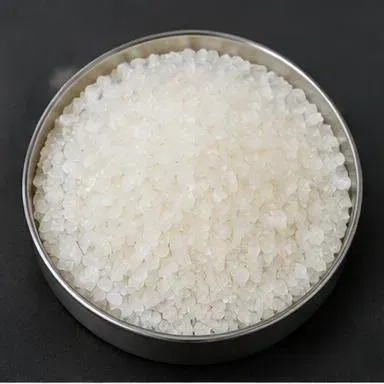
Third-limiting amino acid in swine and poultry after Lys and Met. 98.5% purity crystalline.
Applications by species
Top global export origins
FeedMatch Group's RFQ Builder benchmarks landed costs across origins for your discharge port and shipment window.
Certifications & quality standards
Buyer considerations
Advantages
- Enables further SBM reduction
- Supports intestinal mucin synthesis
Constraints & risks
- Chinese supply dominance
Buying this as part of your additive programme
L-Threonine is bought inside the additives category, where specification discipline — not price per kilogram — decides the real cost. Our feed additives procurement guide covers how to write a quotable specification, which certifications and registrations to demand (FAMI-QS, GMP+, EU Reg. 1831/2003), when a premix beats buying straights, and how to normalise offers to delivered cost per unit of active.
Key specifications to contract
Purity covers everything that should not be in the cargo — foreign matter, other-grain admixture, hulls, soil, packaging debris and deliberate adulterants — and is verified by physical inspection plus targeted analysis.
Every analytical result carries measurement uncertainty; contractual tolerances define how much variation is accepted before a price adjustment, rejection or claim is triggered.
The amino-acid profile — and above all digestible lysine, methionine, threonine and tryptophan — is what protein ingredients are actually bought for in modern formulation.
Shelf life is the period over which an ingredient retains its declared specification under defined storage conditions; it is a conditional statement, not a fixed property of the material.
Each parameter is explained in the specification library — what it measures, how it is tested and what to verify.
Laboratory testing programme
| Test | Why buyers run it |
|---|---|
| Assay / purity of the declared amino acid | Purity is the product; declared content drives least-cost inclusion |
| Loss on drying | Moisture dilutes the active and drives caking |
| Heavy metals and residual solvents where applicable | Safety compliance in the destination market |
| Particle size / bulk density | Dosing accuracy and segregation control |
Storage, packaging, transport & handling
Commonly 24 months or more when stored dry and sealed; hygroscopic forms such as liquid or hydrochloride salts have shorter, condition-dependent lives.
- — Dry, sealed storage below 30 °C
- — Prevent moisture ingress — most crystalline amino acids are hygroscopic
- — Keep lot identity intact for traceability
- — 25 kg multi-wall bags with moisture barrier
- — Bulk bags for high-volume users
- — IBC or tank for liquid forms
- — Protect from condensation in ocean containers
- — For liquid forms, verify tank cleanliness and prior-product history
- — Calibrate micro-dosing to declared purity
- — Verify homogeneity after mixing using a marker assay
- — Handle dust with extraction and appropriate PPE
Procurement considerations
- —Compare offers on cost per unit of active amino acid, not per tonne of product
- —Confirm the production route and the specific form (free base, HCl salt, liquid, hydroxy analogue)
- —Verify authorisation and labelling requirements at destination
- — GMP+ FSA / FAMI-QS feed safety scheme certification of the producing site
- — ISO/IEC 17025 accredited analysis for contractual and safety parameters
- — HACCP plan covering the specific material and process route
- — Codex Alimentarius Code of Practice on Good Animal Feeding
- — Destination-market additive authorisation for the specific amino-acid form
Typical risks & common mistakes
- — Purity below declaration in a tight market
- — Caking after humidity exposure disrupting micro-dosing
- — Form substitution changing effective bioequivalence
- — Comparing different chemical forms as if they were equivalent on a product-weight basis
- — Ignoring loss on drying when checking assay
Species & industry intelligence
Formulation stages, KPIs and the ingredient basket for poultry — broilers operations.
Formulation stages, KPIs and the ingredient basket for poultry — layers operations.
Formulation stages, KPIs and the ingredient basket for aquaculture operations.
Formulation stages, KPIs and the ingredient basket for swine operations.
Related knowledge
Certificates of analysis, sampling, inspection, origin, traceability and import documentation.
Step-by-step buying guides and printable verification checklists.
Least-cost, inclusion and landed-cost tools for procurement planning.
Technical articles, market context and regulatory background.
Educational reference maintained by FeedMatch Group. We do not rank, recommend or endorse manufacturers; values are indicative industry references and never replace testing of the delivered lot.
Your next step, by buying intent
Pick the lane that matches where you are in the purchase — each link goes to the exact tool or page for that step.
What exactly am I buying?
How much, and at what landed cost?
Is this supplier and lot acceptable?
Frequently asked questions
Standard L-Threonine specification?
≥98.5% purity, dust content <5%, free-flowing crystalline.
How does Thr improve gut health?
Mucin (goblet-cell glycoprotein) is ~30% Thr — adequate supply supports intestinal barrier.
Typical price relationship to lysine?
Thr trades at 1.1–1.4× Lys HCl per kg.
For commercial farm feed buyers
Buying l-threonine for a commercial farm
- Best for
- Commercial farms, integrators, distributors and feed buyers sourcing l-threonine and related feed, additives or nutrition supply on a recurring commercial scale — not pet food, hobby farms or backyard quantities.
- Animal species covered
- Broilers and layers, dairy and beef cattle, pigs, tilapia, salmon and shrimp, plus sheep and goats on request.
- Typical feed buyer needs
- A written specification, verified suppliers who can hold that specification, comparable pricing on the same delivery terms, documented quality (CoA, certifications) and a supply schedule that matches production.
- Bulk feed and recurring supply
- Most requests are bulk or big-bag volumes on monthly or quarterly contracts. Volume per delivery, storage capacity on farm and contract length change price more than the headline per-tonne quote.
- Feed additives and premix
- Premix, amino acids, minerals, vitamins, enzymes, organic acids, toxin binders and other additives can be quoted alongside compound feed or ingredients so one supplier comparison covers the whole ration.
- What affects feed cost
- Raw-material origin and specification, inclusion rates, freight and Incoterms, packaging, order volume, payment terms, currency and certification requirements. Landed cost, not ex-works price, decides the winner.
- RFQ checklist
- Species and production stage, tonnes per month, target specification, delivery port or farm location, packaging, required certifications, first delivery date and contract duration.
- Supplier matching process
- You define the requirement, FeedMatch structures the RFQ, sends it to relevant qualified suppliers, and returns comparable offers side by side so you can negotiate on equal terms.
- Buyer is not charged
- Farm buyers are not charged to submit a requirement, receive matched suppliers or compare quotes.
FeedMatch helps farm buyers compare feed suppliers, nutrition providers, additives suppliers and related solutions. FeedMatch is an intermediary and does not manufacture feed or provide financing directly.