
Soybean meal vs sunflower meal: compare the usable feed cost
Neither meal is automatically the better purchase. Compare the delivered lot against the species, life stage and complete formulation, then check digestible amino acids, energy, fibre, quality evidence and storage fit. A cheaper tonne or a higher crude-protein result does not prove lower formulation cost or better animal performance.
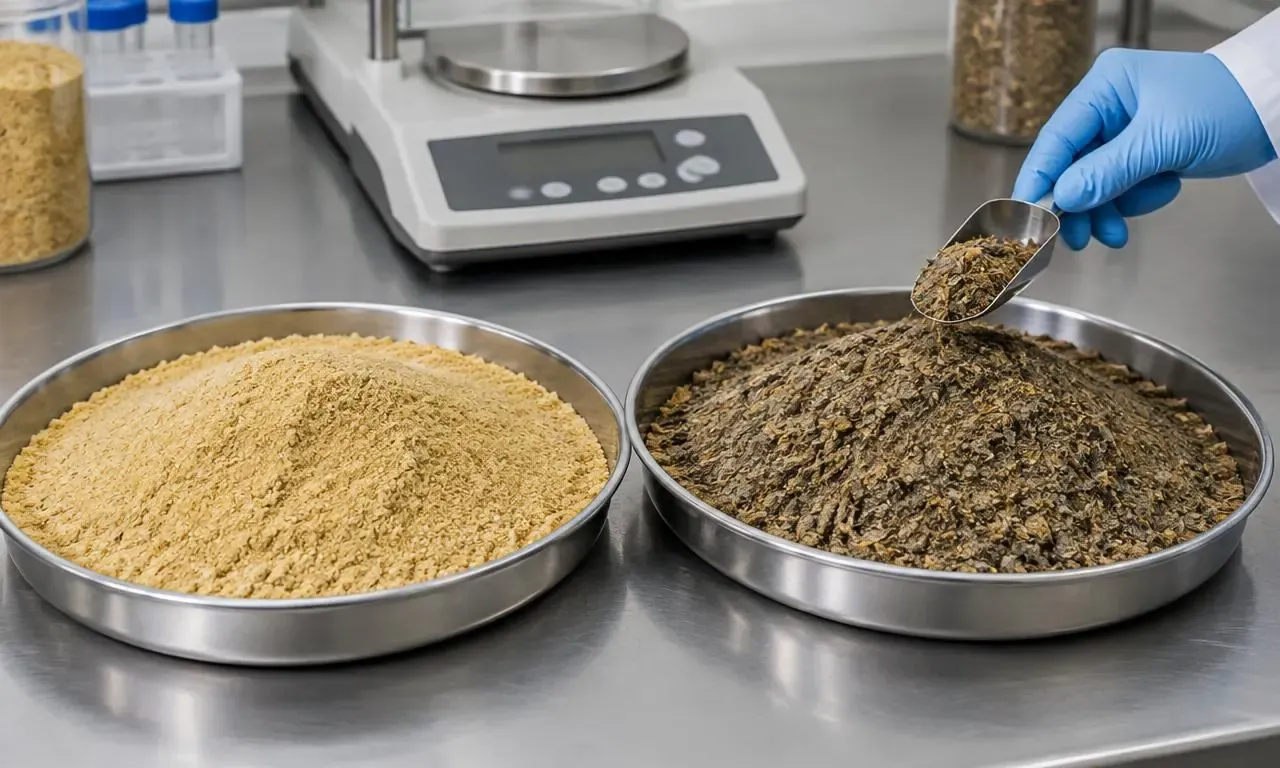
Soybean meal
- Can support formulations requiring concentrated protein and lysine; confirm the actual grade and nutrient matrix.
- Useful as a formulation reference when the nutritionist has reliable species-specific values.
- Processing quality matters: under- or over-processing can affect suitability and nutrient use.
- A crude-protein specification alone does not establish amino-acid digestibility or safety.
- — Formulations whose validated nutrient constraints favour the offered soybean grade.
- — Buyers able to verify lot quality, processing history and delivery conditions.
Sunflower meal
- Provides an alternative protein source where the formula accommodates its fibre and amino-acid profile.
- Dehulling and extraction method offer different grades; compare the actual material, not the product name.
- Hull content and processing can change fibre, protein and energy values.
- Replacing soybean meal may require adjustments to amino acids, energy and other ingredients; there is no universal substitution rate.
- — Formulations whose nutritionist confirms that the offered sunflower grade fits all constraints.
- — Buyers comparing alternative origins and delivery routes without assuming availability.
| Criterion | Soybean meal | Sunflower meal |
|---|---|---|
| Delivered cost per accepted tonne | Use the dated offer plus non-duplicated freight, insurance, duties, handling and testing. | Use the same destination, quantity, currency date and delivery basis. |
| Digestible nutrient cost | Use a validated species-specific nutrient matrix, not crude protein alone. | Include any reformulation cost; do not treat total lysine as digestible lysine. |
| Energy and fibre | Confirm analytical basis and the energy system used for the species. | Confirm hull content, residual oil and the matrix appropriate to the actual grade. |
| Lot acceptance | Agree sampling, methods, limits, retained samples and rejection terms. | Apply the same evidence standard and report missing results as unresolved. |
| Moisture basis | State whether values are as received or on dry matter. | Convert consistently before comparing nutrient concentration. |
| Operational fit | Check storage duration, moisture control, unloading and handling. | Check the same constraints, including changes to bulk density or flow. |
Neither meal is automatically the better purchase. Compare the delivered lot against the species, life stage and complete formulation, then check digestible amino acids, energy, fibre, quality evidence and storage fit. A cheaper tonne or a higher crude-protein result does not prove lower formulation cost or better animal performance.
Free tools and next steps
- Delivered-cost calculator
Feedipedia describes ingredient variability and nutritional characteristics; its reference values are not a certificate for the offered lot. Laboratory analysis supports composition checks; a nutritionist must select appropriate digestibility and energy values. Free calculators estimate only what their inputs and methods cover, not a complete formulation or animal outcome.
- Ingredient-cost comparison
Landed-cost and ingredient-cost tools reconcile entered cost and composition values. They do not validate digestibility, optimise a complete diet or guarantee results.
- Supplier audit questionnaire
Build the questionnaire around the risks of the ingredient and the delivery route. Ask for dated, attributable records, compare them with your specification and track unresolved gaps. A completed form is not supplier approval, a site audit or proof that every future lot will comply.
What should the buyer collect before choosing?
- Define species, life stage, formulation constraints and planned volume with the nutritionist.
- Request product grade, extraction/dehulling method, origin, lot COA, sampling method and date.
- Agree protein, moisture, fibre, amino-acid and contaminant requirements with methods and acceptance limits.
- Normalise both offers to the same delivery point, Incoterm, quantity, payment and timing.
- Reformulate using validated nutrient values; include supplement changes, handling and testing costs.
- Record the selected assumptions, unresolved evidence and approval owner before committing.
Feedipedia describes ingredient variability and nutritional characteristics; its reference values are not a certificate for the offered lot. Laboratory analysis supports composition checks; a nutritionist must select appropriate digestibility and energy values. Free calculators estimate only what their inputs and methods cover, not a complete formulation or animal outcome.
Frequently asked questions
Can sunflower meal replace soybean meal one for one?
Is the cheapest tonne the cheapest feed?
Which grade should I specify?
Does a COA prove performance?
What do the calculators tell me?
Sources and limitations
Free tools and next steps
Tools are free and without obligation. The USD 250,000 minimum applies only to plant and equipment projects; feed, ingredient, premix and additive purchases have no minimum and are reviewed by specification, volume/frequency and destination. For commercial RFQs, our team reviews and organises your brief, contacts suitable suppliers and presents organised responses through FeedMatch. There is no direct buyer–supplier connection; availability and terms are not guaranteed.
Prepare a team-reviewed RFQ