
Pull to refresh
FeedMatch Group logo — wheat sheaf and interlocking chevrons emblem representing the independent animal feed procurement and ingredient intelligence platform
FeedMatchGroup
DashboardSign inRequest Feed Quote
Financing for animal feed and feed-ingredient purchasesSee financing options→←
Back to home
  1. FeedMatch Group
  2. /
  3. Feed catalog
  4. /
  5. Certified organic

Catalog collection

Certified organic feed and ingredients

Certified organic feed is produced and handled under a legal organic standard — such as EU Regulation 2018/848 or the USDA National Organic Program — by certified operators. Ask for a valid certificate covering the exact product and your destination's standard. Non-GMO or 'natural' is not organic.

This collection lists the feed product types for which buyers commonly request certified-organic supply. FeedMatch does not list organic offers yet: each request is checked against the supplier's certificate, the certificate's product scope and the destination country's organic rules before any offer is presented to you.

Rules reviewed 25 October 2026 against the official texts listed below.

Also in: العربية · 中文

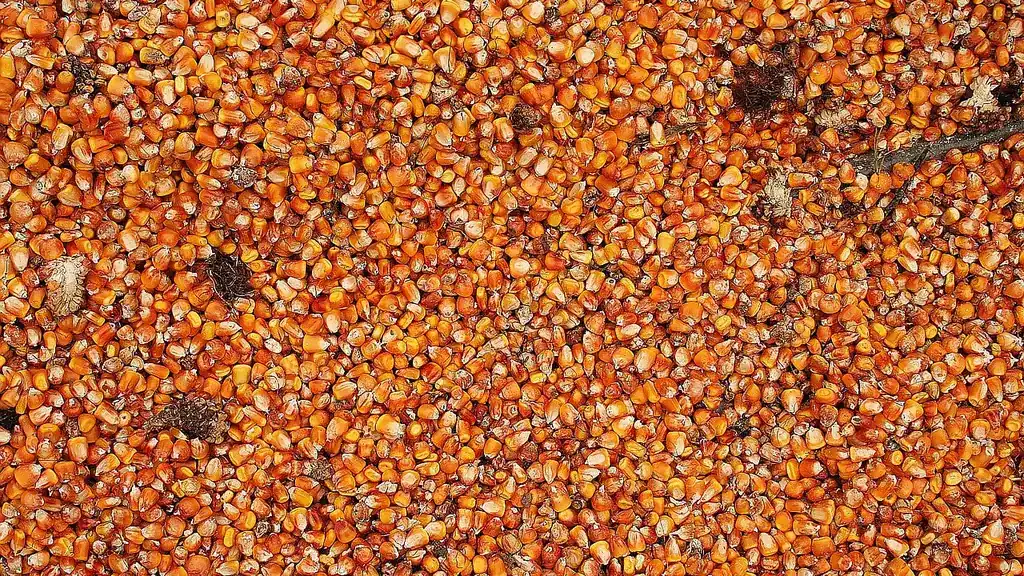
Pile of yellow-orange maize (corn) kernels
Illustrative photo, not a supplier's product. Danielgrad · Wikimedia Commons · CC BY-SA 3.0 (cropped)

What qualifies as organic in this collection

  1. 1. A named legal standard

    The product is certified under the organic rules of the destination market, for example EU Regulation 2018/848 or the USDA organic regulations (7 CFR Part 205). Other markets have their own rules and equivalence arrangements; these are checked per route.

  2. 2. Certified operators along the chain

    The producer, and any operator that handles or processes the feed, is certified. The US rule requires feed rations of organically produced and handled agricultural products from certified operations, with only listed additives and supplements.

  3. 3. Certificate scope matches the product

    A certificate must cover the specific product and activity (e.g. processing compound feed), be valid on the shipment date and come from a body recognised for the destination.

  4. 4. Only authorised additives

    In the EU, only feed additives and processing aids listed in Annex III Part B of Regulation 2021/1165 may be used in organic feed; in the US, synthetic substances must be on § 205.603. Synthetic amino acids and growth promoters are not allowed under the EU rule.

  5. 5. No relabelling of conventional feed

    'Natural', 'non-GMO', 'GM-free', 'in-conversion' and sustainability-certified feed are presented separately and never described as organic.

Organic, non-GMO, natural and sustainable are different claims

LabelWhat it coversIs it organic?
Certified organicCrop and livestock production, permitted inputs and additives, handling and operator certification under a legal standard.Yes — when the certificate covers the product and the destination's standard.
In-conversionLand in its conversion period under an organic standard.No. Usable only within the limits the standard sets.
Non-GMO / GM-freeGenetic modification only, under private or national schemes.No. The feed can otherwise be conventional.
“Natural”No single meaning across markets; ask the supplier for the definition and the evidence behind it.No.
Sustainability-certified (e.g. responsible soy)Land use, deforestation or social criteria set by the scheme.No. It is a separate claim with its own certificate.

Product groups

Organic compound feedsOrganic protein ingredientsOrganic cereals and energy ingredientsOrganic-permitted minerals, vitamins and premixesOrganic production runs at feed mills

Feed inputs

Organic compound feeds

Standard or specification
Processed organic feed under the EU rule must have all agricultural ingredients organic and at least 95% of the dry matter organic. Under the US rule the total feed ration must be organically produced and handled, with only permitted additives.
Best fit for
Certified-organic egg, poultry meat, dairy or pig producers who buy complete or complementary feed rather than mixing on farm.
Commercial benefit
Keeps your own organic certification intact, gives your certifier a documented feed trail, and lets you compare several certified mills on one specification.
Risks to check
Certificates that do not cover the specific feed or processing activity; commingling with conventional runs at shared mills; substitution of a non-permitted additive when an ingredient is short.
Limitations
Supply is regional and seasonal. The EU rule also requires part of the feed to come from the farm itself or regional cooperation (at least 60% for cattle, sheep, goats and horses; at least 30% for pigs and poultry), so imported compound feed covers only part of the ration.
Regulatory note
Check the destination's organic standard and whether an import or transaction certificate is required for each consignment.
How to compare
Compare against conventional or non-GMO feed of the same specification to see the premium you pay for certification, not for nutrition.
Price
No published price range was researched for this group. Offers are compared on your specification.

Documents to request

  • Organic certificate naming the product and the processing activity
  • Feed specification with guaranteed analysis
  • List of additives and their organic authorisation basis
  • Lot traceability and transaction (import) certificate where required
  • Mill cleaning and segregation procedure

Add product types to your shortlist

  • guide
  • guide
  • guide
  • guide

Sources: Regulation (EU) 2018/848 on organic production and labelling (EUR-Lex); USDA organic regulations, 7 CFR § 205.237 Livestock feed (eCFR); USDA organic regulations, 7 CFR § 205.603 Synthetic substances allowed in organic livestock production (eCFR)

Feed inputs

Organic protein ingredients

Standard or specification
Organic oilseed meals and expeller cakes must come from certified organic crops processed by certified operators. Processing with prohibited solvents conflicts with organic rules; ask how the oil was extracted.
Best fit for
Organic feed mills and integrators formulating their own rations, who need protein to balance home-grown cereals.
Commercial benefit
Protein is usually the hardest organic input to source; bundling volumes and specifications into one request widens the number of certified sources compared.
Risks to check
Fraud and mislabelling risk is higher for traded organic protein; lots must be traceable to certified crops and handled without commingling.
Limitations
Organic protein supply is limited and prices are not published here. Synthetic amino acids cannot be used to rebalance EU organic diets, so protein quality matters more.
Regulatory note
EU organic rules prohibit synthetic amino acids; US organic rules allow only additives listed in § 205.603.
How to compare
Compare organic expeller with organic solvent-free meal on protein, fat and delivered price per unit of protein.
Price
No published price range was researched for this group. Offers are compared on your specification.

Documents to request

  • Organic certificate of the producer and processor
  • Certificate of analysis per lot (protein, fat, fibre, moisture)
  • Extraction method
  • Origin and transaction certificate
  • Residue test results where the destination or certifier requires them

Add product types to your shortlist

  • guide
  • guide

Sources: Regulation (EU) 2018/848 on organic production and labelling (EUR-Lex); USDA organic regulations, 7 CFR § 205.237 Livestock feed (eCFR); USDA organic regulations, 7 CFR § 205.272 Commingling and contact prevention (eCFR)

Feed inputs

Organic cereals and energy ingredients

Standard or specification
Grain from certified organic crops, stored and transported by certified handlers who prevent commingling and contact with prohibited substances.
Best fit for
Organic mills and farms buying maize, wheat or barley beyond their own harvest.
Commercial benefit
One request lets you compare certified grain origins on grade, moisture and delivered cost.
Risks to check
Commingling in storage and transport; fumigation or treatments not permitted for organic grain; mycotoxin risk is not reduced by organic status.
Limitations
In-conversion grain is not organic and may only be used within limits set by the EU rule.
Regulatory note
The EU rule caps in-conversion feed and sets regional-origin shares by species; US handlers must follow § 205.272 on commingling.
How to compare
Compare against your own harvest cost and conventional grain to decide which share of the ration to buy in.
Price
No published price range was researched for this group. Offers are compared on your specification.

Documents to request

  • Organic certificate of grower and handler
  • Grade and quality certificate
  • Mycotoxin results per lot
  • Storage and transport cleaning records
  • Transaction certificate where required

Add product types to your shortlist

  • guide
  • guide
  • guide

Sources: Regulation (EU) 2018/848 on organic production and labelling (EUR-Lex); USDA organic regulations, 7 CFR § 205.272 Commingling and contact prevention (eCFR)

Feed inputs

Organic-permitted minerals, vitamins and premixes

Standard or specification
Minerals, vitamins and additives must appear on the destination's organic list — Annex III of EU Regulation 2021/1165, or § 205.603 in the US — and be used as authorised.
Best fit for
Organic mills and farms that need a premix formulated only from organic-permitted substances.
Commercial benefit
A premix declared against the organic list removes a common reason for certification findings.
Risks to check
Premixes reformulated with a non-permitted carrier or additive; vitamin sources not matching the permitted list.
Limitations
A conventional premix is not acceptable even if each active is permitted, unless every component and carrier is permitted.
Regulatory note
Additives must also be authorised under general feed law in the destination (in the EU, Regulation 1831/2003).
How to compare
Compare declared composition line by line rather than on price per tonne.
Price
No published price range was researched for this group. Offers are compared on your specification.

Documents to request

  • Full declared composition including carriers
  • Organic authorisation basis for each component
  • Certificate of analysis per batch
  • Certificate or letter of acceptance from the buyer's certifier where available

Add product types to your shortlist

  • guide
  • guide
  • guide

Sources: Commission Implementing Regulation (EU) 2021/1165 — products and substances authorised in organic production, Annex III (feed); USDA organic regulations, 7 CFR § 205.603 Synthetic substances allowed in organic livestock production (eCFR); Regulation (EC) No 1831/2003 on additives for use in animal nutrition (EUR-Lex)

Equipment

Organic production runs at feed mills

Standard or specification
Equipment is not certified organic; the operator is. A mill producing organic feed must separate organic and conventional products in time or space and clean lines between runs.
Best fit for
Mills adding an organic line or dedicated bins, and new mills that will run organic and conventional feed.
Commercial benefit
Dedicated bins, conveying and clean-out access reduce downtime between organic and conventional runs and simplify audits.
Risks to check
Shared conveying with residues; bins without full emptying; no records of flushing or cleaning.
Limitations
No machine makes feed organic; certification depends on the operator's procedures and records. Plant and equipment projects start from about USD 250,000.
Regulatory note
US handlers must meet § 205.272; EU operators must take precautionary measures against contamination under Regulation 2018/848.
How to compare
Compare dedicated organic bins against scheduled cleaning on a shared line.
Price
No published price range was researched for this group. Offers are compared on your specification.

Documents to request

  • Process flow showing organic and conventional paths
  • Self-cleaning or clean-out features and residue data
  • Bin and conveyor layout
  • Commissioning and cleaning procedures

Add product types to your shortlist

  • guide
  • guide
  • guide

Sources: USDA organic regulations, 7 CFR § 205.272 Commingling and contact prevention (eCFR); Regulation (EU) 2018/848 on organic production and labelling (EUR-Lex)

Project packages

Combine a package with individual products in one shortlist, then generate one request.

  • Project starter kit · feed supply

    Certified-organic layer feed supply

    Organic layer feed plus the organic protein and organic-permitted premix you may buy separately, all requested against your organic standard.

    • Layer feed suppliers and manufacturers
    • Soybean Meal (optional)
    • Vitamin-Mineral Premixes (optional)

Questions buyers ask

Is non-GMO feed the same as organic feed?

No. Non-GMO or GM-free schemes cover genetic modification only. Organic certification also covers crop production, permitted additives, handling and operator certification. A non-GMO feed can be conventional.

Can FeedMatch confirm a supplier's organic certificate?

FeedMatch asks for the certificate and checks that its product scope, validity and issuing body match your request before presenting an offer. Your own certifier makes the final acceptance decision.

Is there a minimum order for organic feed?

No. Feed and ingredient requests have no minimum. Plant and equipment projects, such as an organic production line, start from about USD 250,000.

Do you publish organic feed prices?

No. Organic prices depend on origin, season and certification scope. We compare the quotes suppliers send for your specification instead of quoting a market price.

Ready to request quotes?

Review your shortlist, add quantities and project details, then generate one RFQ. FeedMatch contacts suppliers and presents their responses to you.

Review shortlist

Related guides

  • Organic vs conventional ingredients
  • Layer feed suppliers
  • Feed regulations by market
  • Premium & specialty collection
  • Full feed catalog

Official sources

  • Regulation (EU) 2018/848 on organic production and labelling (EUR-Lex)
  • USDA organic regulations, 7 CFR § 205.237 Livestock feed (eCFR)
  • USDA organic regulations, 7 CFR § 205.603 Synthetic substances allowed in organic livestock production (eCFR)
  • USDA organic regulations, 7 CFR § 205.272 Commingling and contact prevention (eCFR)
  • Commission Implementing Regulation (EU) 2021/1165 — products and substances authorised in organic production, Annex III (feed)
  • Regulation (EC) No 1831/2003 on additives for use in animal nutrition (EUR-Lex)

How to read this catalog. Each entry is a product type FeedMatch sources for commercial buyers, with an independent buying guide. It is not a listing of stock, prices or supplier offers. Nutrition values, formulations, origins, certifications and availability are shown only when a supplier has documented them, and stay labelled as supplier-declared until checked against the documents. FeedMatch is a sourcing intermediary — it does not manufacture, sell or export feed or equipment, and gives no veterinary or nutritional advice; ask your nutritionist or veterinarian about suitability.

Feed and ingredient requests have no minimum; assisted sourcing for plant and equipment projects applies from about USD 250,000. Requests go to the FeedMatch team, who contact suppliers and present responses — buyers and suppliers are not put in direct contact.

Availability and the ability to trade depend on the applicable law and on the licences and approvals required, which differ by product and country. Each participant is responsible for the rules that apply to its own role: suppliers for the products they offer and supply, buyers for their own import permissions and checks. FeedMatch is not a manufacturer, importer, exporter, seller or regulatory approver; it facilitates sourcing and screens requests before any supplier is contacted. Regulation & responsibilities.

FeedMatch Group logo — wheat sheaf and interlocking chevrons emblem representing the independent animal feed procurement and ingredient intelligence platform
FeedMatchGroup

Because we care more.

Global animal feed & ingredient procurement. Supplier-neutral sourcing of feed and raw materials for farms, integrators, feed mills and importers worldwide.

Follow us on LinkedIn
Chat with our team on WhatsApp+44 7936 808834
Language

Feed Procurement

  • Request a Feed RFQ
  • Get a Free Quote
  • Feed Procurement
  • Feed Procurement Platform
  • Commercial Procurement
  • Buyer's Guide
  • Tenders & Institutional Bids
  • Supplier Sourcing
  • Landed Cost by Trade Lane
  • Logistics & Freight

Feed & Ingredients

  • Feed Ingredients
  • Premixes, Additives & Feed-Grade Products
  • Feed by Species
  • Feed by Production Stage
  • Specification Library
  • Standards Library

Calculators & Tools

  • Innovation & Technology
  • Calculators & Tools
  • Free Project Planner
  • Feed Mill Operating Costs
  • Feed Mill Energy Calculator
  • Feed Mill Calculator

Company

  • About FeedMatch
  • How It Works
  • Buyer Intelligence
  • Become a Supplier
  • FAQ
  • Global B2B Group Network
  • Contact
  • Sitemap
Global B2B Group — Our Network

Specialist platforms of Global B2B Group, the parent marketplace for agricultural and food commodities. Explore the full network →

  • HatchMatch — Poultry
  • FishMatch — Aquaculture
  • ColdMatch — Cold Chain
  • SeedMatch — Seeds & Inputs
  • Visit: FishMatch · HatchMatch · SeedMatch · ColdMatch · Global B2B Group

FeedMatch Group is a human-led, supplier-neutral B2B procurement service for commercial animal-feed, feed-ingredient and feed-mill project buyers. Feed-mill plant and equipment projects start from USD $250,000; feed and ingredient supply requests are reviewed by specification, volume, destination and logistics. Every request is reviewed by our team — suppliers are contacted only after authorized human review.

FeedMatch prepares procurement project information and, only with separate explicit consent, may introduce it to independent providers. Procurement is free for buyers and supplier-funded. FeedMatch performs no underwriting, pre-approval, offer or credit decision. Legal classification requires jurisdiction-specific counsel review.

FeedMatch Group is the specialized animal feed and feed-ingredient procurement platform of Global B2B Group. FeedMatch Group is not a feed manufacturer, ingredient trader, commodity trader, distributor, broker, feed mill, nutritionist, veterinarian, EPC contractor, lender, bank, credit provider, financial advisor, investment advisor, insurer or underwriter. Any financing, leasing, trade finance, working capital or project-finance option mentioned on this website is provided solely by independent third-party financing providers, subject to their own eligibility checks, KYC, due diligence, compliance review, approval, terms and documentation. FeedMatch Group prepares project information and may introduce independent providers only with separate explicit consent. Legal classification requires jurisdiction-specific counsel review. FeedMatch does not guarantee financing approval, and is not responsible for any financing decision, offer, rejection, delay, cost, term or outcome. Quotes, feed, ingredients, additives, equipment, logistics, services, warranties, feed safety, nutritional outcomes, FCR and animal performance remain solely the responsibility of independent third-party suppliers, manufacturers, logistics providers or qualified professionals. See Terms and Disclaimer.

FeedMatchGroup.com · Global Animal Feed & Ingredient Procurement
Privacy·Terms·Buyer Terms·Supplier Terms·RFQ Terms·Cookies···Privacy requests·Confidentiality & security·Disclaimer·Legal Center·Accessibility·Accessibility Support·Contact·Sitemap
Privacy & Compliance· Status and your rights© 2026 FeedMatch Group · feedmatchgroup.com · All rights reserved.Earth with a sprouting seed — our responsibility commitmentWe support animal welfare, appropriate nutrition and good care conditions for animals, and practical environmental sustainability. As a group commitment, 2% of our profits will be invested in initiatives supporting the planet and animals.FeedMatch Group is the specialized animal feed and feed-ingredient procurement platform of Global B2B Group. FeedMatch prepares procurement project information; it does not manufacture feed or equipment or make credit decisions. Financing-provider availability and relationships are not verified. Any future introduction requires separate explicit consent and jurisdiction-specific legal review. Operated from the Republic of Cyprus.Built for commercial animal-feed procurement — feed mills, integrators, importers, EPCs, governments and industrial farms. The USD 250,000 minimum applies only to plant and equipment projects, not to feed or ingredient purchases. Not intended for hobby, backyard, pet-owner or small retail purchasing. How FeedMatch works.FeedMatch Group is a specialized platform of Global B2B Group — the parent group and buyer-first marketplace for agricultural and food commodity sourcing. Sister platforms: HatchMatch Group, ColdMatch Group, FishMatch Group, SeedMatch Group.The specialized feed platform within the Global B2B Group ecosystem.
CalculatorsGuidesFinancingRequest a Quote
WhatsApp